
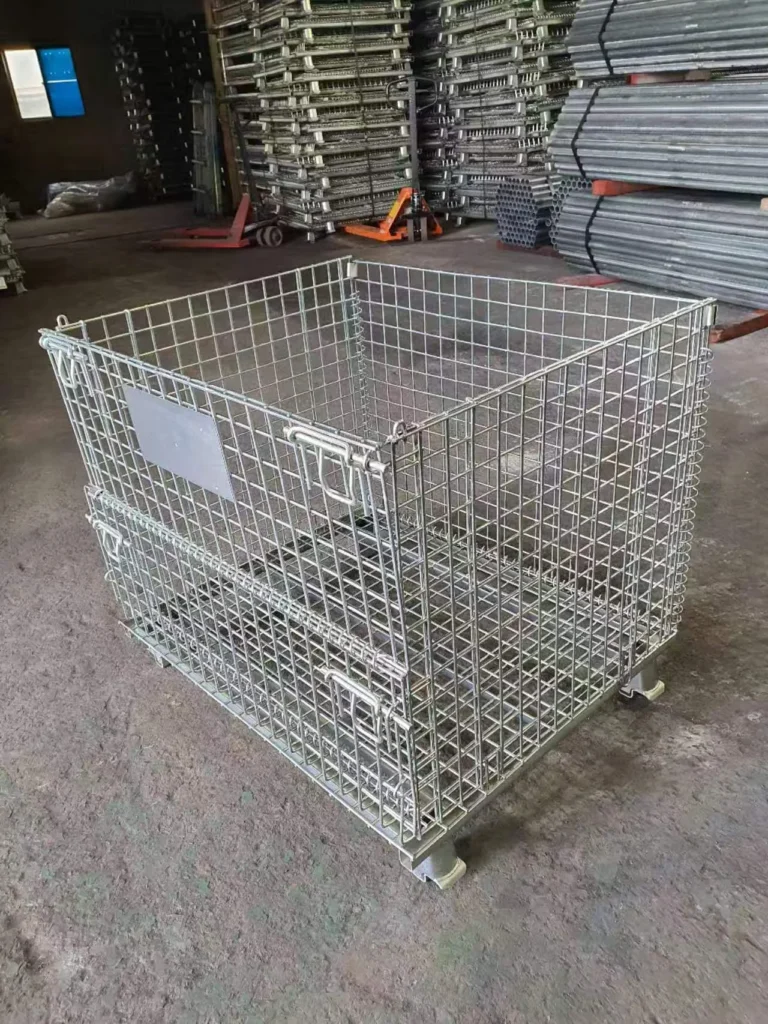
A collapsible wire cage looks like a simple box, so it is easy to assume that its cage rating also sets how high it can be stacked. In a loaded stack, that is not how the load moves. The mesh panels, their welded edges and the hinge joints carry part of the weight from every cage above, and they can be the first members to reach their limit.
This article explains how the load travels through a Stbox stack, why the total weight of the upper cages needs its own limit, and what your team should check during routine use.
How the load travels from the parts to the floor
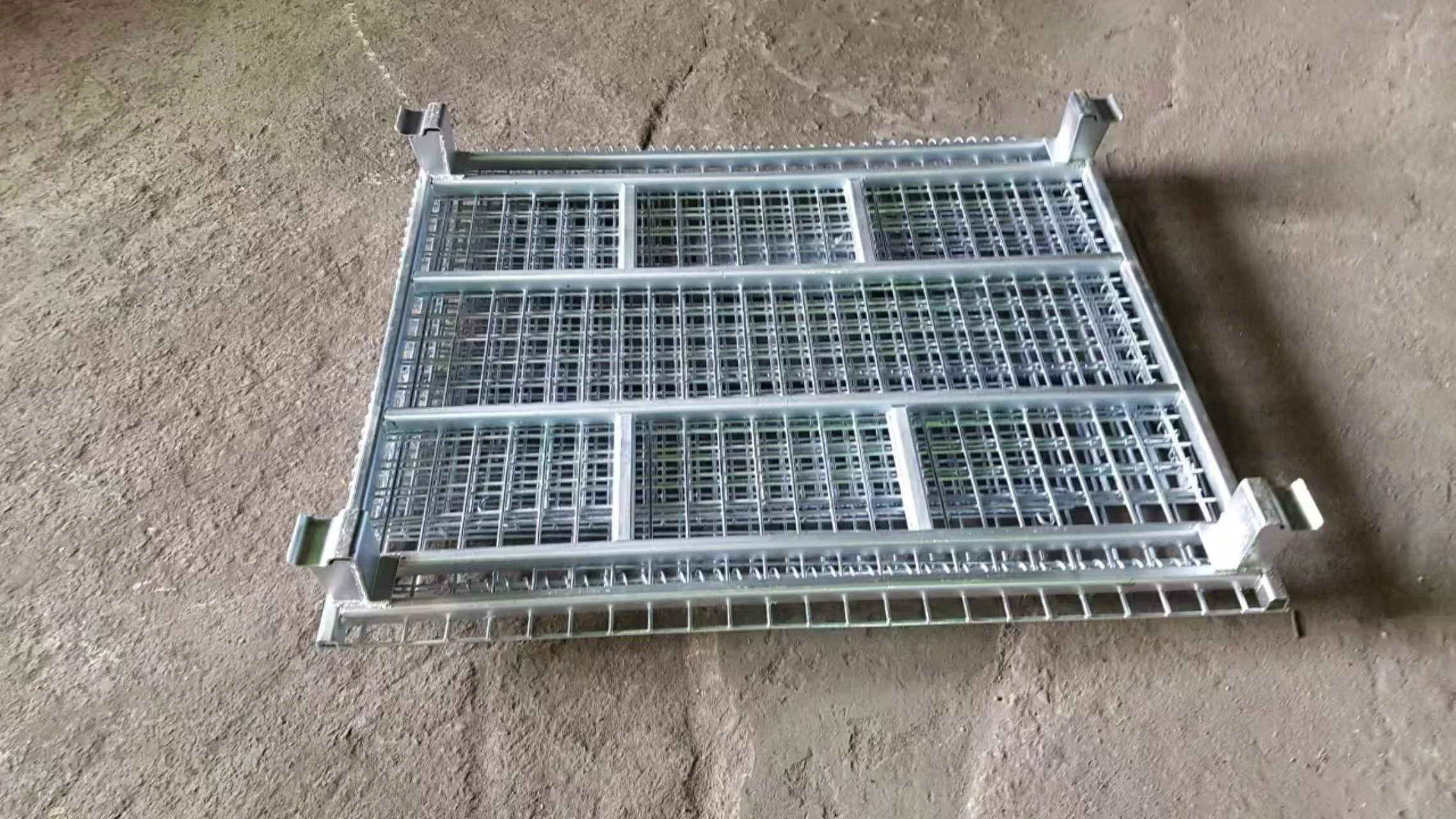
Parts rest on the cage floor and press outward on the mesh walls. The floor and its base channels pass the weight to the formed stacking feet. When cages are stacked, the feet of each upper cage seat into the frame of the cage below. Each lower cage therefore carries its own contents, the tare and contents of every cage above it, and the frame and walls that connect the levels.
The mesh is the thinnest part of that path. The walls are welded grids of 5.8 to 6.0 mm wire on a 50 × 50 mm pitch, joined to the frame by welds and to each other at the folding joints by spiral hinges. Vertical load and any sideways shift in the stack pass through those welds and joints. For that reason, the mesh and its joints are the member to watch when a stack is heavy. The project records we hold do not include a load test of the mesh alone, so the stack limit for each cage comes from its approved drawing, not from a general figure.
Why the upper-cage total needs its own limit
A cage rating states what one cage can hold. It does not state what each level of a stack can hold. Three Stbox project records in our files set different stack rules for different cage sizes and finishes:
| Project record | Cage rating | Stack rule in the record |
|---|---|---|
| Opportunity 15059 (1000 × 800 × 840 mm) | 1,400 kg per cage | Up to 4-high; total load of the upper cages 2,000 kg or less |
| Opportunity 15217 (1050 × 1050 × 1000 mm) | 1,000 kg per cage | Up to 4-high; upper cage load 1,200 kg or less |
| Opportunity 13967 (800 × 1200 × 890 mm) | 1,000 kg per cage | Risk note: 4 tiers or fewer, 500 kg or less in each upper cage |
These three figures do not combine into one rule. Each belongs to one project’s cage, mesh, base and stacking plan. The 13967 record also needs drawing confirmation for the orientation of its opening. Before you set a stack height, check the figures on the approved drawing for your cage, and do not apply a number from another project.
Loading and stacking practice
Enter the forks or the pallet-jack forks at a steady speed. A sudden start or a hard stop moves the load onto the mesh joints and the base welds. Before you release a stack, confirm that the feet of each upper cage are fully seated on the cage below. A partly seated foot shifts the load onto a few welds instead of the whole frame.
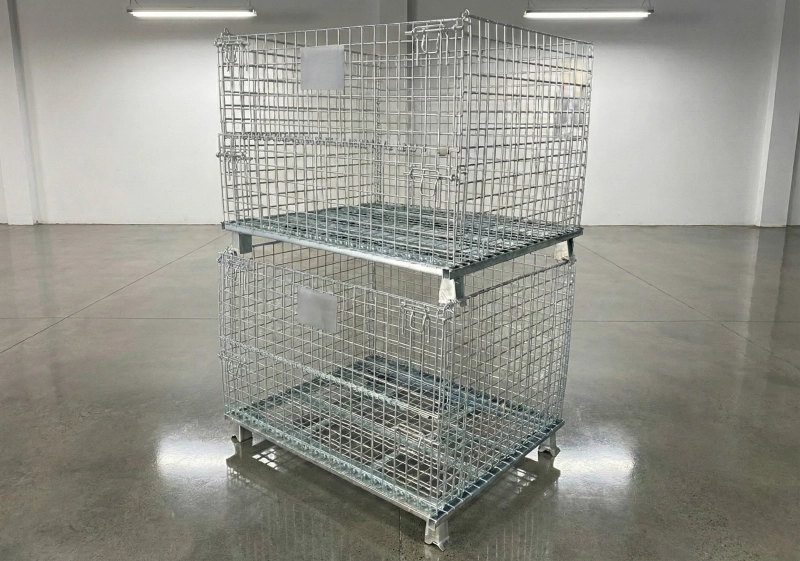
Project documents describe forklift and pallet-jack handling for this cage. Confirm the entry type and the access side on your drawing before the first batch arrives.
Routine inspection points
Inspect the cage at a fixed interval that your EHS team sets for your site. The project records do not give a fixed frequency. Check these points each time:
- Base channels and their welds, for cracks, bends or missing welds.
- Formed stacking feet, for bends, cracks or feet that no longer seat fully.
- Mesh panels, for bent or broken wires, weld breaks and loose mesh.
- Hinge joints, latches and the half-drop gate, for free and full movement.
- Liners, lids or casters, if fitted, for secure fixing.
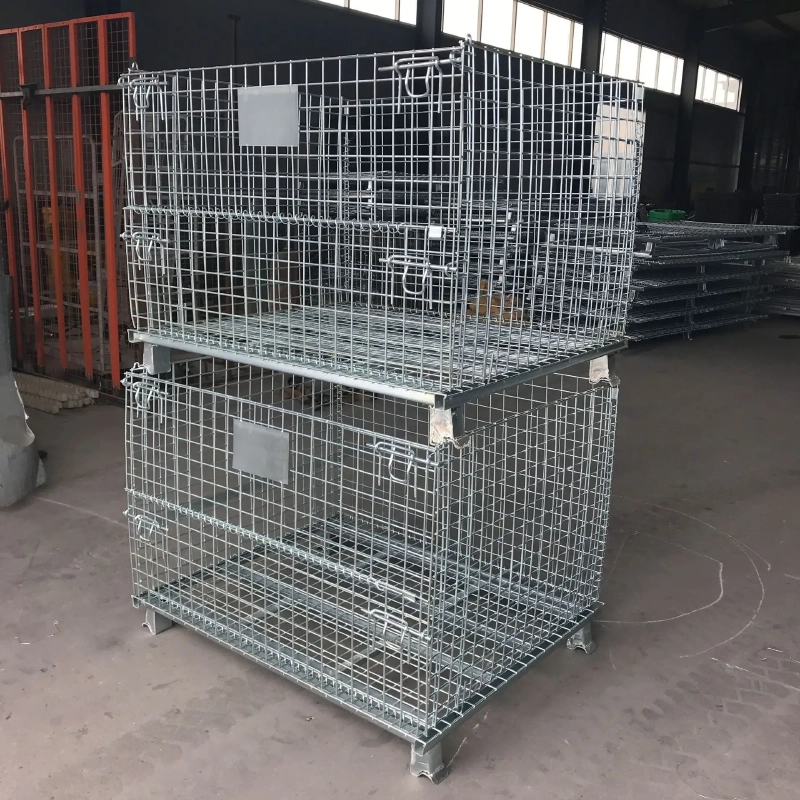
Take any cage with a cracked weld or a bent foot out of the stack until it is repaired, and record the defect.
Where Stbox fits in warehouse operations
- Parts storage and work-in-progress buffers beside assembly or machining lines, where stacks are used.
- Bulk automotive and machining parts that must stay visible through the 50 × 50 mm mesh.
- Empty cages folded flat for return transport, which reduces the space they take up.
- Outdoor or semi-outdoor staging, only with the galvanized finish selected for that site.
Frequently asked questions
Can we stack cages up to their full rating?
No. The cage rating applies to one cage. The stack height and the upper-cage total come from the project record for your cage, so check them before loading.
Does a forklift test image prove a stack limit?
No. The test images in the product library do not state a test standard, fixture, duration or certificate, so they do not set a limit for any project.
Next step
Send us your cage size, the load per cage, the stack height and the handling method you plan to use. We will check them against the drawing for your cage and confirm the upper-cage limit before you place an order.
Need a Custom Storage Solution?
Speak directly with our technical engineers. We offer free structural designs, heavy-duty catalog evaluations, and quick B2B price quotations.
Request a Quote Now →