
Steel Pallet Cage vs Rigid Wire Container: Which Should I Choose for Stacking Parts?
Compare a steel pallet cage vs a rigid wire container for stacking parts. See when Mybox needs a framed structure, larger dimensions, five-layer stacking and more door access.
Steel Pallet Cage vs Rigid Wire Container
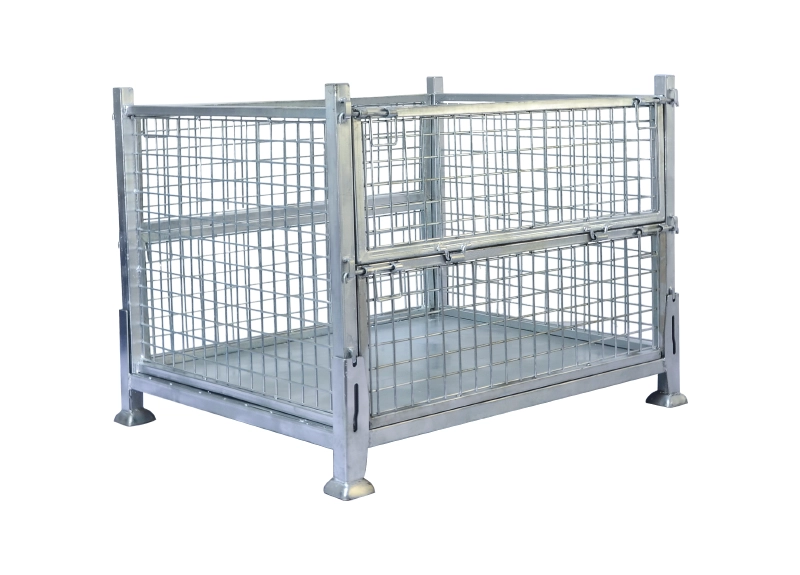
A rigid wire container can be the right choice for standard, moderate-duty parts storage. Move to a Mybox steel pallet cage when the load path, footprint, stacking plan or access pattern needs more than a standard mesh-panel format can provide.
The first question is not which label sounds heavier. Check how the container will be loaded, lifted, stacked and emptied. Mybox uses 40 × 40 mm square-tube uprights and a full-penetration welded structure. That gives the design a defined steel frame for larger dimensions and specified stacking conditions, while the mesh panels retain visibility and ventilation.
- Upgrade trigger: the existing wire mesh container deflects, damages parts or cannot provide the required stack height.
- Size trigger: the standard footprint does not accommodate long, wide or unusually shaped parts without overhang.
- Access trigger: operators need half-drop, full-open or four-side access instead of one fixed loading face.
- Decision rule: compare the complete structural and operating specification, not a unit price attached to a similar-looking box.
Where the two construction types diverge
“Wire mesh container” covers several designs. Before comparing quotations, confirm whether the candidate has a load-bearing tube frame, what load case was tested, and which stacking and door configuration the price includes.
Rigid wire container
- Often built around welded mesh panels and a standard folding format.
- Standard modules can limit footprint choices and the practical number of loaded stacking layers.
- Suitable when the part, load, access and stacking plan all fit the standard design.
Mybox steel pallet cage
- 40 × 40 mm square-tube uprights create a framed load path around the cage.
- Full-penetration welded construction supports a project-specific review of larger size and stacking requirements.
- Can be configured around long footprints and half-open, full-open or four-side access requirements.
Choose by footprint, stack or access requirement
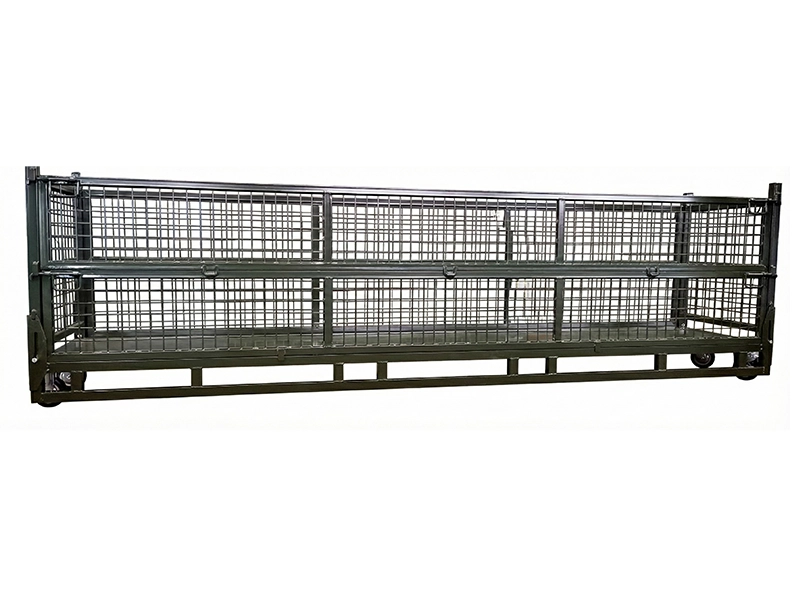
LARGER FOOTPRINT
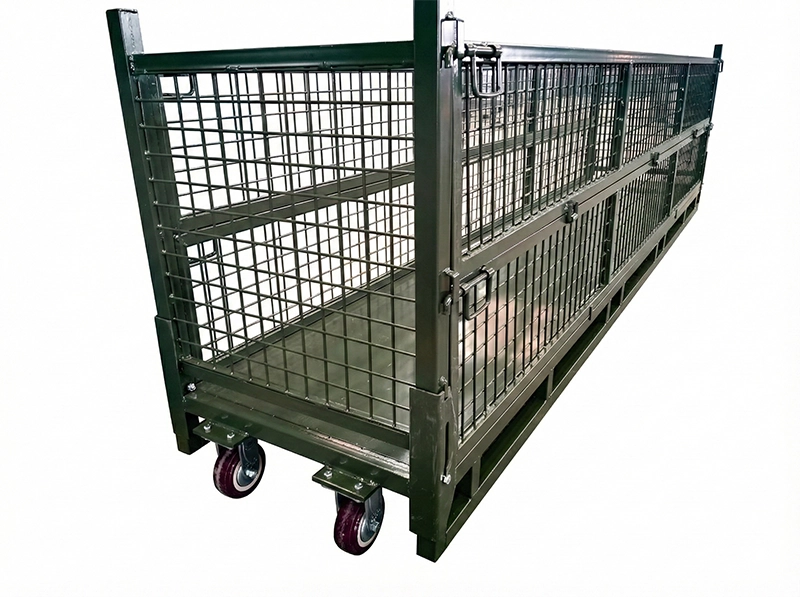
Extra-long parts storage — 14530
For parts that do not fit a standard pallet module, the 14530 project shows the type of extra-long envelope that can be developed instead of forcing the load into an undersized cage.
Use case: oversized or long parts
Load and stack height: confirm for the project
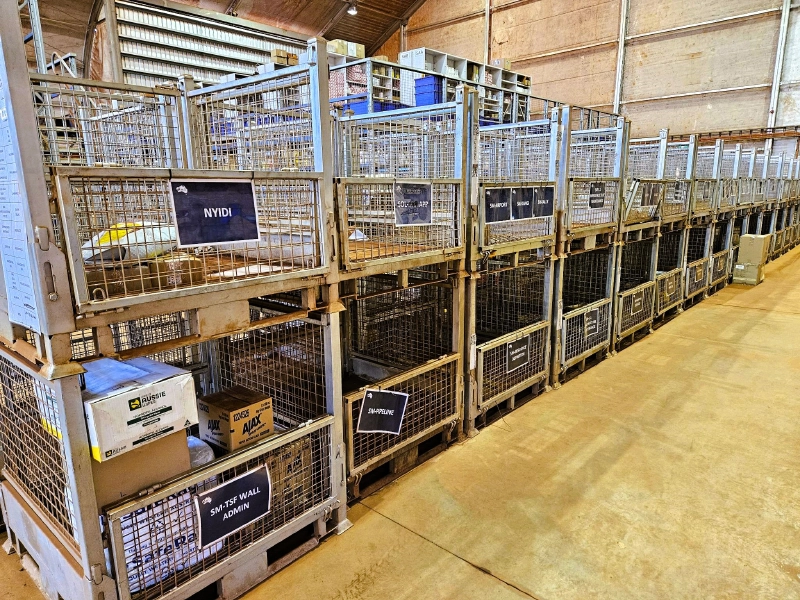
HIGHER STACKING
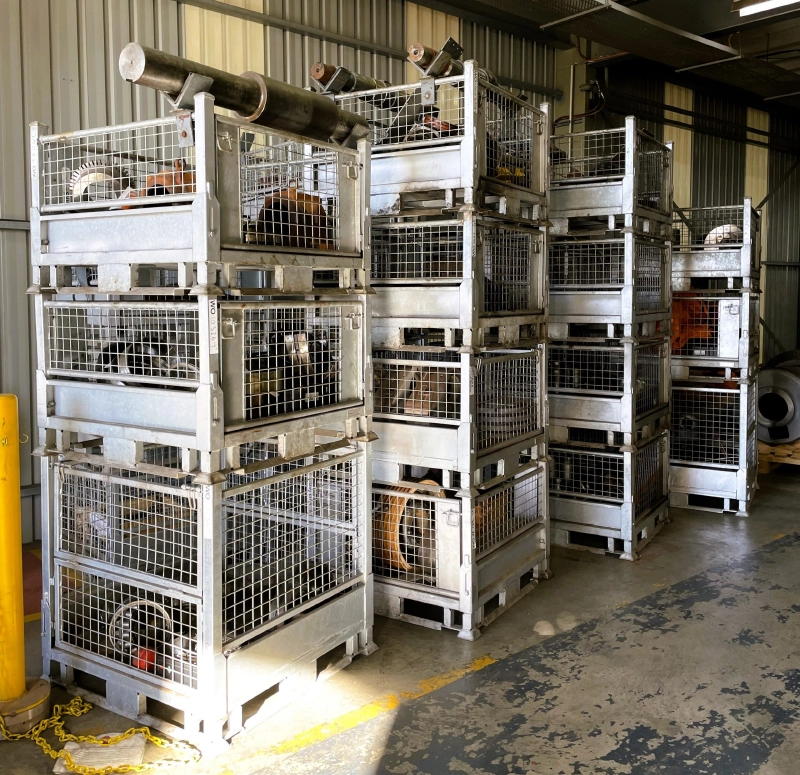
High-stack parts storage — 15757
Project 15757 is a large-volume reference for customers evaluating loaded vertical storage rather than a basic two- or three-layer standard cage.
Container weight: 121 kg
Recorded load: 1,000 kg
Recorded stacking: 5 layers
40HQ loading: 49 units
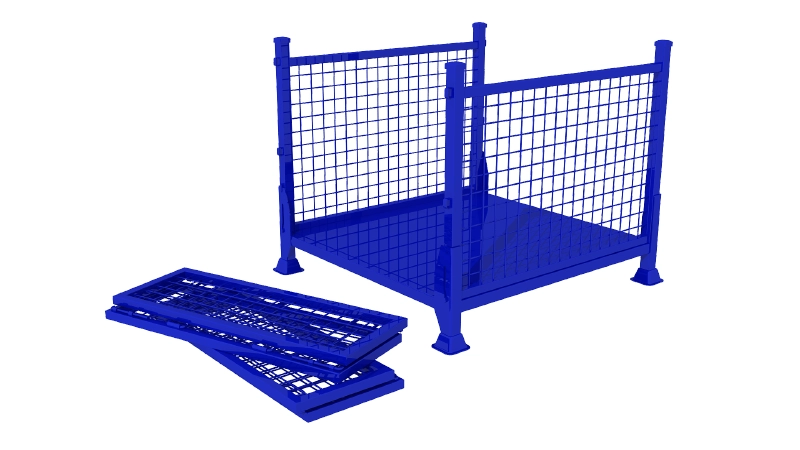
FOLD & ACCESS
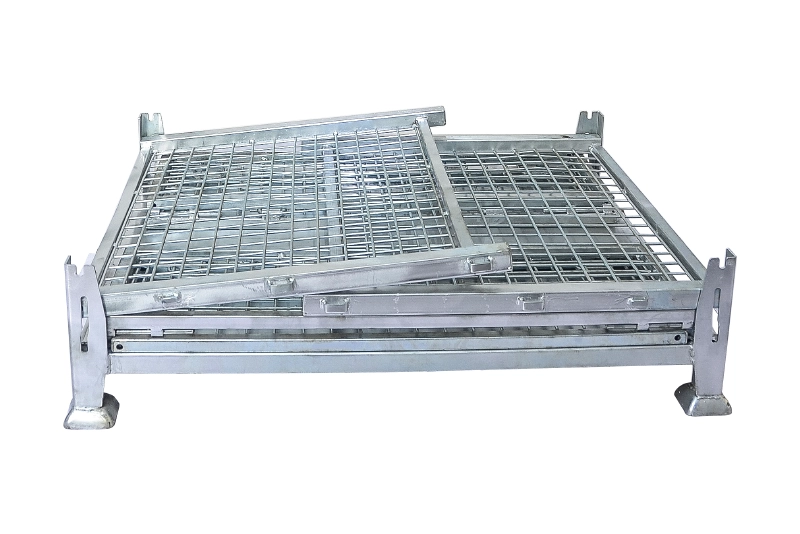
Collapsible cage pallet with planned access
When return transport and operator reach matter as much as containment, assess the foldable format together with the required half-open, full-open or four-side door layout.
Access options: half-open, full-open or four-side
Final layout: confirm against the part and handling route
The difference is in the operating envelope
A defined load-bearing frame
Mybox uses 40 × 40 mm square-tube uprights instead of relying only on mesh panels. The frame gives the project a clear basis for reviewing loaded storage, handling and stacking.
Full-penetration welded structure
Joint detail matters when a cage is repeatedly placed, lifted and stacked. Full-penetration welding is part of the structural specification to review, not a generic wire-diameter comparison.
Stacking treated as a load case
For project 15757, the recorded data is 1,000 kg load, a 121 kg container and five-layer stacking. Use those figures as that project’s reference, not as an automatic rating for every Mybox size.
Access follows the workflow
Half-open, full-open and four-side access can change picking effort and where the operator approaches the parts. Select the door arrangement with the part dimensions and handling equipment, not after the cage is priced.
A practical selection process
Describe the part
Share the part envelope, unit weight, load distribution, centre of gravity and whether the contents can contact the mesh or door.
Set the load case
Define working load, static or dynamic handling, target stacking layers and any rack, forklift or pallet jack interface.
Plan access and return
Choose half-open, full-open or four-side access, then confirm folding, empty storage, truck loading and the available warehouse aisle.
Approve the drawing
Compare the frame, weld structure, dimensions, surface treatment and confirmed load and stack requirements before comparing quotations.
Questions to answer before changing container type
When should I upgrade from a rigid wire container to a steel pallet cage?
Upgrade when the standard cage cannot safely or efficiently meet the required footprint, loaded stack height, repeated handling or operator access. Deflection, damaged parts, overhang, too few usable layers or a fixed door on the wrong side are practical signals to review a framed design.
Why should I not compare both options in the same price band?
A similar-looking box may not include the same tube frame, weld specification, base, door arrangement, surface treatment, load rating, stack design or custom dimensions. Compare the complete operating specification and the validation required for your load, not just the mesh enclosure and nominal size.
Is a rigid wire container always the wrong choice?
No. It remains sensible for standard parts, moderate loads, limited stacking and a fixed access pattern when its documented load and dimensions meet the job. Mybox is the better route when the operating envelope exceeds that standard format.
Can the 15757 five-layer, 1,000 kg figures be applied to any Mybox?
No. Those are recorded project 15757 figures for 1583 × 1540 × 1010 mm and a 121 kg container. A different footprint, part, base, door or handling route needs its own load and stacking review.
What should I submit for a useful recommendation?
Send the part dimensions and weight, load distribution, required internal size, target layers, handling equipment, door side or sides, indoor or outdoor environment, and empty-return plan. Those details let the frame and access configuration be evaluated together.