
Industrial handling selection guide
A cable rack stores and transfers the complete coil. An A-frame pay-off rack keeps the coil on the support so the cable can be pulled into position. If you choose the wrong workflow, the layout can look right while the operation remains wrong.
People confuse these two systems because both carry coils. But the job definition is not the same. An A-frame pay-off setup is built around a fixed point where the coil stays on the frame while the cable is pulled off. A cable rack is built around storing the entire coil, inventory control, and transferring it from one place to another.
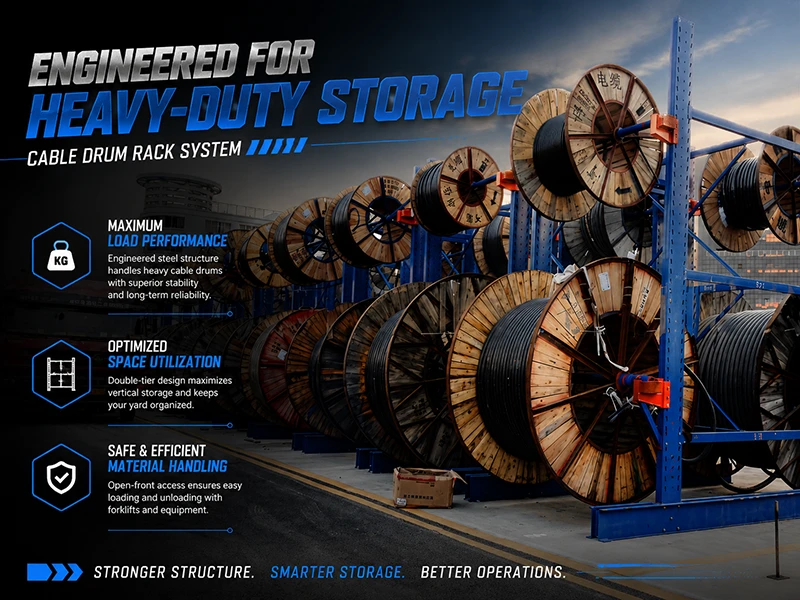
What a cable rack should do
The Carack layout shown here is a double-faced cable drum racking system. It keeps multiple wooden coils organized along a warehouse aisle, so the operation can receive, store, locate, and move complete coils without turning the rack into a pay-off stand. This difference matters. A storage rack should make the coil easy to place and easy to remove as a complete unit.
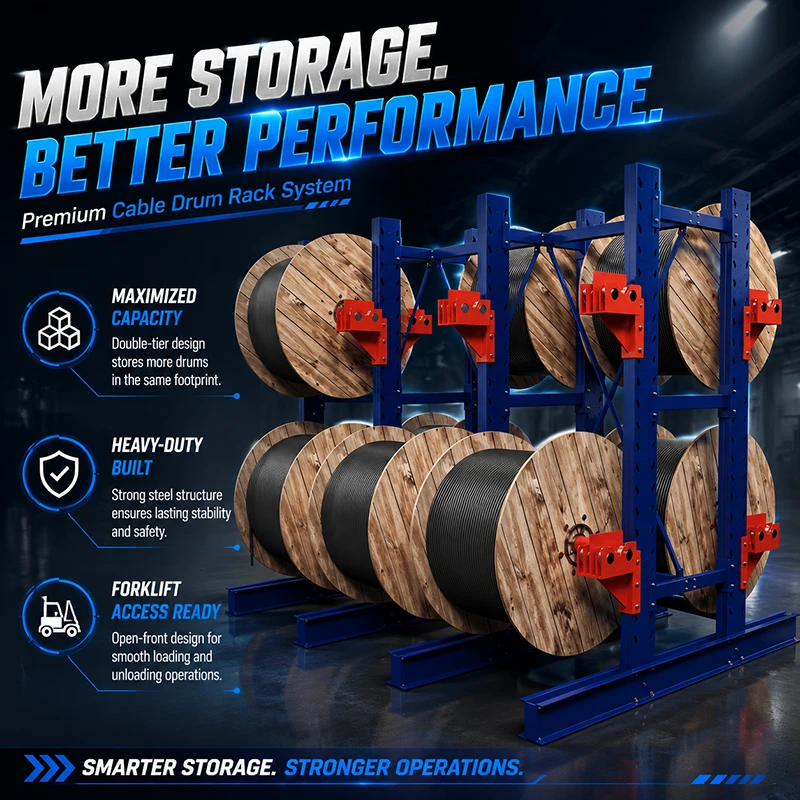
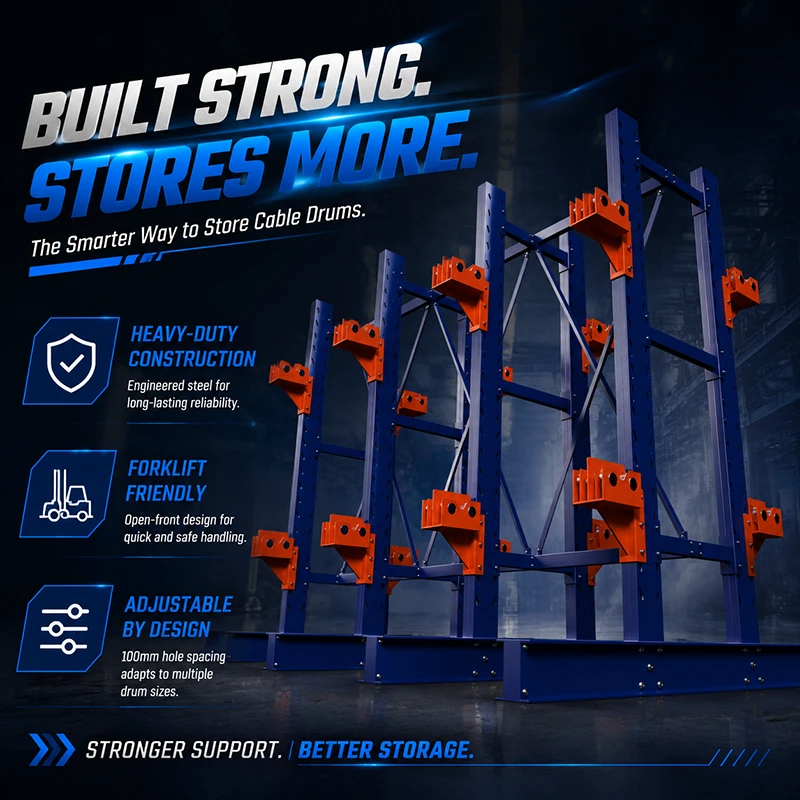
That is why the rack uses reinforced steel uprights, double-faced bays, and a clear aisle layout. The structure is about capacity and flow. It gives you a controlled place for the coil body, then leaves the handling process to forklifts or other transfer equipment when the complete coil needs to be moved.
When an A-frame pay-off rack is the right answer
Choose an A-frame when the coil must remain on the frame and the line must be unwound from that fixed position. In that case, the rack is part of the pay-off process itself. The key question is not how many coils you can store. The key question is whether the cable must be pulled directly from the installed coil without removing it first.
If your team needs to remove the entire coil, unwinding on the rack is the wrong logic. A pay-off rack is not a substitute for storage. It belongs in a workflow where the coil stays in position, the cable path stays aligned, and the rack is used to feed the line rather than to move inventory.
When a cable rack is the best choice
Choose a cable rack when the coil arrives as a complete unit, must be stored as a complete unit, and may need to be transferred to another room, yard, or work cell. This is the right choice when your team wants access to the entire coil, not unwinding the cable from the rack itself.
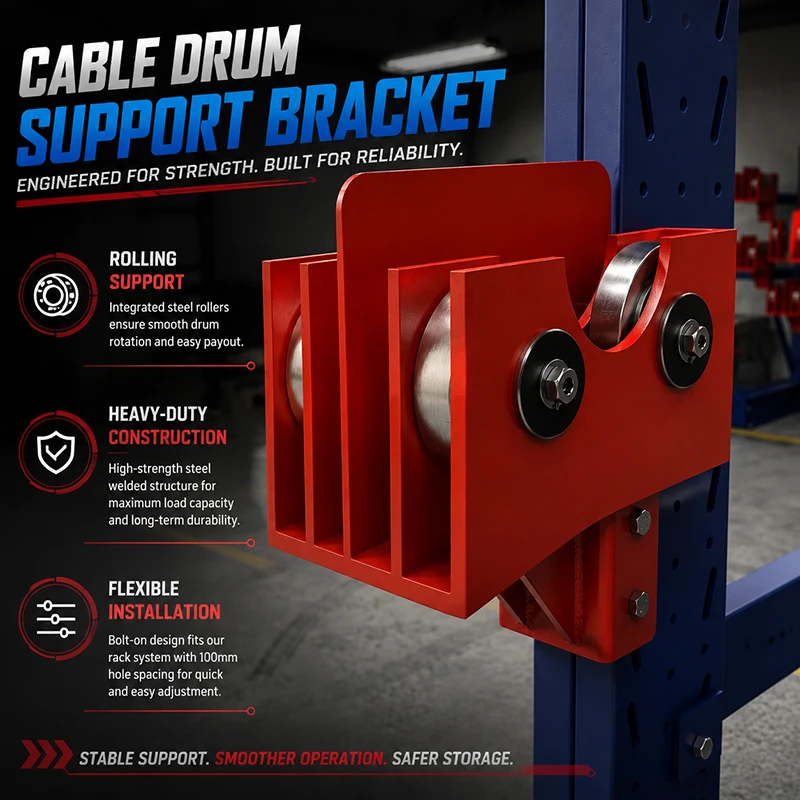
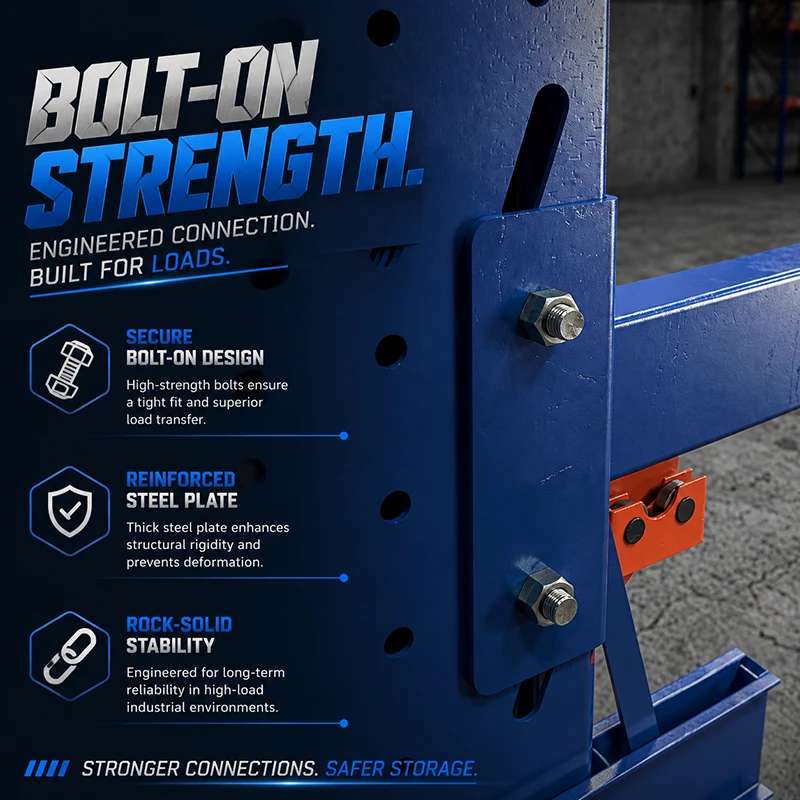
The supporting details in the Carack design point in that direction. The rack uses double-roller support brackets and steel plate connections bolted to the upright and base beam. These details help the coil sit in a controlled cradle and keep the structure stable during handling. They are useful for storage and transfer. They do not turn the rack into an on-site pay-off stand.
How to decide before purchasing
Ask a practical question first: do you want to unwind the cable from the rack, or do you want to remove the entire coil and move it elsewhere? If the answer is pay-off, the A-frame logic fits. If the answer is storage and transfer of the entire coil, a cable rack fits.
Then check the workflow around the coil, not just the coil itself. Do you need open aisle access for forklifts? Do you want more coils placed in a bay? Do you need a structure that keeps complete coils organized while the line department or warehouse team decides where the coil goes next? Those are cable rack questions. If the job is inventory control and transfer of the entire coil, a rack should be judged on layout, support geometry, and handling path, not on pay-off convenience.
In short: A-frame means the coil stays on the support and the cable comes off there. Cable rack means the coil is stored, located, and moved as a complete unit. The words sound similar, but the workflow is different. Buying the wrong one usually means the equipment still works, but the site process does not.
Serve una Soluzione di Stoccaggio Personalizzata?
Parli direttamente con i nostri ingegneri tecnici. Offriamo progetti strutturali gratuiti, valutazioni di cataloghi per carichi pesanti e preventivi B2B rapidi.
Richiedi un Preventivo Ora →