
When a warehouse changes with the season, the main question is not which storage system looks denser on a drawing. The real question is which one allows you to move, reposition, and reset the layout without rebuilding the logic of the aisles. This is where nestainer racking behaves differently from fixed systems: it is designed for palletized loads, forklift handling, and nesting when empty, so the layout can change with demand instead of being locked into steel lanes.
This does not make nestainers the answer for every site. Drive-in racking, selective pallet racking, pallet cages, and wire mesh containers each solve a different storage problem. If you compare them only on density, you can choose the wrong system for the wrong inventory pattern. If you compare them on flexibility, access, and seasonal adaptability, the trade-offs become much clearer.
Drive-in racking: dense storage, fixed decisions
Drive-in racking earns its place when a warehouse needs deep lanes for a limited number of SKUs. Once the lanes are set, volume usage is strong, but the layout is not quick to change. This is the trade-off: high density in exchange for lower flexibility. If demand is stable, this can be the right trade-off. If seasonal volumes rise and fall, those fixed channels can become a burden when you need to reconfigure flow, temporary storage, or receiving space.
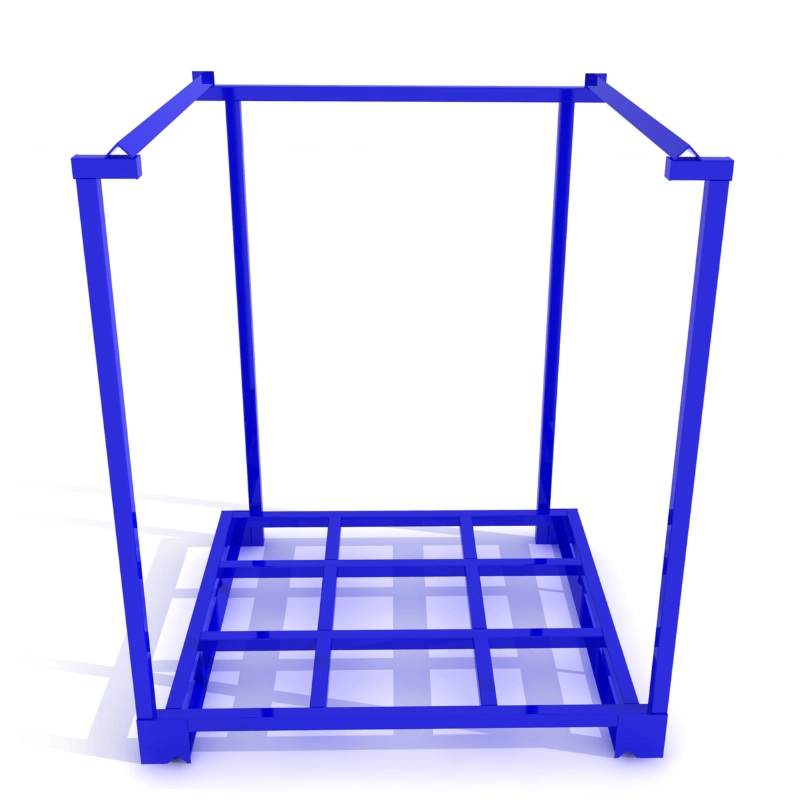
A nestainer racking system works differently. It does not force you to dedicate the same floor area to empty lanes all year round. During peak periods, it becomes stackable racking for palletized goods. During slow periods, empty units can nest together and free up floor space, which is why the same product line can support temporary warehouse setups, raw material storage areas, and seasonal buffering.
Selective pallet racking: access first, flexibility later
Selective pallet racking is the right answer when every pallet must be directly reachable from the aisle. It is simple to understand and easy to operate, especially in warehouses with mixed SKUs. The limitation is that the layout is fixed. You get access, but you do not get seasonal agility. If your team frequently changes the size of temporary storage zones, needs to move blocks, or wants to expand and contract a zone without bolting down a permanent structure, selective racking solves a different problem than nestainers.
For many planners, this is the clearest decision rule: choose selective pallet racking when access speed matters more than layout change speed; choose nestainers when the layout itself must adapt.
Pallet cages and wire mesh containers: close alternatives, different jobs
Pallet cages may look similar at first glance because both are used to organize palletized loads, but the purchase question is not about appearance. It is whether the system helps you save space for empty racks and move units with forklifts in a closed loop. Nestainers are built around nesting and stackability, so empty return storage and reverse logistics are part of the value. This matters when the same steel frame must travel between warehouse, yard, and transport routes.
Wire mesh containers solve a different problem again. They are useful for small parts, mixed loose items, or goods that benefit from a cage enclosure. But when your load is already palletized, bulky, or intended for block handling, a wire mesh container can be the wrong container class. In that case, a pallet cage or nestainer gives you a cleaner fit between load, forklift, and storage lane.
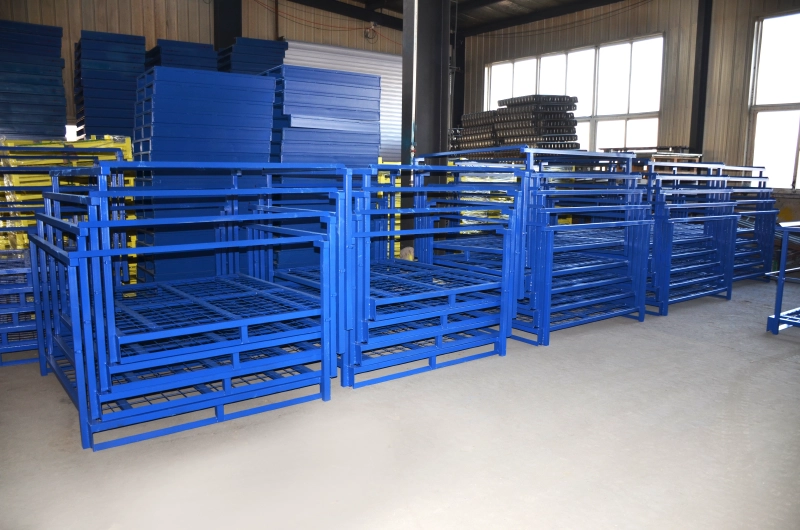
When a nestainer racking system is the best choice
Choose a nestainer when your operation needs more than one type of flexibility. It is an excellent solution for cold storage, seasonal goods buffering, temporary warehouse setup, and sites that move entire palletized loads without breaking them down. The stackable design supports heavy palletized storage, while empty nesting can save up to 70-80% of the storage space used by idle units. For sites that switch between peak and off-peak flow, this is not a small detail; it is often the difference between absorbing a surge and renting extra space.
Our strack nestainer line is designed around this logic: palletized loads, forklift handling, empty nesting, and custom sizes for different usage patterns. That is why it fits operations that want to keep the aisle plan open instead of welding it into place.
When not to choose nestainers
Do not choose a nestainer if your operation requires direct aisle access to every single pallet at all times and your flow does not tolerate shared or temporary positions. In that case, selective pallet racking might serve you better. Do not choose it if your inventory is dominated by a single fixed SKU and a fixed deep-lane system will remain in place all year; drive-in racking can offer more density for that narrow use case. And do not choose a nestainer if your goods are small loose parts better managed in a wire mesh container.
The practical test is simple: if the warehouse must adapt, nestainers help. If the warehouse can remain fixed, another system might be more efficient.
If you are comparing nestainer racks with fixed racks and want a layout that can change with the season, review PDP-01 / PDP-06 and PAGE-01, then request a suitability check for your load and aisle plan.
Request a layout reviewServe una Soluzione di Stoccaggio Personalizzata?
Parli direttamente con i nostri ingegneri tecnici. Offriamo progetti strutturali gratuiti, valutazioni di cataloghi per carichi pesanti e preventivi B2B rapidi.
Richiedi un Preventivo Ora →