 |
As a warehouse manager, you see your team using standard two tier cart on wheels every day. They look functional, but they hide a critical bottleneck: the bottom shelf. Every time an operator needs to store or retrieve an item from it, the entire workflow pauses for an awkward, inefficient, and high-risk action. This is more than a minor inconvenience; it's a costly flaw in your order picking process.
|
Watch the typical order picking cycle. An operator picks an item and moves to the cart. If the top shelf is full, they must stop, bend at the waist, and physically reach *into* the dark, confined space of the bottom shelf. This single action has three negative impacts:
1. It’s Slow: The "stop, bend, reach, and slide" motion is a complete break in rhythm, adding seconds to every single pick designated for the bottom half of the cart.
2. It’s High-Risk for Errors: The bottom shelf is a blind spot. It's difficult for an operator to see existing items, leading to disorganized placement and a higher chance of grabbing the wrong SKU later.
3. It’s High-Risk for Damage: Operators often collide items with the upper frame while trying to get them into the confined space. This damages both the item and the cart's finish over time.
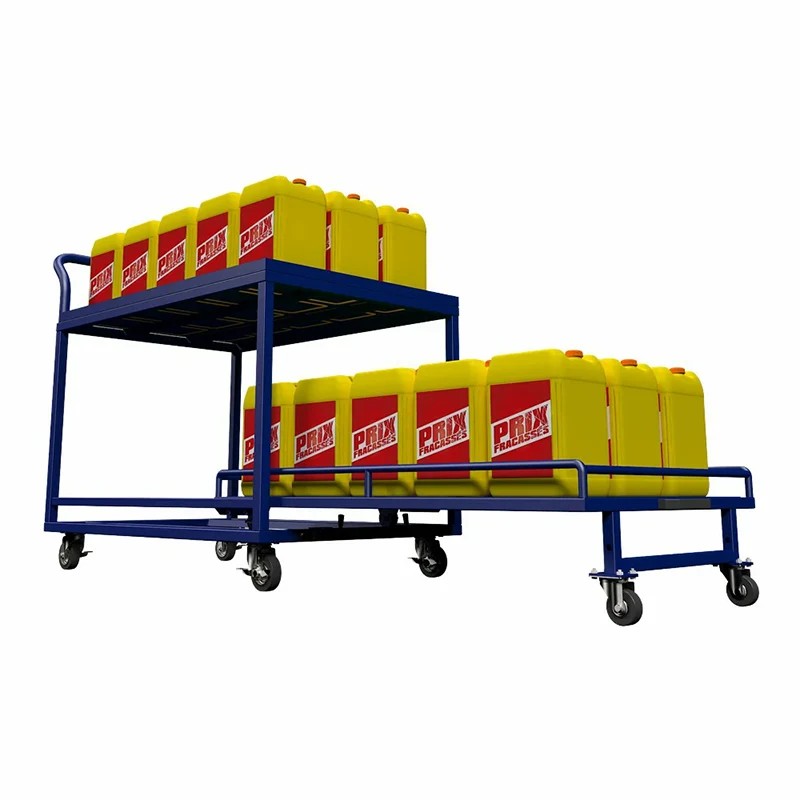
The most effective solution is not to train staff to bend better; it's to eliminate the bend entirely. A cart designed with a fully extendable bottom shelf fundamentally changes the workflow. The shelf slides completely out from the main frame, transforming it from an inaccessible cave into an open, top-level workspace.
A pull-out design gives your team 100% accessibility to the cart's capacity. There are no more blind spots. The operator pulls the shelf out and places the item with a simple, vertical, top-down motion. This is critical in B2B distribution centers managing thousands of varied SKUs, where small parts can easily get lost or damaged in a conventional cart.
With a clear, top-down view, operators can organize the bottom shelf just as neatly as the top. They can see exactly where they are placing an item, preventing accidental stacking on delicate goods. It also eliminates all risk of colliding items with the cart's upper frame, protecting your inventory and your equipment.

| Talk With An Expert |
Optimizing your order picking process doesn't always require a six-figure investment in automation or software. It starts with the physical tools your team relies on. By replacing a flawed tool with one designed for accessibility, you directly remove a bottleneck. This simple change empowers your team to work faster, more accurately, and more safely, delivering a clear return on investment through higher productivity and reduced errors.
It eliminates the inefficient "stop, bend, and reach" motion. Instead of a slow, awkward action, placing an item becomes a fast, top-down motion, just like using the top shelf. This maintains the operator's rhythm and saves time on every pick.
Yes. These carts are engineered with independent tracks, often using V-wheels, and auxiliary support casters at the front of the shelf. This system ensures the shelf remains perfectly level, stable, and easy to move, even under a significant load.
Any operation with a high volume of small-to-medium-sized picks, especially B2B distributors, e-commerce fulfillment centers, or workshops managing thousands of different SKUs. The more items you pick, the more time you save.
It provides full visibility and eliminates the "blind reach." Operators can see exactly where they are placing an item, preventing them from dropping heavy goods on delicate ones. It also removes the risk of colliding the item with the cart's upper frame.
No, it's a direct workflow optimization. While the ergonomic benefit (less strain) is a major plus, the primary business value comes from measurable gains in speed and accuracy. Less time per pick and fewer errors are bottom-line metrics, not just comfort features.



