 |
The daily grind of order picking, especially in a warehouse for small parts, involves constant bending and reaching. Standard two-level carts force staff into awkward positions just to access the bottom shelf. This repetitive strain causes fatigue, slows down the entire order picking process, and leads to costly errors. This inefficiency is a hidden, physical cost in your operations.
|
In any busy warehouse, especially a B2B distributor managing thousands of small SKUs, the standard two tier cart on wheels seems efficient. But it has a fundamental design flaw: the bottom shelf is a cave. To place or retrieve an item, an operator must bend down and reach deep under the top shelf. This action is slow, awkward, and repeated hundreds of times a day. It directly leads to physical strain on the lower back and knees. Furthermore, this "blind" access makes it easy to misplace items or accidentally damage goods that are already on the shelf.
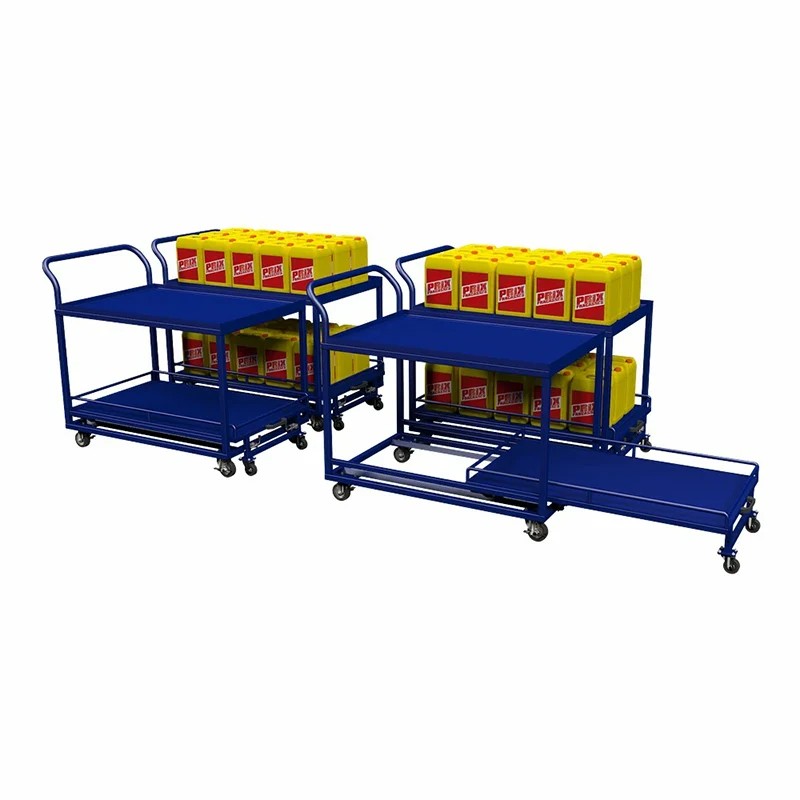
The most significant improvement to this workflow isn't about walking faster; it's about providing 100% accessibility to 100% of the cart's space. The solution is a design that allows the bottom shelf to pull out completely, clearing the frame of the cart. When the bottom shelf slides out, it transforms from a "cave" into a second top-level platform. This simple mechanical change has profound, immediate benefits for your team.
Consider the time saved. Instead of a multi-step "bend, reach, place, slide" motion, the operator simply pulls the tray and places the item from above. This is a single, vertical "drop-and-go" movement. For an operation picking thousands of small parts daily—like electronic components or sporting goods accessories—shaving seconds off every pick translates to hours of recovered productivity per week. Access is no longer a bottleneck.
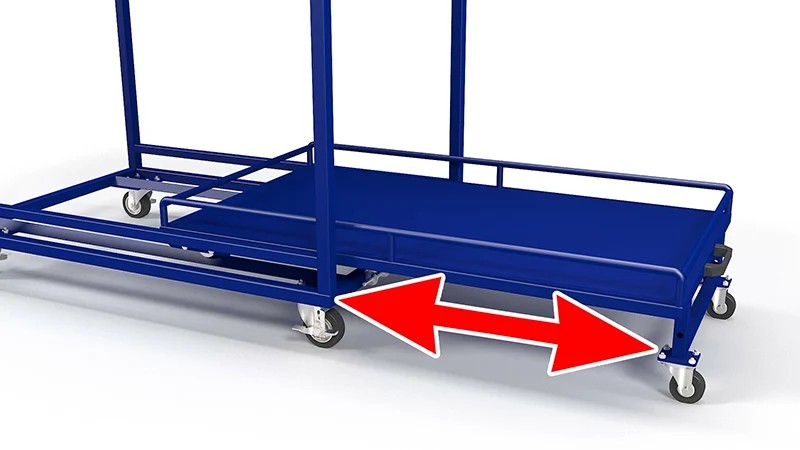
This is the human-centric value. Repetitive strain injuries are a major issue in manual handling. The cumulative effect of 500 small, awkward bends per shift is what leads to chronic back pain and employee downtime. By providing a bottom shelf that slides out to a stable, accessible position, you eliminate the physical stressor itself. Staff can access items while standing or in a much more comfortable, neutral posture. This is a direct, tangible improvement to their daily work life, which in turn improves morale and reduces attrition.
| Talk With An Expert |
For a B2B distributor or any e-commerce fulfillment center, accuracy and speed are paramount. Optimizing your order picking process doesn't always require a complex WMS overhaul. Sometimes, it's about fixing the fundamental, physical tools your team uses every minute. By addressing the "dead space" on your picking carts, you unlock a safer, faster, and more accurate workflow for your most valuable assets: your people.
The primary drain is the time and effort lost accessing the bottom shelf. Operators must stop, bend, and reach deep into a confined space, which is slow and ergonomically poor. This "dead space" effectively cuts the cart's usable speed in half.
By allowing the shelf to pull out, it eliminates the need for operators to bend their back and reach forward in an awkward position. They can access items from above while maintaining a more upright, neutral posture, drastically reducing strain on the lower back and knees.
When picking hundreds of small, individual SKUs (like screws, electronic parts, or accessories), the "bend-and-reach" action is repeated constantly. This high frequency of poor movement is what leads to significant fatigue and injury. Full access makes each small pick faster and safer.
Yes. When an operator has to reach into a poorly lit, confined bottom shelf, it's easy to grab the wrong item, knock over other items, or misplace a picked item. A fully accessible, slide-out shelf provides full visibility, just like the top shelf, which significantly improves picking accuracy.
The key difference is a dedicated slide mechanism, often using V-wheels on a track and auxiliary casters at the front of the shelf. This allows the shelf to extend fully while remaining perfectly level and stable, even when loaded, ensuring it is safe and easy to use.



