
 |
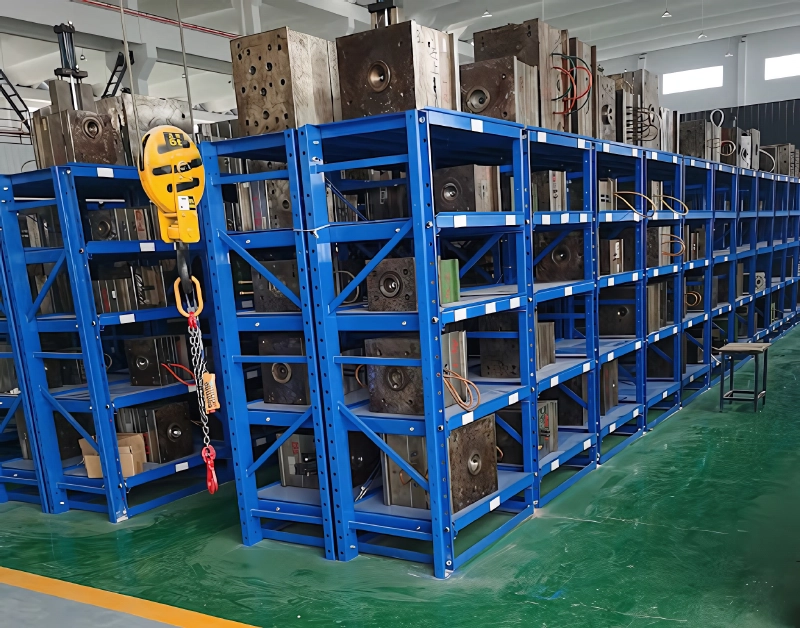
Your injection molding machine is idle, waiting. The next heavy mold is buried on a pallet, and your operator is wrestling with a forklift in a tight aisle. This daily struggle isn’t just inefficient; it’s a direct threat to safety and a drain on your production output. There is a more precise, safer, and faster way to manage the heavy injection molds, blow molds, and thermoforming dies that are the lifeblood of your plastics manufacturing facility. |
From Risky Maneuvers to Precise Placement: Revolutionizing Mold Handling Safety
In any fast-paced plastic packaging plant, the pressure is constant. A client needs an urgent run of PET bottles, meaning the 50 lbs blow mold currently in the machine needs to be swapped out. The old way involves a forklift, multiple operators, and a high degree of risk. The forklift needs a wide turning radius, the mold can be easily bumped, and its precision surfaces—worth tens of thousands of dollars—are vulnerable to damage. Every minute the machine is down for this cumbersome changeover is a minute of lost production. This is the reality of unsafe and inefficient heavy mould storage.
A poorly organized tool room, with molds scattered on the floor or on static shelves, isn’t just a 5S management failure; it’s a direct operational bottleneck. It introduces unpredictable delays and, more critically, exposes your team to significant physical risks.
Unobstructed Access: The Key to Safe and Rapid Mold Exchange
The fundamental problem with traditional storage is access. A forklift can’t lift a mold vertically if there’s another shelf above it. Erack’s die roll out racks solve this with a core engineering innovation: the 100% full-open drawer system. Each drawer, equipped with high-precision roller bearings, glides out completely from the main frame, presenting the entire mold with zero overhead obstruction.
This simple-sounding feature completely changes the workflow. Your existing overhead crane or a dedicated chain hoist can now drop its hook directly onto the mold’s center of gravity. There is no more dragging, pushing, or risky forklift tilting. The entire retrieval process becomes a direct, vertical lift—the safest method possible for handling heavy, unbalanced loads. This is supported by a robust three-pillar frame structure, typically built from 10# channel steel, which guarantees stability even when a 3,000kg (6,600 lbs) mold is fully extended.
Reclaim Your Floor: How Dense Storage Fuels Production Growth
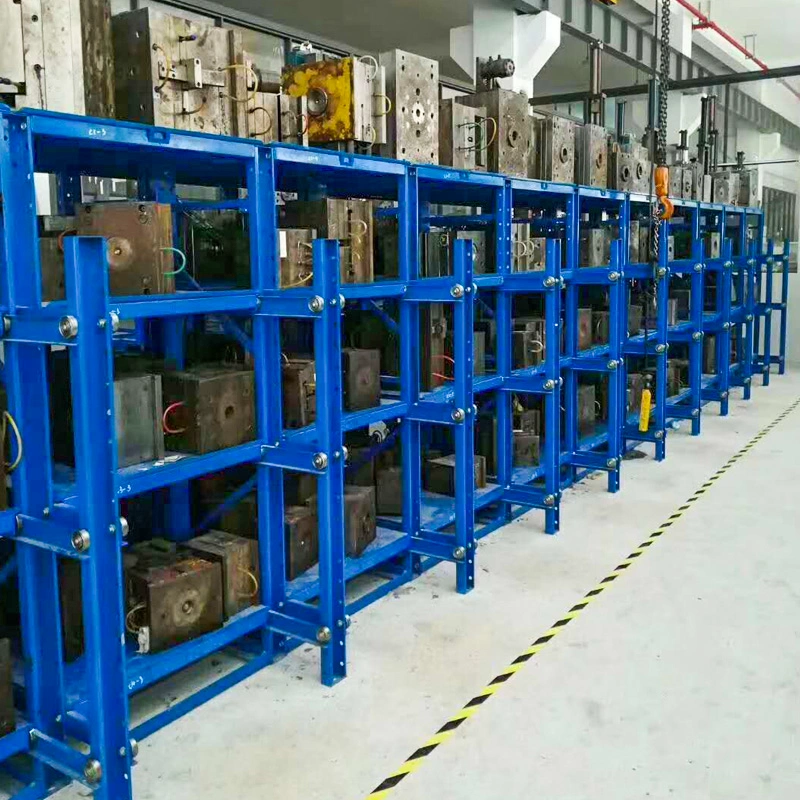
Consider the footprint of a forklift. To access a single mold, it requires an aisle width of at least 4 meters (approx. 13 feet). In a facility where every square foot is valuable production space, this is an extravagant waste. The Erack heavy duty mold racking system, designed to work with overhead cranes, shrinks that requirement to a simple walkway of 1.2-1.5 meters.
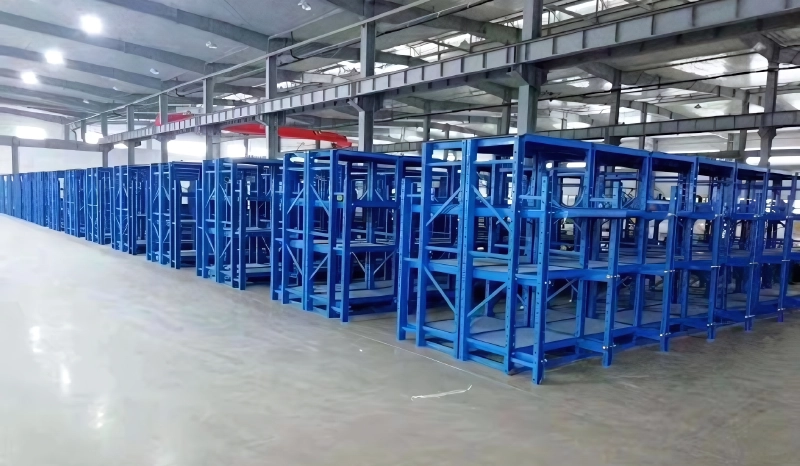
By leveraging vertical space, our modular, add-on design allows you to create a high-density injection mold storage hub. This often results in reclaiming 50% to 80% of the floor area previously lost to disorganized ground storage and wide aisles. For a Plant Manager, this isn’t just a tidier workshop; it’s newly available space for another injection molding machine, an assembly line, or a dedicated mold maintenance area, directly increasing your plant’s revenue-generating capacity.
Engineered for Safety, Built for the Harshest Environments
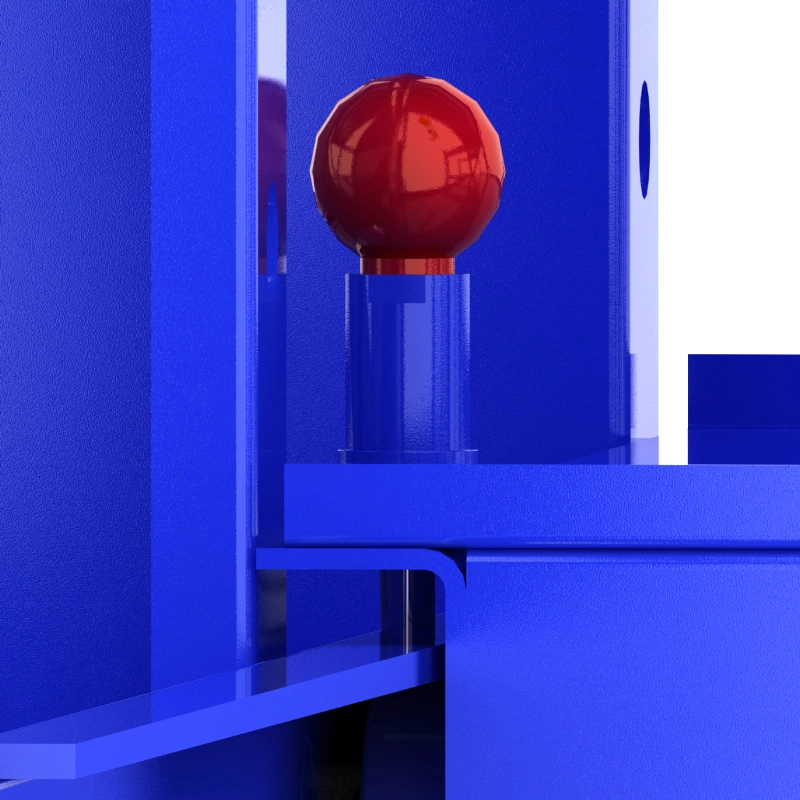
Safety and asset protection are non-negotiable. A falling mold is a catastrophic event. That’s why every Erack drawer incorporates a primary mechanical self-locking safety pin. Once a drawer is pushed in, a physical steel pin automatically engages, preventing any possibility of it sliding out due to vibration or accidental contact. This simple, failsafe mechanism is a cornerstone of a safe work environment compliant with OSHA and ANSI standards.
Furthermore, your molds are valuable assets that need protection from more than just impacts. In manufacturing environments, especially those with high humidity, corrosion is a silent destroyer. Our 7-step industrial surface treatment process—which includes acid washing, phosphating, and a 60-80μm powder-coated finish—creates an impermeable barrier. This ensures your mold rack remains rust-free for over 15 years, safeguarding the multi-thousand-dollar precision tools it holds.
By integrating a dedicated mold storage rack system, you are not just buying shelving; you are investing in a safer, more efficient, and more profitable production workflow. You are empowering your team to perform mold changes with speed and confidence, maximizing the uptime of your most critical machinery.
Frequently Asked Questions
1. How much weight can a single drawer of the heavy duty mold rack hold?
Each individual drawer is engineered to support loads ranging from 1,000 kg to 3,000 kg (2,200 to 6,600 lbs). The final capacity is determined by the specific model and the use of heavy-gauge materials like 10# channel steel for the primary frame, ensuring absolute structural integrity under full load.
2. Our plastic drums require very large blow molds. Can your system accommodate them?
Absolutely. The die rack shelving is a modular system. The height between layers is fully adjustable to accommodate molds of various sizes, from small injection dies to large-scale blow molds. We design the solution based on your specific mold dimensions and weights.
3. Our plant is located in a humid coastal area. How does the rack resist corrosion?
We utilize a comprehensive 7-step industrial surface treatment. This process begins with shot blasting and acid washing to create a perfect surface, followed by phosphating to improve adhesion, and finally, a 60-80 micron thick electrostatic powder coating is applied and cured. This creates a durable, sealed finish that is highly resistant to rust and industrial corrosion for 15+ years.
4. We need to improve our SMED (Single-Minute Exchange of Die) time. How does this system help?
The system drastically reduces SMED time by eliminating the search and transport bottlenecks. With each mold having a designated, instantly accessible slot, the “find” time is reduced to zero. The 100% pull-out drawer combined with an overhead crane makes the “exchange” phase a quick, safe, single-operator task, cutting down changeover times by as much as 80% compared to traditional forklift methods.
5. Does your mold rack system comply with international safety standards like OSHA?
Yes. Safety is the primary design principle. Features like the individual mechanical safety locking pins on each drawer, high-strength bolted connections, and the anti-tipping back bracing system are all engineered to meet or exceed stringent safety regulations like those set by OSHA and ANSI (ANSI MH16.1-2023).
Need a Custom Storage Solution?
Speak directly with our technical engineers. We offer free structural designs, heavy-duty catalog evaluations, and quick B2B price quotations.
Request a Quote Now →