
Warehouse layout selection
If your warehouse is still in the planning phase, the right answer is not always "install racks." The real question is how often the space moves, how stable the loads are, and whether you need permanent density or flexible unit storage. Derack sits in the middle: more order than floor storage, more mobility than fixed racks, and less permanence than an integrated system.
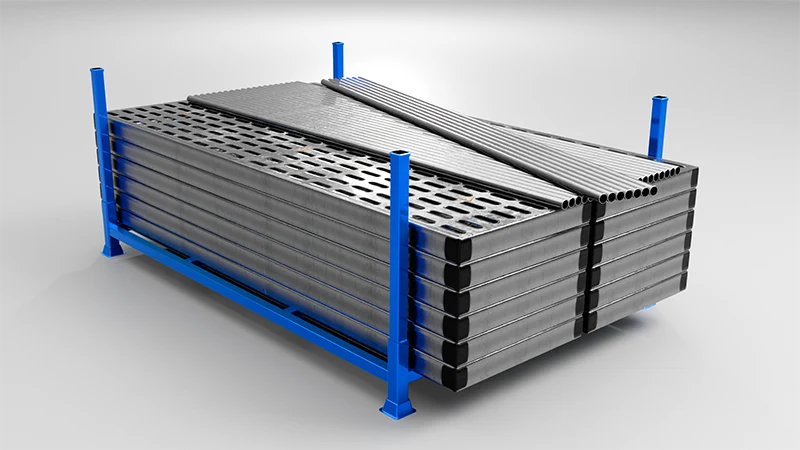
Many warehouses start with the same assumption: if storage space is limited, the answer must be more steel. In practice, the first decision is generally simpler. Do you need a layout that can change, a layout that stays fixed, or a layout that can do both to some extent? Floor storage, fixed racks, and stackable column pallets solve different problems, and they fail in different ways. That is why Derack should be considered a flexible storage unit, not a universal replacement for every other system.
Floor storage: lowest initial cost, lowest control
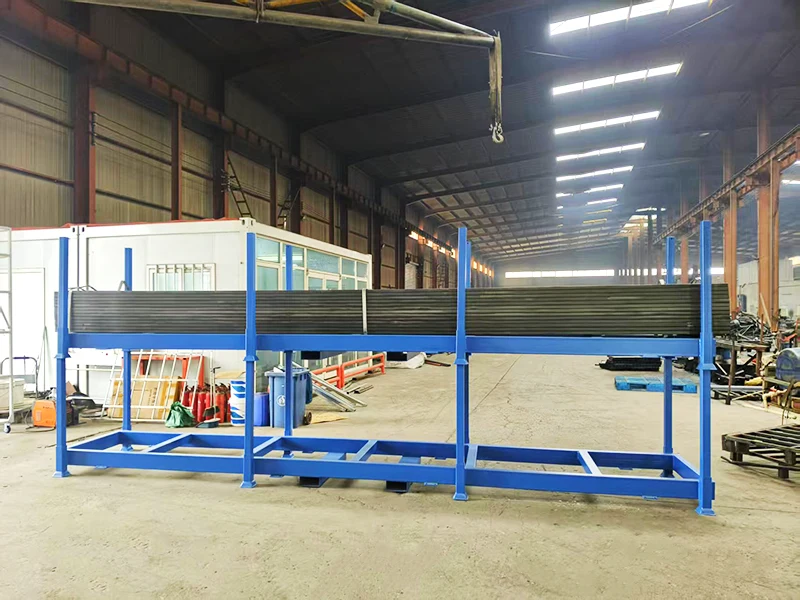
Floor storage makes sense when the load is robust, the quantity is predictable, and the team can accept a lower level of selectivity. It is generally the cheapest way to start because there is no permanent structure to install and no system to adjust. That said, the trade-off is obvious: the floor becomes the structure, so access, visibility, and protection are all limited by how carefully the team manages the stack.
For a small operation or an overflow area, it may be sufficient. But once the warehouse has more SKUs, more daily movement, or more pressure on damage control, floor storage starts to feel like a temporary answer rather than a plan.
Fixed racks: best when the layout is stable
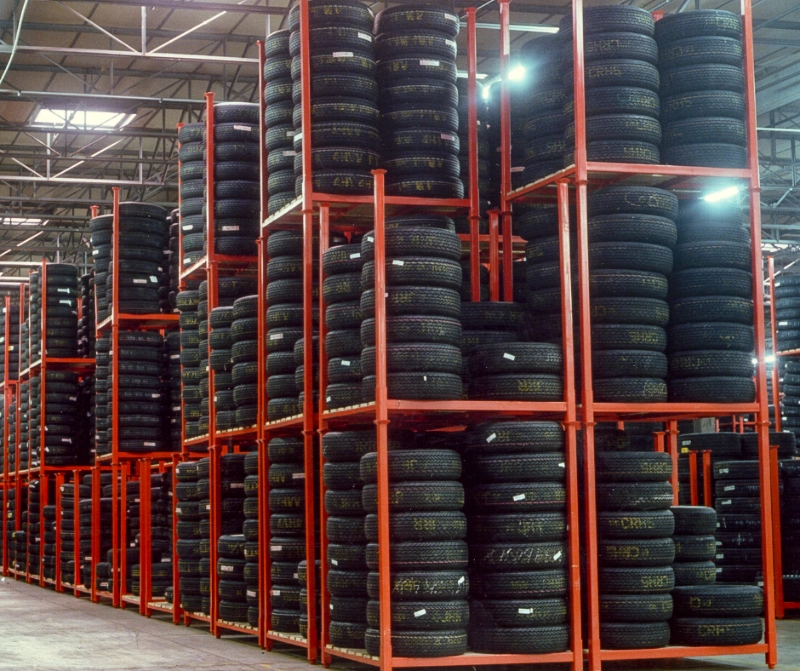
Fixed racks are generally the right answer when the warehouse has settled into a repeatable pattern. If pick faces are known, aisle widths are fixed, and storage density must be planned in advance, a permanent rack system brings a consistency that floor storage cannot match. It makes vertical space usable, improves access discipline, and helps the team keep the layout predictable.
The downside is just as clear: once the footprint is committed, changing it takes more time and more budget. A fixed rack is strong as a building block, but weak when it has to be moved. That is why it works best when the operation is already mature enough to trust the layout.
Stackable column pallets: the middle ground Derack is designed to fill
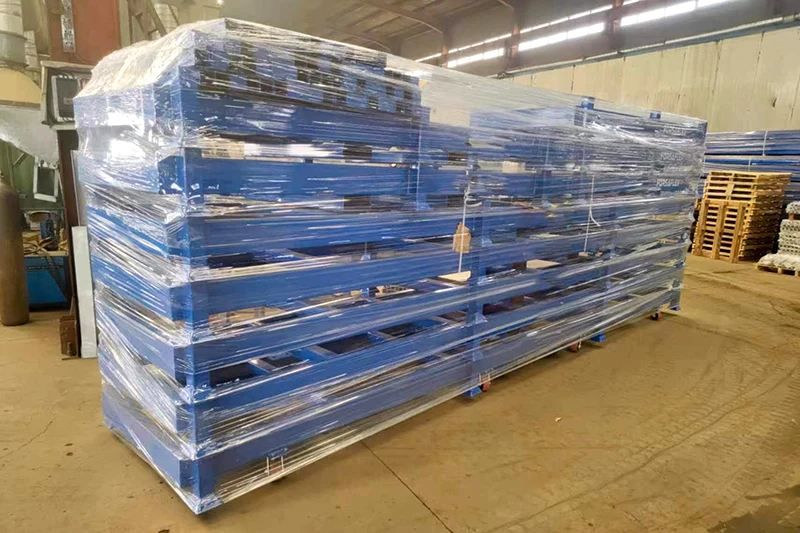
Derack is useful when the warehouse needs a storage unit that can be moved, stacked, and returned in a compact state. This makes it practical for seasonal peaks, surplus inventory, line-side buffers, and temporary projects that do not justify a fully permanent rack layout. It also helps when the site wants more order than floor storage but does not want to commit to a fixed frame everywhere.
Compared with floor storage, Derack gives you a defined unit and cleaner handling. Compared with fixed racks, it preserves mobility and reconfigurability. That is the real value: not maximum density, but better control with less commitment.
The nested view matters because empty equipment is part of the cost. A stackable column pallet that can be returned with a smaller footprint is easier to manage than a permanently installed frame when storage demand is not constant.
When Derack should not be the first choice
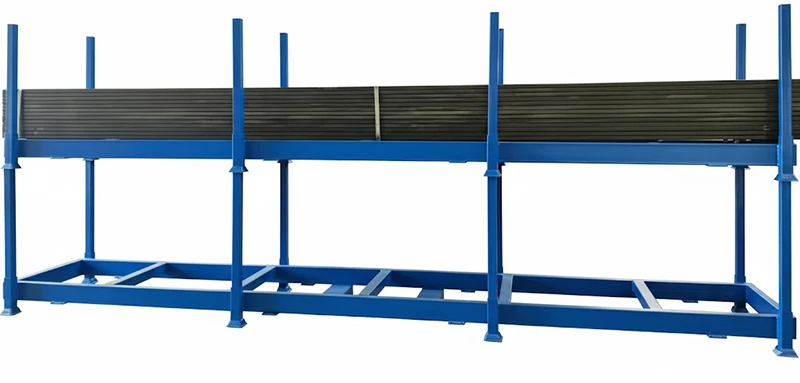
Derack is not the right answer when the load is unstable, heavy on top, or frequently off-center. It is also not a good substitute for a high-density, highly selective rack system when you need constant access to many SKUs in a very controlled aisle plan. If your warehouse floor is uneven or housekeeping is poor, the benefits of stackable storage quickly diminish.
This is the main weakness to keep in mind: Derack is flexible, but it is not inherently as rigid as a fixed rack. If the operation needs the maximum possible permanence or the maximum possible selectivity, a different system is generally better.
Cost vs. flexibility: the practical trade-off
The easiest way to compare the three options is to look at what you are buying:
- Floor storage buys the lowest initial cost, but also the least control.
- Fixed racks buy the strongest commitment to order, but reduce layout freedom.
- Derack buys a middle position: more structure than floor storage, more flexibility than fixed racks.
This intermediate position is often the most useful during warehouse planning. If your operation is still evolving, a stackable column pallet can help you demonstrate the workflow before committing to a permanent build. If the layout is already defined, a fixed rack might be the best investment. If the need is temporary or simple, floor storage may be sufficient.
Una regola semplice per scegliere
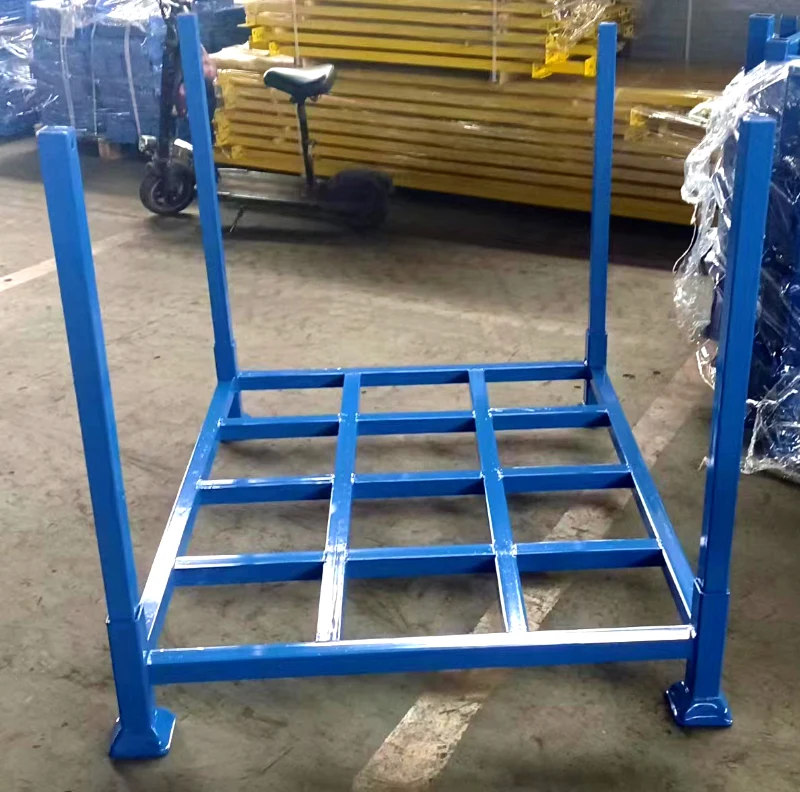
Prima di acquistare qualsiasi cosa, fai tre domande: Il layout rimarrà fisso? Il carico necessita di una forte selettività verticale? E hai bisogno che l'unità di stoccaggio si muova o si incastri quando il lavoro cambia? Se la risposta alla terza domanda è sì, Derack merita un posto nella lista ristretta. Se la risposta alle prime due è anche sì, allora un rack fisso potrebbe essere la soluzione più adatta.
In other words, choose first based on operational behavior and secondarily based on hardware. This is the fastest way to avoid over-purchasing a system that looks efficient on paper but becomes inconvenient in daily use.
If you are comparing product paths for a new layout, refer to the three corresponding detail pages below: