
Warehouse layout selection
If your warehouse is still in planning, the right answer is not always "install racks." The real question is how often the space changes, how stable the loads are, and whether you need permanent density or flexible unit storage. The rack sits in the middle: more orderly than floor stacking, more movable than fixed racks, and less permanent than a built-in system.
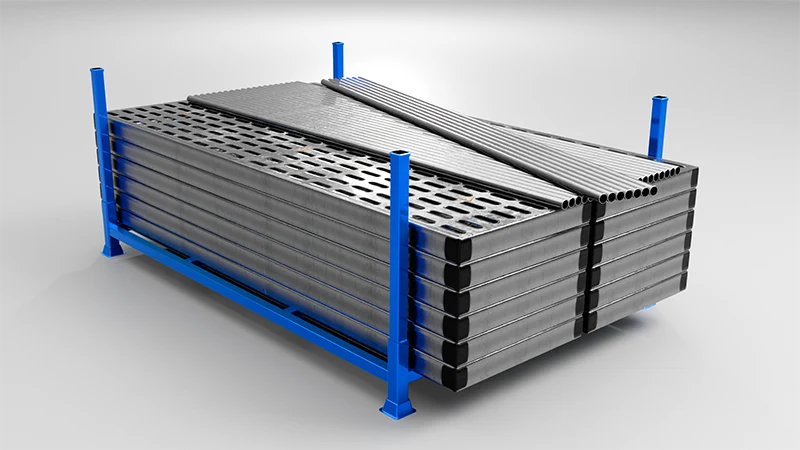
Many warehouses start with the same assumption: when storage is tight, the answer must be more steel. In practice, the first decision is usually simpler. Do you need a layout that can change, a layout that stays fixed, or a layout that can do both to some degree? Floor stacking, fixed racks, and stackable steel pallets solve different problems and fail in different ways. That is why Derack should be seen as a flexible storage unit, not as a universal replacement for every other system.
Floor stacking: lowest initial cost, lowest control
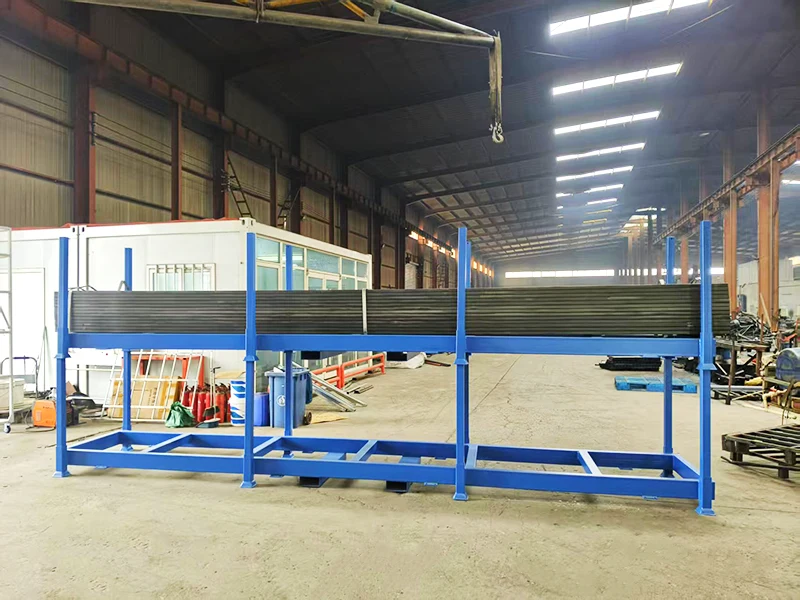
Floor stacking makes sense when the load is robust, the quantity is predictable, and the team can accept a lower level of selectivity. It is usually the cheapest way to start because no permanent racking needs to be installed and no system needs to be set up. However, the trade-off is obvious: the floor becomes the structure, so access, visibility, and protection all depend on how carefully the team handles the stack.
For a small operation or an overflow zone, that may be enough. But once the warehouse has more SKUs, more daily turnover, or more pressure on damage control, floor stacking begins to look like a temporary answer rather than a plan.
Fixed racks: best when the layout is stable
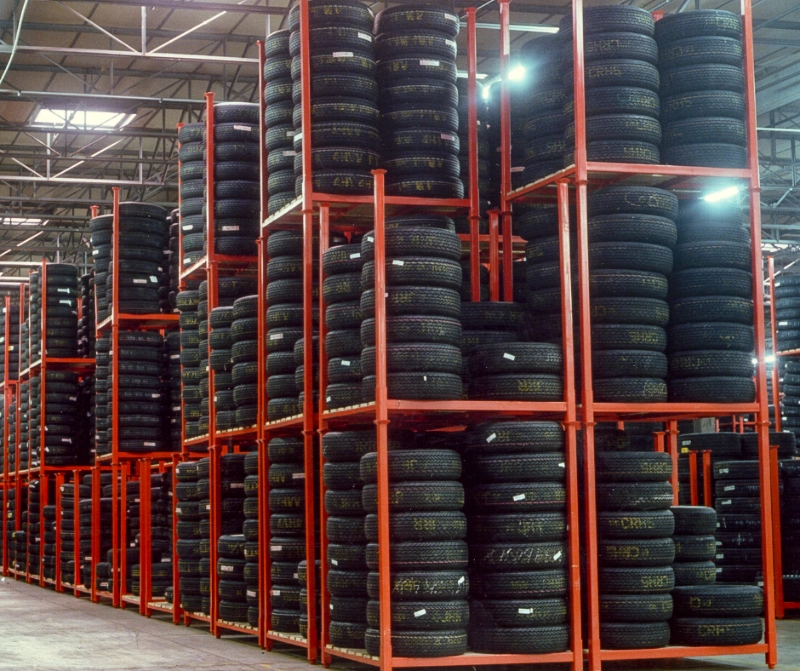
Fixed racks are usually the right answer when the warehouse has settled into a repeatable pattern. When picking areas are known, aisle widths are fixed, and storage density must be planned in advance, a permanent racking system brings a consistency that floor stacking cannot achieve. It makes vertical space usable, improves access discipline, and helps the team keep the layout predictable.
The downside is just as clear: once the footprint is set, it takes more time and budget to change it. A fixed rack is strong as a building block but weak when it needs to be moved. That is why it works best when the operation is already mature enough to trust the layout.
Stackable steel pallets: the middle ground that Derack is meant to fill
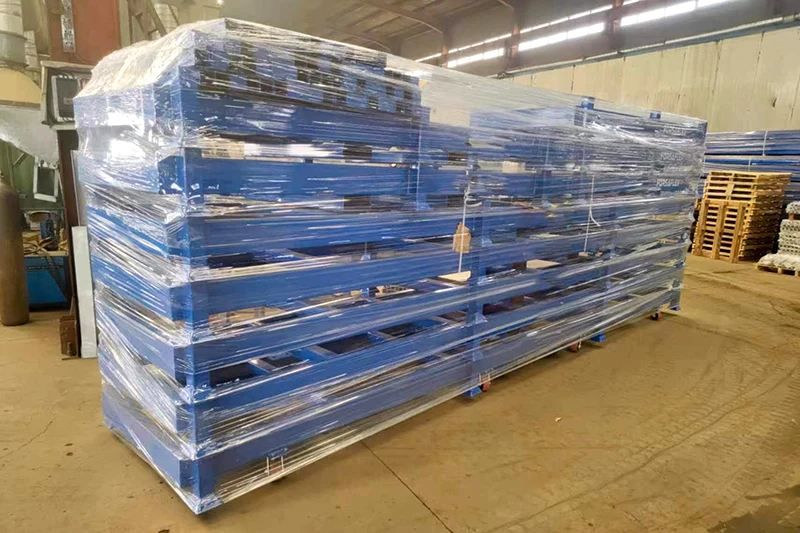
The rack is useful when the warehouse needs a storage unit that can be moved, stacked, and returned in a compact state. This makes it practical for seasonal peaks, overflow stock, line buffering, and temporary projects that do not justify a fully permanent rack layout. It also helps when the location wants more order than floor stacking but does not want to commit to a fixed rack everywhere.
Compared to floor stacking, Derack offers a defined unit and cleaner handling. Compared to fixed racks, it preserves mobility and reconfigurability. That is the real value: not maximum density, but better control with less commitment.
The stacked view is important because empty equipment is part of the cost. A stackable pallet that can return with a tighter footprint is easier to handle than a permanently installed rack when storage demand is not constant.
When Derack should not be the first choice
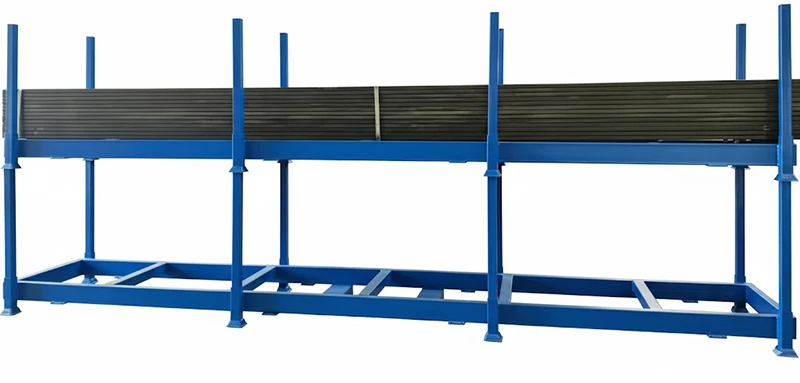
Derack is not the right answer when the load is unstable, top-heavy, or frequently off-center. It is also not a good substitute for a truly dense, highly selective rack system if you need constant access to many SKUs in a very controlled aisle plan. If your warehouse floor is uneven or order discipline is weak, the benefits of stackable storage quickly shrink.
That is the main weakness to keep in mind: Derack is flexible, but inherently not as stable as a fixed rack. If the operation needs the strongest possible stability or the tightest possible selectivity, another system is usually better.
Cost vs. flexibility: the practical trade-off
The easiest way to compare the three options is to look at what you get:
- Bodenstapelung offers the lowest initial cost, but also the least control.
- Fixed racks offer the strongest commitment to order, but limit layout freedom.
- Derack offers a middle position: more structure than floor stacking, more flexibility than fixed racks. </uln
This middle position is often the most useful in warehouse planning. If your operation is still evolving, a stackable pallet can help you prove the workflow before committing to a permanent expansion. If the layout is already set, a fixed rack may be the better investment. If the need is temporary or simple, floor stacking may be enough.
Eine einfache Regel für die Auswahl
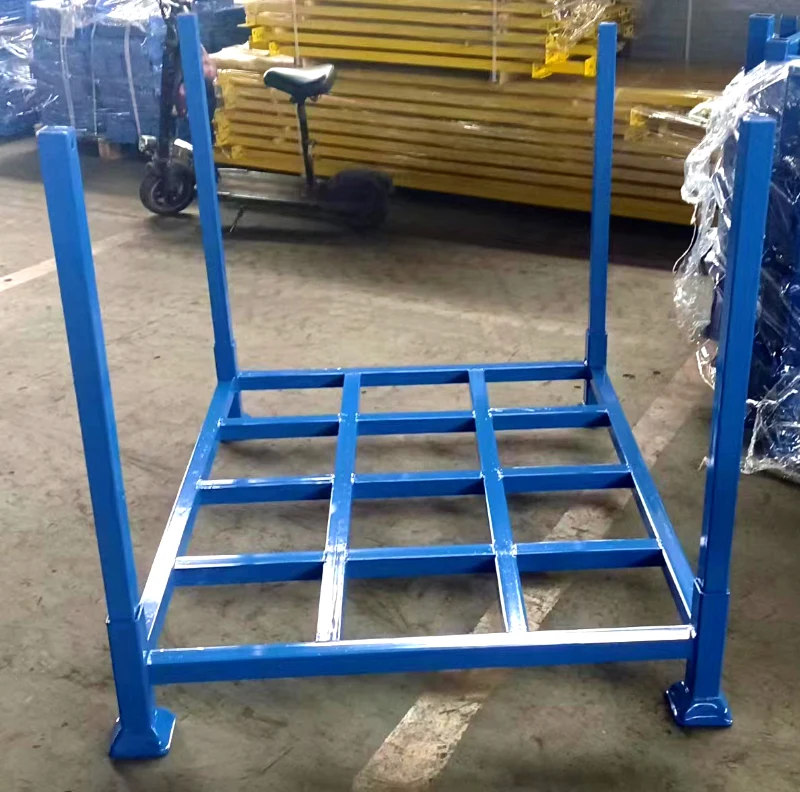
Before you buy anything, ask yourself three questions: Will the layout remain fixed? Does the load require strong vertical selectivity? And will you need to move or nest the storage unit when the task changes? If the answer to the third question is yes, the rack deserves a place on the shortlist. If the answer to the first two questions is also yes, a fixed rack may be the better choice.
Anders gesagt: Wählen Sie zuerst nach dem Betriebsverhalten und zweitens nach der Hardware. Das ist der schnellste Weg, um zu vermeiden, ein System zu überkaufen, das auf dem Papier effizient aussieht, aber im täglichen Gebrauch unpraktisch wird.
Wenn Sie Produktwege für ein neues Layout vergleichen, überprüfen Sie die drei passenden Detailseiten unten: