
How Mybox Reduces Empty Return Space After Folding
For companies managing a loop of returnable collapsible containers, the real cost is rarely just the purchase price. The true bill arrives when empty units come back from the customer: they still take up yard space, truck space, and warehouse handling time. Mybox was designed for that problem. In the reference folded configuration, the container profile drops to approximately 330 mm, which is why a reusable loop can recover a large portion of the return volume instead of shipping full-height cages back home.
This is where the usual claim of 60–80% space reductioncomes from. It is not a fixed promise for every SKU; it is a practical range when comparing the folded state with the assembled state of the same container, using the same loading method. The exact result depends on body length, lid option, wheel package, and whether units are returned as flat packs, nested stacks, or strapped palletized groups.
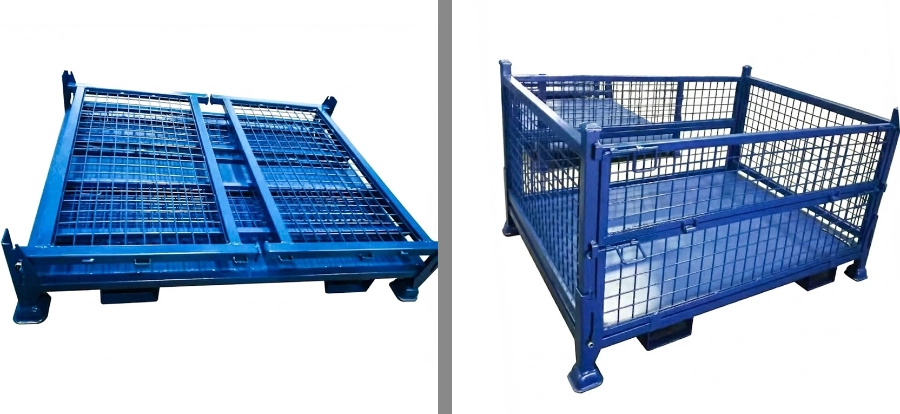
How much space does Mybox save after folding?
In a rigid wire mesh container, the side walls remain vertical throughout the return trip to your site. This means the empty return leg consumes almost the same cubic space as a loaded outbound leg. Mybox changes that logic. When the panels fold down, the container returns home with a much flatter profile, so the return load becomes a volume problem you can actually control.
For many loop packaging programs, this means the folded unit can use only 20–40% of the assembled unit's volume. In other words, the space savings are commonly 60–80% compared to a non-collapsible cage. If your current system uses a fixed wire basket, pallet box, or stillage that cannot be folded, the return transport penalty is usually paid every single cycle.
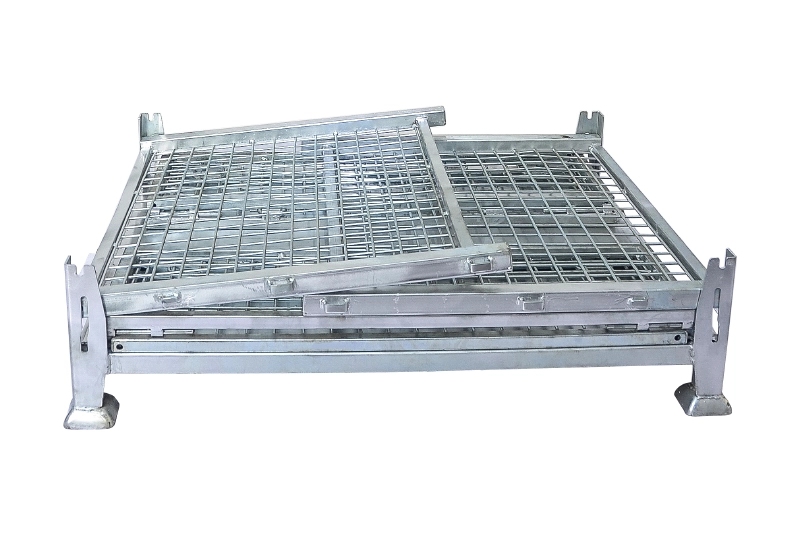
Why a non-collapsible cage wastes more than just storage space
The issue is not only floor space. A full-height return cage also consumes trailer lane depth, reduces the number of units per shipment, and creates more yard downtime because empty stock still has to be counted, moved, and staged. If you serve a customer loop, a production shuttle, or a distributor return route, that wasted volume becomes a recurring operating cost.
Mybox addresses this by combining a folding frame with a reusable steel structure that can be returned, stored, and reused instead of discarded. For internal loops, this means less warehouse clutter. For outdoor or mixed-weather use, the finish can be specified as hot-dip galvanized or powder coated depending on corrosion exposure and brand appearance requirements. If you need to move boxes with pallet jacks or carts, the optional wheel package makes empty return movement even easier.
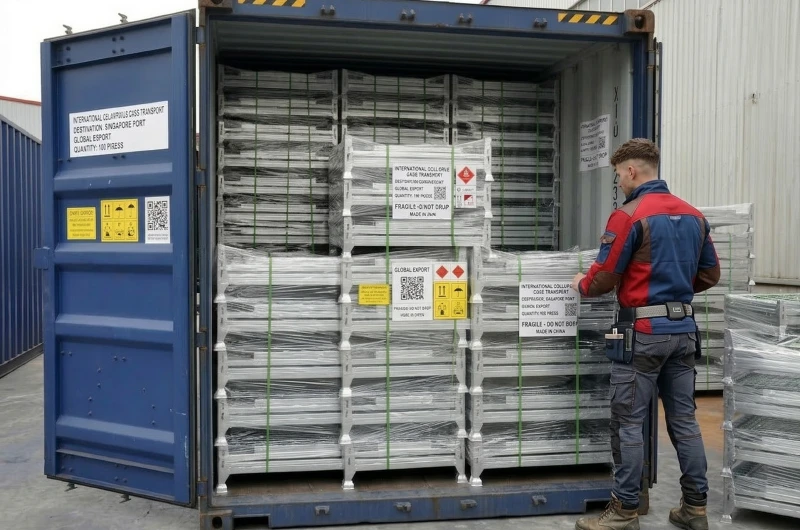
What the 40HQ / 192 units example really means
The reference load case for this product is simple: when the container is in the folded state and the loading pattern is planned correctly, a 40HQ can hold 192 unitsThis is a measured example, not a general guarantee. It should be read together with the actual external dimensions, stacking method, securing strategy, and the door opening height of your project.
Use the 192-unit figure as a planning benchmark when comparing return transport options. If your current rigid container can only be shipped back with a partial load, the backhaul cost per unit is usually much worse. Conversely, a flat folded return stack can often make a full container or truckload viable again, especially for circulation between factory, warehouse, and regional customer sites.
Where Mybox fits—and where it does not
- Suitable for: closed-loop circulation, component returns, outsourced return packaging, factory-to-warehouse shuttles, and seasonal reverse logistics.
- Suitable for: programs that need stackable, collapsible return packaging without losing a welded steel frame.
- Suitable for: outdoor or mixed-environment loops when you specify galvanized or powder-coated protection.
- Not ideal: one-way packaging, or any job requiring full sealing and tamper protection unless you choose a lidded variant or an inner liner.
- Not ideal: extremely small loose parts without a divider, liner, or cardboard insert.
In short, Mybox works when the empty return leg matters. If your current problem is not just storage but also the cost of bringing empties home, the collapsible form gives you a cleaner answer than a rigid pallet cage or a fixed stillage.
FAQ
Is the 60–80% savings fixed?
No. It is a reference range based on the folded versus assembled state of the same product family. Your exact result depends on container size, folded profile, presence of a lid, and the loading plan used on the return leg.
Should I choose Mybox for every return loop?
No. If your use case requires permanent sealing, one-way packaging, or containment of small loose parts without a liner, you should first specify the right variant. If the real goal is reusable circulation, empty return reduction, and easier yard handling, then Mybox is the right starting point.
Se stai pianificando un progetto di loop di ritorno, condividi l'altezza target piegata, la rotta di ritorno vuoto e lo standard di carico. Possiamo aiutarti a mappare la configurazione Mybox giusta e confrontarla con la tua gabbia rigida o stillage attuale.
Serve una Soluzione di Stoccaggio Personalizzata?
Parli direttamente con i nostri ingegneri tecnici. Offriamo progetti strutturali gratuiti, valutazioni di cataloghi per carichi pesanti e preventivi B2B rapidi.
Richiedi un Preventivo Ora →