
How many Mytrack folding cages fit in a 40-foot high-cube container? The only safe answer is: it depends on the project configuration. Two real project records show why a single container capacity figure can mislead an export buyer. Project 14922 was recorded at 32 cages per 40-foot high-cube container. Project 14652 was recorded at 64 cages per 40-foot high-cube container. These are not two claims about the same standard loading capacity. They are distinct configuration records.
If you are planning a shipment, use the number only after the cage dimensions, folded condition, stacking arrangement, packaging, and securing method have been examined together. Folding cages can reduce return volume, but the fact that they are "foldable" does not eliminate the need for a project-specific loading plan.
Why the two project records show 32 and 64
Record 14922 comes from a cage configuration for transporting motorcycles. Its recorded external dimensions were 2300 × 2470 × 1270 mm, with an internal loading area of 2116 × 2410 mm. Each cage weighed 300 kg, had a 100 mm forklift entry, and could be reduced to 355 mm when folded. The uprights could be removed and folded inward. The project record specifies a stack of eight cages at 2560 mm and a loading result of 32 cages in a 40-foot high-cube container.
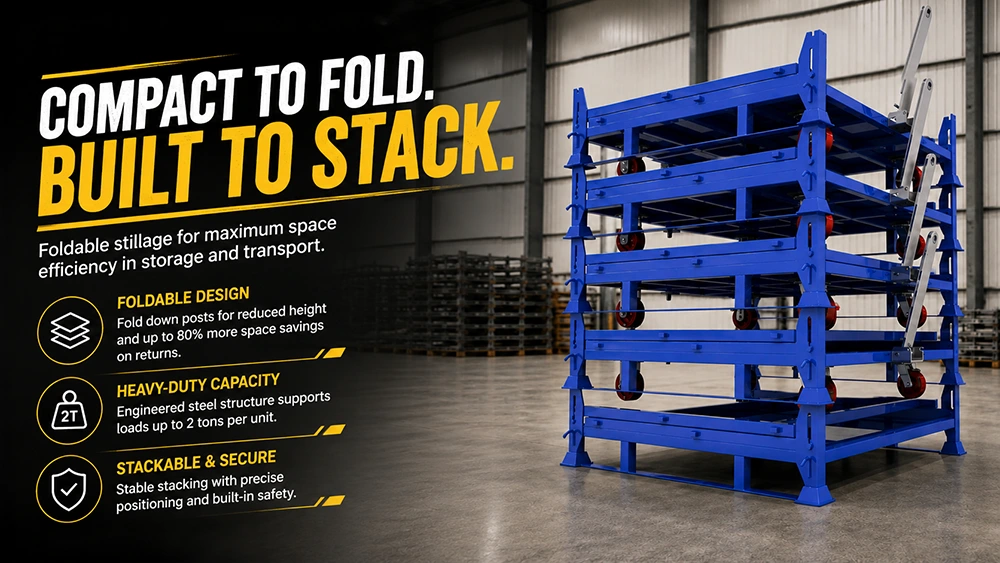
This configuration is designed around the space and handling needs of motorcycle transport. The vertical geometry, usable internal area, and forklift access are part of the shipping specification, not details that can be separated from the container count. A different load, frame height, upright arrangement, or protective packaging can produce a different result.
Why record 14652 reaches 64
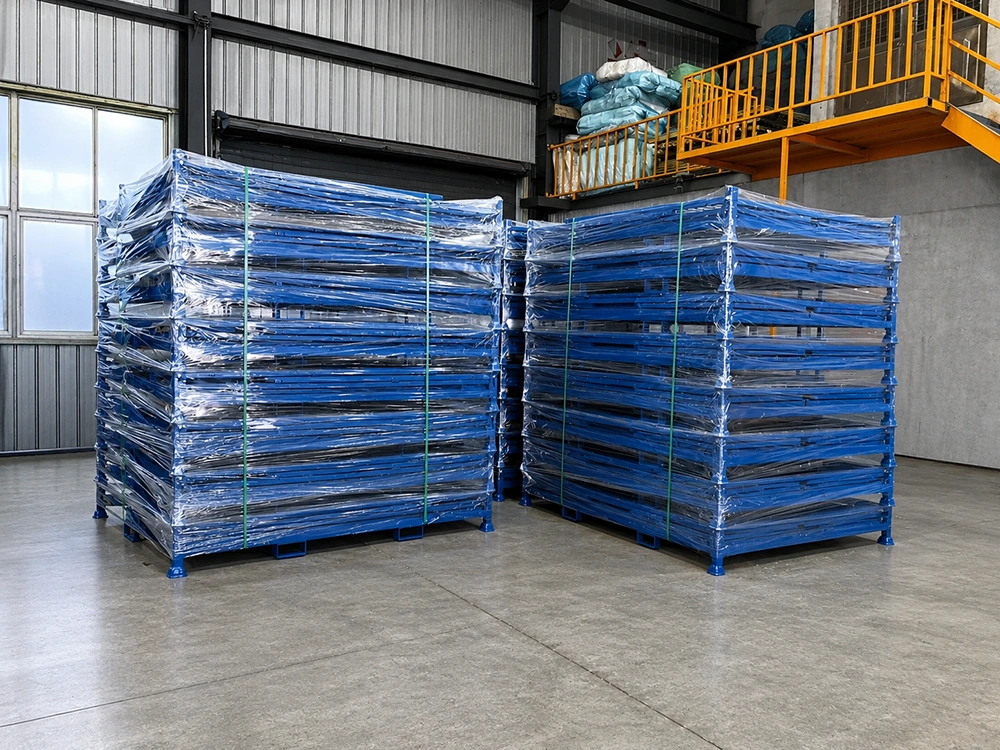
Record 14652 describes a different folding cage project. Its documented empty arrangement is eight folded cages in a stack, with a recorded loading result of 64 cages in a 40-foot high-cube container. The record also identifies packaging options: stretch film with strapping, or wooden crates at a price of 90 RMB per square meter. These details are important because the space occupied by packaging and the clearance needed for loading can change the final arrangement.
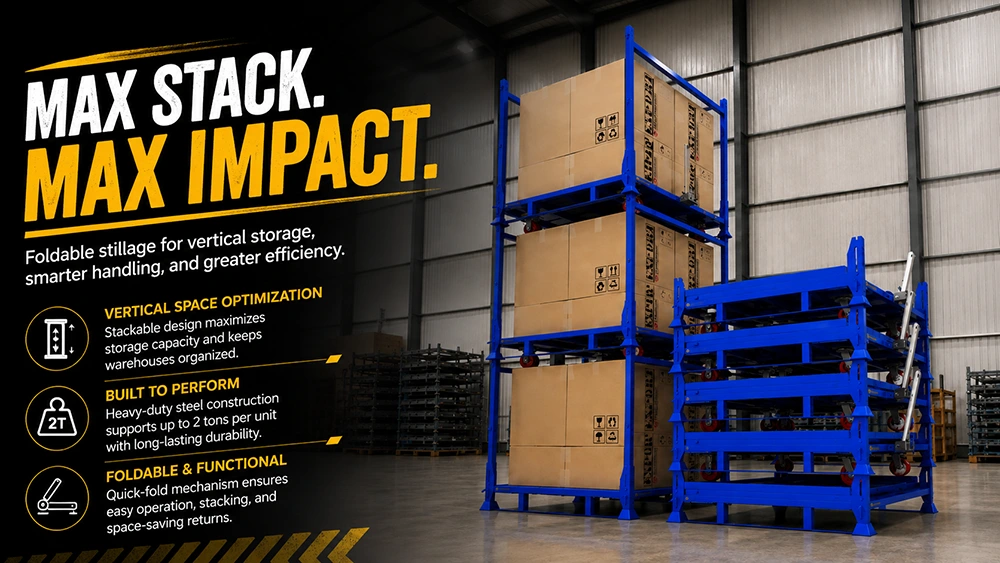
The figure of 64 cages therefore belongs to the folded stack and packaging method of that project. It must not be combined with record 14922 for motorcycle cages, averaged into a "typical" capacity, or used as a promise for an unverified project. The difference is not a contradiction. It is evidence that the loaded quantity follows the physical configuration.
How to plan a loading table for a 40-foot high-cube
Start from the exact product configuration. Confirm the external and internal dimensions, the folded height, whether the uprights are removed or folded inward, and the number of units in each stack. Then define the packaging method before counting the available positions. Film and strapping may occupy less volume than a wooden crate, while a crate may offer different protection and securing methods. Do not assume that the packaging tolerance is zero.
Then verify the handling path. The forklift entry, container door clearance, stack stability, and access for anchoring must work at the same time. For applications such as 14922, the 100 mm fork entry and the 355 mm folded height are useful planning data, but they do not replace a loading drawing. For a different project, the confirmed folded stack height and the packaging footprint take priority.
Finally, issue a project-specific loading table that shows the units per stack, stack height, packaging tolerance, loading orientation, and total units. If the configuration changes, the table must be recalculated. A standard flat steel pallet or non-folding racking may prove unsuitable when the load requires dedicated positioning, vertical storage, or compact empty returns.
Where Mytrack is suitable — and where it is not
- Use folding cages when empty return volume, vertical storage, and repeated mechanical handling are part of the logistics plan.
- Use a motorcycle transport configuration only when the load dimensions, support points, and anchoring requirements have been confirmed for the motorcycle load.
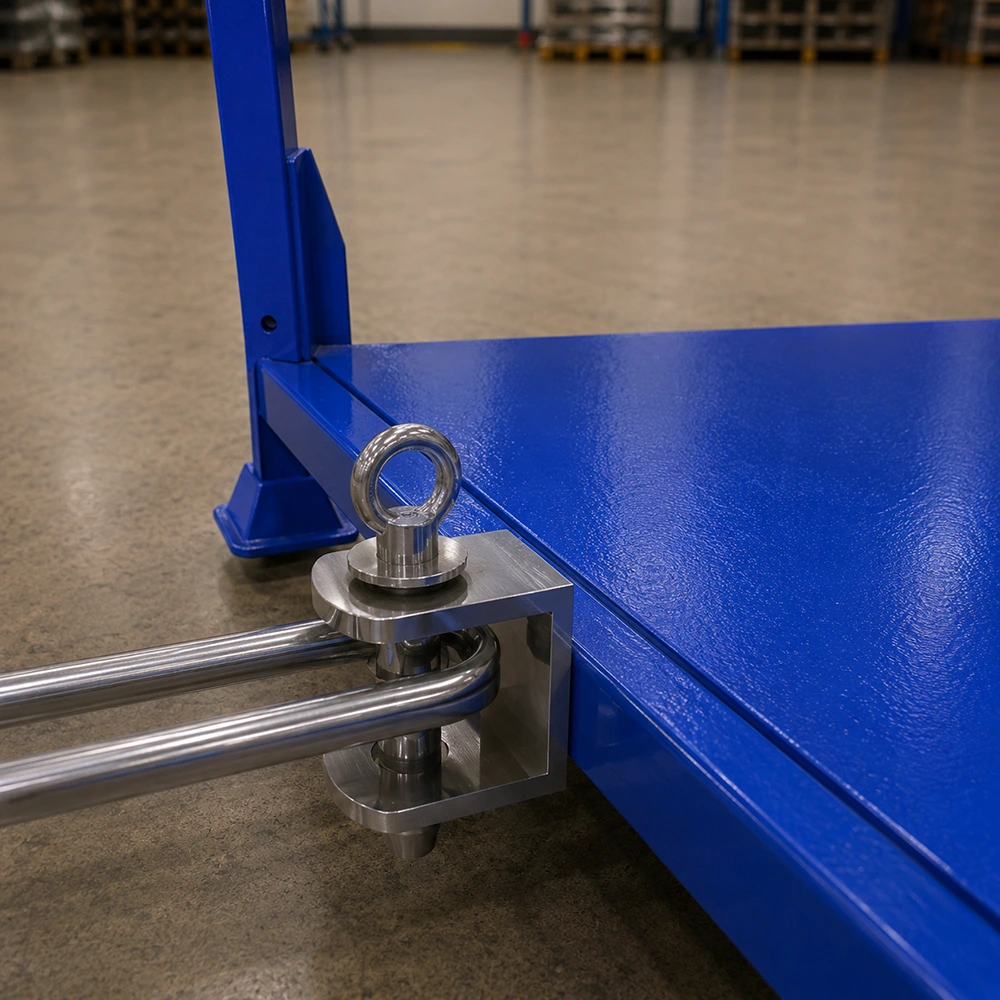
- Consider hinged guides, removable uprights, or other retention details only when they are included in the approved configuration; a product image does not replace a technical drawing.
- Do not use a single published container loading figure as valid for rolling doors, motorcycles, and general cargo. Irregular loads, protective packaging, and access requirements each require their own loading verification.
FAQ: Mytrack container loading quantity
How many Mytrack cages fit in a 40-foot High-Cube container?
There is no universal number. The verified project data available here are 32 units for project 14922 and 64 units for project 14652. Each figure belongs to its own configuration and its own packaging plan.
What should I send before requesting a loading plan?
Inviare le dimensioni esterne e interne richieste, l'altezza piegata, la disposizione dei montanti, il tipo di carico, la quantità impilata, la scelta di imballo e il metodo di ancoraggio. Se il carico è un motociclo o un altro carico irregolare, includere i requisiti di appoggio e di ancoraggio. Questi dati consentono di ricostruire la tabella di carico anziché copiarla da un progetto non correlato.
Il numero di pezzi per container non torna? Inviaci le dimensioni della tua gabbia e la configurazione di piegatura. Steel Pallet può convertirle in una tabella di carico specifica per il tuo progetto.
Richiedi una verifica del carico per il tuo progettoServe una Soluzione di Stoccaggio Personalizzata?
Parli direttamente con i nostri ingegneri tecnici. Offriamo progetti strutturali gratuiti, valutazioni di cataloghi per carichi pesanti e preventivi B2B rapidi.
Richiedi un Preventivo Ora →