
BLOG-07 · Outdoor Usage Limits
Scaffalature impilabili Nestainer: Limiti di ruggine per siti esterni e umidi
If a rack is exposed to rain, salt air, or a wet loading yard, rust control is no longer a vague promise. It becomes a condition of use, a matter of coating, and a maintenance routine.
Many buyers look at a steel rack and assume the problem is only the outer surface. In practice, the first point of failure is often simpler: water pooling where it shouldn't. For a Nestainer stackable rack, the weak point is not the idea of steel itself. The weak point is prolonged exposure to moisture, especially when rainwater remains inside a tube or around a joint after use.
That's why rust control should be discussed as part of the operating limit. If the rack will remain indoors, the conversation is simple. If it will be parked outdoors, used near a dock, or stored in a humid coastal yard, then the coating, storage habits, and inspection schedule all matter. A stackable rack is not a temporary shelter from rain.
What rain does first: the inside of the tube, not the outer paint
When a welded steel frame is left in the rain, the outer surface is not the only point that matters. Open ends, joints, connector holes, and low points can collect water. Once water stagnates inside the tube, rust starts from the inner wall and may not be visible until the damage is already present. That's also when users start noticing rust-colored water, stains, or rough coupling between parts.
So the rule of thumb is simple: don't let the rack become a long-term water container. After outdoor use, it should be dried, covered, or moved under a roof. If your operation keeps a rack in the yard by default, then you're not asking for a normal storage rack. You're asking for a steel rack that must survive a wet cycle, and that changes the specification discussion.
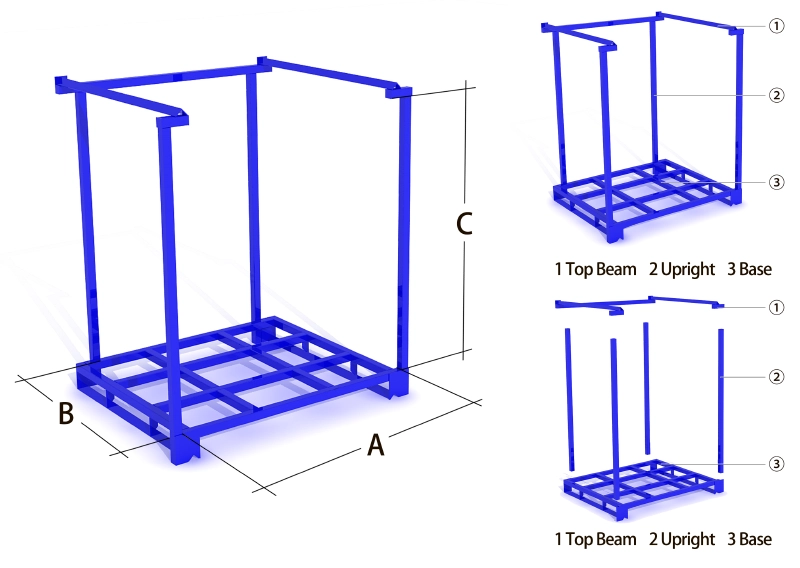
The structural view matters here because it reminds buyers that a rack is made of beams, uprights, and a base, not a single sealed block of metal. Every connected part is a point where moisture management matters. That's why outdoor use should be planned in advance, not discovered after the first rainy season.
For humid or coastal sites, specify the coating before purchase
In high-humidity warehouses, seaside yards, or mixed indoor/outdoor sites, the finish is part of the job definition. A corrosion-resistant coating helps, but it doesn't make the product immune to water, salt air, or neglect. We don't promise permanent rust protection, and buyers shouldn't base a purchase decision on that idea.
Instead, confirm the coating requirement before ordering. Decide whether the rack will be used under a roof, in short outdoor transit cycles, or in repeated open-air exposure. Then match the finish to that service cycle. If the site will regularly see wet floors, condensation, or rain splash, the buyer should treat the surface treatment as a mandatory item, not a welcome option.
This is also where the Nestainer stackable rack is often chosen for practical reasons. It can support palletized loads, be moved with a forklift, and be nested or stacked when the site is reconfigured. But the handling advantage doesn't cancel out the rust issue. The method of use and the finish specification must still agree with the environment.
Welds and connectors still require inspection
Even when the rack is coated, the owner still has a maintenance duty. Welds, connector hooks, side-bar joints, and stacking interfaces should be checked on a schedule. If rust starts at the weld toe or on a connector slot, the rack can still look usable at first glance while the coupling becomes rougher or weaker over time.
This matters for stackable and nestable systems because geometry is what makes the product useful. When connection points stay clean and aligned, the rack stacks and nests as intended. When corrosion builds up, the coupling changes. The result is not just a visual issue; it can also affect handling smoothness, contact surfaces, and operator confidence when lifting or stacking.
Use the detailed view below as a reminder of what should be checked in service: the contact point, the hook, the slot, and the weld zone. These are ordinary wear points, so they deserve ordinary inspection. This product is not maintenance-free.
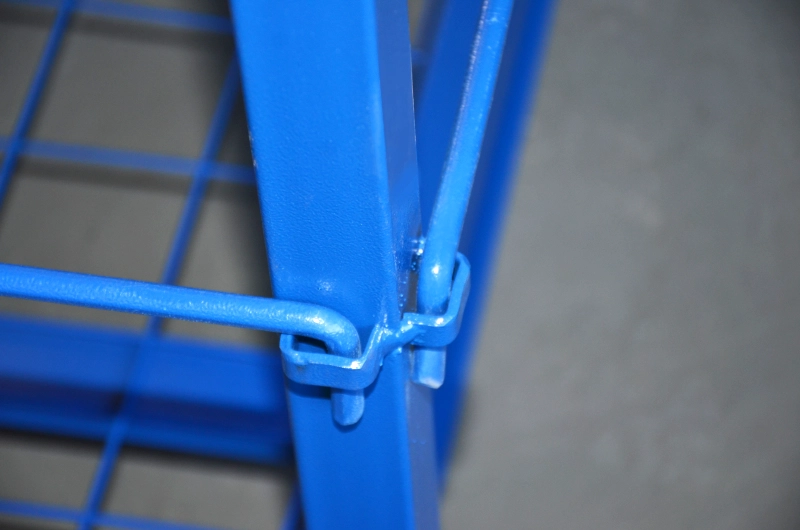
For purchasing teams, this means the real question is not "Will it rust?" Every steel product can rust under the wrong conditions. The better question is: "What is the expected exposure, what coating will we specify, and how will we inspect welds and connectors after use?"
Where this rack fits and where it doesn't
- Fits well: covered warehouses, indoor storage areas, and short outdoor transit areas where the rack is not left in the rain for long periods.
- Fits with conditions: humid plants or coastal yards, if the coating specification, drying routine, and inspection plan are confirmed before purchase.
- Does not fit well: stoccaggio all'aperto a lungo termine, esposizione ripetuta alla pioggia senza copertura o ambienti con spruzzi di sale senza un piano di trattamento superficiale.
- Regola di proprietà: la protezione dalla ruggine deriva dal metodo di utilizzo più la conferma del rivestimento. Non è una promessa permanente di nessuna manutenzione.
FAQ
Una scaffalatura impilabile Nestainer può rimanere all'aperto tutto l'anno?
Solo se tratti l'esposizione all'aperto come una condizione operativa definita. Ciò significa che il rivestimento, la copertura, la routine di asciugatura e il ciclo di ispezione fanno tutti parte del piano. Se il tuo obiettivo è lasciare la scaffalatura sotto la pioggia e ignorarla, questa non è un'ipotesi di utilizzo valida.
Cosa dovrei confermare prima di ordinare per uso umido o costiero?
Conferma la finitura anticorrosione, il ciclo previsto di bagnato/asciutto, se la scaffalatura sarà conservata sotto tetto e con quale frequenza verranno controllati saldature e punti di connessione. Non fare affidamento su una promessa permanente di assenza di ruggine. Specifica prima l'ambiente, poi ordina la finitura per abbinarlo.
Serve una Soluzione di Stoccaggio Personalizzata?
Parli direttamente con i nostri ingegneri tecnici. Offriamo progetti strutturali gratuiti, valutazioni di cataloghi per carichi pesanti e preventivi B2B rapidi.
Richiedi un Preventivo Ora →