
Sebox insert selection guide: mesh or steel sheet?
When the outer frame stays the same, the insert decides whether the load remains visible or fully contained. For Sebox users, this choice is not aesthetic. It changes how quickly operators can identify parts, how loose items are retained, and how much support the load receives during handling and stacking.
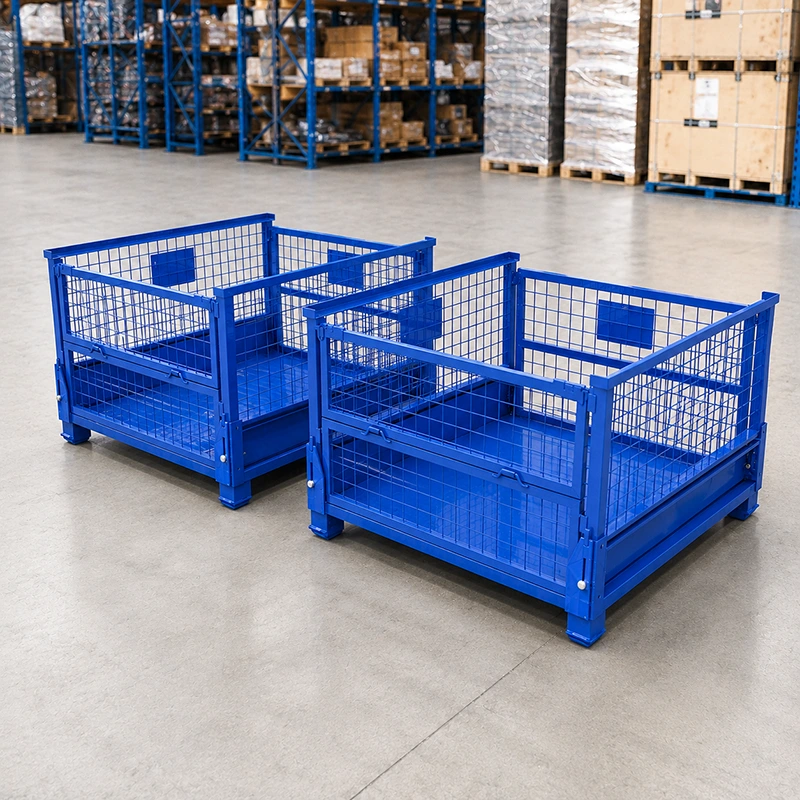
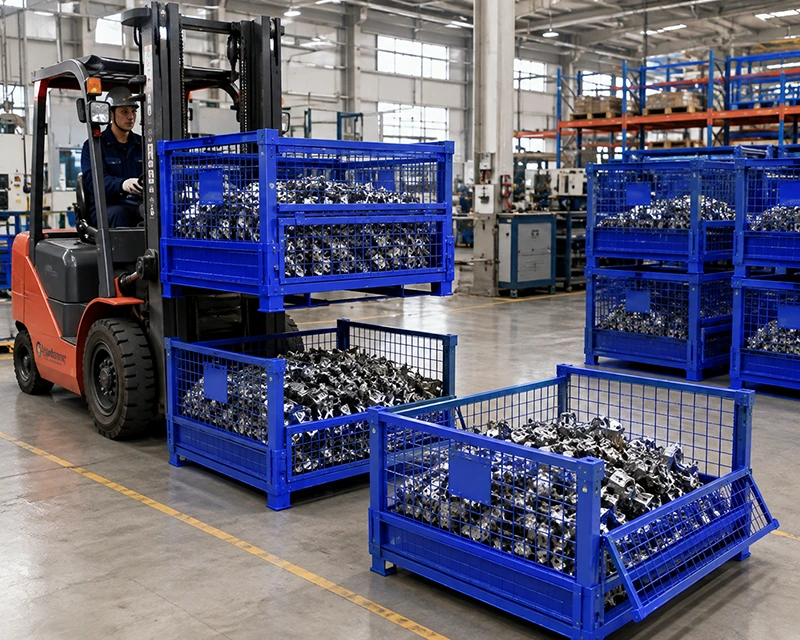
If your team needs to confirm the right SKU at a glance, the mesh insert is usually the first starting point. It keeps the load visible, so counting, scanning, and visual checks are faster. This matters when the batch is mixed, orders change frequently, or the warehouse wants to reduce opening steps.
Mesh also fits the engineering logic of parts heavy enough to stay inside the cage but that need air, visibility, and quick inspection. In practice, this is the best choice when you want the operator to see what is inside without opening the unit. If parts are very small, however, mesh must be handled with discipline: check the opening size against the part size and add an inner liner or tray if the SKU can pass through the gaps. Mesh is a visibility-driven choice, not a universal anti-loss solution.
When steel sheet is the best choice
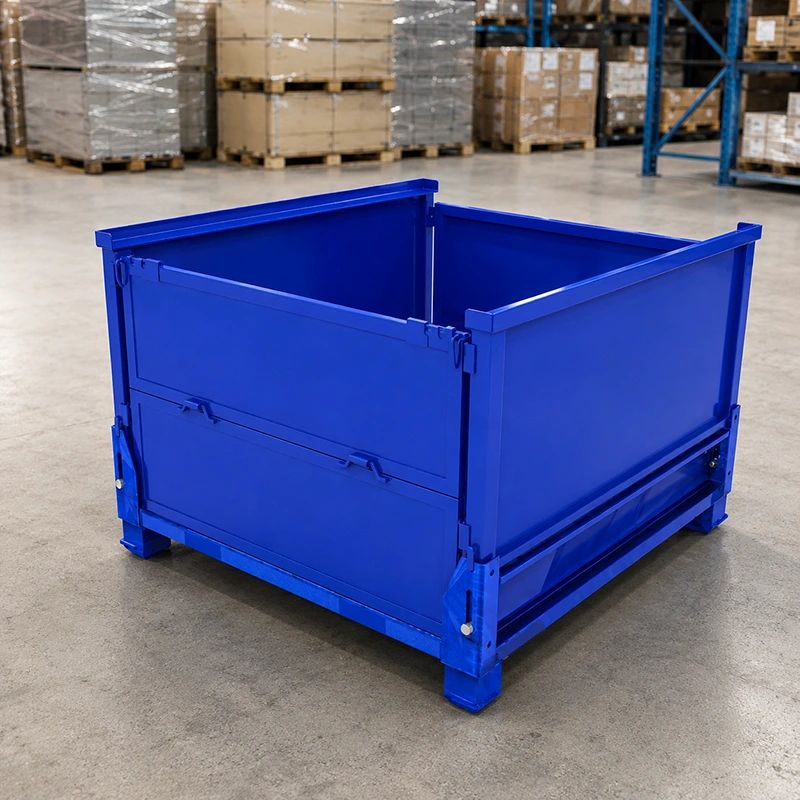
Steel sheet inserts solve the opposite problem. They reduce lateral exposure, improve containment, and give the load a more rigid boundary when parts are dense, irregular, or prone to shifting. If your concern is not visibility but control, a steel sheet insert is the safer direction. It is especially useful when parts have sharp edges, when the batch is stacked unevenly, or when the side wall must act as a rigid barrier rather than a transparent fence.
The trade-off is simple: steel sheet blocks most of the view. Operators lose the quick visual read that mesh offers, so the insert should only be chosen when containment matters more than immediate inspection. That is why the decision should be made at the design stage, not after the first shipment has already arrived at the warehouse.
The fastest way to decide
- If the operator needs to see the load quickly, choose mesh.
- If parts are small enough to risk escaping, do not assume mesh alone is sufficient.
- If the batch is heavy, irregular, or likely to press against the sides, choose steel sheet.
- If one frame must serve different SKUs, keep the Sebox outer frame and change the insert via configuration.
This last point is the real cost saving. You do not need two different handling systems just because the parts mix changes. In a customizable Sebox configuration, the frame, forklift path, and storage footprint remain stable. What changes is the insert that matches the parts family. For the warehouse team, this means fewer process changes. For the purchasing team, it means one platform can cover multiple use cases.
Can the same frame change inserts on site?
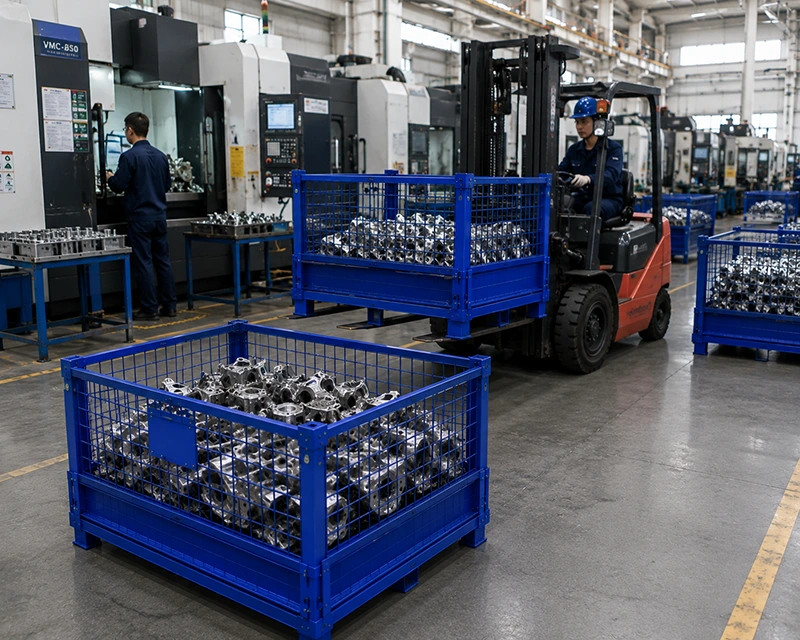
Yes, if the Sebox is specified as a system with interchangeable inserts. In that case, the steel outer frame is the fixed handling platform and the insert becomes the variable. This is the cleanest way to manage a mixed plant: use the same footprint, the same stacking logic, and the same forklift approach, matching the insert to the load.
If the frame was ordered as a fixed construction, make the decision before production starts. Retrofitting after goods arrive usually costs more time than choosing the right insert from the beginning.
If you are weighing visibility against containment, send part dimensions, load weight, and handling method.
Get configuration adviceServe una Soluzione di Stoccaggio Personalizzata?
Parli direttamente con i nostri ingegneri tecnici. Offriamo progetti strutturali gratuiti, valutazioni di cataloghi per carichi pesanti e preventivi B2B rapidi.
Richiedi un Preventivo Ora →