
Choosing a Sebox insert does not mean choosing between two different products. The external frame remains the same; what changes is the insert that matches the part dimensions, visibility needs, and handling routine.
If your line requires quick visual checks and frequent picking verifications, a mesh insert is usually the most suitable choice. If the priority is keeping small loose parts fully contained or giving the load a more closed support surface, a steel plate insert is the safer direction. The right answer is the one that matches the smallest loose item, not the largest box.
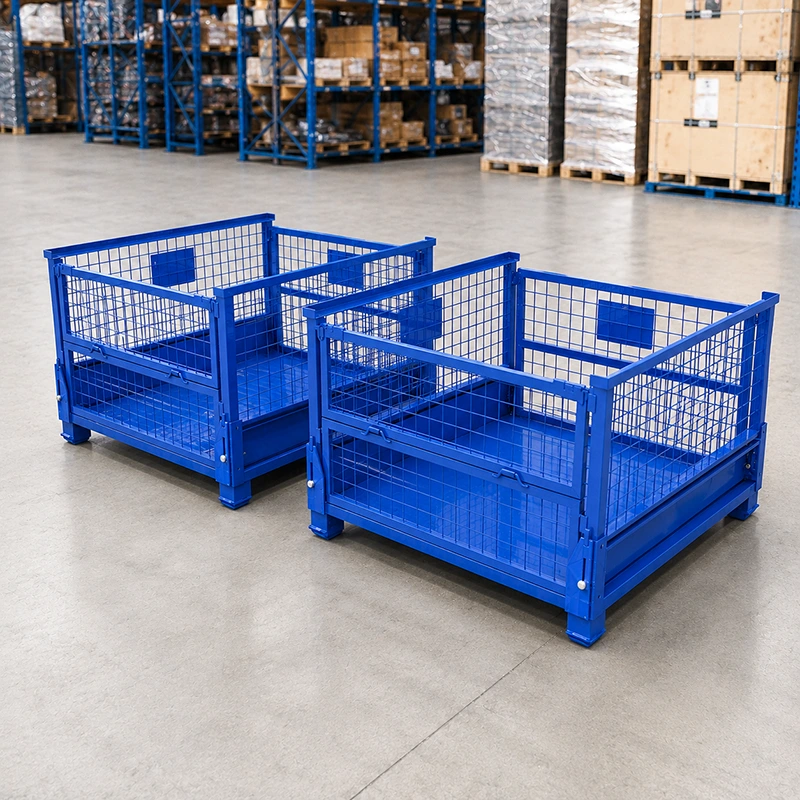
When mesh inserts make more sense
Mesh is the right starting point when the first question on the floor is: "Can I see what's inside without opening the container?" In automotive parts flow, machining buffers, and warehouse picking zones, this answer often matters more than a fully closed side wall. A mesh insert helps operators inspect the load, confirm the batch, and spot missing items more quickly.
This is also why mesh works well with Sebox's handling logic. The container is a collapsible pallet cage built around a Q235 steel frame, a 1000 kg design load, and integrated forklift pockets. You keep the same mechanical handling path, but gain more visibility for inventory and storage. The caution is simple: mesh does not automatically mean "safe for every small part." If your smallest loose item can pass through the opening, the mesh insert is not the right final specification.
In practice, mesh is most effective when parts are medium-sized, the load needs frequent checking, and the operator wants a clear line of sight without lifting the entire box. It is a strong choice for a mesh pallet stacking box use case, but only when the part geometry and mesh opening are intentionally matched.
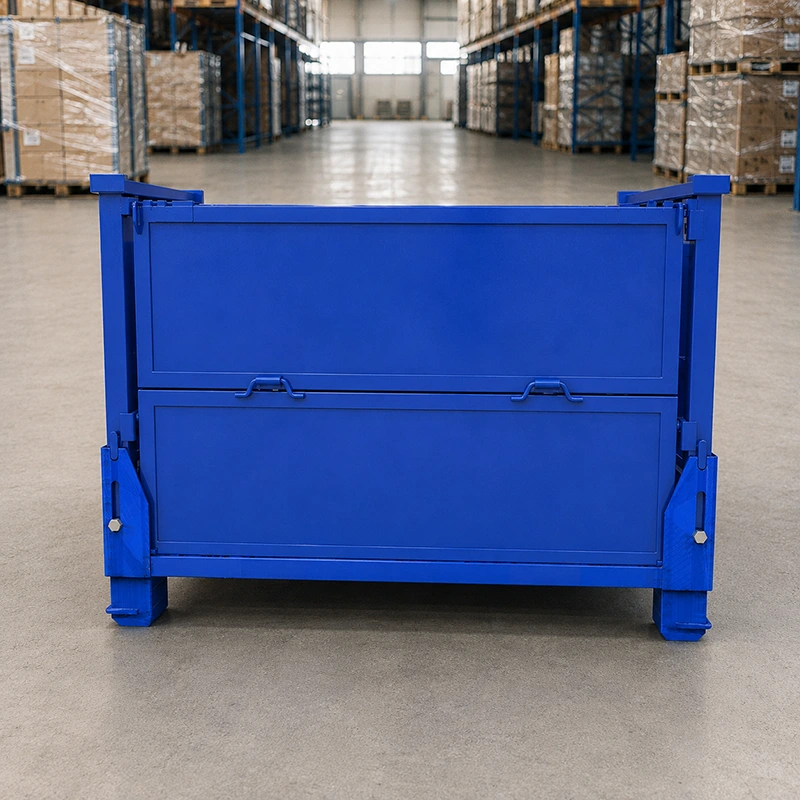
What steel plate inserts solve
Steel plate inserts are the best answer when containment comes first. They reduce the chance of small loose parts, mixed shapes, or irregular edges shifting through the side structure. They also reduce direct visibility, which is exactly the trade-off some operations are willing to accept when the load is expensive, fragile, or hard to keep organized.
This trade-off matters in heavy part containment, scrap collection, and work-in-progress transfer. A closed insert can make loading more deliberate and can keep the container cleaner when parts have sharp edges or when the load consists of many small items. For Sebox, this does not change the basic handling story: the same steel frame still supports forklift and pallet jack handling, and the same collapsible body still reduces return volume when the unit is empty. What changes is the insert choice.
If your process depends on immediate visual confirmation, keep mesh on the working side. If your process depends on keeping the load on a more closed surface, the steel plate is the safer specification. The decision should be written into the project brief, not left to a last-minute warehouse preference.
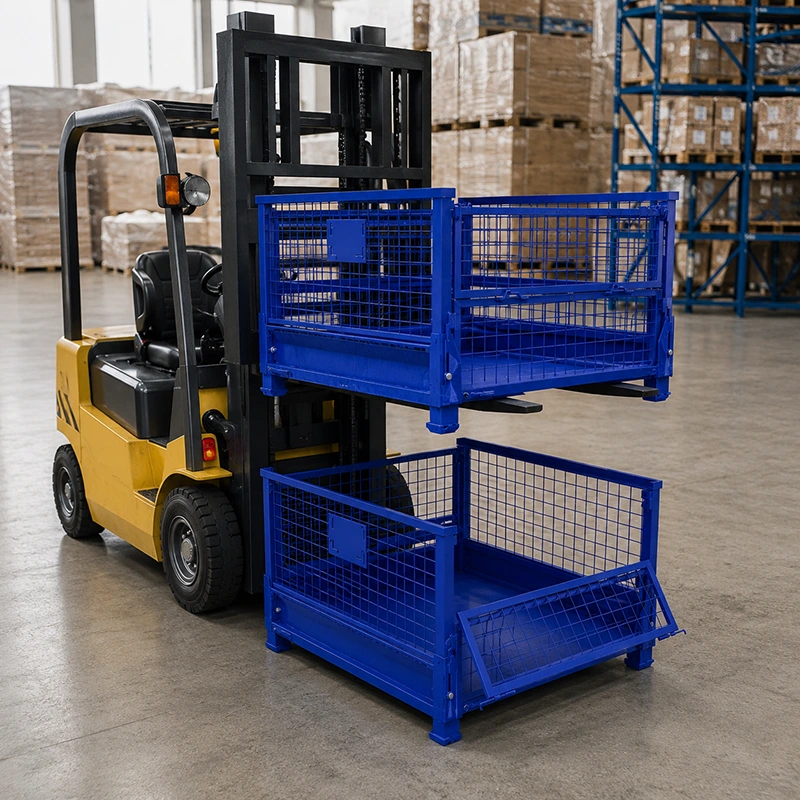
Can inserts be changed on site?
Yes, but only when the design is engineered that way. In Sebox configurations built around the same external frame and same fastening pattern, the insert can be specified as mesh or steel plate without changing the entire container family. This is the practical value of calling it an insert: the frame, fork channels, stacking logic, and folding behavior remain consistent while the internal configuration changes.
This matters when one line uses an insert for incoming inspection and another for internal transfer. It also matters when the same plant wants to standardize box sizes but manage different part groups through the same storage cycle. Sebox folds to 1000 × 800 × 335 mm, stacks in 3-4 layers in normal use, and maintains a working footprint of 1000 × 800 × 840 mm, so the insert decision should be made together with the return plan and storage plan.
The safest workflow is simple: define the parts, define the visibility requirement, define the containment requirement, then lock the insert before production. If you only specify "metal pallet box," you may end up with a box that is structurally correct but operationally wrong.
Where this configuration fits best
- Automotive parts assembly lines needing quick visual checks
- Machined metal parts and small component buffer storage
- Warehouse bulk storage and high-density block stacking
- Closed-loop logistics and export container shipping
Domande frequenti
Will mesh inserts let small parts pass through?
They can, if the smallest loose item is smaller than the mesh opening. Use mesh when visibility matters and the part size is well above the opening; use steel plate when containment is the first requirement. The point is not to blindly favor one material, but to match the insert to the smallest part in the load.
Can the same Sebox frame accept both insert types?
Sì, quando il progetto è definito attorno allo stesso telaio e agli stessi punti di fissaggio. Questo è esattamente il motivo per cui l'inserto dovrebbe essere specificato in anticipo. Consente a una famiglia di contenitori di servire diverse stazioni senza cambiare il metodo di movimentazione, la routine di trasferimento pallettizzato o la logica di stoccaggio pieghevole.
Hai bisogno di una raccomandazione per l'inserto Sebox per il tuo mix di parti? Condividi l'elenco delle parti, l'articolo sciolto più piccolo e il flusso di movimentazione, e mappiamo la configurazione giusta per PDP-03.
Ottieni consigli sulla configurazione per PDP-03Serve una Soluzione di Stoccaggio Personalizzata?
Parli direttamente con i nostri ingegneri tecnici. Offriamo progetti strutturali gratuiti, valutazioni di cataloghi per carichi pesanti e preventivi B2B rapidi.
Richiedi un Preventivo Ora →