
Choosing a Sebox insert is not choosing between two different products. The external structure remains the same; what changes is the insert that matches the size of your part, visibility needs, and handling routine.
If your line needs quick visual checks and frequent picking verification, a mesh insert is usually the cleanest fit. If the priority is keeping loose small parts fully contained or giving the load a more closed support surface, a steel sheet insert is the safer direction. The right answer is the one that matches the smallest loose item, not the largest box.
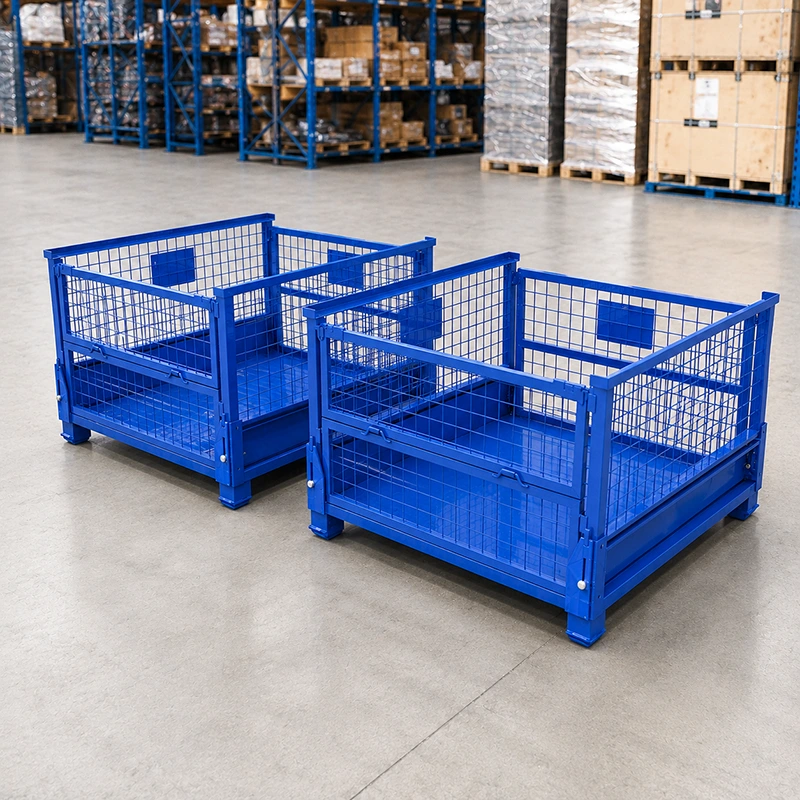
When mesh inserts make more sense
Mesh is the right starting point when the first question on the shop floor is: "Can I see what is inside without opening the container?" In automotive parts flow, machining buffers, and warehouse picking zones, that answer often matters more than a fully closed side wall. A mesh insert helps operators inspect the load, confirm the batch, and identify missing items faster.
This is also why mesh works well with Sebox handling logic. The container is a collapsible pallet cage built around a Q235 steel frame, a 1000 kg design load, and integrated fork pockets. You keep the same mechanical handling path, but you get more visibility for inventory and staging. The caveat is simple: mesh does not automatically mean "safe for every small part." If your smallest loose item can pass through the opening, the mesh insert is not the correct final specification.
In practice, mesh is strongest when parts are medium-sized, the load needs frequent checking, and the operator wants a clear line of sight without lifting the entire box. It is a strong fit for a mesh pallet box stacking use case, but only when part geometry and mesh opening are matched on purpose.
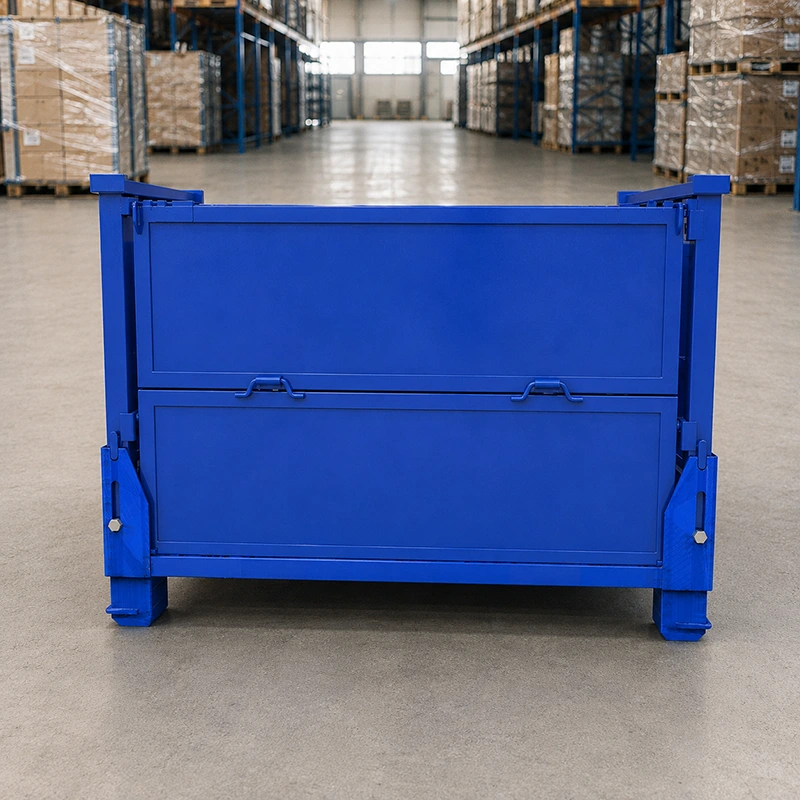
What steel sheet inserts solve
Steel sheet inserts are the best answer when containment comes first. They reduce the chance that small loose parts, mixed shapes, or irregular edges shift through the side structure. They also reduce direct visibility, which is exactly the trade-off some operations are willing to accept when the load is expensive, fragile, or hard to keep organized.
That trade-off matters in heavy part containment, scrap collection, and work-in-process transfer. A closed insert can make loading more deliberate and can keep the container cleaner when parts have sharp edges or when the load consists of many small items. For Sebox, this does not change the basic handling story: the same steel frame still supports forklift and pallet jack handling, and the same collapsible body still reduces return volume when the unit is empty. What changes is the insert choice.
If your process depends on immediate visual confirmation, keep mesh on the working side. If your process depends on keeping the load on a more closed surface, steel sheet is the safer specification. The decision should be written into the project brief, not left to a last-minute warehouse preference.
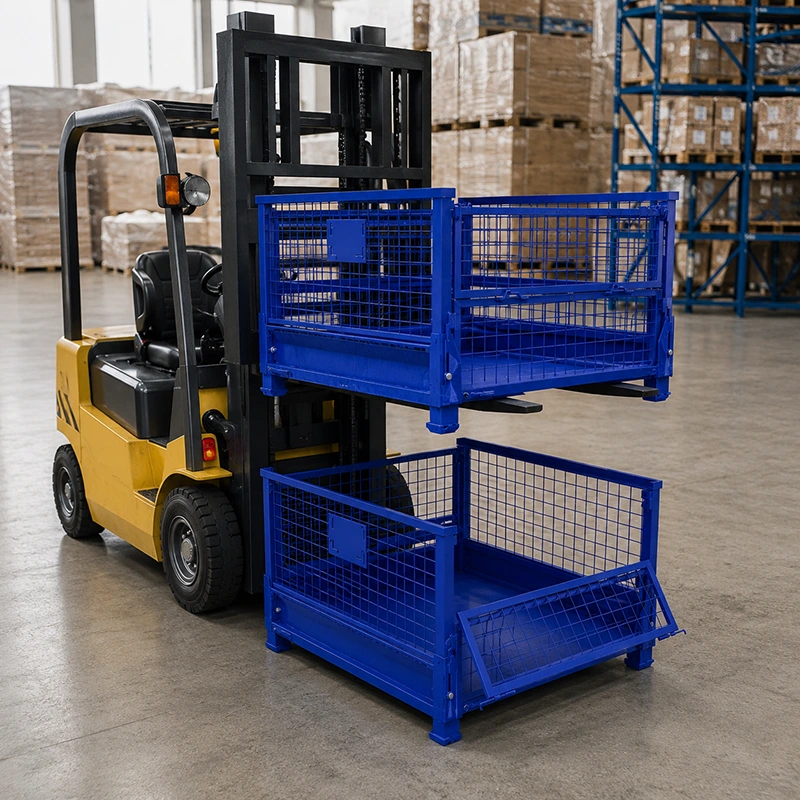
Can you swap inserts on site?
Yes, but only when the design is built that way. In Sebox configurations built around the same external frame and fixing pattern, the insert can be specified as mesh or steel sheet without changing the entire container family. That is the practical value of calling it an insert: the frame, fork channels, stacking logic, and folding behavior remain consistent while the internal configuration changes.
This matters when one line uses an insert for inbound inspection and another for internal transfer. It also matters when the same plant wants to standardize box size but run different part groups through the same storage loop. The Sebox folds to 1000 × 800 × 335 mm, stacks 3–4 high in normal use, and keeps a working footprint of 1000 × 800 × 840 mm, so the insert decision should be made together with the return plan and storage plan.
The safest workflow is simple: define the parts, define the visibility requirement, define the containment requirement, and then lock the insert before production. If you only specify "metal pallet box," you can end up with a structurally correct but operationally wrong box.
Where this configuration fits best
- Automotive parts assembly lines that need quick visual checks
- Machined metal parts and small component buffer storage
- Warehouse bulk storage and high-density block stacking
- Closed-loop logistics and export container shipping
Perguntas frequentes
Will mesh inserts allow small parts to escape?
They can, if the smallest loose item is smaller than the mesh opening. Use mesh when visibility matters and part size is safely above the opening; use steel sheet when containment is the first requirement. The point is not to favor one material blindly, but to match the insert to the smallest part in the load.
Can the same Sebox frame accept both insert types?
Yes, when the design is defined around the same frame and fixing points. That is exactly why the insert should be specified early. This allows one container family to serve different stations without changing the handling method, palletized transfer routine, or collapsible storage logic.
Need a Sebox insert recommendation for your part mix? Share the parts list, the smallest loose item, and the handling flow, and we will map the right configuration for the PDP-03.
Get configuration advice for PDP-03Precisa de uma Solução de Armazenamento Personalizada?
Fale diretamente com nossos engenheiros técnicos. Oferecemos projetos estruturais gratuitos, avaliações de catálogos de alta capacidade e orçamentos rápidos para B2B.
Solicite um Orçamento Agora →