
When a wire mesh container is intended to carry dense components, the first quality question is not the product label or a declared load rating. It is whether the steel wire specified for the project is actually the wire supplied and welded into the cage. A caliper makes that question visible: measure the wire, record the result, and compare it with the order drawing.
For Stbox project records, the documented wire diameter falls in the range of approximately 5.8–6.0 mm: table 13967 records 5.8 mm, project 15059 specifies full-size Φ6 wire, and project 15217 records Φ6.0±0.1 mm. These references explain why buyers requiring a full-size wire mesh container should define the diameter and tolerance before production – not rely on a generic "heavy-duty" description.
8 mm and 6.0 mm are close on paper – but they are not the same requirement
A 5.8 mm wire can look nearly identical to a 6.0 mm wire during a quick visual check. That is exactly why a specification should be measured rather than estimated. For a round wire, the cross-sectional area changes with the square of the diameter; 6.0 mm has approximately 6.9% more nominal steel area than 5.8 mm before considering other design factors. This is not a load certification and does not predict the capacity of a finished cage. Instead, it shows why a "slightly thinner" substitution is a technical change, not a harmless wording difference.
The practical purchasing requirement is simple: state the target wire diameter, the allowable tolerance, the measurement method, and the applicable location in the order documentation. When the requirement is full-size Φ6, a supplier should not substitute a smaller unrecorded wire and then claim the same load expectation with a catalog statement.
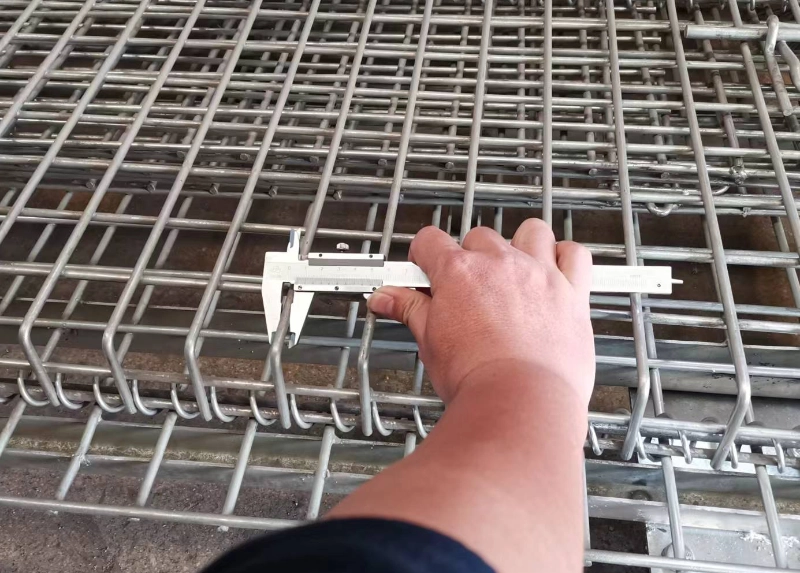
What the Stbox caliper image demonstrates – and what it does not demonstrate
The image above shows a quality control scene where a mechanical caliper is used to measure the wire mesh. The image caption describes the verification shown as "≥6.0 mm". Its proper purpose is to show the inspection principle and the importance of checking wire gauge. It is not a certification statement, a universal Stbox specification, or proof that every batch, every incoming coil, or every finished container has the same result.
For a technical decision-maker, the boundary matters. A photograph cannot replace project-specific incoming material records, in-process inspections, finished product inspections, or an agreed inspection plan. If wire diameter is commercially critical, request the relevant records for the order and confirm where and when measurements are taken. Final acceptance criteria must follow the approved order drawing and the purchase specification.
Diameter is one level of structural reserve, not the entire structure
Substituting thinner wires creates procurement risks because it can reduce material reserve while leaving the external appearance, mesh pattern, and marketing language unchanged. The result could be a cage that looks correct but has less tolerance for variations in welding, impacts, concentrated loads, or repeated handling. A thinner wire also makes it difficult to interpret a declared load rating unless the full design basis is disclosed.
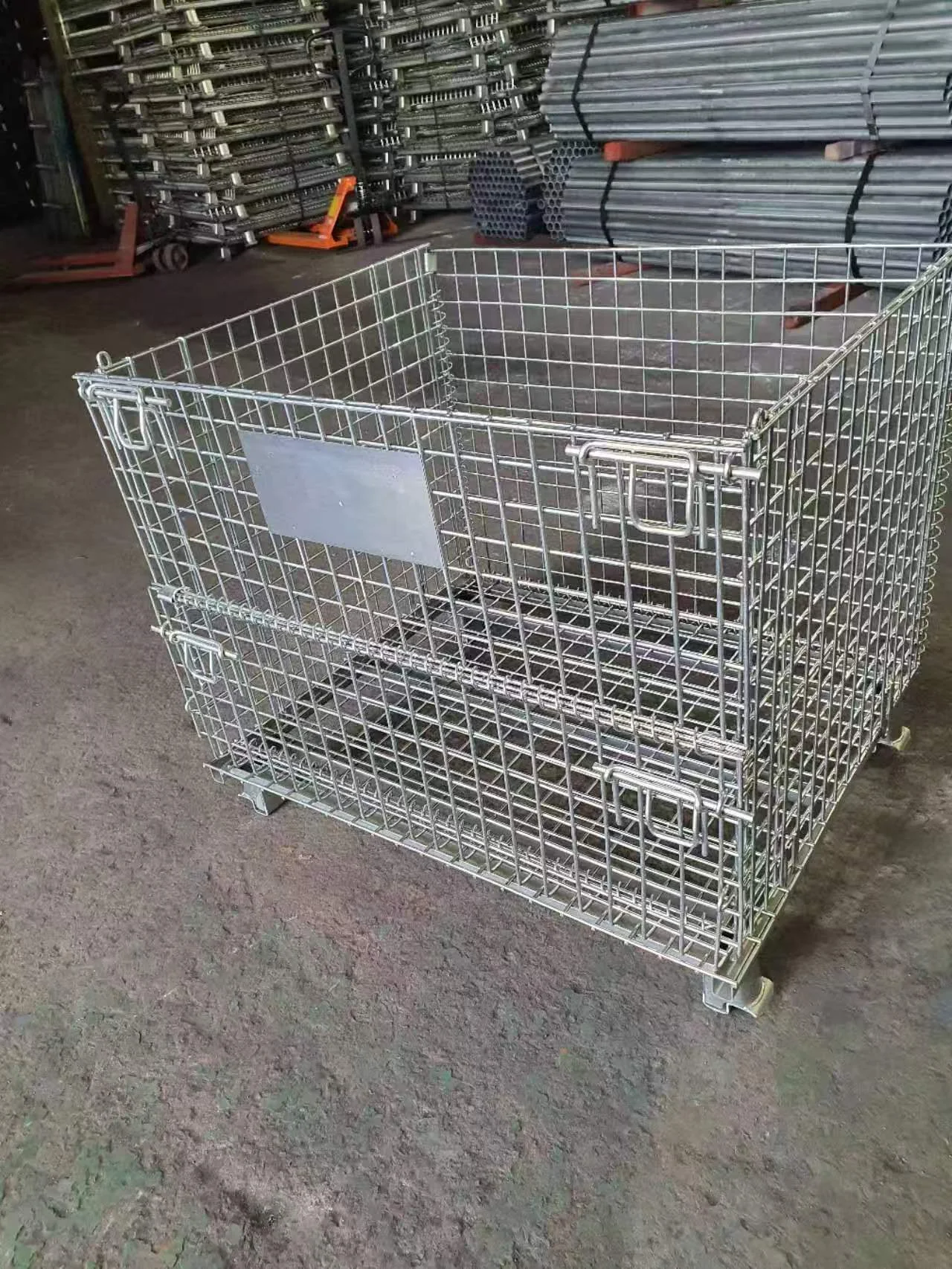
The Stbox assessment should therefore consider the wire together with the welded mesh, joints, frame, base, and stacking interface. The product image below shows an assembled cage in a production environment, but it should be read as a product reference – not as a standalone load test. Ask the supplier to link the specified wire diameter to the actual drawing, weld construction, and intended load case.
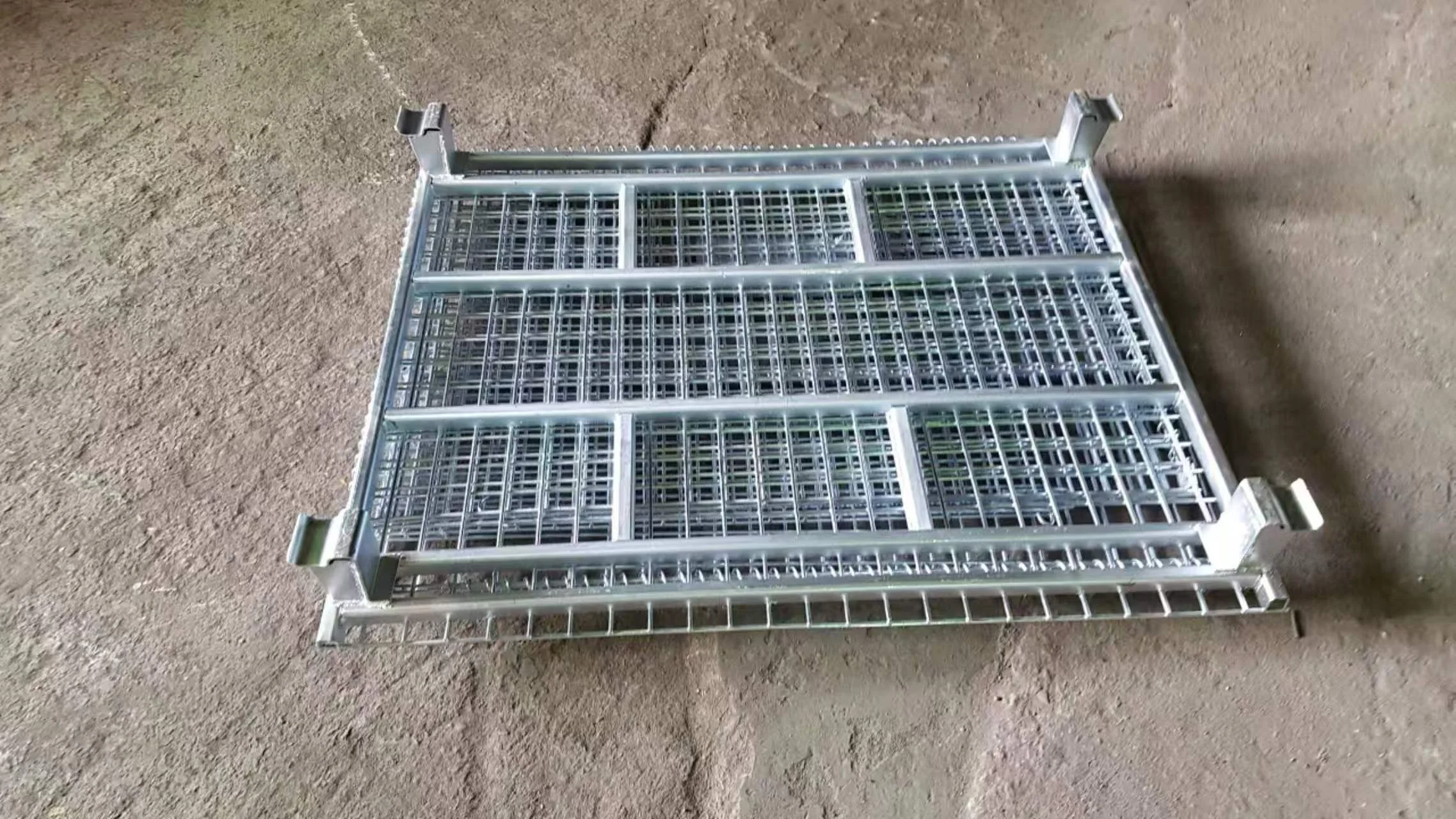
The base is another reason not to judge capacity from wire diameter alone. Reinforcement members and stacking feet affect how loads are transferred and how the container behaves during forklift or pallet truck handling. A credible comparison is therefore "specified wire plus verified structure" versus "unverified thinner wire plus an unsupported load statement".
What to include in the purchase specification for a wire mesh container
- Wire diameter: identify whether the requirement is 5.8 mm, full-size Φ6, or Φ6.0±0.1 mm; do not use "about 6 mm" when tolerance affects acceptance.
- Inspection evidence: define incoming and finished product checks. The caliper image illustrates quality control, but it is not a batch certificate.
- Structural context: examine the mesh welding, frame joints, base reinforcement, stacking interface, and handling method together with the wire gauge.
- Load limit: state the material, load distribution, static or dynamic condition, and stacking arrangement. Do not transfer a project load assumption to every configuration.
- Drawing control: use the approved order drawing as the final authority for dimensions, tolerances, options, and acceptance details.
FAQ on quality and load decisions
Does a 6.0 mm wire automatically mean a higher load class?
No. Il diametro è un input importante, ma la capacità dipende anche dalla rete, dalle saldature, dal telaio, dalla base, dalla connessione di impilamento, dalla distribuzione del carico e dalle condizioni operative. Un solo diametro del filo non può certificare un contenitore a rete metallica finito.
La foto del calibro Stbox può essere usata come prova per ogni spedizione?
No. È un riferimento visivo di controllo qualità che mostra una misurazione descritta nell'indice delle immagini come ≥6,0 mm. Non può sostituire i registri di ispezione concordati per ogni ordine. Confermare il requisito finale in base al disegno d'ordine.
Cosa devo fare se un fornitore offre 5,8 mm invece di Φ6 a dimensione piena?
Trattarlo come una deviazione dalla specifica, non come una sostituzione equivalente. Chiedere un'approvazione scritta, la tolleranza applicabile e la base strutturale/di carico. Se il requisito è Φ6 a dimensione piena, mantenere quel requisito esplicito nel disegno e nel piano di ispezione.
Hai bisogno di un contenitore a rete metallica Stbox abbinato a una specifica controllata? Condividi il disegno approvato, il requisito del filo, il caso di carico e il metodo di movimentazione con il nostro team. Possiamo esaminare la configurazione prima del preventivo e confermare le dimensioni finali e le opzioni dal disegno d'ordine.
Discuti la tua specifica Stbox
Rivedi i dettagli del prodotto Stbox · Esplora le soluzioni di stoccaggio Steel Pallet
Serve una Soluzione di Stoccaggio Personalizzata?
Parli direttamente con i nostri ingegneri tecnici. Offriamo progetti strutturali gratuiti, valutazioni di cataloghi per carichi pesanti e preventivi B2B rapidi.
Richiedi un Preventivo Ora →