
When a wire mesh container is expected to carry dense parts, the first quality question is not the product label or a claimed load number. It is whether the steel wire specified for the project is actually the wire supplied and welded into the cage. A caliper makes that question visible: measure the wire, record the result, and compare it with the order drawing.
For Stbox project records, the documented wire diameter is in the approximately 5.8–6.0 mm range: the 13967 table records 5.8 mm, project 15059 specifies full-size Φ6 wire, and project 15217 records Φ6.0±0.1 mm. These references explain why buyers who need a full-size wire mesh container should define the diameter and tolerance before production—not rely on a generic “heavy-duty” description.
5.8 mm and 6.0 mm are close on paper—but not the same requirement
A 5.8 mm wire can look almost identical to a 6.0 mm wire during a quick visual check. That is exactly why a specification should be measured rather than guessed. For a round wire, cross-sectional area changes with the square of diameter; 6.0 mm has about 6.9% more nominal steel area than 5.8 mm before other design factors are considered. This is not a load certification and it does not predict the capacity of a finished cage. It does show why a “slightly thinner” substitution is a technical change, not a harmless wording difference.
The practical purchasing requirement is simple: state the target wire diameter, the permitted tolerance, the measurement method and the applicable location in the order documentation. Where the requirement is full-size Φ6, a supplier should not replace it with an unrecorded smaller wire and then support the same load expectation with a catalogue statement.
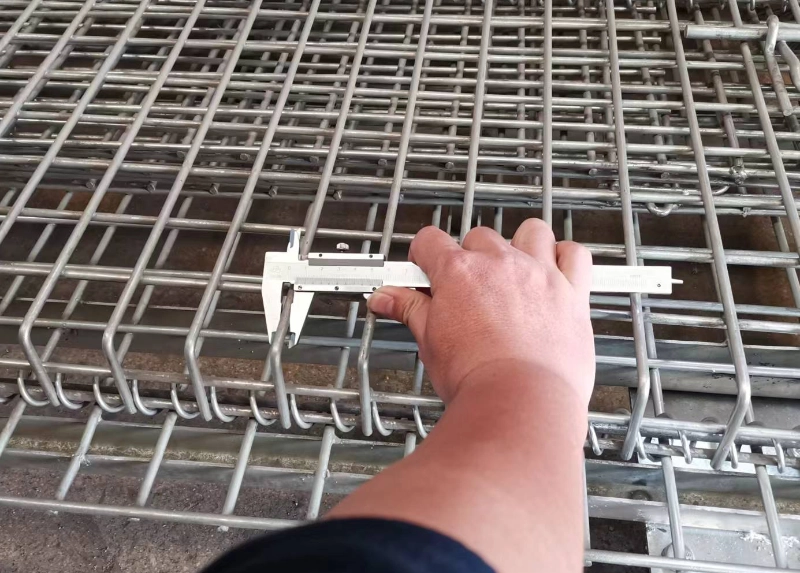
What the Stbox caliper image proves—and what it does not
The image above shows a quality-control scene in which a mechanical caliper is used to measure the wire grid. The image index describes the displayed check as “≥6.0 mm.” Its correct purpose is to show the inspection principle and the importance of checking wire gauge. It is not a certification statement, a universal Stbox specification, or evidence that every batch, every incoming coil or every finished container has the same result.
For a technical decision-maker, the boundary matters. A photograph cannot replace project-specific incoming-material records, in-process inspection, finished-product inspection or an agreed inspection plan. If a wire diameter is commercially critical, request the relevant records for the order and confirm where and when measurements are taken. The final acceptance criteria must follow the approved order drawing and purchase specification.
Diameter is one layer of structural reserve, not the entire structure
Thin-wire substitution creates procurement risk because it can reduce material reserve while leaving the outside appearance, mesh pattern and marketing language unchanged. The result may be a cage that looks right but has less tolerance for variation in welding, impact, concentrated loads or repeated handling. A thinner wire also makes a claimed load number difficult to interpret unless the complete design basis is disclosed.
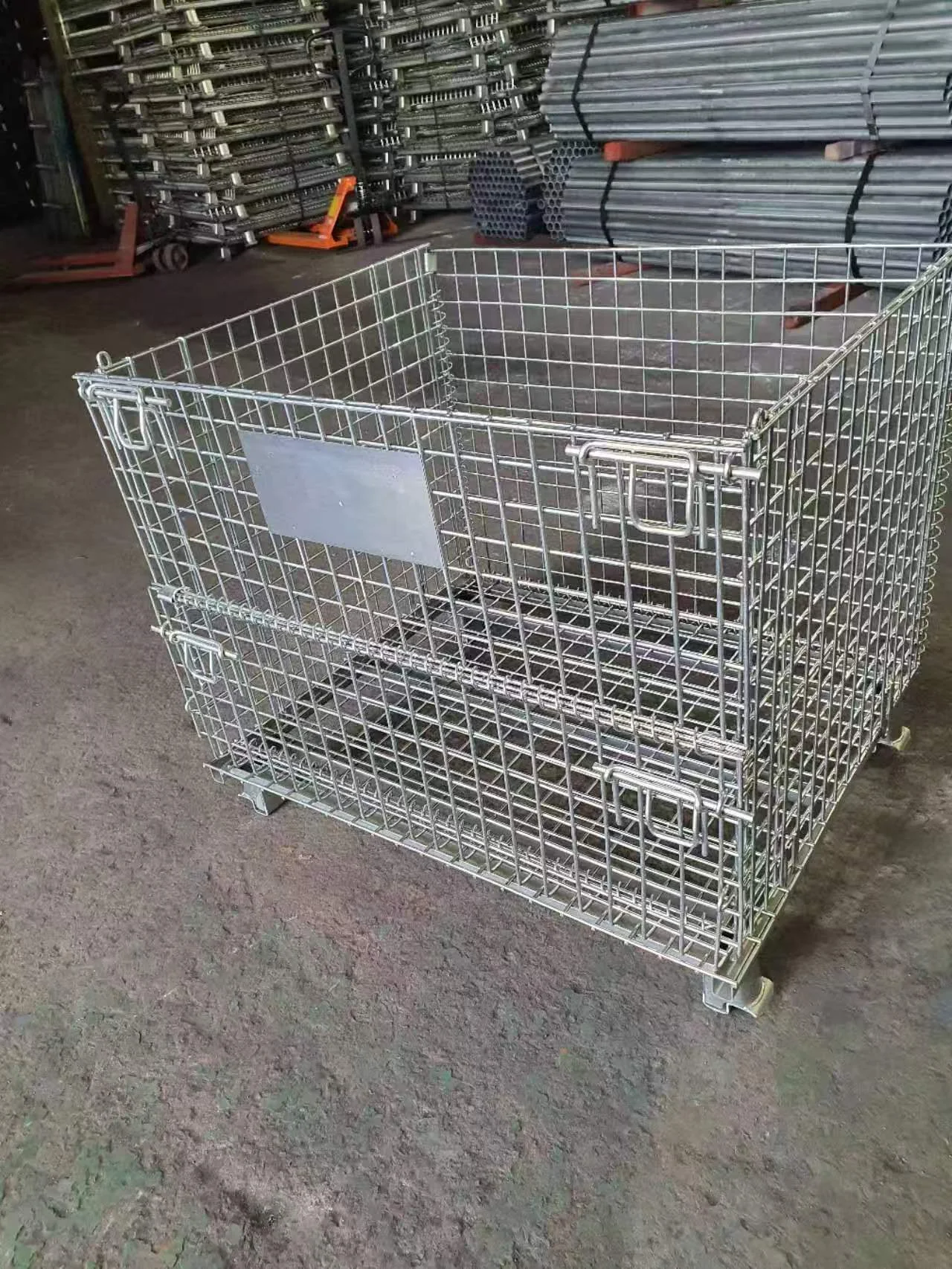
Stbox evaluation should therefore consider the wire together with the welded mesh, joints, frame, base and stacking interface. The product image below shows an assembled cage in a manufacturing environment, but it should be read as a product reference—not as a standalone load test. Ask the supplier to connect the specified wire diameter to the actual drawing, weld construction and intended load case.
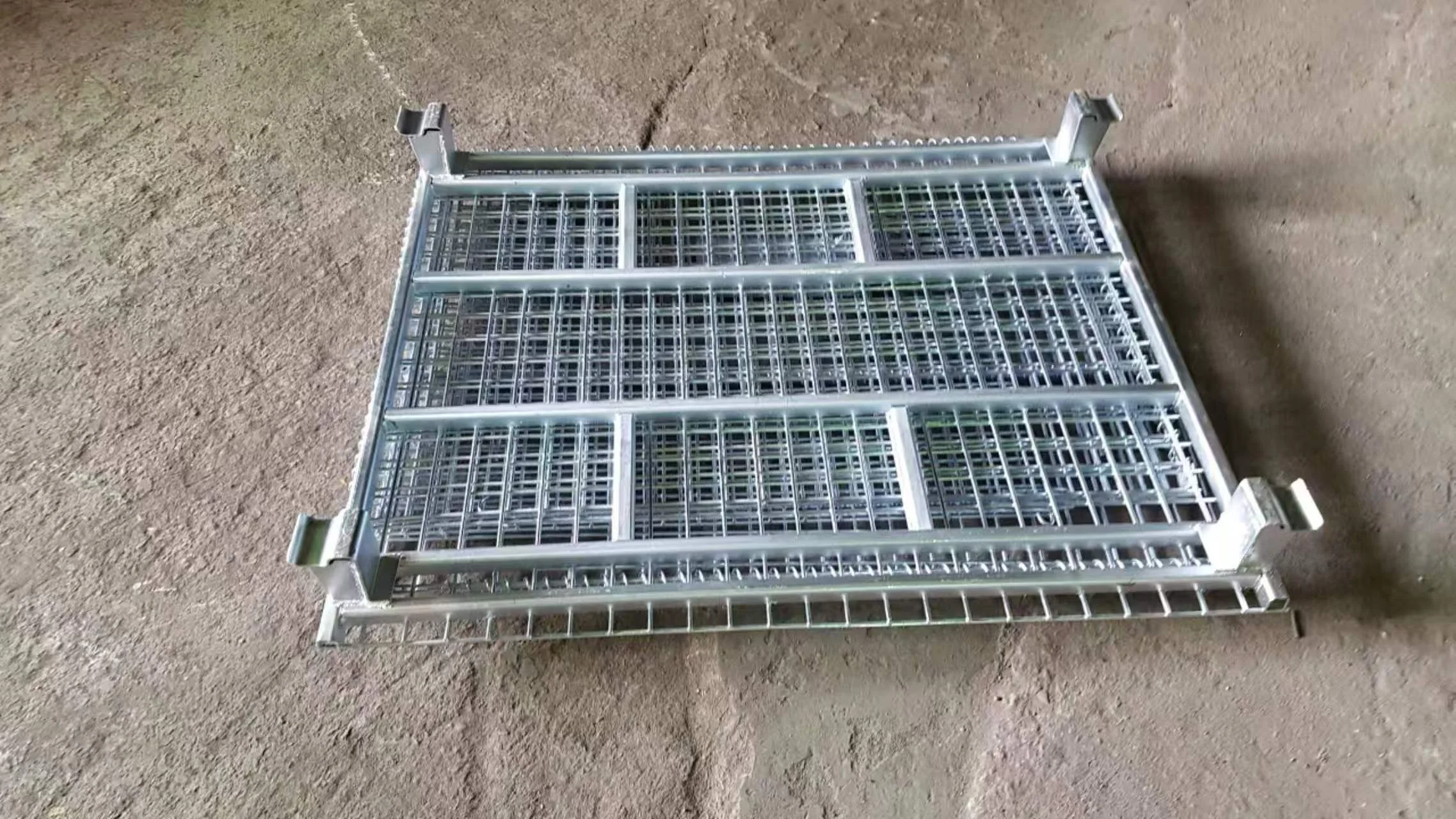
The base is another reason not to judge capacity from wire diameter alone. Reinforcing members and stack feet influence how loads are transferred and how the container behaves during pallet jack or forklift handling. A credible comparison is therefore “specified wire plus verified structure” versus “unverified thin wire plus an unsupported load claim.”
What to put in a wire mesh container purchase specification
- Wire diameter: identify whether the requirement is 5.8 mm, full-size Φ6, or Φ6.0±0.1 mm; do not use “about 6 mm” when tolerance affects acceptance.
- Inspection evidence: define incoming and finished-product checks. The caliper image illustrates quality control, but it is not a batch certificate.
- Structural context: review mesh welding, frame joints, base reinforcement, stack interface and the handling method together with the wire gauge.
- Load boundary: state the material, load distribution, static or moving condition and stacking arrangement. Do not transfer a project load assumption to every configuration.
- Drawing control: use the approved order drawing as the final authority for dimensions, tolerances, options and acceptance details.
FAQ for quality and load decisions
Does a 6.0 mm wire automatically mean a higher load rating?
No. Diameter is an important input, but capacity also depends on the mesh, welds, frame, base, stacking connection, load distribution and operating condition. A wire diameter alone cannot certify a finished wire mesh container.
Can the Stbox caliper photo be used as proof for every shipment?
No. It is a visual quality-control reference showing a measurement described in the image index as ≥6.0 mm. It cannot replace the inspection records agreed for each order. Confirm the final requirement against the order drawing.
What should I do if a supplier offers 5.8 mm instead of full-size Φ6?
Treat it as a specification deviation, not an equivalent substitution. Ask for written approval, the applicable tolerance and the structural/load basis. If the requirement is full-size Φ6, keep that requirement explicit in the drawing and inspection plan.
Need a Stbox wire mesh container matched to a controlled specification? Share the approved drawing, wire requirement, load case and handling method with our team. We can review the configuration before quotation and confirm the final dimensions and options from the order drawing.
Discuss your Stbox specification
Review Stbox product details · Explore Steel Pallet storage solutions
Need a Custom Storage Solution?
Speak directly with our technical engineers. We offer free structural designs, heavy-duty catalog evaluations, and quick B2B price quotations.
Request a Quote Now →