
Why Stacking Post Pallets Can Cut Export Shipping Costs Nearly in Half
For export teams under pressure from shipping costs, the biggest expense is often not the rack itself. It's how much empty steel volume you pay to move back and forth.
Derack, also known as knock-down post pallets or portable stacking rack, is designed to change how cargo is packed for export. Instead of treating storage as a flat floor stack, it turns each load into a structural stacking unit with a removable post system. This shift matters when the container is the cost center. In practice, the same container can hold only about 70–80 sets with a folding rack model, while a stacking post design can achieve around 200 sets with a well-matched load plan. These are example ranges, not a universal promise.
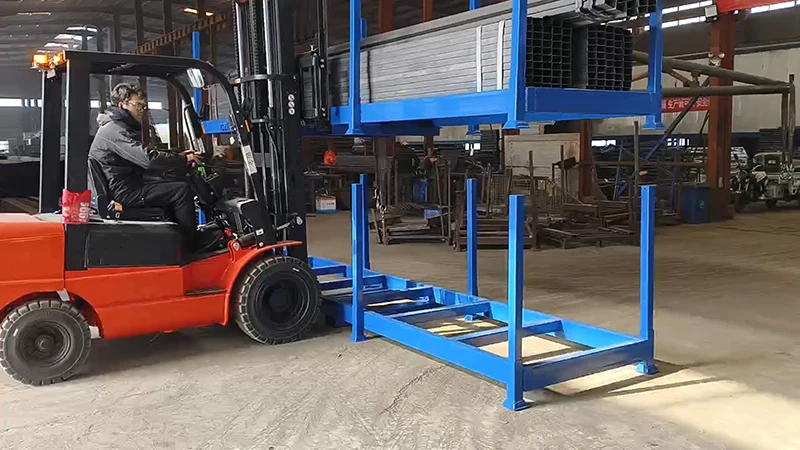
What the nesting principle really means
The nesting principle is simple: when the posts are removable, the empty rack no longer needs to maintain its full working height during the return trip. The base frames and posts can be separated, aligned, and nested so the return footprint becomes much smaller. This is where the transport savings come from. You are not shipping air. You are compressing the return format of the load carrier itself.
For export users, this matters because the shipping container is billed by space, not intention. If empty racks can be stacked more densely after unloading, the return trip may require fewer containers, fewer trailers, or less storage space at the destination.
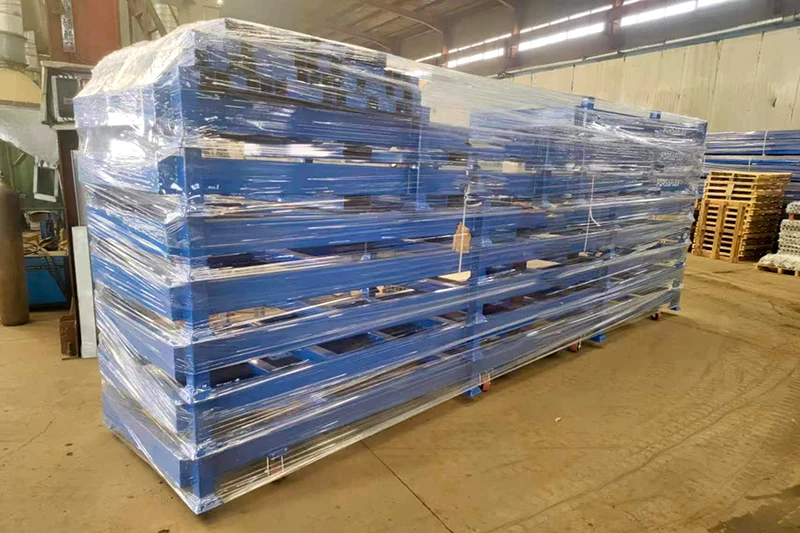
Where do the comparison numbers come from
The 70–80 vs. 200 example comes from load plan logic, not a fixed product promise. The exact result depends on the rack footprint, post height, stacking method, container dimensions, cargo shape, and whether the route is a one-way export or a closed return loop. In other words, the comparison is a planning benchmark. It helps buyers understand why the support design can matter as much as the load itself.
For a fair comparison, teams should verify three variables together: the working footprint of a loaded rack, the empty nesting ratio, and the number of racks allowed in an export container. If any of these changes, the transport calculation changes too.
Which types of cargo benefit the most
Stacking post pallets are best when the load is heavy, compressible, or prone to deformation under floor stacking pressure. Typical matches include tires, pipes, long profiles, panels, sheet materials, boxed parts, and other cargo that needs a defined frame instead of a floor pile. They are also useful when the same load needs to travel between factory, warehouse, customer site, and back.
They are less attractive when every shipment has a different footprint, when the return cycle does not exist, or when the cargo cannot be stabilized within a frame. In these cases, a fixed rack or a different packing method may be more practical.
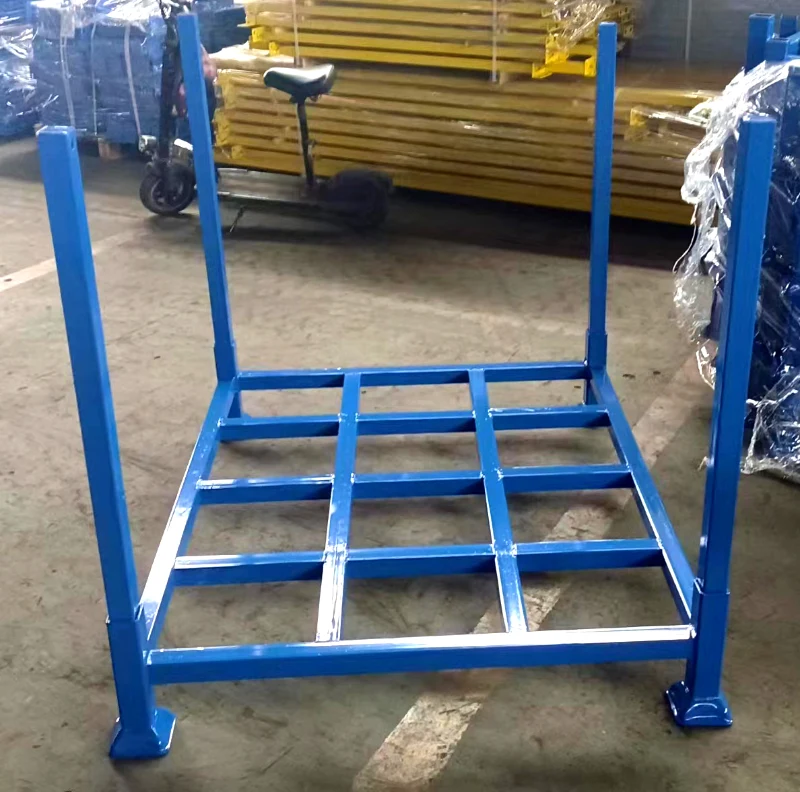
How to decide if it fits your export route
- If your cargo is damaged by floor stacking, a structural rack is usually a better starting point than a ground pile.
- If your export route has a return trip, nesting efficiency can directly reduce the cost of return transport.
- If your cargo is long, oversized, or shape-sensitive, the number of posts and the base span should match the material, not the warehouse aisle.
- If you need a reusable transport packaging cycle, a knock-down post design is often easier to recover than a fixed storage frame.
FAQ
Does "cut transport in half" mean every project will reduce transport by 50%?
No. That headline is meant to grab attention, but the actual result depends on cargo dimensions, rack footprint, nesting ratio, container plan, and route design. Use the 70–80 vs. 200 figure as an example range, not a guarantee.
Which cargo is the best fit for a stacking post rack?
The best match is cargo heavy enough to need structural support, but standardized enough to be stacked and recovered repeatably. Tires, pipes, profiles, panels, and boxed industrial parts are common candidates. If your product changes size every batch, we should verify the rack plan first.
For a product-level explanation and design reference, please see the linked internal pages below.
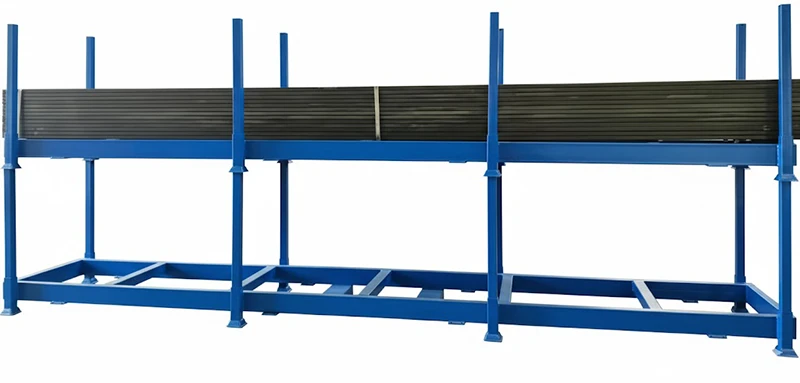
Serve una Soluzione di Stoccaggio Personalizzata?
Parli direttamente con i nostri ingegneri tecnici. Offriamo progetti strutturali gratuiti, valutazioni di cataloghi per carichi pesanti e preventivi B2B rapidi.
Richiedi un Preventivo Ora →