
Por que os Paletes com Postes Removíveis Podem Reduzir os Custos de Frete de Exportação Quase pela Metade
Para equipes de exportação sob pressão de frete, o maior custo muitas vezes não é o próprio rack. É quanto volume de aço vazio você paga para transportar de um lado para o outro.
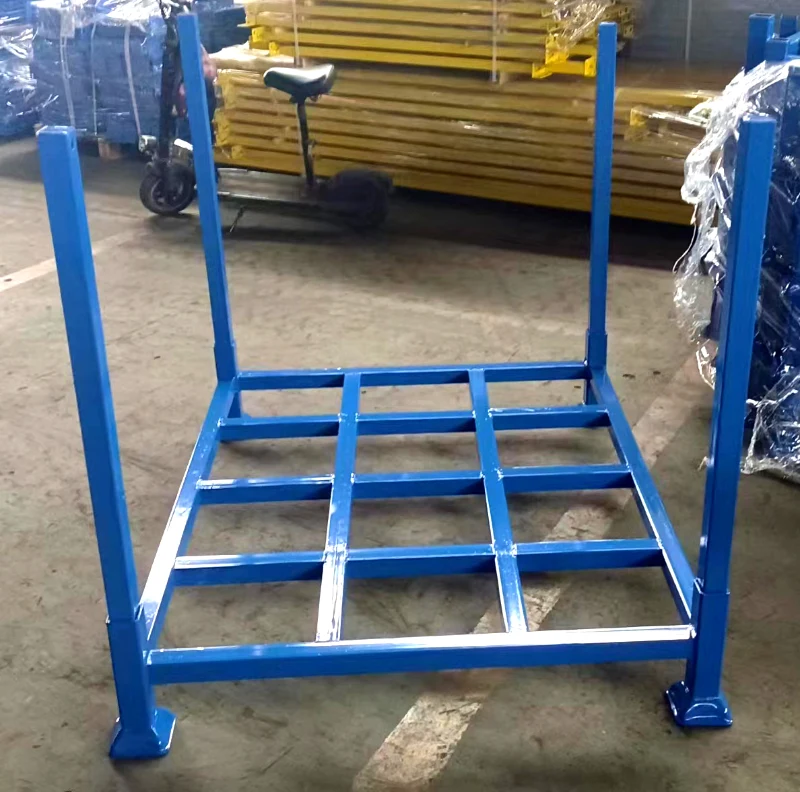
Derack, também conhecido como palete de postes desmontáveis ou rack empilhável portátil, é projetado para mudar a forma como a carga é embalada para exportação. Em vez de tratar o armazenamento como uma pilha plana no chão, ele transforma cada carga em uma unidade de empilhamento estrutural com um sistema de postes destacáveis. Essa mudança é importante quando o contêiner é o centro de custo. Na prática, o mesmo contêiner pode caber apenas cerca de 70–80 conjuntos com um padrão de rack dobrável, enquanto um design de poste removível pode atingir cerca de 200 conjuntos em um plano de carregamento bem ajustado. Esses são exemplos de faixas, não uma promessa universal.
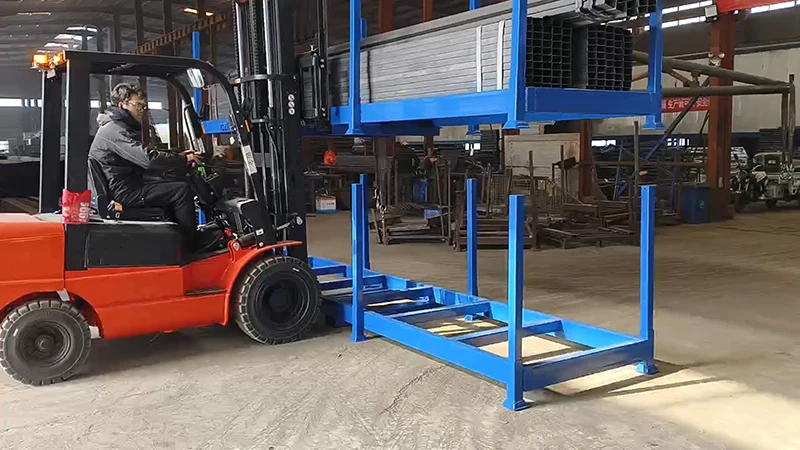
O que o princípio de aninhamento realmente significa
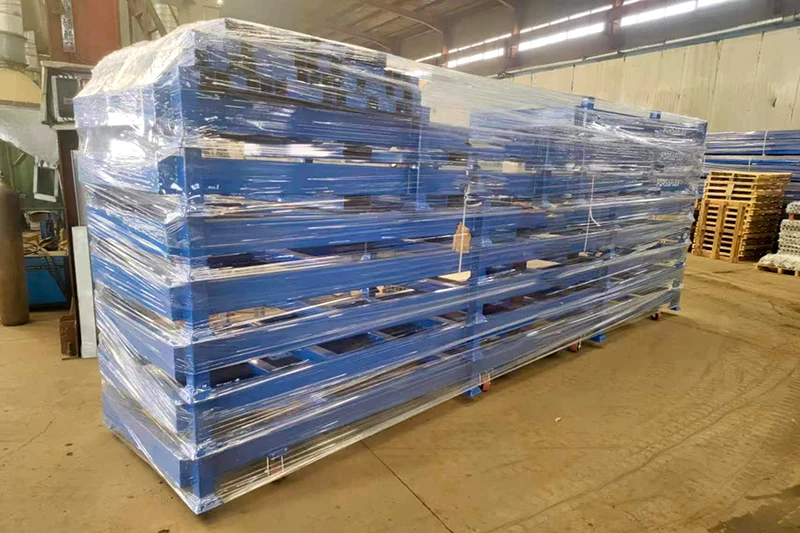
O princípio de aninhamento é simples: quando os postes são removíveis, o rack vazio não precisa mais manter sua altura total de trabalho durante a viagem de retorno. As bases e os montantes podem ser separados, alinhados e aninhados, de modo que o envelope de retorno se torne muito menor. É daí que vêm as economias de frete. Você não está transportando ar. Você está comprimindo o formato de retorno do próprio suporte de carga.
Para usuários de exportação, isso é importante porque o contêiner de transporte é cobrado pelo espaço, não pela intenção. Se os racks vazios puderem ser empilhados de forma mais densa após o descarregamento, a perna de retorno pode precisar de menos contêineres, menos reboques ou menos slots de armazenamento no destino.
De onde vêm os números de comparação
The 70–80 versus 200 example comes from loading plan logic, not a fixed product promise. The exact result depends on rack footprint, post height, stacking method, container size, load shape, and whether the route is a one-way export or a closed return loop. In other words, the comparison is a planning benchmark. It helps buyers understand why rack design can be just as important as the load itself.
For a fair comparison, teams should check three variables together: the working footprint of a loaded rack, the empty nesting ratio, and the number of racks allowed in an export container. If any of these change, the freight math changes too.
Which load types benefit the most
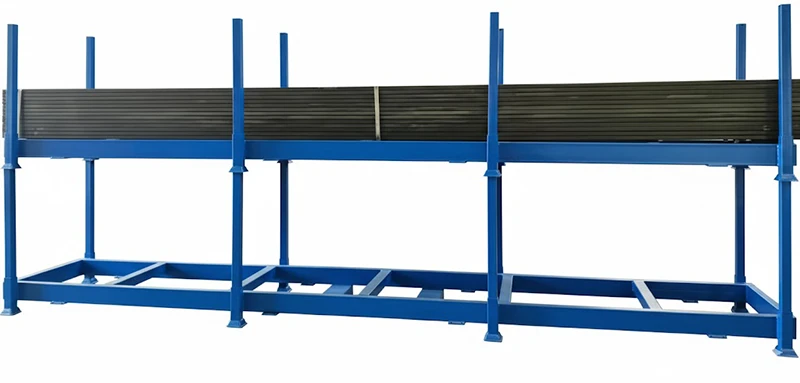
Pallets with removable posts are best when the load is heavy, compressible, or easy to deform under floor-stacking pressure. Typical fits include tires, tubes, long profiles, plates, sheet materials, packed parts, and other loads that need a defined structure instead of floor stacking. They are also useful when the same load must travel between factory, warehouse, customer site, and back.
They are less attractive when each shipment has a different footprint, when the return loop does not exist, or when the load cannot be stabilized inside a frame. In those cases, a fixed rack or a different packaging method may be more practical.
How to decide if it fits your export route
- If your load is damaged by floor stacking, a structural rack is usually a better starting point than a floor pile.
- If your export route has a return leg, nesting efficiency can directly reduce the return cost.
- If your load is long, oversized, or shape-sensitive, the number of posts and the base span should match the material, not the warehouse aisle.
- If you need a reusable transport packaging loop, a collapsible post design is often easier to recover than a fixed storage rack.
FAQ
“Reduzir o frete pela metade” significa que todo projeto reduzirá o frete em 50%?
No. That title is to grab attention, but the actual result depends on load size, rack footprint, nesting rate, container plan, and route design. Use the 70–80 versus 200 number as an example range, not a guarantee.
Which load is the best match for a removable post rack?
The best match is a load that is heavy enough to need structural support, but standardized enough to stack and recover repeatedly. Tires, tubes, profiles, plates, and packed industrial parts are common candidates. If your product changes size every batch, we should check the rack plan first.
For a product-level explanation and a design reference, see the internal pages below.
Precisa de uma Solução de Armazenamento Personalizada?
Fale diretamente com nossos engenheiros técnicos. Oferecemos projetos estruturais gratuitos, avaliações de catálogos de alta capacidade e orçamentos rápidos para B2B.
Solicite um Orçamento Agora →