
Floor stacks on wooden pallets seem simple, but they depend on too many variables at once: pallet quality, board condition, floor flatness, wrapping quality, and how carefully the operator places each layer. Once a pallet is warped or a load is placed slightly off-center, the entire stack starts to lean. This is not a rare disaster story; it is a common risk pattern in warehouses.
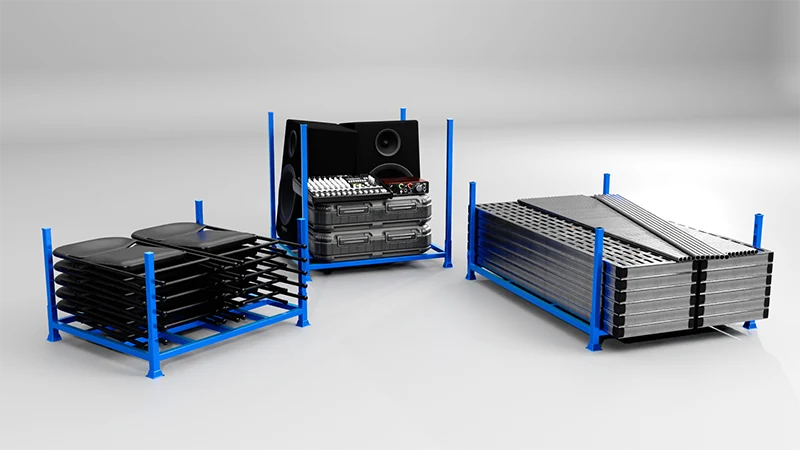
A rigid post rack changes the logic. Instead of asking wooden boards to support the stack, the system provides the load with a fixed steel structure, repeatable forklift access, and a footprint that remains constant every time the rack moves or returns empty.
Why floor stacks on wooden pallets start to fail
The biggest problem with floor stacking on wooden pallets is that the pallet itself becomes part of the support structure. If the pallet is split, damp, uneven, or mixed with a different quality, the bottom layer can settle unevenly. Add the tension of shrink wrap, a narrow aisle, or a small lateral impact from a forklift, and the stack can go from "looks fine" to visibly unstable very quickly.
In many factories, daily errors are the same: using whatever pallet is at hand, stacking too high because space seems full, letting the bottom layer take more load than the upper layers, and assuming that film can replace a real structure. Film holds boxes together; it does not create geometry. If the floor is dusty, oily, or slightly sloped, that loss of geometry is even more evident.
That is why a floor stack can work for short-term preparation, but it remains a worse choice for repetitive WIP management. The more often the load is moved, the more the operator becomes the safety system. Once the process relies on perfect behavior every time, the stack has already become fragile.
What a rigid post rack changes
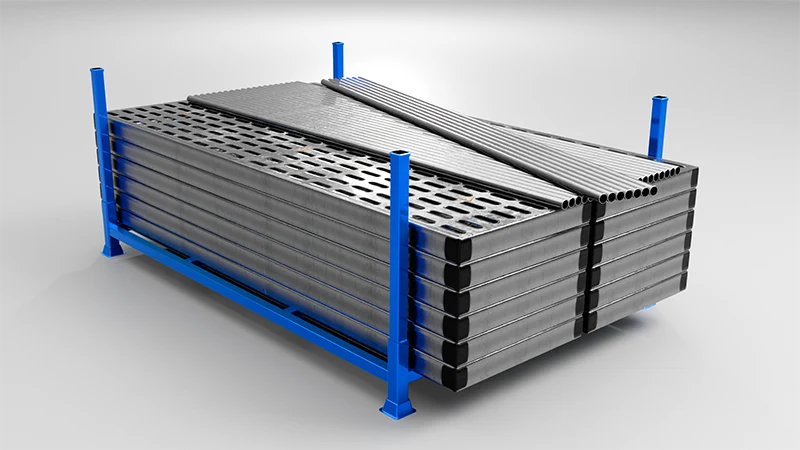
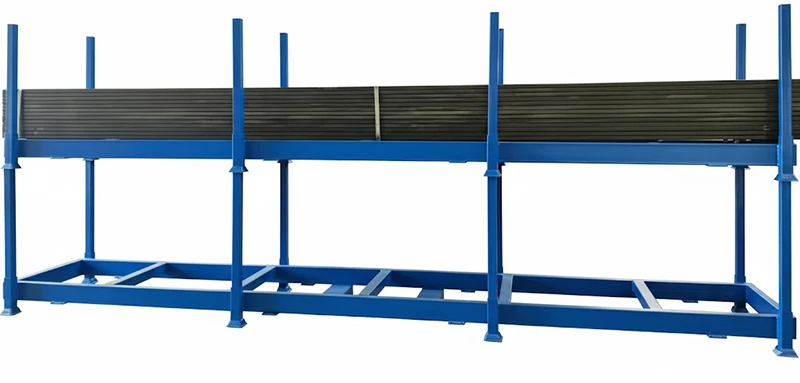
A rigid post rack gives the stack a fixed boundary. The posts define the working footprint, so the load does not wander over loose wooden boards. In practice, this means better visual alignment, easier repeatable loading, and less chance that a pallet edge or a board crack becomes the weak point of the entire system.
The steel structure also makes the handling flow easier to standardize. The forklift entry is clearer, positioning is more repeatable, and the team can keep material in a more predictable position while waiting for the next process step. For operations preparing panels, bundled parts, tires, or other unit loads, that repeatability matters as much as raw capacity.
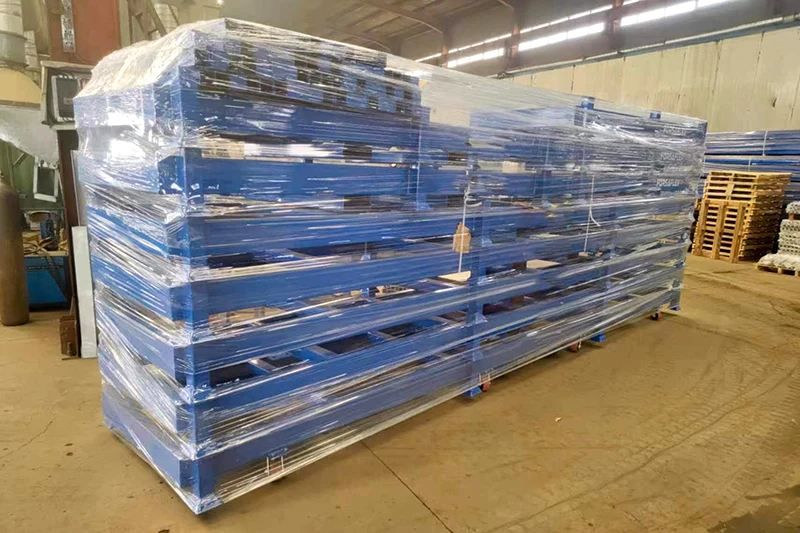
DERack also helps in the return phase. When empty racks can be nested, the warehouse does not pay the same space penalty it pays with loose pallets piled in a corner. This matters in factories where empty storage is never really empty; it is just waiting for the next shift, the next batch, or the next outbound truck.
Forklift handling rules that actually reduce risk
Even with a rigid rack, the handling method still matters. Forks should enter straight, the mast should stay under control, and the operator should avoid sharp turns while the rack is lifted. The safest pace is simple: pick up, clear the floor, move in a straight line, and deposit before any lateral shift occurs. Lateral loads and sudden angle changes are what turn a stable structure into a damaged one.
Keep the aisle wide enough for clean entry and keep preparation lanes marked so the forklift driver does not have to "guess" where the load belongs. A rack system works best when the warehouse layout helps it. If the aisle is too narrow, the operator is forced to make corrections at the worst possible moment.
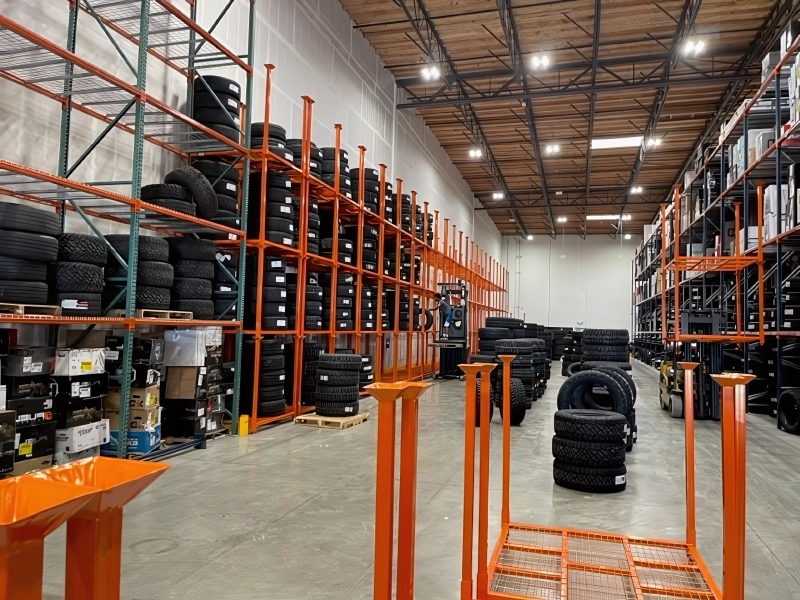
For DERack-type applications, this is the real win: the rack is not just a storage object, it is a handling rule. It tells the team where the load sits, how it returns, and how much the operation should depend on human precision versus physical structure.
Where DERack fits and where it does not
- Good fit: repeated WIP staging with forklift entry/exit cycles and a fixed floor footprint.
- Good fit: unitized loads that need a more defined structure than wooden pallets can provide.
- Good fit: return logistics of empty racks where nesting saves space.
- Not suitable: loose, non-contained items that need full lateral containment or small-part containment.
- Not suitable: damaged, unstable, or poorly unitized loads that should be repackaged before storage.
In other words, a rigid post rack does not replace every storage method. It replaces situations where wooden pallets are asked to do more than they should: maintain geometry, survive repeated handling, and stay stable even when the load or floor is not perfect.
FAQ
Is a wooden pallet stack always unsafe?
No. Short, light, well-unitized stacks can be acceptable in many factories. The problem starts when the stack becomes taller, moves more often, or depends on pallets that are already worn, warped, or mixed.
Do I need a rack if the stack only stays in one place?
If the load is truly static and rarely touched, a floor stack may be sufficient. But if the material becomes a repeated WIP buffer, a rigid rack usually reduces operator dependence and makes the handling pattern easier to control.
Serve una Soluzione di Stoccaggio Personalizzata?
Parli direttamente con i nostri ingegneri tecnici. Offriamo progetti strutturali gratuiti, valutazioni di cataloghi per carichi pesanti e preventivi B2B rapidi.
Richiedi un Preventivo Ora →