
Wood pallet floor stacks look simple, but they depend on too many variables at once: pallet quality, board condition, floor flatness, wrap quality, and how carefully the operator places every layer. Once one pallet is warped or one load is set slightly off-center, the whole stack starts to lean. That is not a rare disaster story; it is a common warehouse risk pattern.
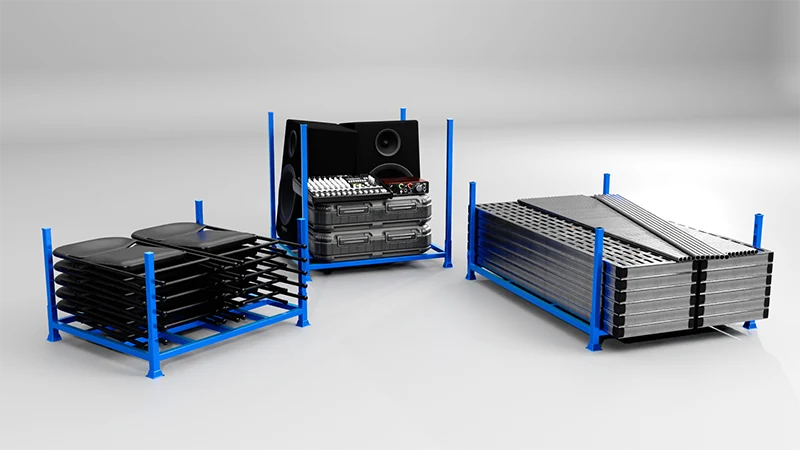
A rigid post rack changes the logic. Instead of asking wood boards to carry the stack, the system gives the load a fixed steel frame, repeatable fork access, and a footprint that stays consistent every time the rack moves or returns empty.
Why wood pallet floor stacks start to fail
The biggest problem with ground stacking on wood pallets is that the pallet itself becomes part of the support structure. If the pallet is split, damp, uneven, or mixed with a different grade, the bottom layer can settle unevenly. Add shrink-wrap tension, a narrow aisle, or a small side impact from a forklift, and the stack can move from “looks okay” to visibly unstable very quickly.
In many plants, the everyday mistakes are the same: using whatever pallet is nearby, stacking too high because the space feels full, letting the bottom layer take more load than the upper layers, and assuming wrap film can replace a real frame. Wrap keeps boxes together; it does not create geometry. If the floor is dusty, oily, or slightly sloped, that loss of geometry is even more obvious.
That is why a floor stack may work for short-term staging, yet still be a poor choice for repetitive WIP handling. The more often the load is moved, the more the operator becomes the safety system. Once the process relies on perfect behavior every time, the stack has already become fragile.
What a rigid post rack changes
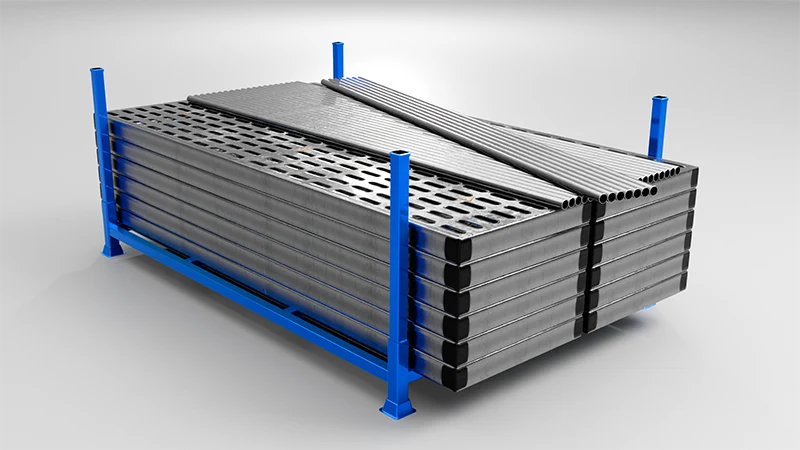
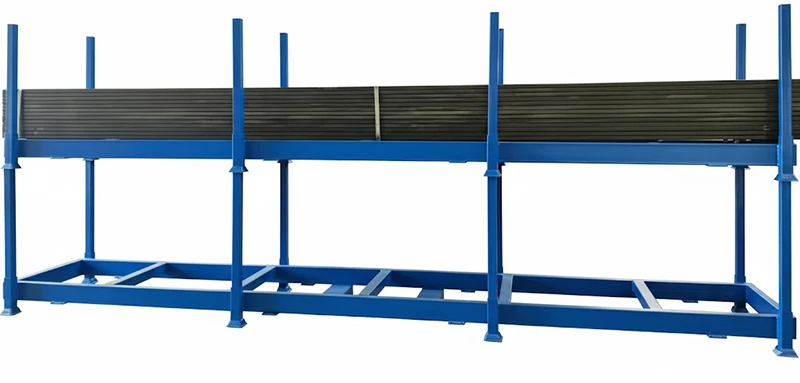
A rigid post rack gives the stack a fixed boundary. The uprights define the working footprint, so the load is not wandering on top of loose wood boards. In practice, that means better visual alignment, easier repeat loading, and less chance that a pallet edge or board crack becomes the weak point of the entire system.
The steel frame also makes the handling flow easier to standardize. Forklift entry is clearer, placement is more repeatable, and the team can keep the material in a more predictable position while it waits for the next process step. For operations that stage panels, bundled parts, tires, or other unit loads, that repeatability matters as much as raw capacity.
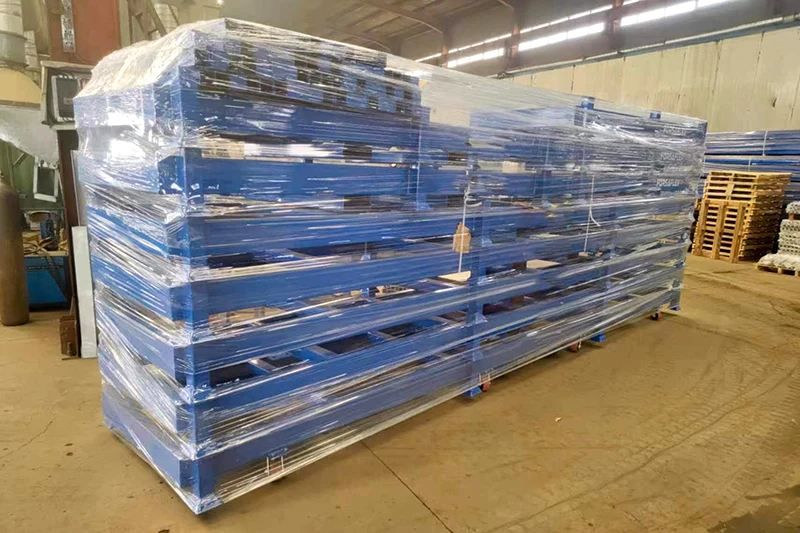
DERack also helps on the return leg. When empty racks can nest, the warehouse does not pay the same space penalty that it pays with loose pallets piled in a corner. That matters in plants where empty storage is never really empty; it is just waiting for the next shift, the next batch, or the next outbound truck.
Forklift handling rules that actually reduce risk
Even with a rigid rack, the handling method still matters. Forks should enter straight, the mast should stay controlled, and the operator should avoid turning sharply while the rack is lifted. The safest rhythm is simple: pick up, clear the floor, move in a straight path, and set down before any side shift happens. Side loads and sudden angle changes are what turn a stable frame into a damaged one.
Keep the aisle wide enough for clean entry, and keep staging lanes marked so the fork driver does not have to “guess” where the load belongs. A rack system works best when the warehouse layout helps it. If the aisle is too tight, the operator is forced to make corrections at the worst possible moment.
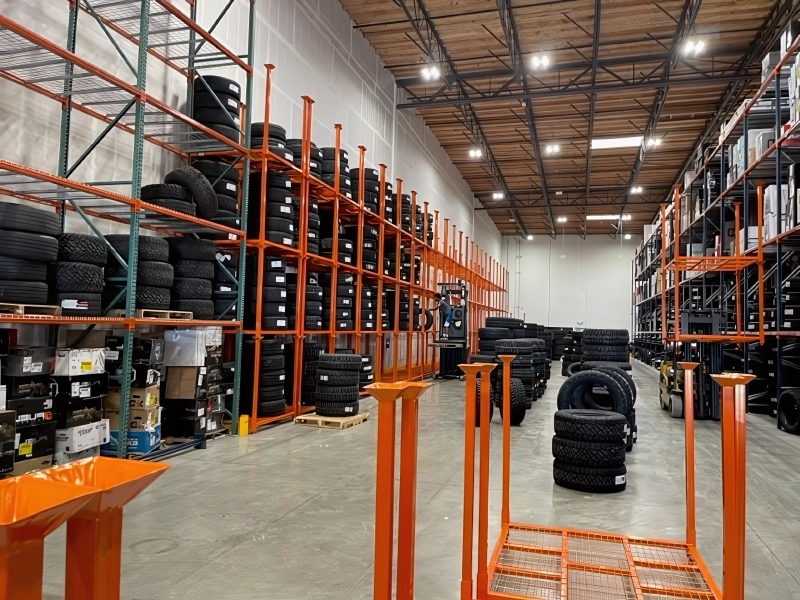
For DERack-type applications, this is the real win: the rack is not just a storage object, it is a handling rule. It tells the team where the load sits, how it returns, and how much the operation should depend on human precision versus physical structure.
Where DERack fits, and where it does not
- Good fit: repeated WIP staging with forklift in/out cycles and a fixed floor footprint.
- Good fit: unitized loads that need a clearer frame than wood pallets can provide.
- Good fit: empty-rack return logistics where nesting saves space.
- Not a fit: loose, uncontained items that need full side enclosure or small-parts containment.
- Not a fit: damaged, unstable, or poorly unitized loads that should be re-packed before storage.
In other words, a rigid post rack does not replace every storage method. It replaces the situations where wood pallets are being asked to do more than they should: hold geometry, survive repeated handling, and stay stable even when the load or the floor is not perfect.
FAQ
Is a wood pallet stack always unsafe?
No. Short, light, well-unitized stacks can be acceptable in many plants. The problem starts when the stack gets taller, moves more often, or depends on pallets that are already worn, warped, or mixed.
Do I need a rack if the stack only stays in one place?
If the load is truly static and rarely touched, a floor stack may be enough. But if the material becomes a repeated WIP buffer, a rigid rack usually lowers operator dependence and makes the handling pattern easier to control.
Need a Custom Storage Solution?
Speak directly with our technical engineers. We offer free structural designs, heavy-duty catalog evaluations, and quick B2B price quotations.
Request a Quote Now →