
Product Identification Guide: Separating STBOX Mesh Cages from MYBOX Square-Tube Folding Boxes
Identify the right foldable container before quoting: STBOX mesh-bodied wire mesh cage versus MYBOX square-tube folding box, with an identification table, term mapping and the photo, load and reuse-count check.
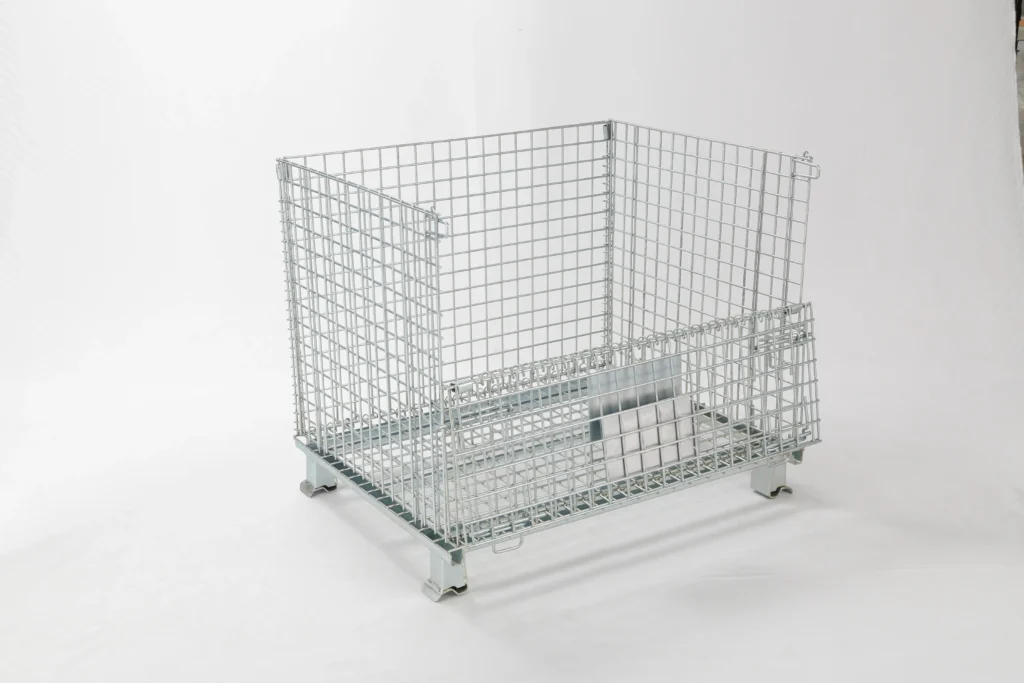
Two foldable containers, two different load paths
STBOX and MYBOX are both collapsible containers, and that is exactly why a product name alone does not settle an inquiry. The same everyday words — cage, folding box, stillage — are used for both products, and a quotation issued against the wrong structure is not corrected later by the unit price.
This page is the identification step. It separates the STBOX collapsible wire mesh container — a mesh-bodied cage whose load passes through welded mesh panels and the base frame — from the MYBOX square-tube folding box, whose mesh panels are retained by a square-tube frame with square-tube stacking uprights. Both products fold. Both are moved by forklift or pallet jack. They are not interchangeable, and the difference is structural, not cosmetic.
Three pieces of information let us confirm the product name and the drawing before a quotation is written: a photograph of the actual unit, the load per container, and the expected number of uses.
- Structure. STBOX carries load through welded mesh panels, panel edges and the base frame. MYBOX carries load through a square-tube frame, including square-tube stacking columns. A photo of the side panel answers this in one look: mesh only, or mesh inside a tube frame.
- Load. The product-comparison presentation recorded for this container family puts the STBOX practical unit limit at approximately 1 t and directs loads above that to the MYBOX. That is a selection guideline, not a certified rating.
- Folded profile. The mesh cage folds low and flat, which is why it is the more freight-efficient of the two in the same container. The square-tube box stays relatively tall even when folded.
- Reuse count. One delivery or limited staging points to the STBOX; recurring loaded turnover points to the MYBOX.
What actually separates the two products
The table below is the identification table we use when a buyer sends a drawing, a photo or a spoken description. It compares structure and load path first, because that is what decides which drawing the quotation belongs to. The load, folded-volume and container figures come from the product-comparison presentation recorded for this container family; they are selection references and must be re-confirmed on approved drawings and test records for the ordered configuration.
| Identification point | STBOX — collapsible wire mesh container | MYBOX — square-tube folding box |
|---|---|---|
| Product type | Collapsible mesh cage | Square-tube folding box |
| Body construction | Predominantly wire-mesh panels | Mesh panels retained inside a square-tube supporting frame |
| Primary structural members | Mesh body, mesh-panel edges and base structure | Square-tube frame, including square-tube stacking uprights |
| Stacking columns | No square-tube stacking columns; stacking corners on a mesh-based structure | Square-tube columns receive the stacked load |
| Principal load path | Mesh and edge structure into the base frame | Tube frame into the base |
| Unit weight | Lighter | Heavier |
| Folded profile | Low and flat | Relatively tall even after folding |
| Recommended single-unit load in the recorded comparison | Approximately 1 t, treated as a selection guideline | Recommended for loads above approximately 1 t |
| Loaded stacking | Lower; side mesh panels can be the limiting element | Higher; square-tube uprights carry the stacked load |
| Turnover expectation | One-time or limited-use applications | Repeated turnover and longer-term use |
| Finish described in the recorded comparison | Electroplated or galvanized-type finish | Powder-coated finish as standard |
| Reference units per 40 ft container | Approximately 360 | Approximately 160 |
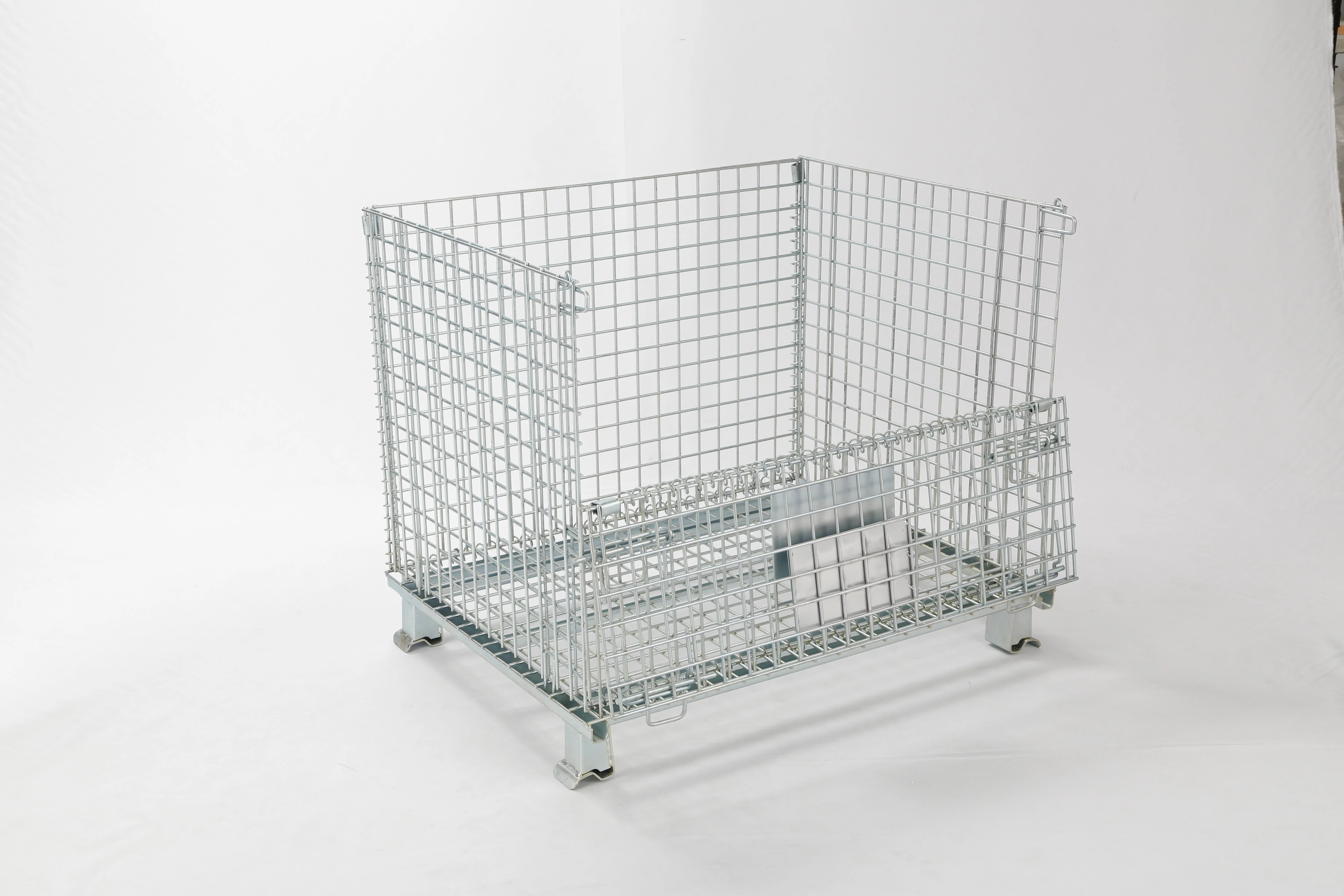
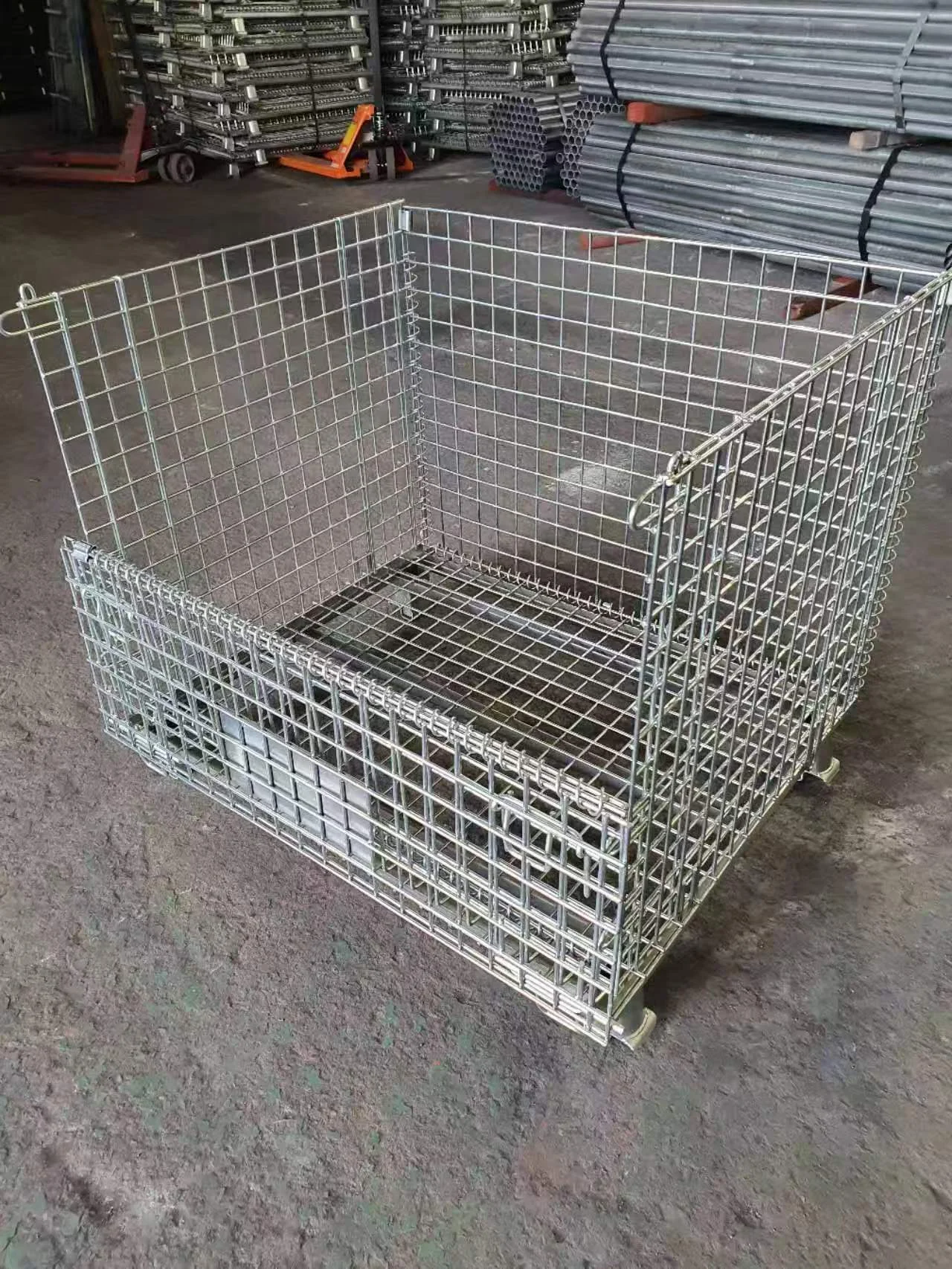
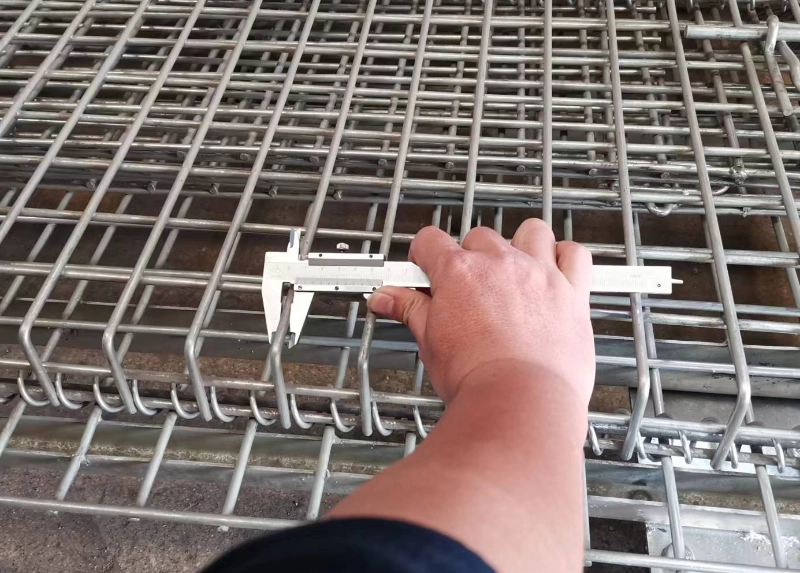
What the photographs on this page can and cannot prove: they show STBOX construction — mesh panels, helical hinge joints, formed stacking feet and a channel-reinforced base. They do not show MYBOX units, and this page does not present MYBOX measurements as STBOX values. When your own photo shows a square-tube side frame and square-tube uprights, the inquiry belongs to the MYBOX range, not to this page.
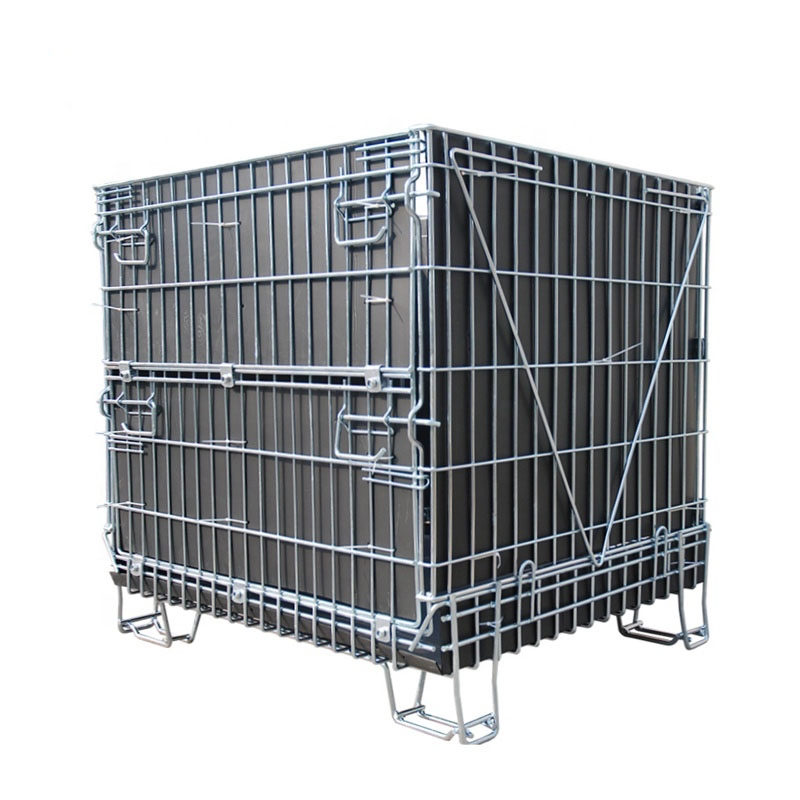
Lined body
STBOX with PP hollow-board liner
A lined cage is still a mesh-bodied STBOX. A black corrugated plastic liner is used for precision parts that must not rub against the mesh — it does not add a tube frame and does not change the load path.
Liner thickness and fixing method to be confirmed per order
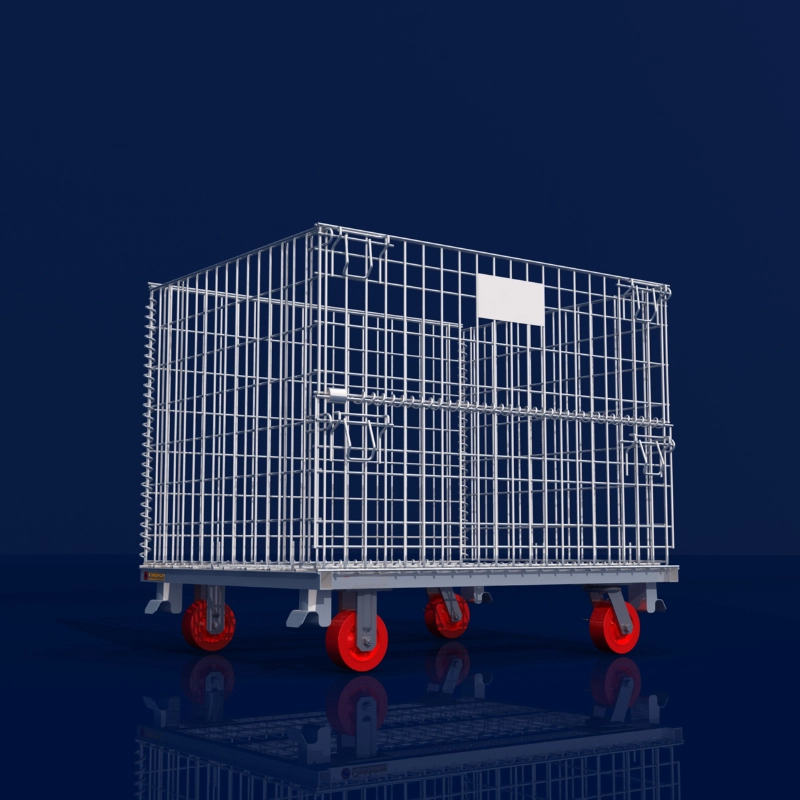
Mobile
STBOX on casters
Wheels make a cage mobile; they do not turn it into a square-tube box. A wheeled unit must be re-checked for loaded stacking and floor conditions before it is used in a stack.
Wheel load rating to be confirmed per configuration
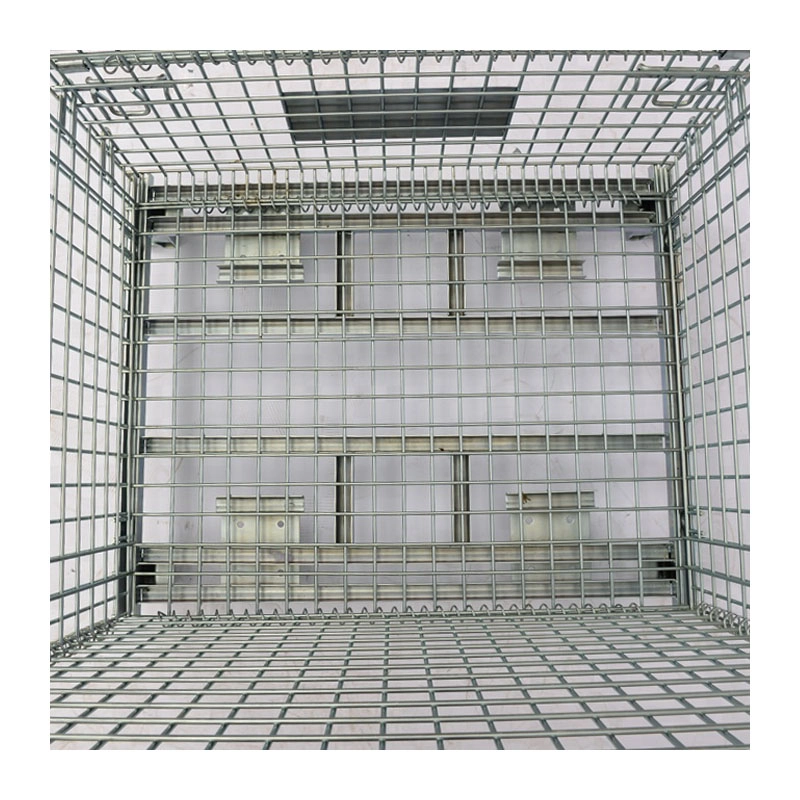
Base detail
Channel-reinforced base and formed stacking feet
Recorded STBOX projects show U-channel reinforcement through the base and pressed stacking feet at the corners. Reinforcement counts and sections differ between projects and are fixed on the final base drawing.
Mesh commonly 50 × 50 mm; confirm against the smallest part handled
For the full structure-and-selection comparison, including loaded-stack calculation examples, read STBOX vs. MYBOX: choosing between a collapsible mesh cage and a square-tube folding box.
A product name is an interpretation; a photo is evidence
A name cannot separate two foldable products
Both products can honestly be described as foldable storage boxes. In the recorded inquiry review, customers used “cage”, “folding box” and similar everyday descriptions without distinguishing the catalogue products, so product identification depended entirely on the supplier’s interpretation.
The load figure selects the structure
The load per unit is normally the primary structural criterion. Above the STBOX practical range of approximately 1 t, the recorded comparison directs the application to the square-tube MYBOX. Without that number in writing, a supplier can recommend a product that cannot carry the application.
The reuse count decides the economics
A cage that travels with one delivery and leaves the customer is a different purchase from equipment that returns to the workshop every week. Cost per use and cost per expected cycle can reverse the ranking of two units that look similar on a price list.
A wrong name has a real cost
The recorded review lists the consequences directly: drawings, samples, manufacturing time and freight may all be spent on the wrong product. A photograph in the quotation — and in the packing list — is a cheaper control than reworking a released order.
Four steps from an everyday description to a confirmed name
Send a photograph of the actual unit
Side panel, corner detail and base, in ordinary light. A phone photo of the unit you want copied is more useful than a model name typed into the inquiry.
State the load per container
Maximum normal load, load distribution and whether the figure is static or dynamic, plus any handling shock. This single number decides whether the mesh cage or the square-tube box is the correct direction.
State the expected number of uses
One delivery, a short campaign, or recurring turnover. Also state whether loaded units will be stacked, because the stack — not the individual unit rating — governs the bottom container.
Receive the confirmed name and drawing reference
We return the official product name, the drawing or configuration reference it belongs to, and the points that must still be confirmed — folded height, finish, gate direction and handling interface.
Related reading: how everyday terminology misroutes folding cage inquiries, reuse-cycle economics between mesh cages and square-tube boxes, e how folded height changes container loading.
Identification questions we answer before quoting
What is the structural difference between STBOX and MYBOX?
STBOX is a mesh-bodied collapsible cage: the load is carried mainly by the welded mesh panels, their edge members and the base frame. MYBOX is a square-tube folding box: mesh panels are retained inside a square-tube supporting frame, and square-tube uprights carry the stacked load. The stronger box is not a heavier cage — it uses a different load path. That is why unit weight, folded height, loaded-stacking performance and service life differ between the two.
My inquiry says “cage” or “folding box” — which product is it?
The name alone cannot decide. Both terms fit both products. We identify from the photo: mesh panels with helical hinge joints and formed stacking feet indicate STBOX; a square-tube side frame with square-tube uprights indicates MYBOX. Load per unit and expected reuse count then confirm the direction, and the confirmed official name is written back into your quotation.
What if I described it as a “hamster cage”?
That is one of the two recurring misidentifications recorded in the product-comparison review: a MYBOX requirement described as a “hamster cage” can be read as an STBOX request, and an STBOX requirement sent with a MYBOX photo can lead to the wrong product being quoted. In both cases the error comes from the description, not from the requirement. We treat an everyday term as a starting point and confirm the product from the photo before pricing.
Which everyday terms map to which official product name?
Use the mapping below as a first filter, then confirm with a photo. Terms made up in your own market are welcome — we ask for the photo precisely because we do not assume the same word means the same box everywhere.
| Term used in the inquiry | Official product it usually means | Still to confirm |
|---|---|---|
| Wire mesh container, wire mesh cage, storage cage, 仓储笼 | STBOX collapsible wire mesh container | Size, load per unit, stacking layers, finish |
| Stillage cage, stillage pallet, pallet mesh cage | STBOX, stillage configuration | Handling interface (forklift or pallet jack) and gate direction |
| Folding wire container, collapsible wire crate, folded box | Either product — name is not decisive | Structure from a photo: mesh body or square-tube frame |
| “Hamster cage”, “cage box”, “metal box” | Ambiguous by definition | Photo, load, reuse count |
| Square-tube folding box, tube-frame box, powder-coated box | MYBOX square-tube folding box | Stated MYBOX rating for the selected configuration |
Why should the quotation carry an actual photo?
Because a photograph can be checked and a product name cannot. The quotation control practice recorded for this product family is to include the image of the product being quoted, the confirmed load requirement, the expected reuse cycle, the intended stacking condition, the selected finish, and a short written confirmation of the customer’s terminology. In this product family a photograph in the quotation is often more useful than the product name in the description.
Can I use one published load figure for every STBOX size?
No. Recorded STBOX projects show different sizes, wire diameters and load records — including values between 1000 kg and 1400 kg on three separate projects — and those are project figures, not one standard rating. The approximately 1 t figure used on this page is the practical limit stated in the recorded comparison and should be treated as a selection guideline until a current, product-specific engineering document supports a higher value for your configuration.
Which brand does STBOX belong to?
The STBOX identity described on this page belongs to the steelpallet range: product naming, drawings and quotations for STBOX are issued under the steelpallet brand on steel-pallet.com. STBOX data is not mixed with MYBOX data, and this page does not restate another brand’s catalogue as STBOX. If a document reaches you with STBOX photographs and square-tube MYBOX parameters in the same specification table, treat the table as unconfirmed and send it back to us with a photo of the unit.
What do you need from me to close the identification?
A photo of the unit, the load per container, the expected number of uses, whether loaded units will be stacked, indoor or outdoor exposure, and the destination. Folded and assembled dimensions close the loop for packing and freight. With those in hand we return the confirmed product name, the matching drawing reference and the open points that still need your decision.