
Flat-Folded Mesh Cage Stacks Improving Container Utilisation in Volume Export Orders
How folded profile and folded height set units per container for a collapsible wire mesh cage: the 360 vs 160 demonstration reference, 13967 folded 190 mm and ten-unit stack block, 15059 20GP 250 / 40HC 638, 15217 20GP 150, and how to recalculate your own loading plan.
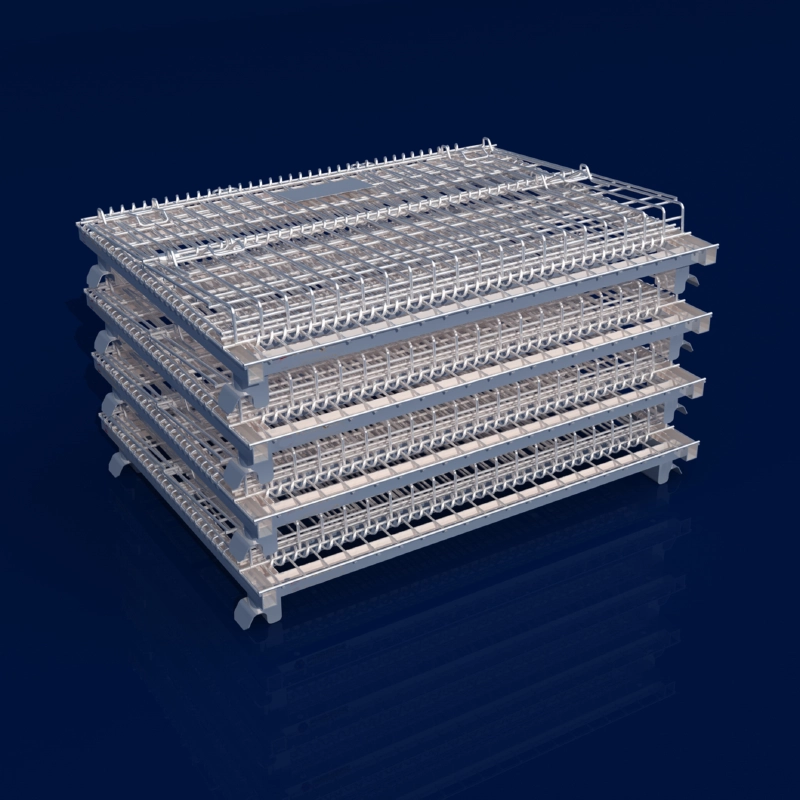
A collapsible mesh cage is shipped as a folded height, not as a cage
Fold it flatter, load more units per booking: the container count falls and the freight charged to each cage falls with it.
Nothing in a volume export order is bought as an assembled cage. The assembled cage is what the end user receives; the container is filled with folded units stacked in columns and strapped, and the height each folded unit adds to that column is the number that decides how many you can book. A 20 mm difference in folded increment, repeated a few hundred times, changes the container count on the purchase order. That is why we ask for the folded profile before we discuss quantity, and why a cage that looks identical on the floor plan can load materially differently.
The comparison used in our product presentation puts the mesh-bodied STBOX at roughly 360 units in a 40 ft container against roughly 160 units of a square-tube MYBOX. The square-tube frame keeps its uprights in the folded package, so the folded block stays tall even when the box is flat. Both figures were given as presentation references; the MYBOX figure was corrected in the session from about 80 to about 160, which is exactly why these numbers are never written into a quotation as a commitment.
- Folded increment governs the count. The container pays for the stack block, so unit folded height is multiplied by the number of units, not added once.
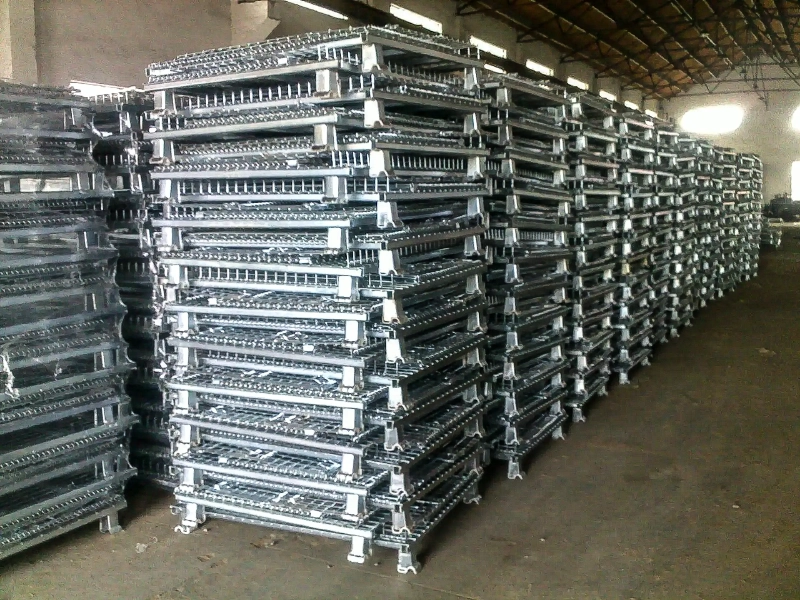
- Nesting slows the stack. In record 13967 the unit folds to about 190 mm, while ten empty units ship as one stack block of 1240 x 1240 x 1600 mm: the feet drop into the folded frame below, so each added unit costs less than its own folded height.
- Project records show how much the size moves the answer. A 1000 x 800 x 840 cage was planned at 250 per 20GP and 638 per 40HC (record 15059); a 1050 x 1050 x 1000 cage was planned at 150 per 20GP (record 15217). Different projects, different packing, so the pair is evidence of sensitivity, not a size-to-quantity formula.
- The final number is a document, not a calculation. Container quantity is confirmed on the approved drawing and the container loading plan, after packing method, restraint and usable internal height are fixed.
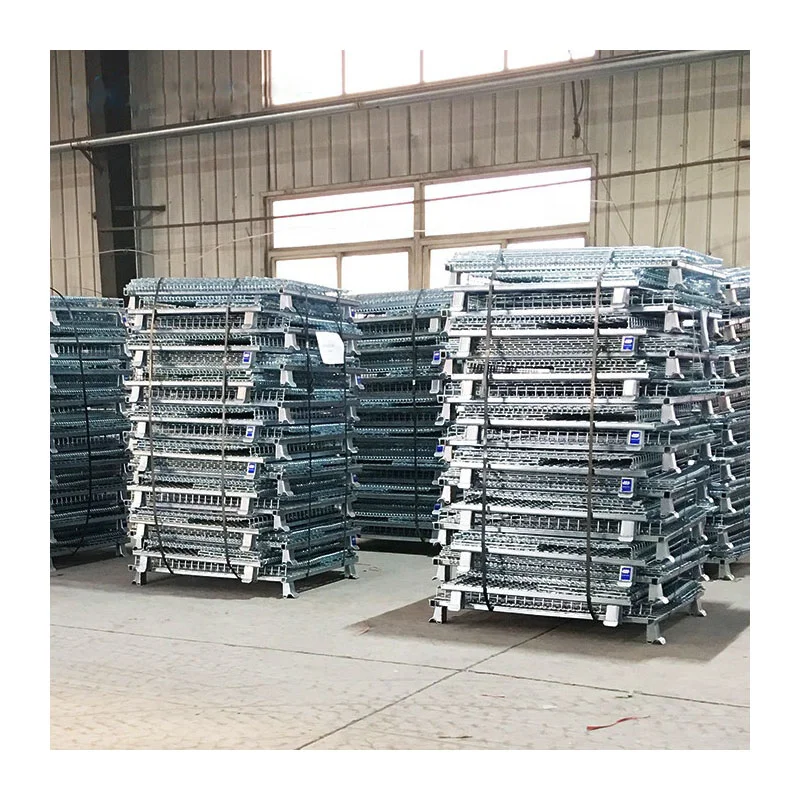
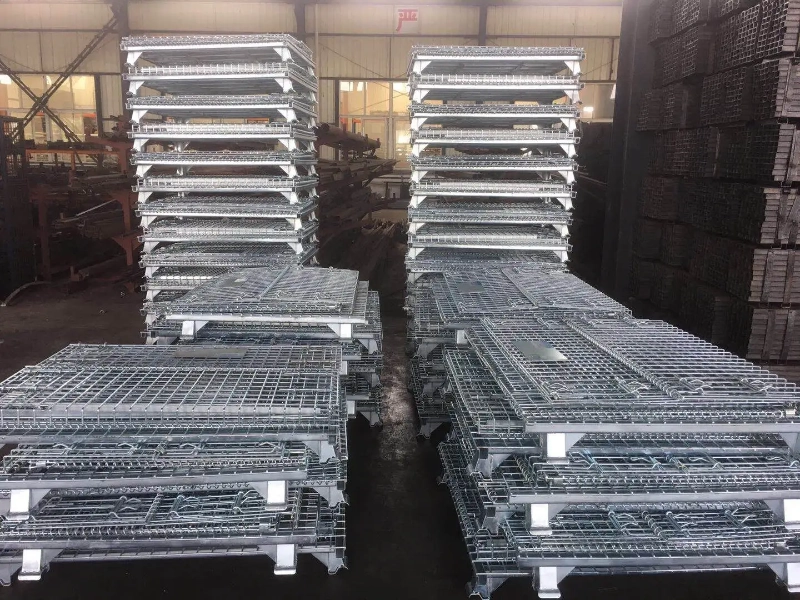
Why the flat-fold cage and the square-tube box load so differently
Both products fold. Only one of them becomes a low, flat package that can be nested and strapped into a dense column.
The table below reproduces the comparison stated in our product presentation. It is a demonstration comparison between two of our own product families, produced to explain the packaging difference, and it is not a guaranteed loading quantity for any order.
| Packing characteristic | STBOX collapsible mesh cage | MYBOX square-tube folding box |
|---|---|---|
| Folded appearance | Low and flat | Flat arrangement, still relatively tall |
| Structural members in the folded package | Mesh panels and edge members fold into the base frame | Square-tube uprights continue to contribute folded height |
| Reference units per 40 ft container | Approximately 360 | Approximately 160 |
| Difference in the same booking | Approximately 200 additional STBOX units in the reference comparison | |
| Commercial consequence | Freight allocated per unit is lower | Freight allocated per unit is higher |
| Status of these figures | Presentation references from a demonstration comparison. Not a quotation, not a commitment, and not transferable to another size. | |
The important reading is the mechanism, not the two numbers. Folded height enters the loading plan once per unit inside a stack, so the product whose folded package stacks lower and nests tighter wins the container arithmetic by a wide margin, even when its ex-works unit price is not the lowest. The same mechanism is why an assembled size that looks similar on a drawing can load very differently: the assembled cage is not what fills the container.
This is a mesh-cage page, and the boundary matters. The STBOX is a mesh-bodied collapsible wire mesh container with a practical working load around one tonne; stacked loads travel through the mesh panels and their joints. If the requirement is a load clearly above that range, repeated turnover, or loaded stacking with a heavy upper level, the square-tube product is the correct direction, and its lower container utilisation is part of the delivered cost you are choosing. Load and use cycle decide the product; container count then decides the delivered economics of that product.
Three records, three different answers, and why none of them is your quotation
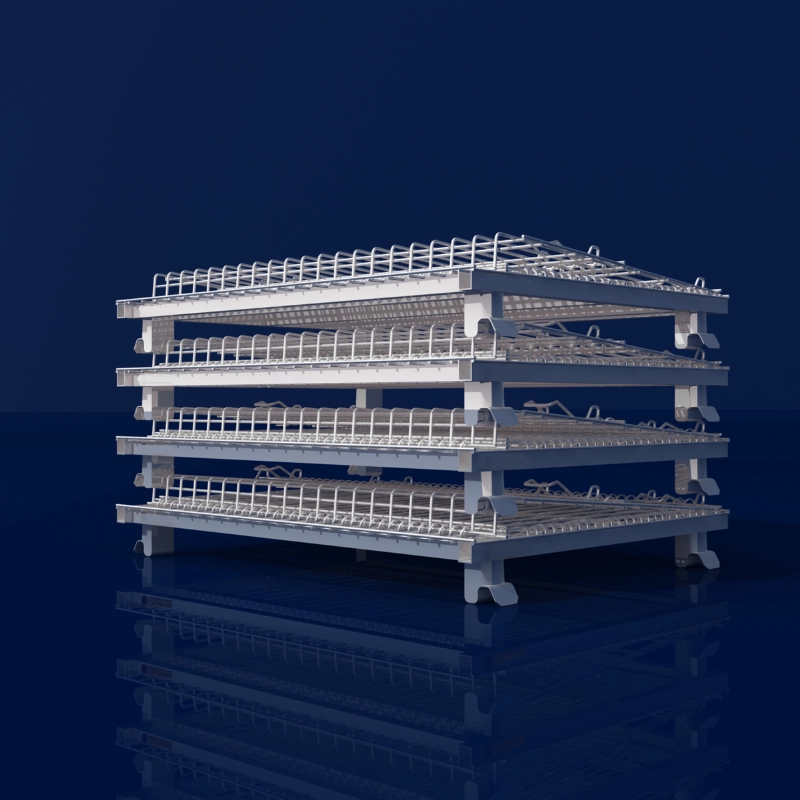
Record 13967
Folded height of about 190 mm, ten empty units per stack
A parts-storage cage built to a requested 800 mm width and 1100 +/- 100 mm length, 890 mm recommended height, 1000 kg working load, with the opening on the 800 mm side. This is the only record where a folded height is written down for the unit: about 190 mm. Ten empty units are stacked into one block measuring 1240 x 1240 x 1600 mm for shipment, which is what the loading plan actually uses.
Working load 1000 kg (project specific)
Empty stack block 1240 x 1240 x 1600 mm, ten units
Static stack guidance: up to 4 layers, upper layer 500 kg or less
Record 15059
250 units per 20GP and 638 per 40HC on a 1000 x 800 x 840 cage
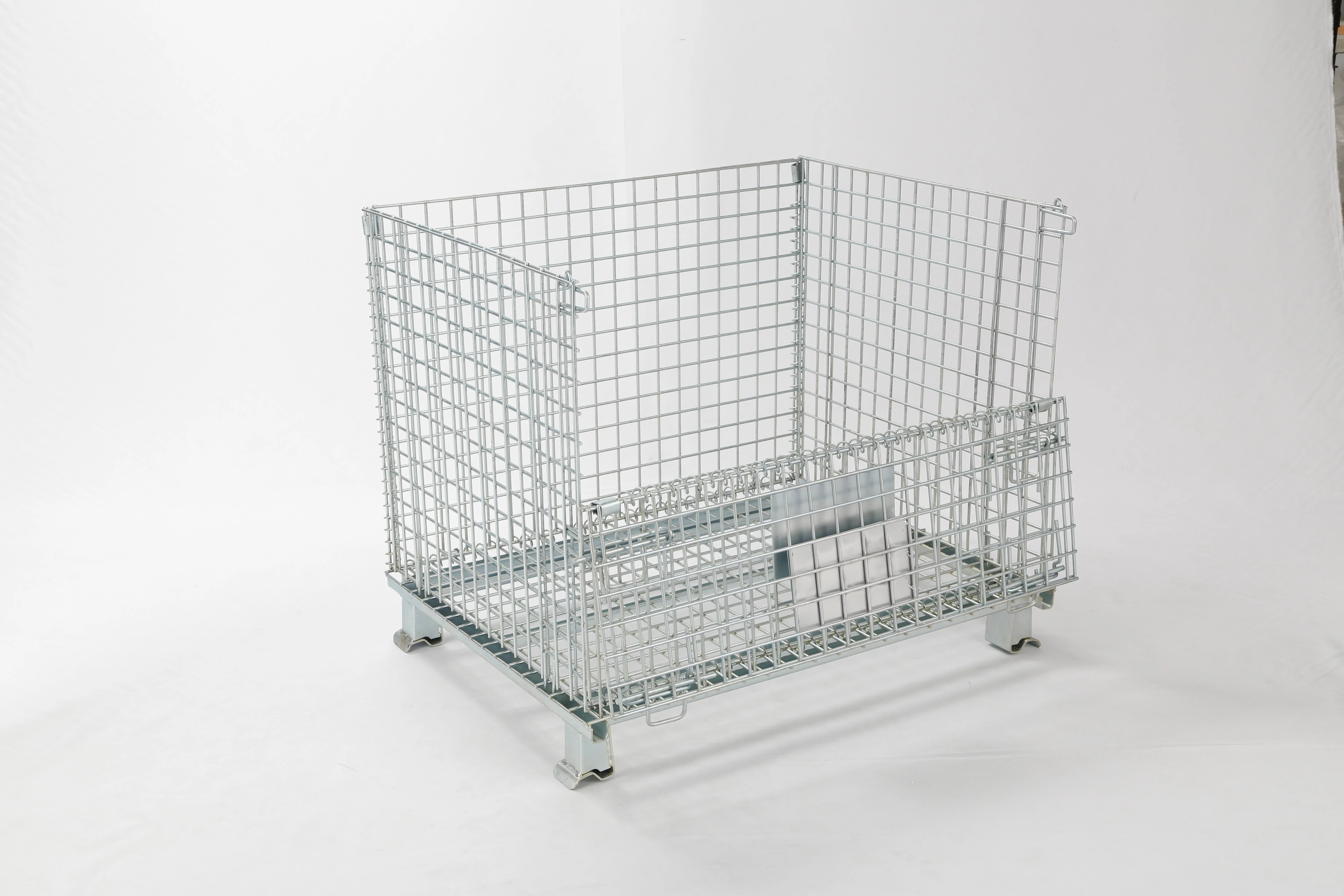
An export top-up order for a 1000 x 800 x 840 mm cage, 50 x 50 mm mesh, 6 mm wire, 1400 kg working load, with both hot-dip and electro-galvanized finishes quoted. The plan is 250 units in a 20 ft container or 638 in a 40 ft high cube, with 30 days production for the 40HC quantity. Stacking is limited to four layers, with the upper cages totalling no more than 2000 kg.
Mesh 50 x 50 mm, wire 6 mm
Working load 1400 kg (project specific)
20GP 250 units / 40HC 638 units
Record 15217
150 units per 20GP on a 1050 x 1050 x 1000 cage
The same enquiry pattern, a larger footprint and a taller body: 1050 x 1050 x 1000 mm, 50 x 50 mm mesh, 6 mm wire, 1000 kg working load, cold galvanized finish, four-layer stacking with the upper cages totalling no more than 1200 kg, and 25 days for a 20GP quantity. Against record 15059 this is 150 units instead of 250 in the same container size.
Working load 1000 kg (project specific)
20GP 150 units
25 days for a 20GP quantity
Compare the two 20 ft figures carefully. The cage that is 200 mm smaller in each floor dimension and 160 mm lower in body height was planned at 250 units; the larger cage was planned at 150. Footprint, body height, folded increment, packing and the customer’s own stacking rule all move the number. Treat the three records as evidence that the loading plan has to be built per size, never as a table you interpolate between.
Four things decide whether a container figure holds on your order
Folded increment, not folded appearance
A folded unit photographed from the side tells you it is flat. The loading plan needs the measured increment: how much height each additional unit adds once the feet are nested into the frame below. That increment, multiplied by units per stack and by stacks per container, is the count you can defend.
Packing method changes the block
Film and strapping adds no packaging cost and keeps the columns compact, but it does not fully protect the finish from knock damage between units in transit. A wooden crate is quoted at 90 CNY per square metre and it grows the outer block, so it lowers the unit count. Choose the protection level first, then the quantity.
Usable internal height, not container name
A 20 ft, a 40 ft and a 40 ft high cube are three different cavities, and the usable height after floor clearance, top clearance and restraint is what the stack block must fit. The same folded cage can be a 20GP quantity in one plan and a 40HC quantity in another without any change to the product.
Approved drawing plus loading plan
A container figure is released with the approved drawing that fixes the folded dimensions and with a loading plan that fixes sequence and restraint. Until those two documents exist, any number, including the 360 and 160 in our own comparison, stays a reference value on a page.
From your outer size and folded height to a quantity you can quote
Send four inputs
Outer size as length x width x height, the folded height you can accept, the target container type, and the quantity band you are budgeting for. If a folded height is critical for your freight, say so now, because that is the parameter the design is steered by.
We build the stack block
From the approved drawing we state the folded increment per added unit and how many empty units go into one strapped column, in the same way that record 13967 ships ten units as a 1240 x 1240 x 1600 mm block.
We fit the block to the cavity
The column height, column count and floor pattern are checked against the usable internal dimensions of the container you named, together with loading sequence, restraint and any maximum stack height your warehouse or destination imposes.
You receive an estimate and a review list
You get the loading estimate for your size plus the checklist used to produce it, so your own forwarder can audit it. The order quantity is then fixed against the approved drawing and loading plan, not against this page.
The three questions volume buyers ask first
How does the folded profile affect the number of cages per container?
Folded units are shipped as strapped columns, so the folded height enters the plan once per unit rather than once per order. A lower folded increment means more units per column, which means fewer columns, which means more of the container’s usable height and floor becomes cage instead of air. Because the collapsed mesh cage folds into its own base frame and the stacked feet drop into the frame below, the second and later units in a column add less height than the unit’s own folded height, and that nesting effect is where most of the difference between a mesh cage and a square-tube box comes from.
Can I use 360 units per 40 ft directly in a quotation?
No. The roughly 360 STBOX and roughly 160 MYBOX figures come from a demonstration comparison in our product presentation, and the MYBOX figure was corrected in that session from about 80 to about 160, which shows how easily these numbers move. They describe the scale of the packaging difference between two product families; they are not a loading quantity for your size, your packing method, your container or your destination rules. Quote a container quantity only after the folded dimensions are fixed on an approved drawing and the loading plan has been built against your container type.
How do I recalculate the loading plan for my own dimensions?
Start from the folded increment rather than from the assembled size. Take the measured folded height of one unit, then the increment each additional nested unit adds, then the number of units per strapped column, then how many columns fit the usable internal height and floor pattern of your container. Apply your packing choice, film and strap or wooden crate, and your maximum stack height rule. Repeat the calculation for every size you intend to buy: records 15059 and 15217 were planned at 250 and 150 units per 20 ft container for different cage sizes, which is why one figure cannot be scaled across a range.
Does a lower container figure ever make the other product the better buy?
Yes, and the decision belongs to the load and the use cycle, not to freight. The mesh cage is a one-time or limited-use container with a practical working load around one tonne, and stacked loads pass through its mesh panels. Where the load is clearly above that range, where units are stacked with material in place, or where the same units return to the plant for years, a square-tube frame that loads fewer units per container can still be the cheaper container per usable shipment. If your enquiry is actually a square-tube requirement described as a cage, tell us early: the wrong product identification costs more than the container planning does.
The fastest way to a defensible number is to send your outer size, folded height and target container with the quantity band you are working to. We return a loading estimate with the review checklist, and, once the drawing is approved, the loading plan your forwarder can sign off.