
Stbox Wire Mesh Container: Four-Way Fork Entry and Stackable Base
Stbox
Contenitore in rete metallica Stbox con base rinforzata a canale U, piedini di impilaggio stampati e interfaccia per carrello elevatore guidata dal disegno. Confermare lo spazio per le forche, la movimentazione a quattro vie e l'allineamento di impilaggio prima dell'ordine.
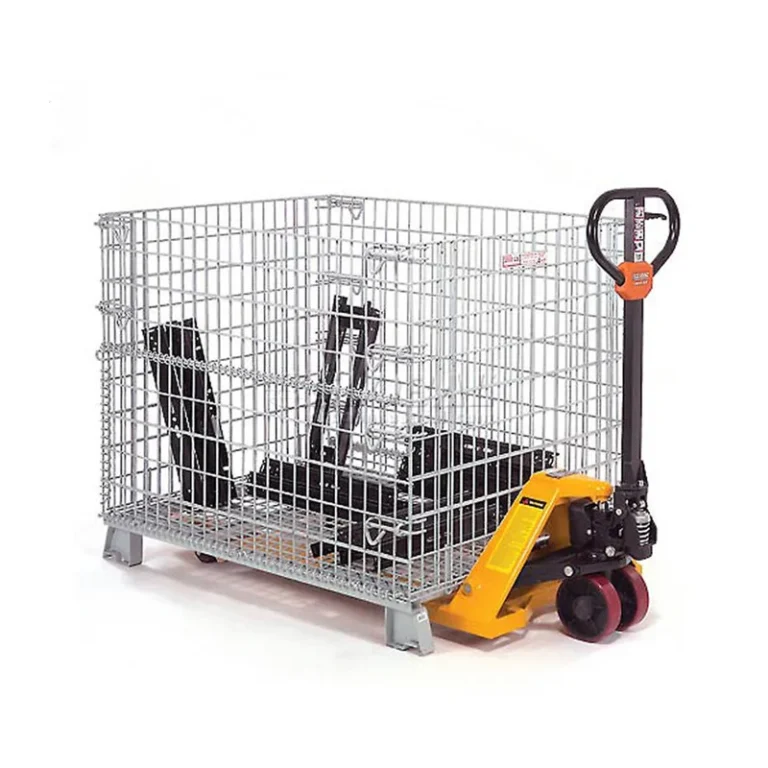
Four-way access starts at the base
Four-way handling shown. Stable stacking depends on a reinforced base, formed stack feet and a confirmed equipment interface.
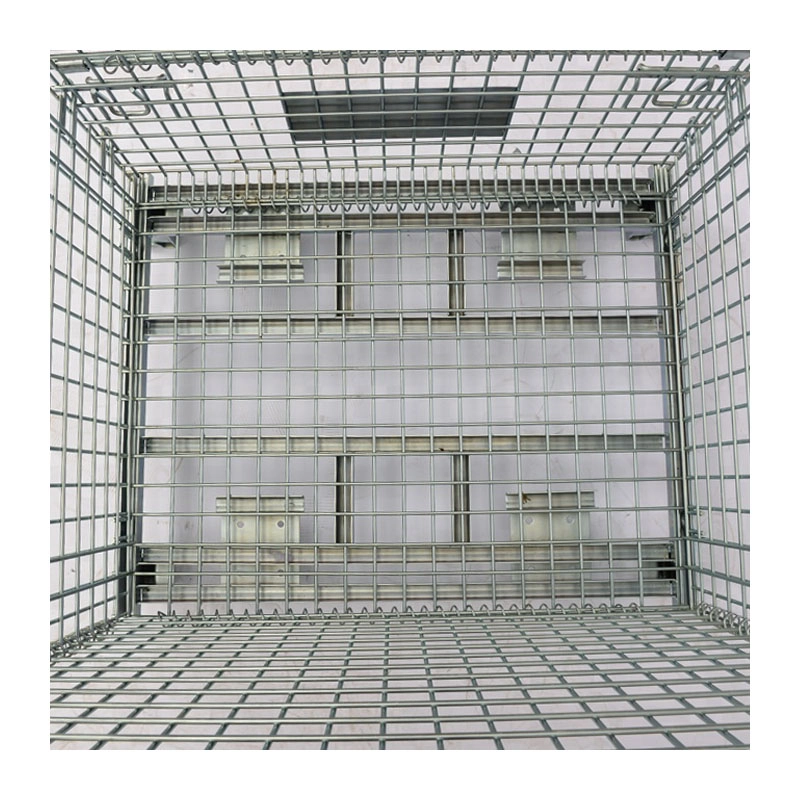
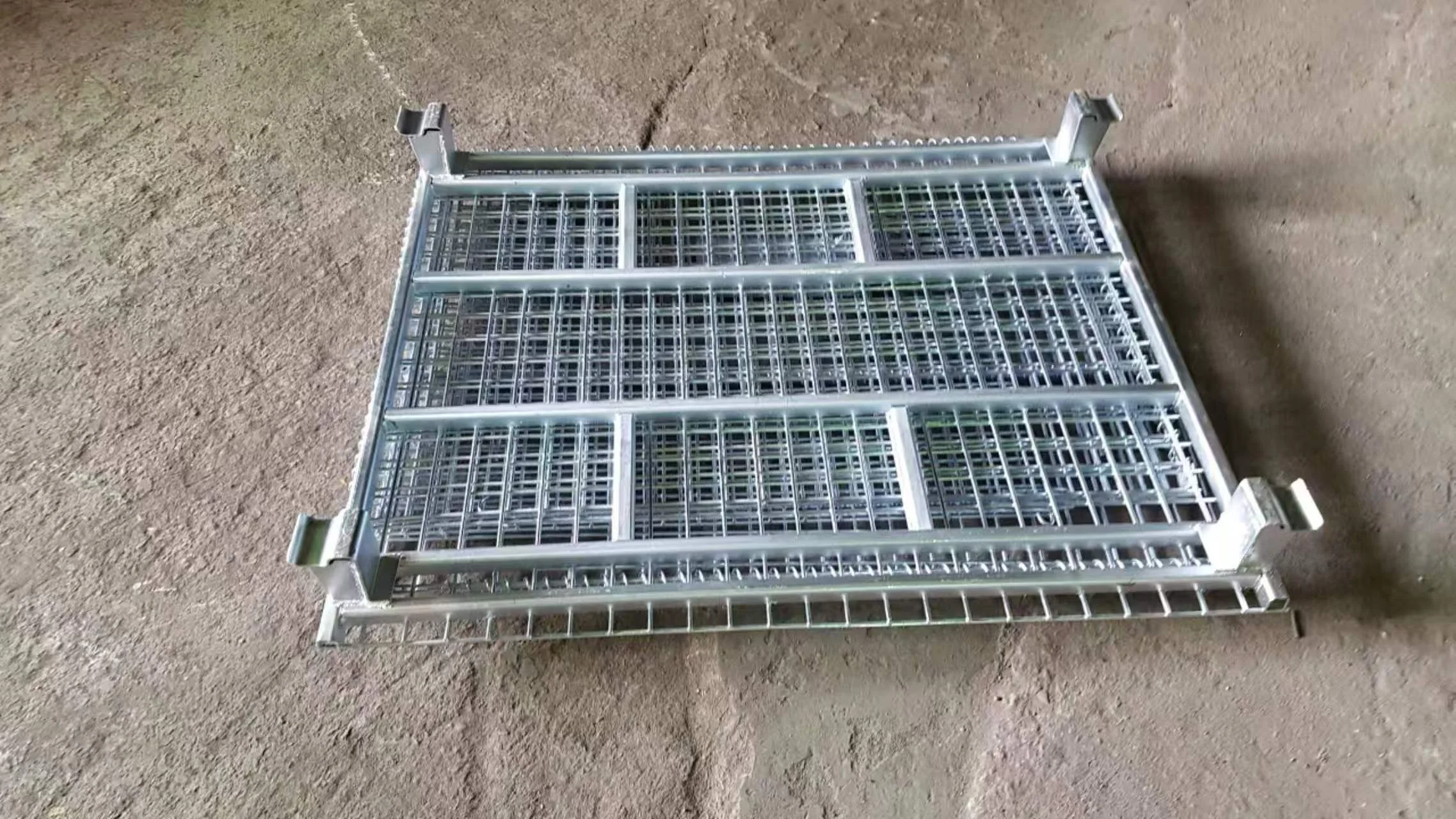
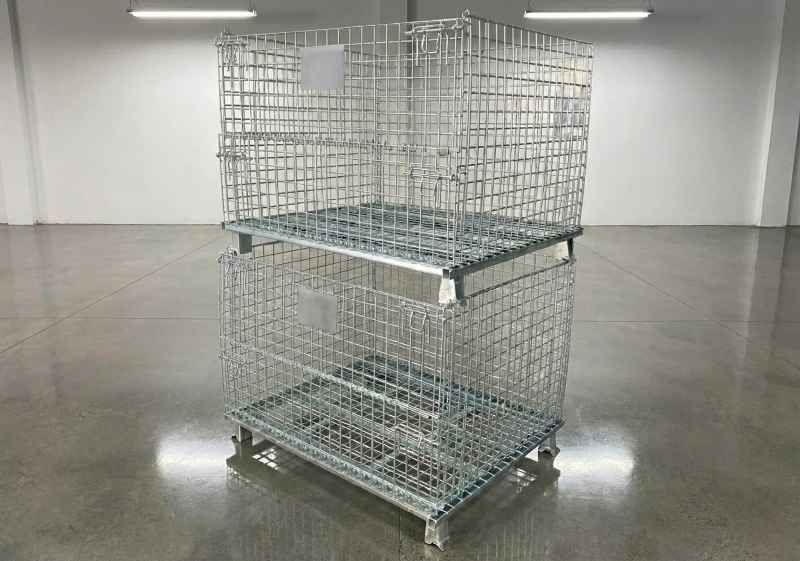
Stbox is a collapsible wire mesh container for parts storage, WIP buffering and warehouse handling. The handling-oriented construction combines U-channel steel reinforcement under the container, a formed steel bottom plate or base frame, and robust formed stack feet. At each corner, the foot is designed to seat into the locating area on the top frame of the container below. That physical engagement helps keep the upper box aligned rather than relying only on friction between flat surfaces.
- Base reinforcement: U-channel steel or channel reinforcements support the formed lower structure; the final section, count and layout follow the approved base drawing.
- Stacking location: The four corner feet must be fully seated into the locating zones of the lower container before the forklift or pallet truck is withdrawn.
- Interface verification: Indexed scenes show forklift handling from multiple directions; fork pocket clearance and four-way compatibility must be confirmed against the final base drawing and customer equipment.
- Operating discipline: Approach squarely and at controlled speed. No violent entry, tilted forks, side loading or impact against the gate frame.
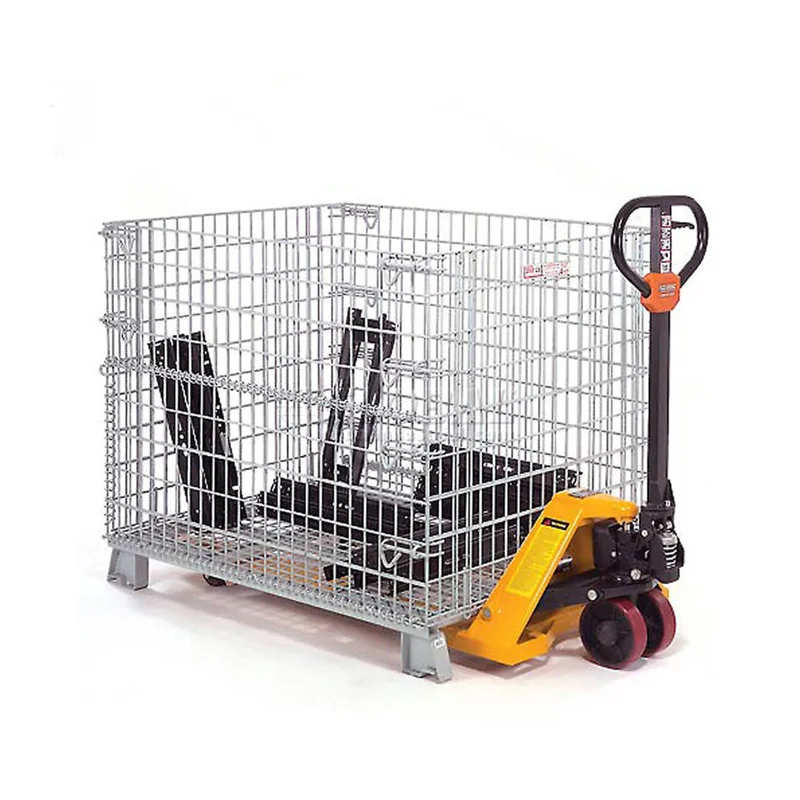
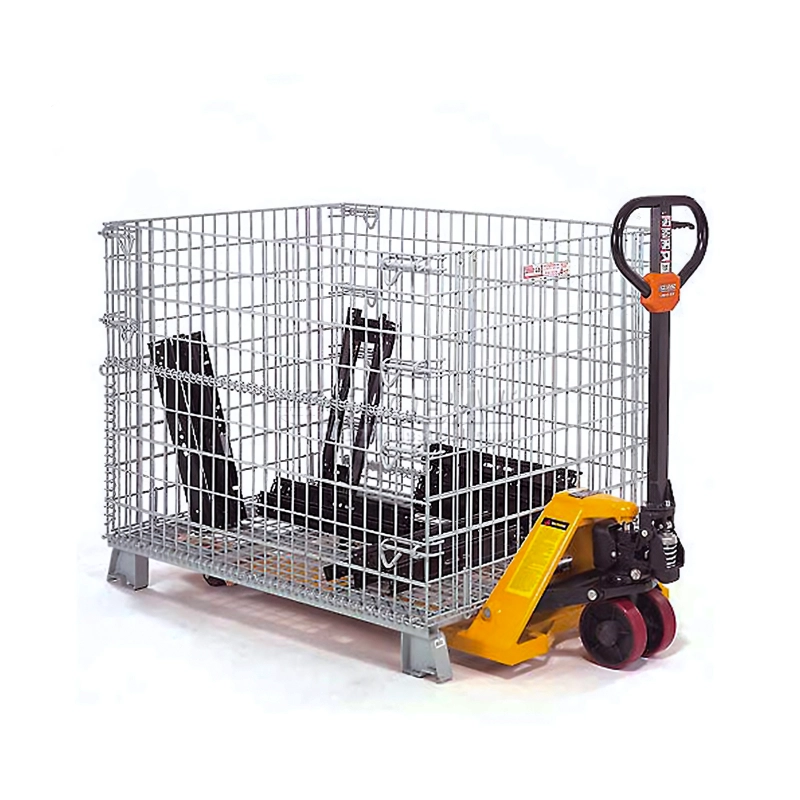
One container platform, three handling decisions
 BASE
BASE
U-channel reinforced bottom
Use when repeated forklift or pallet truck handling and distributed industrial loads make the lower frame the first design control point.
 STACKING
Formed feet with locating engagement
Use when floor storage requires repeatable vertical alignment. The upper container must be lowered squarely until all four feet are seated.
HANDLING
Fork and forklift interface review
Use when the site has fixed fork dimensions, limited maneuvering space, or a custom access requirement from more than one direction.
A mobile container, not a substitute for fixed shelving
The load travels with the container
A wire mesh container holds parts as a handling unit from the production line to the warehouse. A fixed rack organizes a location; it does not travel with the load.
Stackable feet guide the load path
The four formed feet and lower locating zones help align stacked containers. They do not authorize a universal number of layers or a load rating; these remain project-specific.
Open visibility, optional protection
The mesh supports visual inventory checks and airflow. For small, delicate, dusty or theft-sensitive parts, consider a PP liner, lid or lockable variant.
Empty return volume can be reduced
When empty, the collapsible container can be folded for storage or return logistics. Folded height and pack quantity must be confirmed for the selected model.
Prevent "forks don't fit" and "stacking wobbles" before arrival
Submit equipment data
Share pallet truck and forklift type, fork dimensions, entry directions, rated capacity, maneuvering space and load center of gravity.
Approve the base drawing
Confirm the U-channel layout, formed bottom, stackable feet, locating zones and fork pocket clearances on the final engineering drawing. Do not infer four-way compatibility from a single product photo.
Approach square and slow
Keep both forks level and centered, insert them fully into the approved pockets, lift gently and keep the load balanced. Never force an angled fork into the base or strike the door frame.
Seat all four feet
Before withdrawing the forks, lower the upper container squarely and verify that each corner foot is seated in the lower locating zone. Isolate any bent foot, deformed base or damaged weld.
Questions to clarify before ordering
Will Stbox definitely accept forks from all four directions?
Indexed images show forklift handling scenes from the base interface. Exact fork pocket clearance and four-way generality must be confirmed on the final base drawing for the selected size and customer equipment.
How does stacking stay aligned?
Ogni piede d'angolo formato lavora con la zona di localizzazione nella parte superiore del contenitore inferiore. Un inserimento stabile richiede un avvicinamento quadrato, condizioni di pavimento livellate e tutti e quattro i piedi completamente inseriti; non è una promessa di impilamento illimitato.
Posso usare lo stesso contenitore su rack da magazzino fissi?
Non presumere che sia possibile. Stbox è una gabbia di stoccaggio industriale mobile per stoccaggio a terra e movimentazione meccanica. Le dimensioni delle travi del rack, i carichi puntuali, gli spazi di sicurezza e la certificazione del rack richiedono una valutazione ingegneristica separata.
Quale portata devo indicare nell'ordine di acquisto?
I registri del progetto includono diverse cifre di carico, tra cui 1000 kg e 1400 kg in diverse configurazioni. Conferma il carico statico o dinamico, la distribuzione, il livello di impilamento, il peso totale del contenitore superiore e il metodo di prova per il design selezionato.
Quali opzioni proteggono i pezzi piccoli o delicati?
Una rete da 50 × 50 mm potrebbe necessitare di un rivestimento in lamiera forata PP per pezzi piccoli, sensibili ai graffi o alla polvere. Un coperchio o una parte superiore con serratura è un'opzione mostrata nell'indice delle immagini, non una configurazione predefinita.
Cosa dovrebbe essere controllato durante la ricezione?
Confronta la base consegnata con il disegno approvato. Ispeziona i profili del canale a U, il fondo formato, i piedi, la rete, le saldature e il portellone prima del carico. Verifica che l'attrezzatura di movimentazione entri senza forza e che un impilamento di prova si inserisca uniformemente.
Continua la revisione: PDP-03 base e rinforzo · PAGE-01 pianificazione stoccaggio magazzino · BLOG-04 guida alla movimentazione · SOCIAL-01 percorso di richiesta