
Ttrack Blog
When loose tires pile up, floor space quickly disappears. A returnable steel rack changes the handling unit from a heap to a forklift-ready stack.
If your warehouse still treats loose tires as loose floor piles, the real cost is not just square meters. You also pay in search time, handling operations, sidewall abrasion, unstable stacks, and the extra labor required to keep the area from becoming a traffic jam. That is why searches for tire storage racks and tire racks increasingly look for returnable steel rack systems instead of disposable packaging.
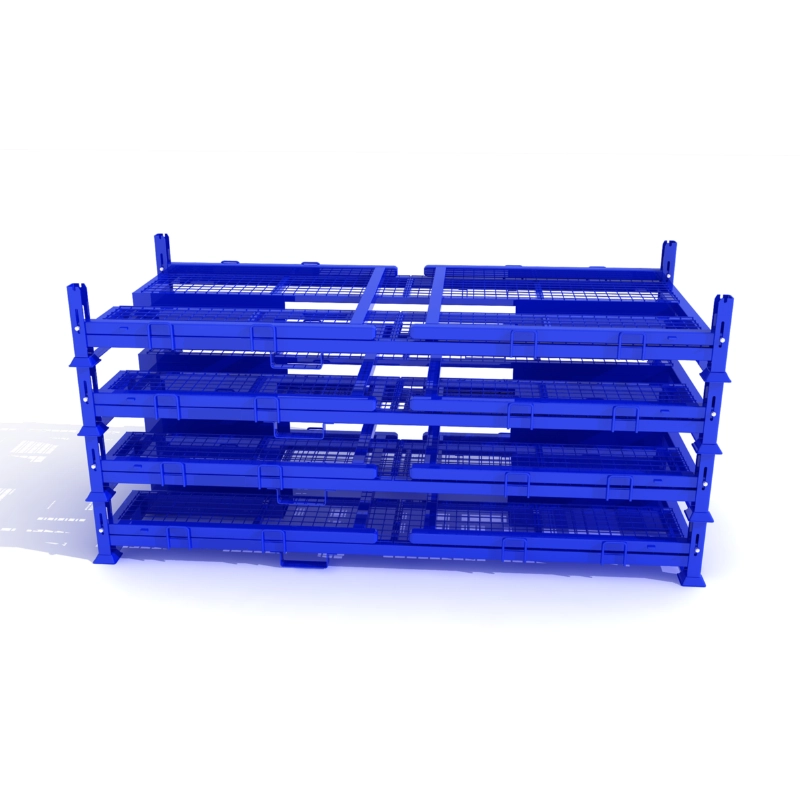
What loose tire storage really costs
Loose tires look simple until the numbers change. A floor stack is hard to segment by order, hard to separate by size, and hard to move without touching the same unit more than once. Once a warehouse team has to walk around the stack to read labels or pull out the bottom layer, the floor plan no longer behaves like a warehouse layout. You get wider aisles, more rework, and more susceptibility to damage.
A returnable steel tire rack solves this by turning the tire batch into a handled unit. Instead of moving loose parts, the warehouse handles a framed load with a repeatable base, a fixed lift point, and a clear stacking profile. That makes the rack the work unit, not the tire.
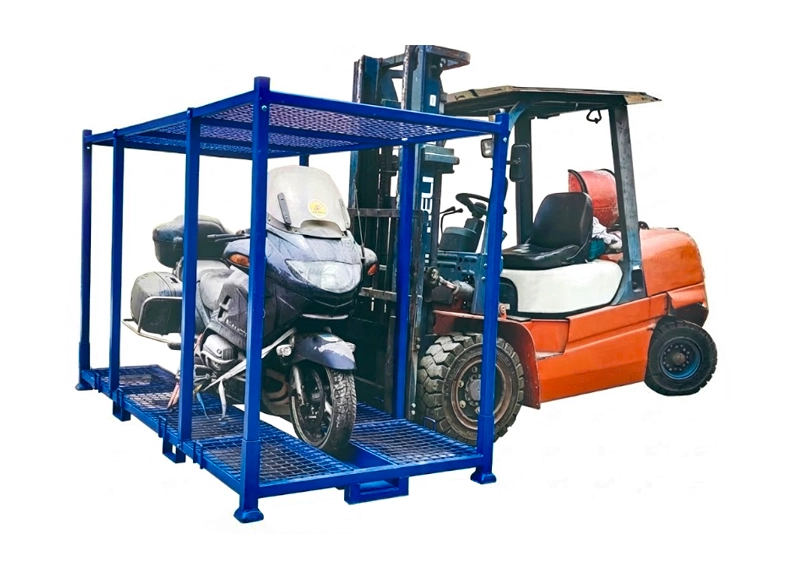
What handling whole racks changes
Handling whole racks saves more than just forklift time. It reduces the number of touches between receiving, sorting, storage, and shipping. It also gives you a clean control point for inventory. When the unit is the rack, the team can label, count, and stage by frame instead of by loose tire, which reduces confusion during peak periods.
For passenger tire or truck tire programs, the same logic is also useful in return logistics. A supplier can ship on a loaded rack, unload at the destination, and send the empty frame back as a defined asset. If your program uses the same rack in a loop, you also reduce the likelihood of a disposable wooden crate or an ad-hoc pallet getting lost in the cycle.
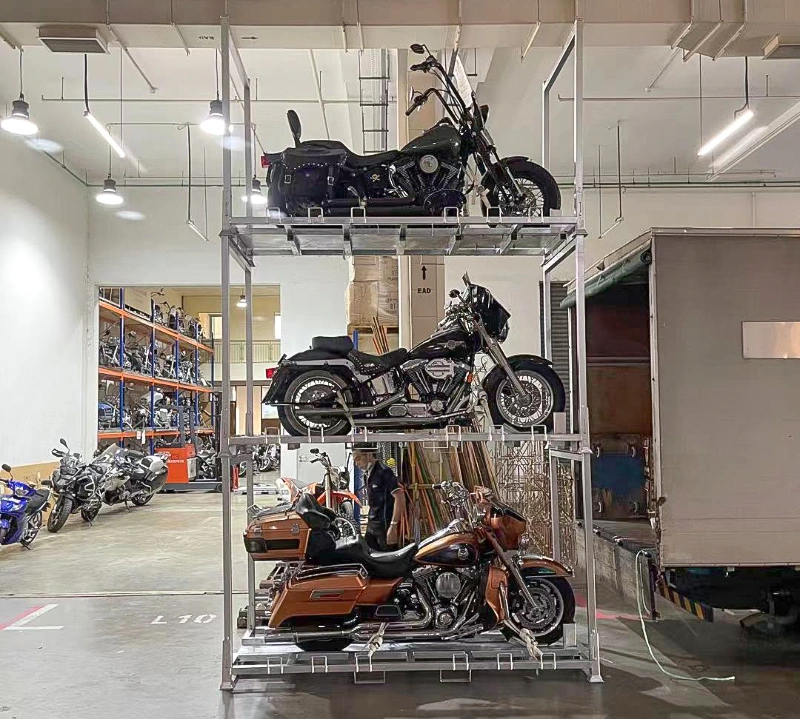
How the stack should be arranged
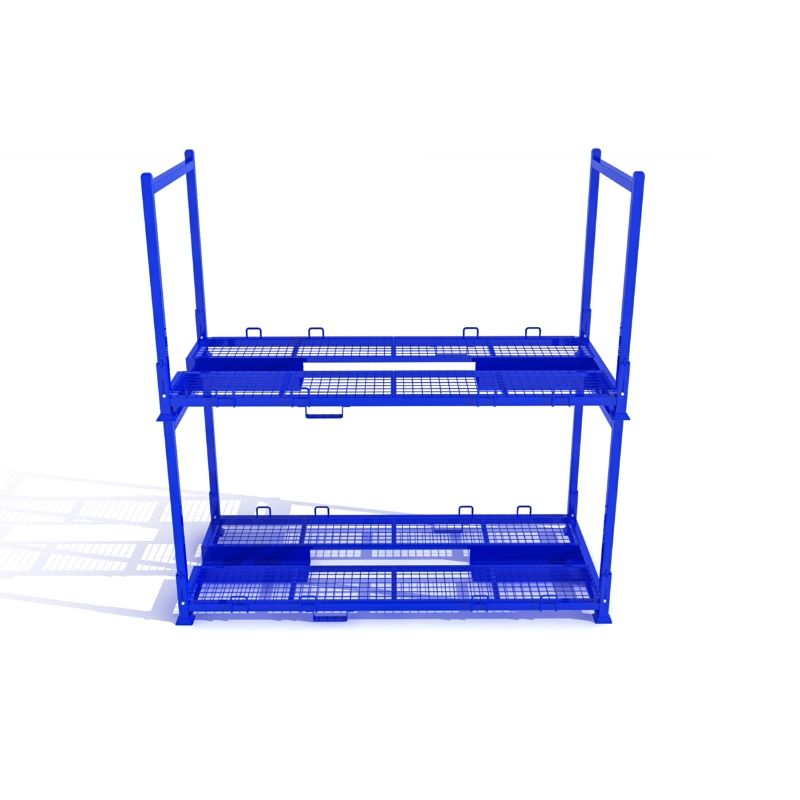
Stacking only works if the frame geometry is designed for it. Do not treat a tire rack like an arbitrary pallet. The lower frame needs a fully seated upper interface, and the upper frame must land exactly on the positioning points before the forklift sets down the load. If the stack is only half engaged, the entire advantage disappears.
A practical layout is simple: keep the same tire size together, align the stack in one direction, and keep the forklift access side consistent. That reduces mis-picks and avoids the time loss caused by turning units to make them "fit" on the fly. Multi-stacking does not mean forcing more height into the bay. It is about making the bay predictable.
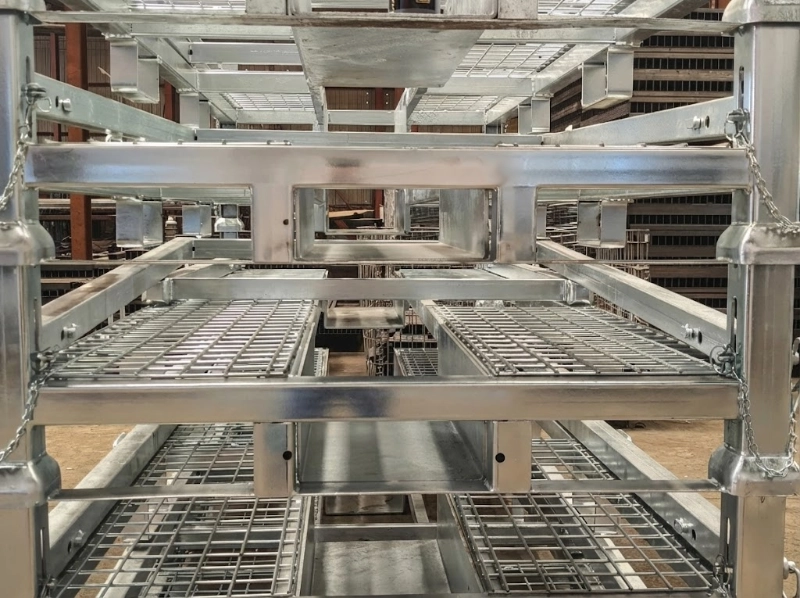
Why returning empty frames matters
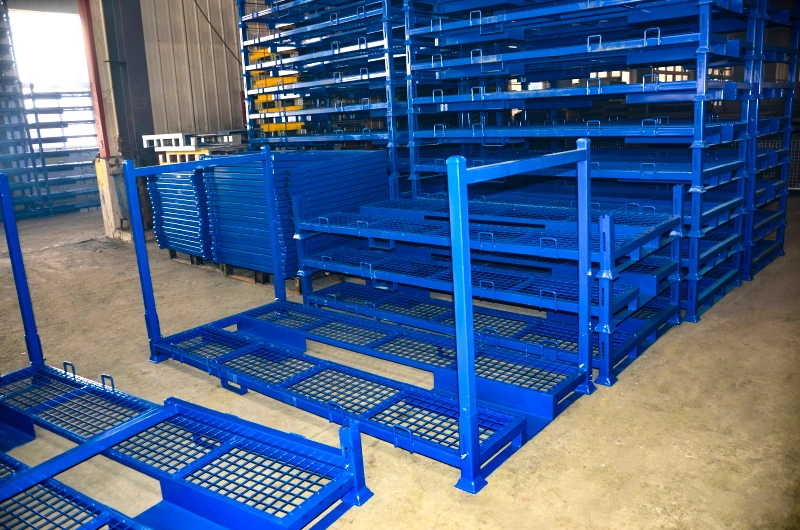
Return freight is an area where many tire programs quietly lose money. A loaded rack earns its freight cost; an empty rack can become dead volume if the return leg is not planned. That is why collapsible or stackable side elements matter. When empty frames can be stacked into a compact bundle, the container or truck returns with much less air inside.
At this point, the stackable steel rack design in the Ttrack style becomes more than just storage furniture. It becomes a circulation tool. When the side elements fold, the posts are removed, or the empty frames nest tightly, the return leg stops being a penalty and becomes part of the operating model.
Where this format fits and where it does not
A returnable tire rack is a good choice when your flow is repetitive, forklift-driven, and worth standardizing. It is also a good choice when the same rack must work across receiving, storage, and return transport. It is not the right answer when volumes are too small to justify a returnable asset, when the flow is too mixed to standardize, or when the operation cannot support a controlled forklift process.
In other words: the rack pays for itself when you use it as a circulation system, not as a disposable container. When your team compares loose floor storage with stackable tire racks, the question is not whether the rack looks neat. The question is whether it reduces touches, keeps the floor clear, and comes back in a smaller footprint.
When planning a tire storage rack program for dealer returns, buffer stock, or outgoing tire batches, first request a layout review. The right rack pattern is the one that fits your handling flow, not the one that only looks compact on paper.
Request a layout reviewBenötigen Sie eine individuelle Lagerlösung?
Sprechen Sie direkt mit unseren technischen Ingenieuren. Wir bieten kostenlose Strukturplanungen, Bewertungen von Hochlast-Katalogen und schnelle B2B-Preisangebote.
Jetzt Angebot anfordern →