
Long materials usually do not waste space because they are "too long." They waste space because the warehouse continues to treat them as flat floor stock. Once a tube, profile, or pipe is placed on the floor, the occupied rectangle grows quickly, handling becomes slower, and the aisle system begins to fail.
This article summarizes three common mistakes from industrial experience in long material storage, along with basic checks for vertical storage and clear classification. The goal is simple: move the load from floor stacking to structural support, and then make the space visible again.
The first mistake: judging storage only by length
A 6-meter tube is not just 6 meters long. In the warehouse, it also needs a safe overhang margin, a lifting path, turning space, and access for the next pick. When teams only count linear meters and ignore the total occupied area, the result is predictable: the floor fills up, the aisle narrows, and every move requires extra handling.
Horizontal floor stacking is often the fastest way to create this problem. The pile may look simple from a distance, but the real cost appears in crushed lower layers, bent edges, harder picking, and more re-handling. As a rule of thumb from experience, the longer and more flexible the material, the more valuable a defined structural support point becomes.
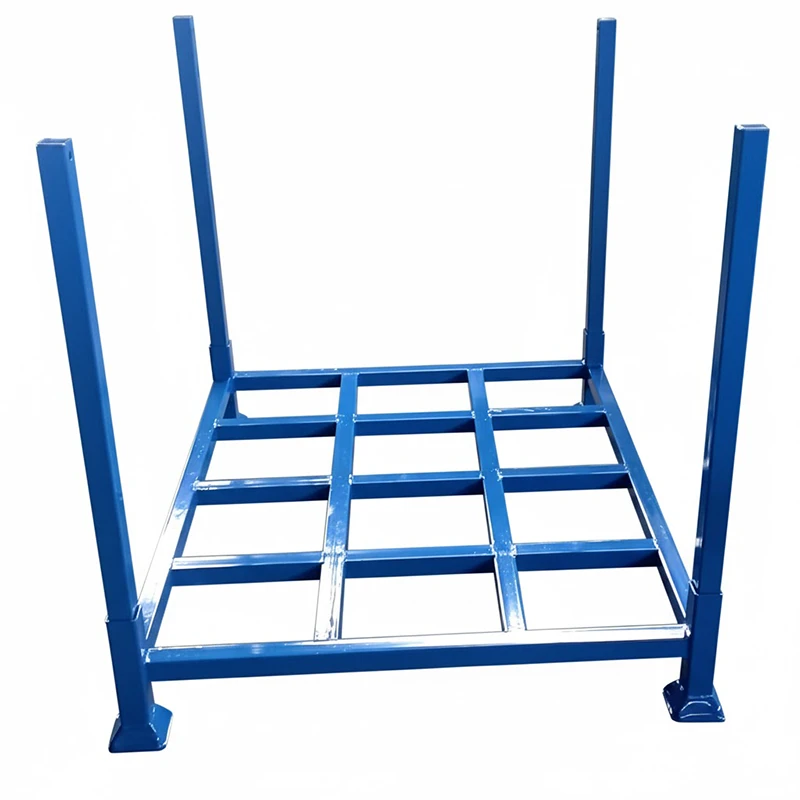
The second mistake: mixing lengths and categories in the same area
Many long material areas start with a simple rule: "Put similar items together." That sounds practical, but it often breaks down when the warehouse handles different diameters, different lengths, and different customer batches at the same time. Without a clear classification rule, operators spend more time searching than storing.
A clean system generally classifies long stock by at least four levels: length, cross-section or diameter, batch/customer, and status. For example, incoming material, reserved stock, picked stock, and returns should not share the same visual logic. Once the zone logic is clear, the warehouse can keep the floor open and reduce accidental cross-picking.
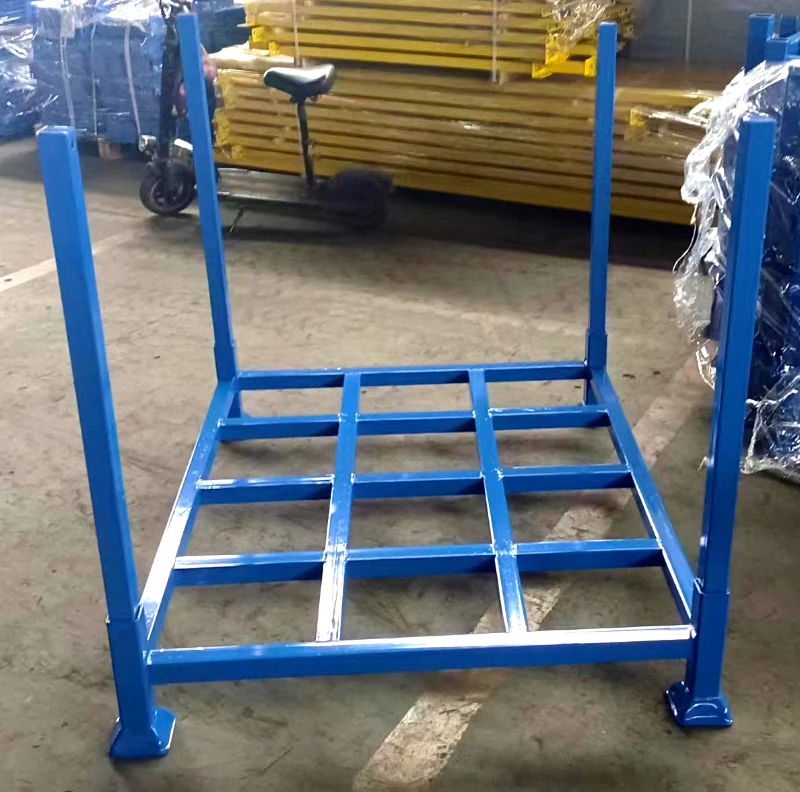
The third mistake: ignoring the return flow of empty carriers
Long material storage is not only about the loaded state. It also includes the return of empty carriers, temporary storage, and circulation between sites. If the storage method cannot be stacked, nested, or returned efficiently, the warehouse saves space at the beginning and loses it at the end.
This is where the concept of a demountable rack matters. A mobile rack with structural support allows the warehouse to move long stock off the floor; an empty stackable or nestable frame can then reduce reverse logistics volume. In practice, that helps the operation keep both full and empty flows under control.
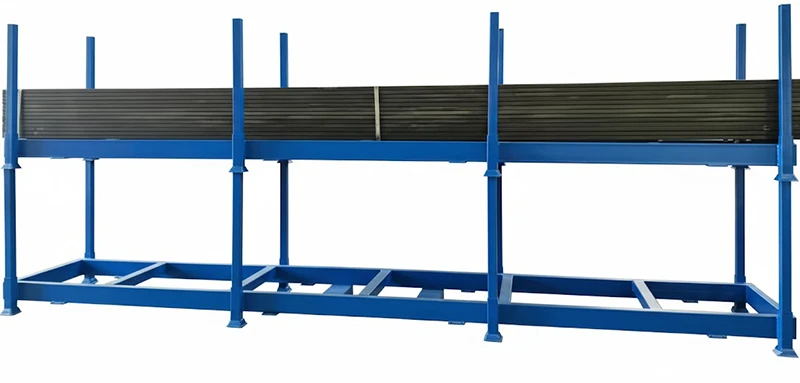
What to consider in vertical storage
- Confirm the actual length, not just the nominal size on the label.
- Verify how much overhang is acceptable and where the support points should be.
- Leave enough aisle width for forklift entry, turning, and pick confirmation.
- Use a clear code rule for length, diameter, batch, and status.
- Set a visible label position so operators can identify stock without re-handling.
- If the rack will circulate between sites, plan the return and nesting logic before the first batch arrives.
When Derack fits well and when it does not
Derack is a good option when the main problem is floor congestion and the operation needs a mobile, stackable, returnable carrier for long materials. It is especially useful when the warehouse wants to move from floor stacking to structured storage without installing fixed racking.
It is not a universal answer for all products. Loose small items, highly fragmented picks, or situations that need fixed racking with compartments may require a different storage system. The right choice depends on material length, handling method, circulation frequency, and whether the empty carrier must return.
Conclusion
Long material warehouses generally do not run out of space because the building is too small. They run out of space because floor stacking hides the real footprint. Once the operation stops stacking everything horizontally and starts classifying stock clearly, the warehouse can recover aisle space, reduce damage, and make picking easier.
If you are reviewing a long material area and want to compare a structural storage approach with your current design, the next step is to examine the rack structure, classification rule, and return flow together, not separately.
Frequently asked questions
Why does horizontal stacking seem efficient at first?
Because it is easy to place material on the floor quickly. The problem appears later: the pile spreads into the aisle, access becomes slower, and the risk of damage increases as the pile grows.
What is the main benefit of moving long stock to a rack system?
It converts the load from floor-dependent storage to structural support. That generally improves visibility, handling order, and space recovery at the same time.
¿Necesita una Solución de Almacenamiento a Medida?
Hable directamente con nuestros ingenieros técnicos. Ofrecemos diseños estructurales gratuitos, evaluaciones de catálogos para cargas pesadas y cotizaciones de precios B2B rápidas.
Solicitar un Presupuesto Ahora →