
MYTRACK Cable Reel Storage: From Floor Storage to a Folding Rack That Works with a Standard Forklift
Case study: a Sri Lankan cable manufacturer replaced floor storage of empty drums and finished reels with a folding MYTRACK rack loaded by an existing standard forklift.
MYTRACK Cable Reel Storage: From Floor Storage to a Folding Rack That Works with a Standard Forklift
A cable manufacturer in Sri Lanka stored empty drums and finished copper-cable reels directly on the workshop floor. Two requirements fixed the platform early: the units had to stack, and shipping volume had to stay small. Three design stages followed, and the decisive change was a reel orientation that let the customer's existing forklift do the work instead of a dedicated machine. The customer approved the arrangement and ordered 20 units for evaluation.
Send your reel sizes and forklift data for a configuration review
MYTRACK Cable Reel Storage: From Floor Storage to a Folding Rack That Works with a Standard Forklift
This case study comes from a project meeting with a cable manufacturer in Sri Lanka. It addresses a problem common to many cable factories: how to store cable reels without consuming excessive floor space and how to handle them safely and efficiently.
The customer stored two categories of product:
Empty cable drums and reels, whether awaiting use or being returned for reuse;
Finished cable reels wound with copper wire and waiting for handling or dispatch.
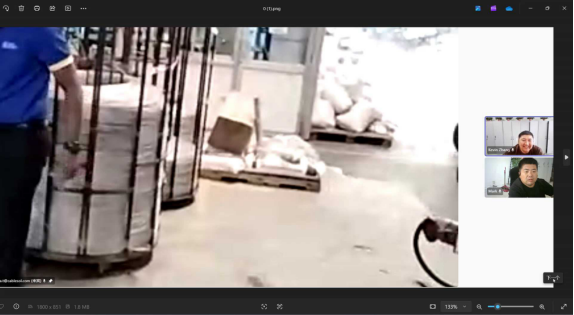
At the time of the meeting, these reels were stored directly on the workshop floor. The customer wanted to move them onto a rack and make better use of the available vertical space.
The final solution was not the first proposal presented. It was the result of three design stages:
an initial folding-rack concept with reel sizes displayed for customer review;
a V-opening approach that used the reel’s center hole but required special handling equipment;
and a final perpendicular arrangement that worked with a standard forklift and provided access to two storage levels.
The most valuable outcome of this case is the design path: a technically workable solution was reconsidered because the customer could not justify the equipment it required.
1. Project Context at a Glance
| Artículo | Recorded Detail | Significance |
|---|---|---|
| Customer | Cable manufacturer in Sri Lanka | Export project with a strong freight-cost requirement |
| Aplicación | Storage of empty cable drums and finished copper-cable reels | Reels require dedicated support and controlled handling |
| Original storage method | Reels stored directly on the workshop floor | Vertical space remained unused |
| Existing handling equipment | The customer already owned a forklift | New handling equipment needed to be justified |
| Access constraint | Limited travel space beside the storage area | Restricted the size and maneuverability of available equipment |
| Early equipment recommendation | Narrow-aisle electric forklift | More maneuverable and easier to move than a comparable fuel-powered forklift |
| First customer requirement | The rack had to be stackable | Required for orderly storage and compact accumulation |
| Second customer requirement | Shipping had to use as little space as possible | Freight to Sri Lanka represented an important part of the delivered cost |
| Product platform selected | Folding rack based on MYTRACK | Foldable construction supports compact shipping and empty-state stacking |
| Common reel specifications shown | 500 mm and 630 mm | Two principal sizes presented for customer evaluation |
| Design stages | Three | Parallel arrangement, V-opening concept and final perpendicular arrangement |
| Final handling method | Standard forklift | No dedicated reel-handling machine required |
| Final level access | Bottom and second storage levels | Avoids turning upper storage positions into inaccessible capacity |
| Customer response | Trial order for 20 units | Acceptance followed practical evaluation before a volume commitment |
The 500 mm and 630 mm figures are the reel-size specifications recorded for this application. The presentation does not establish whether both values represent reel diameters; the terminology should be confirmed against the customer’s drawings.
2. The Customer’s Original Storage Problem
2.1 Cable Reels on the Workshop Floor
The original method was straightforward: the cable drums and reels were placed on the floor.
Although simple, this arrangement created several operating problems.
| Aspecto | Floor Storage | Consequence |
|---|---|---|
| Vertical space | Only the floor-level layer was used | The space above the reels remained unavailable for storage |
| Reel movement | Reels were rolled into position | Handling depended on manual rolling rather than a controlled loading method |
| Organization | Different reels were mixed within the storage area | It was difficult to identify and retrieve a specific reel |
| Physical effort | Reels were moved by hand | Finished copper-cable reels were considerably heavier than empty drums |
| Work-area impact | Reels occupied production floor space | Storage competed with production, movement and work areas |
| Future capacity | More reels required more floor area | Additional storage space became increasingly difficult to find |
Rolling a reel across the floor was reasonable when the reel remained at ground level. The same handling method could not simply be transferred to a rack positioned above the floor.
2.2 The Forklift and Narrow-Aisle Constraint
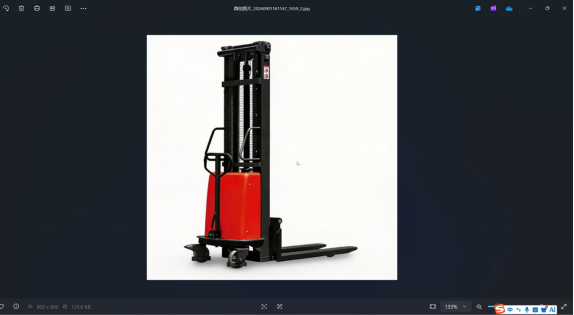
The customer already owned a forklift, but the travel space beside the storage area was limited. The customer was considering purchasing another machine capable of operating within this smaller area.
During the meeting, a narrow-aisle electric forklift was recommended. Compared with a comparable fuel-powered forklift, it could maneuver within a smaller operating area and was easier to move around the workshop.
However, this equipment discussion also exposed an important design question:
Could the rack be designed around the customer’s existing forklift, rather than forcing the customer to purchase another specialized machine?
That question became central to the final design.
| Handling Option | Ventaja | Issue Identified During the Project |
|---|---|---|
| Existing customer forklift | Already available and used for other duties | Entry and maneuverability had to be verified within the confined area |
| New narrow-aisle electric forklift | More maneuverable in a small operating envelope | Additional capital expenditure |
| Special equipment for engaging the reel center hole | Suited a purpose-designed loading method | Low utilization outside reel-handling operations |
| Standard forklift with the final rack design | Uses existing customer equipment | Required the final change in reel orientation |

3. The Two Requirements That Determined the Product Platform
Before the rack geometry was finalized, the customer emphasized two requirements.
3.1 Requirement 1: The Rack Must Be Stackable
The customer explicitly wanted the storage units to be stackable.
| Stacking Requirement | Reason |
|---|---|
| Units must be stackable | Supports orderly accumulation of cable reels |
| Stack must remain practical | Empty and finished reels have different weights and handling requirements |
| Empty units should occupy limited space | Folded units can be accumulated without using their full operating envelope |
| Design must suit export shipping | Compact stacking affects container utilization and delivered freight cost |
| Reels must remain stable | Circular reels can roll unless their movement is physically restrained |
3.2 Requirement 2: Shipping Must Minimize Space
The customer was located in Sri Lanka, and freight formed an important part of the product’s delivered cost.
| Shipping Consideration | Effect on the Design |
|---|---|
| Freight is influenced by both weight and volume | A folded rack can reduce the shipping volume per unit |
| Empty rack units should not be shipped at full operating size | Foldable construction supports compact packing |
| Container utilization affects freight cost per unit | The number of folded or stacked units influences landed cost |
| The customer also benefits after delivery | The folded state can reduce idle storage space at the customer’s facility |
Together, these two conditions determined the product platform before the detailed reel arrangement was resolved.
The rack was not simply required to hold reels. It also had to stack, fold, ship economically and remain useful at the customer’s destination.
4. Design Development at a Glance
| Design Stage | Reel Orientation | Método de Manipulación | Main Result | Reason for Revision |
|---|---|---|---|---|
| Stage 1 | Parallel to the rack beams | Not yet resolved | Covered the customer’s two common reel-size specifications | Reels could be rolled on the floor but could not be placed on the rack manually |
| Stage 2 | Reel bore aligned with a V-shaped rack opening | Fork engagement through the reel center hole | Created a direct lifting and loading interface | Required special handling equipment with low overall utilization |
| Stage 3 | Perpendicular to the rack beams | Conventional forklift engagement beneath the reel | Worked with existing equipment and provided access to two levels | Resolved both the equipment-budget and upper-level access problems |

5. Stage 1: Two Reel Sizes Presented for Evaluation
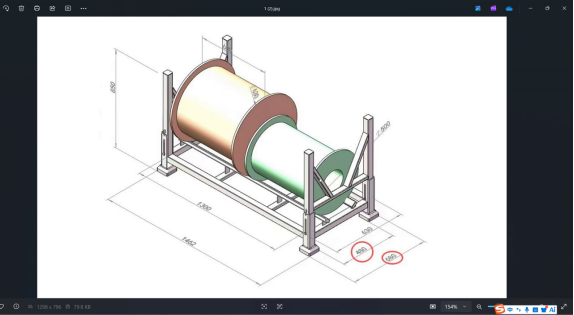
The first proposal used the folding rack as its base and accommodated the customer’s two most common reel specifications: 500 mm and 630 mm.
5.1 The Initial Arrangement
| First-Stage Feature | Arrangement |
|---|---|
| Rack platform | Folding MYTRACK-based rack |
| Reel orientation | Parallel to the rack beams |
| Reel positions | Two positions representing the customer’s 500 mm and 630 mm specifications |
| Purpose of the display | Allowed the customer to evaluate whether the two common sizes could use the same rack concept |
| Customer requirement considered | Stackability and compact shipping |
| Unresolved issue | How the reels would be loaded and retrieved once raised above floor level |
The first proposal was logical as a storage arrangement. It satisfied the major shipping and stacking requirements while demonstrating how the two common reel sizes could be supported.
However, it exposed a contradiction between the existing handling method and the new storage position.
6. The Access Problem: A Reel That Rolls Easily Cannot Be Loaded by Hand at Height
On the floor, a cable reel could be rolled into place by a worker. This was relatively simple when the reel remained at ground level.
Once the reel had to be stored on a rack, that approach no longer worked.
| Handling Step | Floor Storage | Rack Storage |
|---|---|---|
| Approach | Worker walks beside the reel | Forklift must approach the storage position |
| Initial movement | Reel is rolled by hand | Reel must be lifted to rack level |
| Positioning | Operator controls the reel while it remains on the floor | Forklift or other lifting equipment must control the reel at height |
| Soporte | The floor carries the reel directly | The rack and lifting equipment must support the reel |
| Load engagement | Not required | Fork engagement or another defined handling interface is necessary |
| Resultado | Low-level manual movement | Forklift-assisted loading and retrieval |
The first design moved the reels off the floor but did not provide a practical method for putting them onto the rack.
This was not a minor operational inconvenience. It had to be resolved before the design could be accepted.

7. Stage 2: The V-Opening Concept
The first attempt at solving the access problem involved changing the geometry of the rack itself.
7.1 Using the Reel’s Center Hole
In a conventional plug-in rack, the top of the structure is generally closed. For this cable-reel application, the end of the rack was redesigned as a V-shaped opening.
| Design Element | Función |
|---|---|
| V-shaped opening at the rack end | Created an open, funnel-like approach instead of a closed rack face |
| Reel center bore | Provided a natural engagement interface between the reel and the lifting equipment |
| Bore aligned with the V-opening | Allowed the fork tips to enter the center of the reel from the side |
| Open lower V-shaped structure | Supported the rack’s stability while providing the required opening |
| Fork engagement | Enabled the reel to be lifted into or removed from the rack position |
The idea was to use the geometry already present in the cable reel rather than requiring an additional lifting attachment around its outer rim.
7.2 A Concept That Worked—but Required Dedicated Equipment
Although the V-opening arrangement created a direct loading interface, it introduced a significant commercial problem.
| Consequence of the V-Opening Approach | Resultado |
|---|---|
| Required special fork engagement | The handling equipment had to be matched to the reel’s center bore |
| Dedicated equipment limited to reel handling | The same machine could not readily perform other workshop duties |
| Low overall equipment utilization | The customer would invest in an asset used for only one specific operation |
| Customer raised a budget objection | The additional purchase could not be justified |
| Resultado | The concept was not accepted in this form |
A technically elegant solution can still be the wrong commercial solution. When the required equipment would remain idle for most of its life, the product design should change.

8. Stage 3: Change the Reel Orientation Instead of the Forklift
The final proposal changed the reel’s orientation rather than asking the customer to change its handling equipment.
8.1 The Revised Arrangement
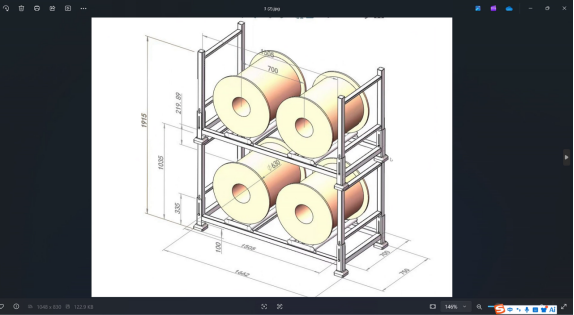
The reel axis was positioned perpendicular to the rack beams, and the reels were stacked within the folding rack.
| Design Change | V-Opening Concept | Final Arrangement |
|---|---|---|
| Reel orientation | Aligned with the original rack arrangement | Perpendicular to the rack beams |
| Fork interface | Fork tips inserted into the reel center bore | Conventional forks engage through the available space beneath the reel |
| Special handling equipment | Required | Not required |
| Reel retention | Center-bore engagement during handling | Round restraint tubes and an end stopper |
| Bottom-level access | Disponible | Disponible |
| Second-level access | Limited by the special forklift’s lifting height | Available with a standard forklift |
| Existing customer forklift | Could not be used as the primary reel-handling method | Used for the rack operation |
| Equipment utilization | Bajo | Consistent with the customer’s existing fleet |
8.2 Why the New Orientation Solved the Handling Problem
The final arrangement created a path for conventional fork tips to enter beneath the reel.
| Handling Element | V-Opening Concept | Final Arrangement |
|---|---|---|
| Fork approach | Precise alignment with the reel’s center hole | Entry through the clear space created by the revised orientation |
| Operator intervention | High precision required to locate and enter the bore | More consistent with a normal fork-insertion movement |
| Equipo | Special fork arrangement or handling machine | Standard forklift |
| Equipment utilization | Restricted to reel handling | Available for the customer’s normal duties |
| Level reach | Restricted by the handling equipment | Supports both the bottom and second storage levels |
This single orientation change resolved two separate problems:
it eliminated the need for dedicated reel-handling equipment; and
it made the second storage level accessible.
The project ultimately improved the rack by changing the orientation of the reel, rather than changing the customer’s fleet of forklifts.

9. Reel Retention: Round Restraint Tubes and an End Stopper
Changing the reel orientation required positive retention features. The final design used two separate details to control movement in different directions.
9.1 Round Restraint Tubes
Round tubes were positioned on both sides of the cable reel.
| Function of the Restraint Tubes | Engineering Effect |
|---|---|
| Prevent lateral rolling | The tubes create defined limits on either side of the circular reel |
| Maintain a consistent position | The reel remains centered within the storage position |
| Provide smooth bearing surfaces | Round tubes contact the reel more smoothly than an irregular edge |
| Define the load path | Reel weight is carried at identifiable bearing points |
| Permit loading and removal | The tubes restrain the reel without enclosing it completely |
Because a cable reel is circular, preventing uncontrolled rolling is the primary retention requirement.
9.2 The Long Strip-Form End Stopper
A long strip-form retainer was added at the end of the reel position.
| Function of the End Stopper | Engineering Effect |
|---|---|
| Limit longitudinal movement | The reel is prevented from sliding along the rack and out of position |
| Engage with part of the reel | The strip physically blocks a portion of the reel |
| Work with the restraint tubes | Completes the positional control created by the side supports |
| Retain the reel when the upper board is removed | Prevents the reel from sliding down between the support tubes |
9.3 Why Both Retention Features Are Required
| Característica | Direction Controlled | Consequence if Omitted |
|---|---|---|
| Round restraint tubes | Sideways movement and rolling | The reel can move out of its defined storage line |
| End stopper | Movement toward the open end | The reel can slide out of the support area |
| Combined arrangement | Defined retention in both directions | The reel remains in a stable, repeatable position |
9.4 How the End Stopper’s Function Was Demonstrated
The review demonstrated the end stopper’s purpose by removing the upper board from the rack.
| Test Condition | Observed Behavior |
|---|---|
| Upper board removed and no end stopper | The reel could slide down and out between the two supporting tubes |
| Upper board removed and end stopper installed | The stopper blocked part of the reel and prevented it from sliding away |
| Engineering conclusion | The end stopper was a functional safety feature rather than a decorative addition |
Removing the cover revealed the actual function of the retainer: without it, the reel could leave the rack entirely.
10. Two-Level Access: Making Every Storage Position Useful
The previous design could retrieve the reel from the bottom level, but the special forklift could not lift high enough to access the second level.
That limitation meant the upper position was not fully functional.
| Level Access | V-Opening Concept | Final Arrangement |
|---|---|---|
| Bottom level | Reachable | Reachable |
| Second level | Not achievable with the available special forklift | Reachable with a standard forklift |
| Consequence of limited reach | Upper reels became inaccessible or required additional handling | Every shown level becomes an active working position |
| Equipment dependency | Alto | Reduced by using the customer’s existing forklift |
In any stacking rack, an inaccessible level is effectively wasted capacity. The upper material may be stored there, but it cannot be retrieved efficiently when needed.
| Operating Principle | Resultado |
|---|---|
| Every level must be reachable with available equipment | Storage capacity remains usable |
| Level access must be checked against the actual forklift | Theoretical specifications do not guarantee practical reach |
| Using existing equipment removes the access ceiling | The customer does not need a separate machine solely for the rack |
| Clear fork approach and lifting clearance | The reel can be removed without damaging the rack or surrounding equipment |

11. Fork Position and Overhead Operating Clearance
The final design drawing identified two square areas representing the fork-entry positions.
| Design Feature | Purpose |
|---|---|
| Defined fork positions | Guides the operator to a repeatable approach to the reel |
| Clear space between support elements | Allows conventional forks to enter beneath the reel |
| Generous overhead clearance | Gives the reel sufficient space to rise without striking the structure above |
| Space above the upper storage level | Allows the highest reel to be removed using the same basic movement as lower reels |
| Operational objective | Makes lifting controlled, repeatable and safer |
The overhead space was deliberately reserved. It was not simply unused space above the rack.
A reel that cannot be lifted cleanly from its storage position will eventually be lifted carelessly. Adequate clearance is part of the handling design, not an optional luxury.
12. What the Final Design Delivered
The final proposal was presented to the customer as a three-dimensional rendering.
| Customer Requirement | How the Final Design Addressed It |
|---|---|
| Move reels off the floor | Reels were stored in defined positions within the rack |
| Use vertical space | Multiple rack levels used more of the available building height |
| Stack the storage units | The folding rack platform supported stacking and compact accumulation |
| Minimize shipping space | The rack could be folded for transportation |
| Accommodate common reel sizes | The design development included the 500 mm and 630 mm specifications |
| Use existing handling equipment | The final arrangement worked with a standard forklift |
| Prevent reel movement | Round restraint tubes and an end stopper controlled different directions of movement |
| Access more than one level | Both the bottom and second levels could be reached |
| Provide safe removal clearance | Defined fork positions and generous overhead space were included |
| Reduce operating complexity | No dedicated reel-handling forklift was required |
12.1 Why the Design Applies to More Than One Factory
The application is representative of a common issue in cable production.
| Common Cable-Factory Situation | Application of the Same Approach |
|---|---|
| Empty drums accumulating near the winding line | Defined rack positions replace floor accumulation |
| Finished reels waiting for dispatch | Reels become individually identifiable and accessible |
| Production space needed beside a winding machine | Storage moves to a perimeter rack without occupying the central floor |
| Reels moved by rolling across the workshop | Forklift-assisted handling replaces low-level manual rolling |
| Different reel sizes in regular use | A common rack concept can be evaluated against the principal size specifications |
| Export-oriented production | Foldable, stackable construction reduces shipping volume |

13. Customer Acceptance: A Trial Order Before Volume Purchasing
The customer accepted the final proposal and placed an order for 20 units to evaluate the application before making a larger purchasing decision.
| Acceptance Step | Recorded Detail |
|---|---|
| Design review | The final arrangement was presented to the customer |
| Design approval | The customer accepted the revised solution |
| Trial order | Twenty units were ordered |
| Evaluation purpose | The customer would assess the rack in its actual operating environment |
| Volume decision | A decision on bulk purchasing was to follow the evaluation |
A trial order is an important acceptance signal for a newly developed application. The customer was not simply buying a standard catalogue product; it was testing a configuration adapted to its reels, equipment, space and export requirements.
| What the Trial Order Could Validate | Por Qué es Importante |
|---|---|
| Perpendicular reel orientation | The core change in the handling method |
| Restraint-tube and end-stopper performance | Reel security during daily operation |
| Standard-forklift compatibility | The principal commercial advantage of the final design |
| Two-level access | Ensures that the upper level is genuinely useful |
| Folding and stacking convenience | Logistics and site-efficiency benefits |
| Compatibility with the principal reel sizes | Coverage of the customer’s most common stock |
| Removal clearance | Safe handling of reels at every working level |
14. Lessons from This Case
1. Storage and Handling Must Be Designed Together
Moving a reel from the floor to a rack changed the handling problem. A method that worked at ground level could not simply be transferred to rack height.
2. Define the Access Method Before Finalizing the Geometry
The first proposal established where the reels would be stored but not how they would be loaded. Handling should be defined at the same time as the storage arrangement.
3. A Customer’s Budget Constraint Is a Valid Engineering Input
The V-opening concept was technically workable, but the customer could not justify the dedicated equipment. Changing the design was more appropriate than forcing an uneconomical solution.
4. Changing the Product Is Often Better Than Changing the Customer’s Equipment
Turning the reel axis perpendicular to the rack beams eliminated the special forklift requirement and improved access to the second level.
5. Retention Features Must Be Tested in the Most Exposed Condition
Removing the upper board showed that the end stopper prevented the reel from sliding out. Functional testing can reveal safety features that are not obvious from an assembled view.
6. Every Level Must Be Reachable
A storage level that cannot be accessed with the customer’s available forklift is wasted capacity. Level access must be demonstrated in the actual operating arrangement.
7. Foldability Serves Both Sides of the Transaction
The folding rack reduces the supplier’s shipping volume and the customer’s idle storage footprint. The same feature benefits both parties.
15. Where This Solution Applies
| Application Area | Why It Fits |
|---|---|
| Cable manufacturers storing finished reels | Replaces floor accumulation with defined storage positions |
| Producers storing empty drums and reels | Empty material can be accumulated without consuming production floor space |
| Export-oriented factories | Foldable construction supports compact shipping |
| Facilities with limited floor area | Multiple levels use more of the available height |
| Customers already operating a standard forklift | Final design avoids a dedicated reel-handling machine |
| Operations separating empty and finished stock | Different stock categories can be assigned to defined positions |
| Cable factories with narrow internal travel space | The final handling method is based on the customer’s existing equipment |
Conclusión
This project is valuable not only because of its final geometry, but also because of the process that produced it.
The Initial Problem
A Sri Lankan cable manufacturer stored empty cable drums and finished copper-cable reels on the workshop floor. The customer wanted to use the vertical space above them while reducing the floor area occupied by storage.
Two requirements were established early:
the storage units had to be stackable; and
their shipping volume had to be minimized because freight to Sri Lanka affected the delivered cost.
These two requirements pointed toward a folding rack platform.
Stage 1: A Practical Storage Concept with an Unresolved Handling Method
The initial proposal accommodated two common reel-size specifications—500 mm and 630 mm—and arranged the reels parallel to the rack beams.
It demonstrated how both sizes could be supported, but it did not provide a practical loading method. A reel that could be rolled across the floor could not be manually placed at rack height.
Stage 2: The V-Opening Concept
The rack end was changed into a V-shaped opening. The reel’s center bore was aligned with this opening, allowing the fork tips to enter the bore from the side.
The concept created a direct handling interface, but it required special equipment whose utilization would be limited to reel handling. The customer raised a valid budget objection.
Stage 3: The Standard-Forklift Solution
The final proposal turned the reel axis perpendicular to the rack beams. Round restraint tubes on both sides controlled rolling, while a long strip-form end stopper prevented longitudinal movement.
The end stopper’s function was demonstrated by removing the upper board: without the stopper, the reel could slide down and out between the support tubes.
The revised design works with a standard forklift, reaches both the bottom and second storage levels, and includes defined fork positions with generous overhead clearance for lifting the reel safely.
The Result
The customer approved the proposal and ordered 20 units as a trial before deciding whether to make a larger purchase.
The transferable principle is straightforward:
When a design requires the customer to buy equipment that will rarely be used, change the design. A rack that works with the forklift already on site can be more valuable than one that works only with a new specialized machine.
Share your reel dimensions, reel weights, required stacking levels and the forklift already on your site. We will confirm the reel orientation, retention details and folding configuration before quoting. Talk to the MYTRACK project team