
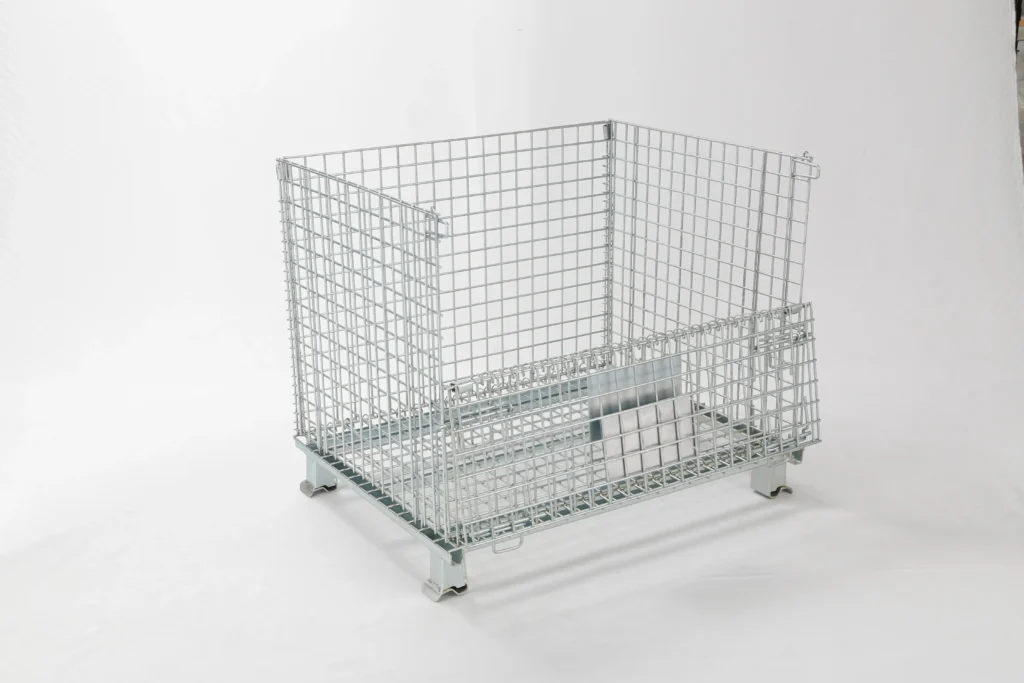
A wire mesh container may appear suitable for outdoor use and yet fail as soon as rain, condensation, salt water, and damaged coating meet steel. Procurement is not simply about whether a cage is galvanized; it is about whether the surface treatment matches moisture, salt exposure, handling damage, and storage practices on your route.
Stbox is a collapsible wire mesh container for parts storage, pallet lifting, and forklift operation. The choice of surface treatment should be made based on the actual usage cycle: electro-galvanizing may be suitable for controlled or protected conditions, while hot-dip galvanizing is the stronger starting point for sustained outdoor moisture or sea freight exposure. The final specification must still be confirmed for the project.
Why the same rain can produce completely different results
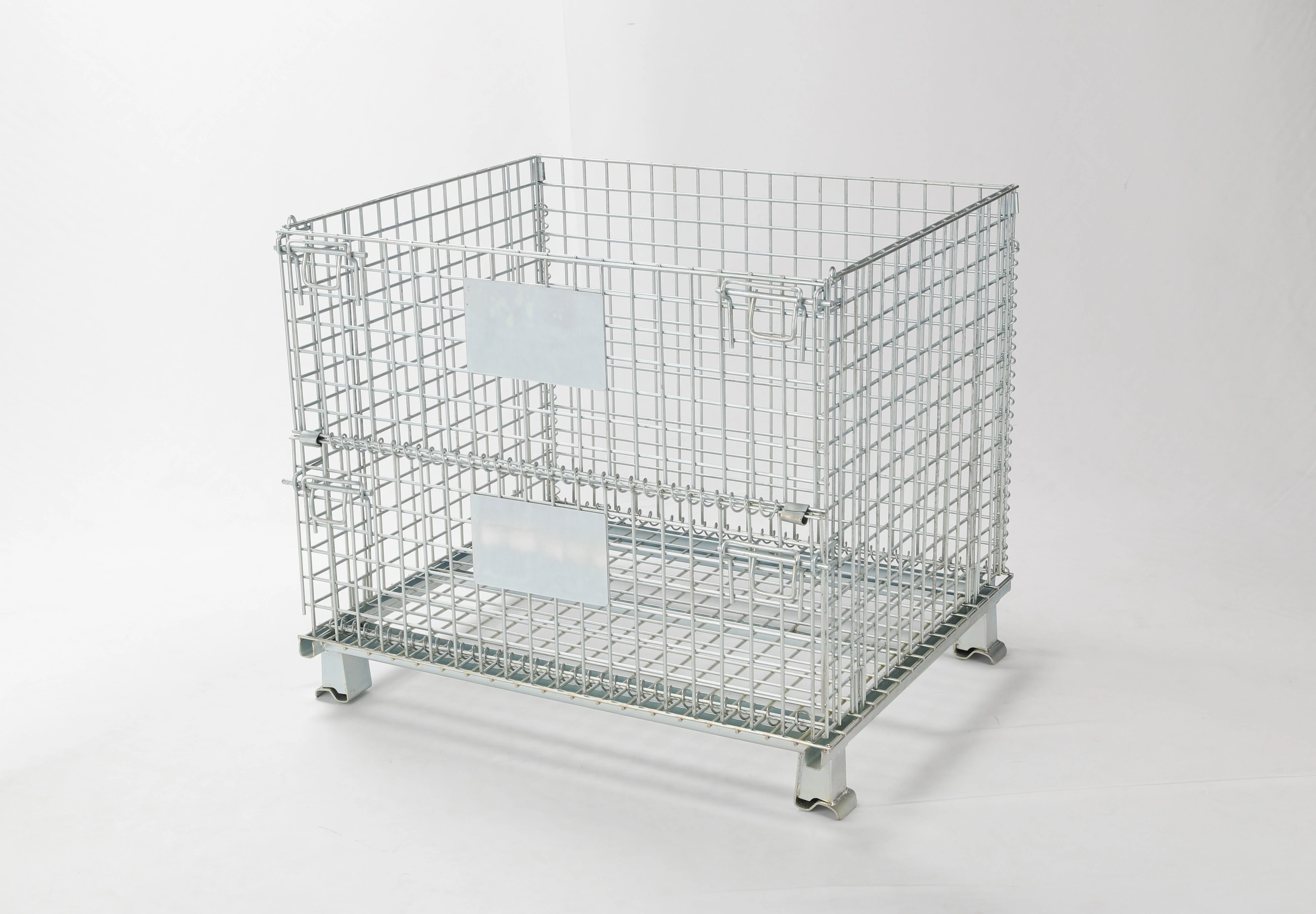
Corrosion resistance is determined by more than just the visible zinc surface. Compare coating coverage at welds, edges, and corners; check whether loading has scratched the surface; and prevent water from standing in the base or in folded joints. A galvanized collapsible container also requires practical controls such as drainage, separation from standing water, protection during storage, and inspection after handling. The rear hinge and the mesh connections shown here are exactly the areas a buyer should include in a coating and touch-up discussion rather than judging only the front side.
Hot-dip galvanized vs. electro-galvanized: What is the practical difference?
Electro-galvanized steel typically offers a smoother, more controlled zinc coating and is often chosen for indoor logistics, dry warehouses, or protected use. It should not be treated as equivalent to hot-dip galvanizing in a continuously wet or salt-laden environment. An available project reference specified electro-galvanizing of at least 8 μm for outdoor use; that is a project parameter, not a universal Stbox promise. Hot-dip galvanizing immerses the fabricated steel in molten zinc and typically provides a more substantial barrier against moisture. It may be the better starting point for outdoor areas and maritime handling, but the buyer should confirm coating coverage, dimensional tolerances, drainage, and any post-fabrication touch-up requirements. A second project reference used hot-dip galvanizing and cold coating together, showing why the entire process—not just a label—must be reviewed.
Which surface should you choose for outdoor storage or sea freight?
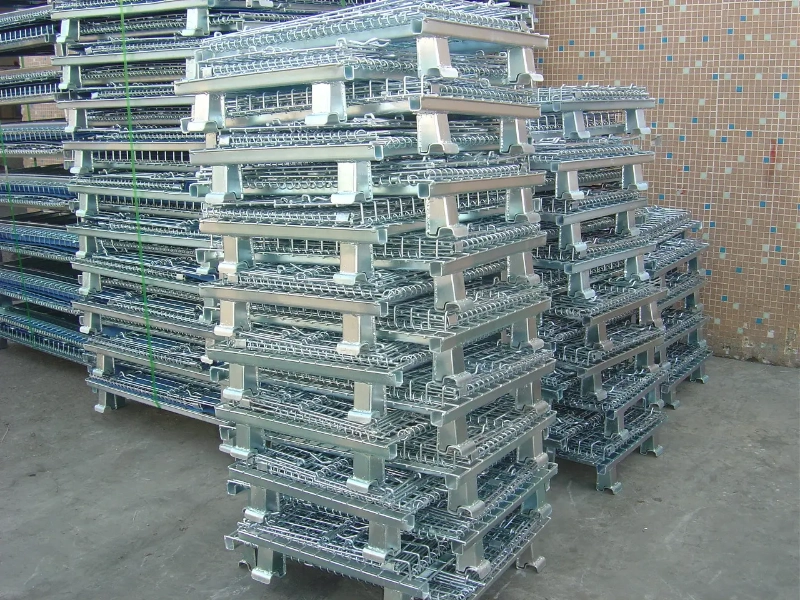
Use electro-galvanized Stbox units when the route is primarily indoors, humidity is controlled, or the cages are protected under cover and away from standing water. For an exposed yard, coastal warehouse, or repeated wet handling, ask for a hot-dip galvanized specification and confirm how welds, cut edges, and handling damage are treated. For sea freight, separate transport protection from long-term outdoor storage: salt-laden air, condensation in packaging, and abrasion during loading can damage the coating. Specify packaging, ventilation, and inspection points together with the surface treatment. If the application requires aggressive chemicals, permanent immersion, or strictly controlled aesthetics, a project review is required before a standard wire mesh container is considered suitable.
Match the surface treatment to the operating environment
- Indoor parts storage with limited humidity: Electro-galvanizing can be a practical option if the container remains dry and protected from standing water.
- Protected loading docks or covered warehouses: Confirm the expected splash water, condensation, and handling exposure before deciding between electro-galvanized or hot-dip galvanized treatment.
- Exposed outdoor areas and coastal logistics: Start with hot-dip galvanizing and then confirm weld, edge, drainage, and touch-up details for the actual Stbox design.
- Sea freight export: Specify corrosion protection together with packaging, ventilation, abrasion control, and the storage conditions at the destination; do not use a coating label as a substitute for a shipping plan.
Buyer FAQ: Galvanized wire mesh containers under wet conditions
Is hot-dip galvanizing always necessary for an outdoor Stbox?
Not automatically. The right choice depends on exposure, salt, condensation, handling damage, and whether the unit is covered. Electro-galvanizing has been specified for some outdoor projects with a verified project thickness, but that reference should not be generalized. For sustained wetness or coastal exposure, hot-dip galvanizing is usually the more conservative starting point and must be confirmed against the actual design.
Can a galvanized wire mesh container be guaranteed for a fixed number of years outdoors or at sea?
No fixed corrosion lifespan should be promised without a defined environment, coating specification, damage, and maintenance plan. Ask about the proposed treatment, coverage at welds and edges, packaging method, storage instructions, and inspection schedule. These details are more useful for the purchase than a general year-based claim.
Benötigen Sie eine individuelle Lagerlösung?
Sprechen Sie direkt mit unseren technischen Ingenieuren. Wir bieten kostenlose Strukturplanungen, Bewertungen von Hochlast-Katalogen und schnelle B2B-Preisangebote.
Jetzt Angebot anfordern →