
When a rack carries wooden or plastic pallets, the weak point is often not the steel frame. It is the pallet base. In Project 14346, the rack layout was built around a pallet footprint of 1100 x 1100 so the cross beams could sit where the pallet actually carries load, not where a generic drawing places it.
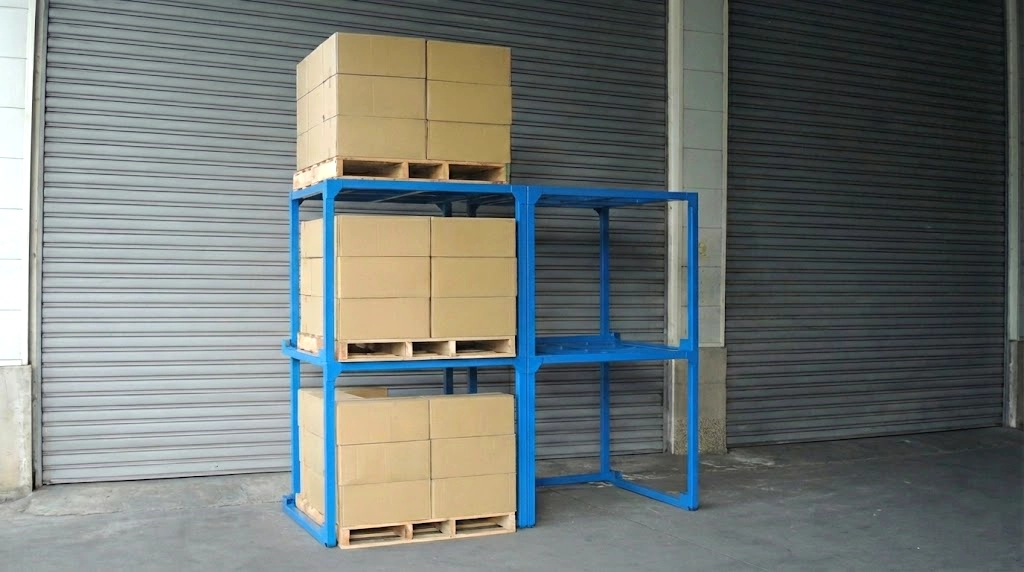
Why the pallet feet determine the rack detail
When the cross beams land between the pallet support points, the load is forced to bridge a gap. On a wooden pallet, that can twist a stringer or crush a block. On a plastic pallet, it can concentrate stress in the molded feet or runners and trigger slow deformation that only shows up after repeated cycles. The rack still looks strong, but the load path is wrong.
That is why Project 14346 did not treat the rack as a fixed standard. It treated the pallet drawing as the starting point. The cross beams were positioned to match the pallet support feet so the load could be transferred straight into the steel frame instead of being pushed through a weak section of the pallet.
What Project 14346 specified
The documented project used a pallet reference of 1100 x 1100 and 50 x 2.5 mm uprights. That is already a hint at the engineering approach: the rack was tuned as a system, not assembled from a single standard outline. The upright size, the cross beam spacing, the pallet support points, and the overall load height all had to match.
For buyers, this matters because the right answer is not always to "make the rack stronger." Often the right answer is to "make the rack stronger at the exact point where the pallet transfers load."
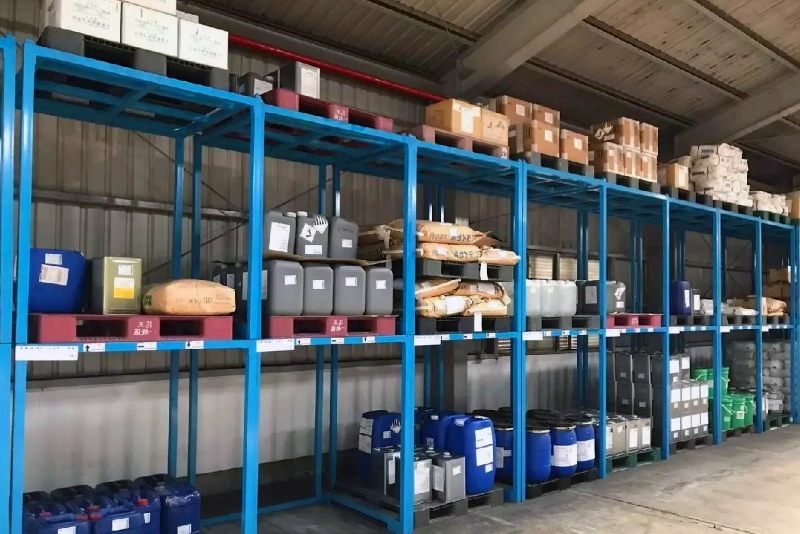
Wooden pallet vs. plastic pallet: The problem is similar, but not identical
Wooden pallets usually fail at the stringer or block under repeated point loading. Plastic pallets often fail differently: the foot area can creep, bow, or lose its geometry after heat, moisture, or long storage cycles. The cross beam rule is the same in both cases, but the detail is not.
That is the trade-off. A project-specific rack can protect the pallet better, but it gives up some interchangeability. If you want one rack to serve many pallet pools, you usually need a more forgiving internal layout. If you want to protect one pallet type with repeatable quality, you should tighten the geometry around that pallet and accept the narrower scope of use.
How load height and pallet size change the answer
Cross beam alignment cannot be separated from the overall stack height. If the height of the load plus pallet is too high for the chosen stacking pattern, the upper unit can sway even if the lower support is correct. If the pallet footprint is changed from 1100 x 1100 to another size, the support points also shift. That means the rack design, the fork entry, and the stack clearance all need to be checked again.
In practice, the customer should specify four things together: pallet size, position of the support feet, load height, and the number of stacking levels. That is the cleanest way to avoid the common mistake of considering the outer frame first and the load path later.
This is a project detail, not a universal standard
Rerack is built for custom engineering, not for a fixed catalog geometry. The same product family can be adapted for temporary storage layouts, returnable steel container loops, and palletized goods that need nested empty returns. But the exact cross beam placement in Project 14346 should not be carried over into every order without checking the pallet drawing.
Instead, use this rule: If the pallet feet are known and stable, align the cross beams to them. If the pallet pool is mixed or the support pattern is uncertain, widen the engineering window and test the actual pallet before freezing production. That is how you protect both the product and the load.
Do you need the rack built around your pallet drawing, not a generic outline?
View PDP-03 View PAGE-02Benötigen Sie eine individuelle Lagerlösung?
Sprechen Sie direkt mit unseren technischen Ingenieuren. Wir bieten kostenlose Strukturplanungen, Bewertungen von Hochlast-Katalogen und schnelle B2B-Preisangebote.
Jetzt Angebot anfordern →