
When a rack supports wooden or plastic pallets, the weak point is often not the steel frame, but the pallet base. In Project 14346, the rack layout was designed around a 1100 x 1100 pallet footprint, so that the beams were placed where the pallet actually bears the load, not where a generic drawing says they should be.
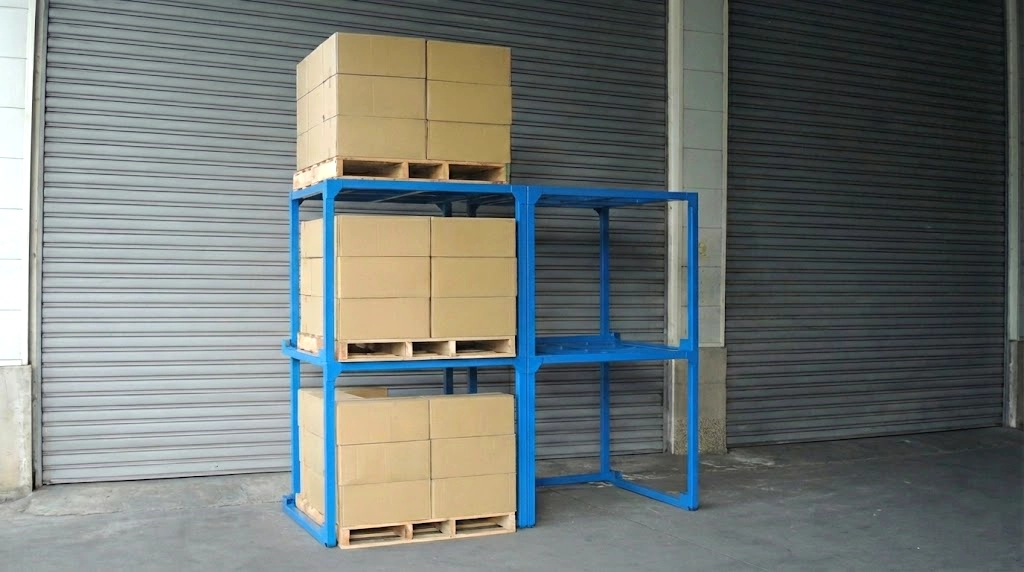
Why the pallet feet decide the racking detail
If the beams fall between the pallet support points, the load is forced to bridge a gap. On a wooden pallet, this can twist a stringer or crush a block foot. On a plastic pallet, it can concentrate stress on the molded feet or stringers and initiate slow deformation that only becomes apparent after repeated cycles. The rack still looks sturdy, but the load path is incorrect.
That is why the Project 14346 report did not treat the rack as a fixed standard, but considered the pallet drawing as the starting point. The beams were positioned to align with the pallet support feet, so that the load could be transmitted directly into the steel frame rather than being pushed through a weak section of the pallet.
What Project 14346 specified
The documented project used a 1100 x 1100 pallet reference and 50 x 2.5 mm uprights. That alone is a clue to the engineering approach: the rack was being tuned as a system, not assembled from a standard outline. The upright size, beam spacing, pallet support points, and total load height all had to work together.
For buyers, this matters because the right answer is not always "make the rack stronger." Often, the right answer is "make the rack stronger at the exact point where the pallet transfers the load."
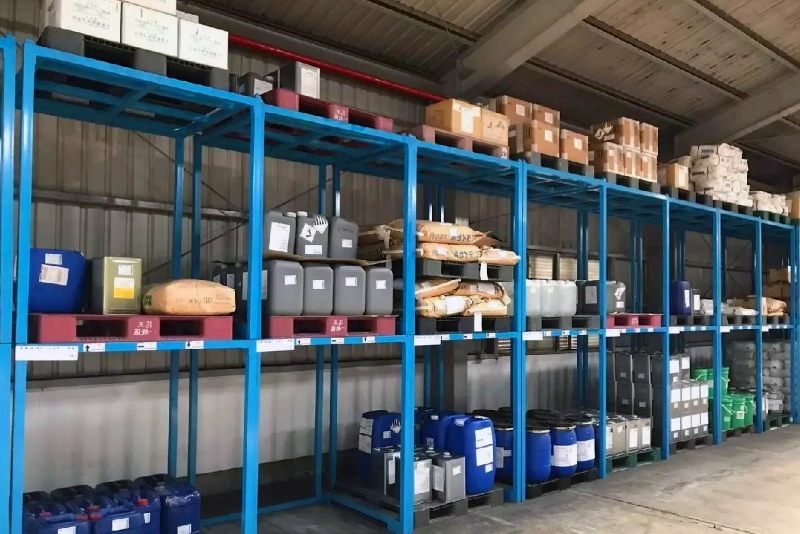
Wooden pallet vs plastic pallet: the problem is similar, but not identical
Wooden pallets often fail at the stringer or block under repeated point loads. Plastic pallets often fail differently: the foot area can creep, bow, or lose geometry after cycles of heat, humidity, or prolonged storage. The beam rule is the same in both cases, but the detail is not.
That is the trade-off. A project-specific rack can better protect the pallet, but it gives up some interchangeability. If you want a rack to accommodate many pallet types, you generally need a more tolerant interior layout. If you want to protect one pallet type with repeatable quality, you must tune the geometry around that pallet and accept a narrower usage range.
How load height and pallet size change the answer
Beam alignment cannot be separated from total stacking height. If the load height plus the pallet is too tall for the chosen stacking pattern, the top unit can wobble even if the lower support is correct. If the pallet footprint is changed from 1100 x 1100 to another size, the support points also move. That means the rack design, fork entry, and stacking clearance must be reviewed again.
In practice, the customer must specify four things together: pallet size, support foot location, load height, and number of stacking levels. That is the cleanest way to avoid the common mistake of adjusting the outer frame first and then the load path.
This is a project detail, not a universal standard
Rerack is designed for custom engineering, not for a fixed catalog geometry. The same product family can be adjusted for temporary warehouse layouts, returnable steel container circuits, and palletized goods that need nested empty returns. But the exact beam placement in Project 14346 should not be copied into every order without verifying the pallet drawing.
Use this rule instead: if the pallet feet are known and stable, align the beams with them. If the pallet mix is mixed or the support pattern is uncertain, widen the engineering window and test the actual pallet before freezing production. That is how you protect both the product and the load.
Do you need the rack built around your pallet drawing, not around a generic outline?
Ver PDP-03 See PAGE-02¿Necesita una Solución de Almacenamiento a Medida?
Hable directamente con nuestros ingenieros técnicos. Ofrecemos diseños estructurales gratuitos, evaluaciones de catálogos para cargas pesadas y cotizaciones de precios B2B rápidas.
Solicitar un Presupuesto Ahora →