
Side-line storage is a capacity decision, not a visual merchandising exercise. The correct number of wire mesh containers at a station depends on the station's takt, the replenishment batch, the usable quantity in each container, the time required to bring the next load, and how operators can reach the material. One extra container can narrow an aisle; one fewer container can stop production.
This planning method applies to Stbox collapsible wire mesh containers used for industrial components and work-in-progress (WIP). It does not replace the approved drawing, the load plan, or the on-site safety review. Consider dimensions, capacity, stacking height, and gate orientation as design inputs, not as universal promises.
Start from consumption, not from the number of containers
First define the station's actual consumption rate. If a station uses R pieces per hour, and the replenishment route requires L hours from request to the next usable load, the minimum piece buffer is:
Required piece buffer = R × L
Then define the usable quantity C per each wire mesh container. C is not necessarily the geometric volume. It is the quantity that can be loaded without damaging the pieces, blocking the discharge gate, exceeding the approved load, or making manual picking unsafe. The first planning estimate is therefore:
Minimum number of containers in the replenishment window = ceiling((R × L) ÷ C)
For a batch-fed process, also verify the supplier's batch quantity BSe una consegna arriva con B pezzi, utilizza arrotondamento per eccesso (B ÷ C) containers for that delivery, then verify whether the station consumes them before the next delivery. A result that works only on average but fails during a format change is not a workable side-line plan.
Convert the calculation into a rotation plan
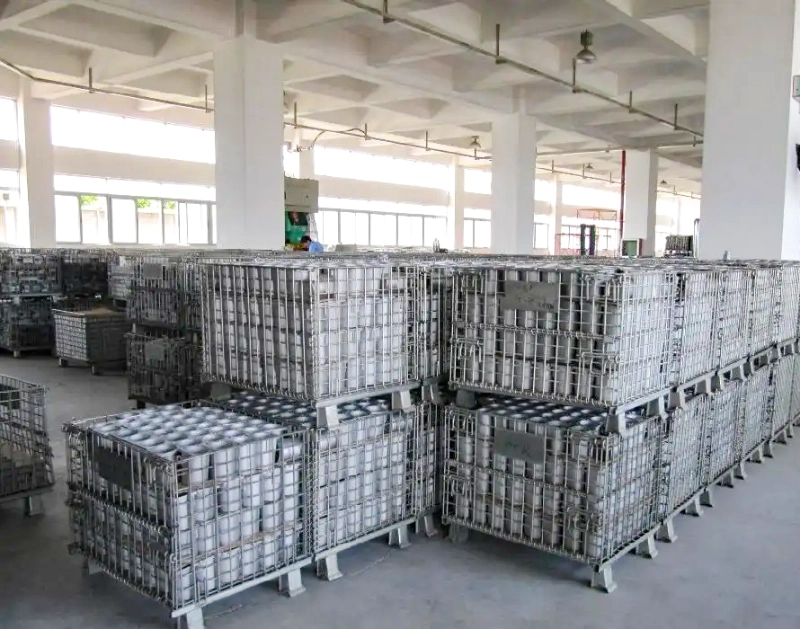
Normally the station needs more than the quantity that is consumed. Map the operational states: a container being picked, a container waiting to be picked, a container being replenished or inspected, and any container held for format change or quality segregation. Do not add a fixed "standard safety cage." Instead, measure the delay and frequency that generate each state.
- High-frequency replenishment: a smaller batch can work if the route is reliable and the aisle remains clear.
- Long replenishment lead time: the active rotation must cover consumption during that delay; calculate it from the measured travel time.
- Frequent format changes: size according to the highest simultaneous demand of part families, not the average daily production.
- Variable fill levels: set a maximum usable quantity for each part, especially where contact with the mesh or mixed components create a risk of damage or sorting problems.
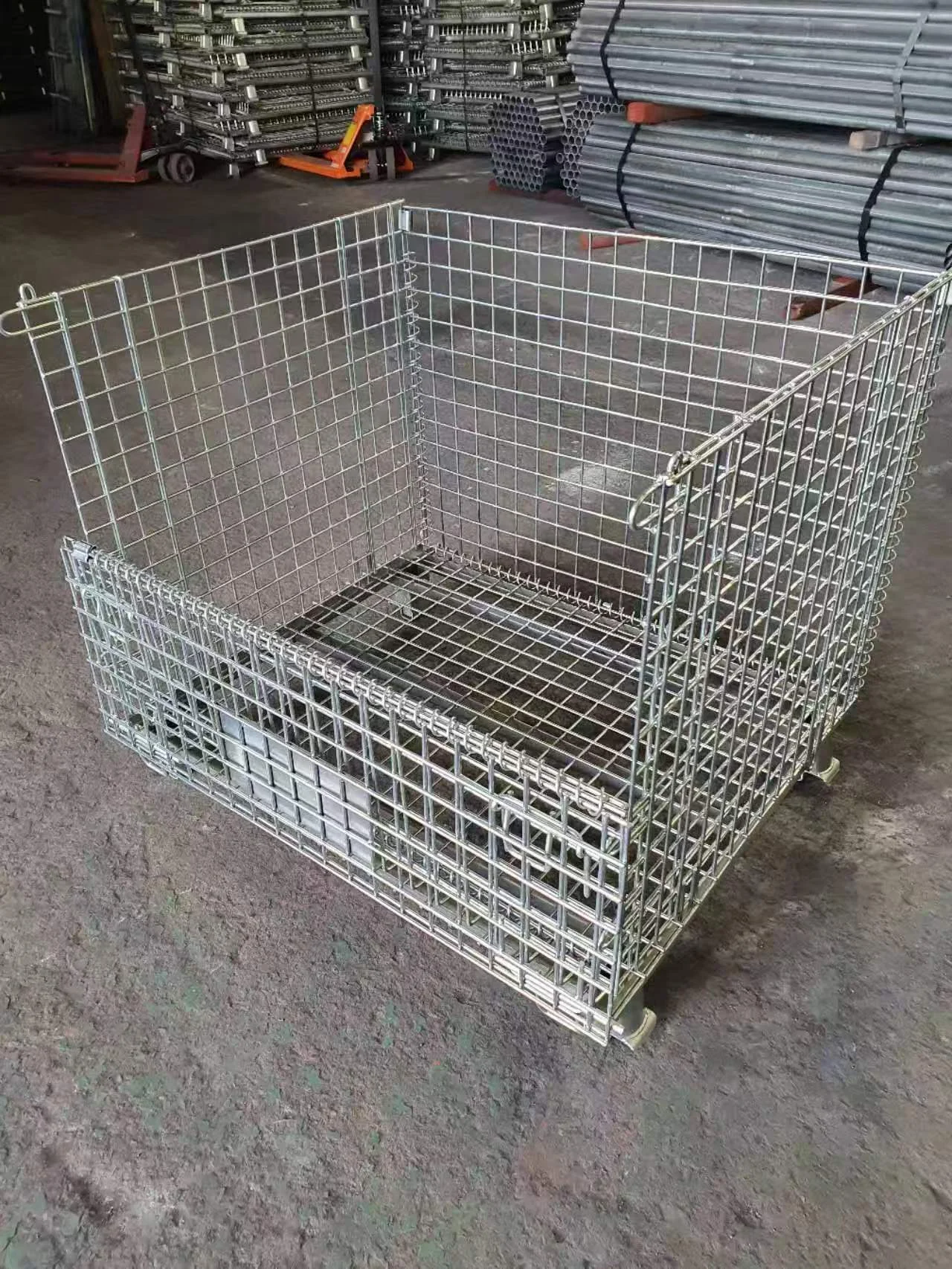
Stbox supports this rotation model because the same industrial storage cage can be moved with a forklift or pallet jack in documented configurations, while a half-drop gate allows access to parts on the lower level without unloading the entire cage. The gate is a flow aid, not an authorization to reach through an unstable stack.
Let stacking limits constrain the answer
After calculating the number of active containers, verify the physical storage plan. If the stacking limit approved by the design is S containers in height, the minimum floor positions for vertical storage are arrotondamento per eccesso (N ÷ S)Questa è solo una calcolo dello spazio a pavimento. A lato linea, gli operatori possono avere bisogno del contenitore accessibile a un livello, quindi il risparmio teorico derivante dall'impilamento potrebbe non essere disponibile.
For the documented design configuration 13967, the table lists a cage of 800 × 1200 × 890 mm, dynamic load of 1,000 kg, and stacking of no more than four levels with each upper cage limited to 500 kg. These data must remain tied to that design drawing. Before releasing a stack, verify that the feet are fully inserted, that the forklift moves smoothly, and that the actual load at each level complies with the approved plan.
Match the gate direction to the aisle
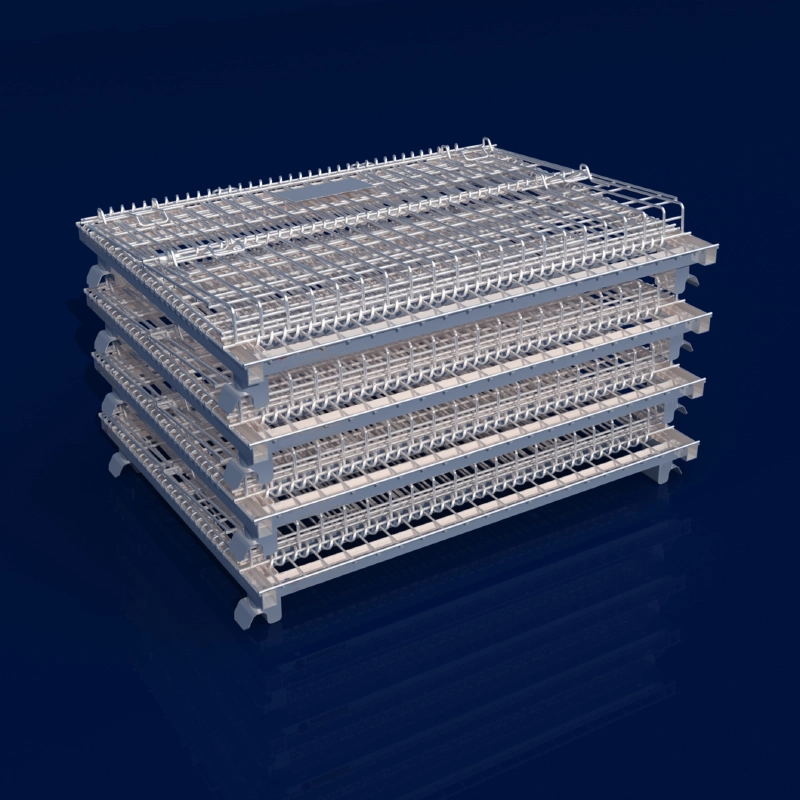
The opening direction and the channel width are coupled decisions. Draw the container footprint, the gate opening or lowering movement, the operator standing zone, the approach of the pallet jack or forklift, and the footprint of adjacent equipment on the same layout. The usable side-line width is the width available after subtracting the container footprint and the access envelope required by the site's EHS and material handling rules.
La richiesta 13967 posiziona l'apertura sul lato da 800 mm, ma l'orientamento finale del cancelletto e la terminologia richiedono una conferma tramite disegno. Non dedurre quell'orientamento da una fotografia del prodotto. Se il cancelletto è rivolto verso la stazione, il prelievo è diretto ma il contenitore può sporgersi nel passaggio dell'operatore. Se è rivolto verso il corridoio di rifornimento, l'accesso per la consegna può migliorare ma il prelievo manuale può richiedere un riposizionamento. Quando è necessario un accesso su due lati, verificare che il design selezionato lo preveda effettivamente.
Utilizzare la configurazione più stretta possibile solo dopo una prova con il transpallet reale, il cartone del pezzo, la postura dell'operatore e la stazione adiacente. Un numero di gabbie matematicamente sufficiente è comunque sbagliato se il cancelletto a mezza caduta non può aprirsi completamente o se l'attrezzatura di movimentazione non può avvicinarsi in modo perpendicolare.
Verificare l'interfaccia di movimentazione prima di congelare la quantità
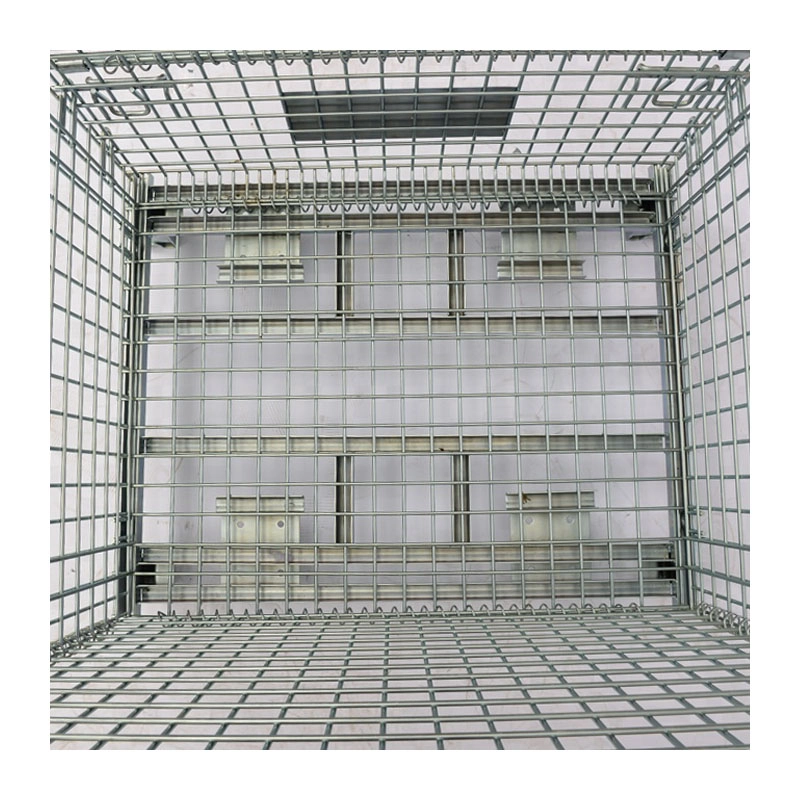
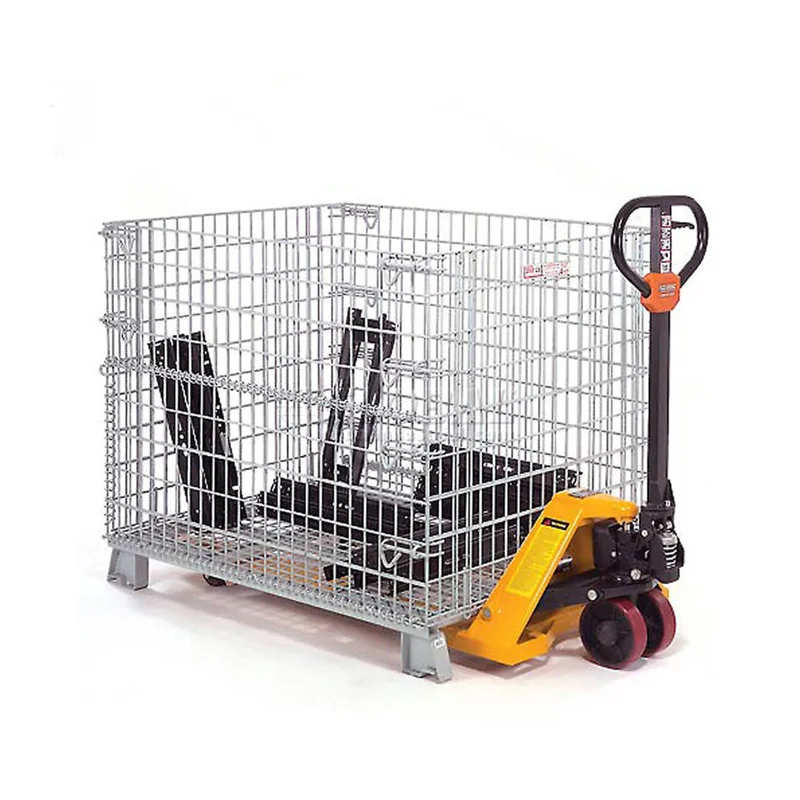
Confirm fork entry, pallet truck access, maneuvering space, floor conditions, and the actual handling sequence of the route. The Stbox image record shows pallet truck lifting and a reinforced channel steel base, but a visual reference does not replace a project-specific handling confirmation. For small or precision parts, specify whether PP honeycomb cardboard lining is needed to limit rubbing, dust, or leakage through the mesh. For safety-sensitive materials, evaluate a lid; for plant-floor handling, evaluate the swivel-wheel and brake variant. These options change the usable workflow and can change quantity or footprint.
A practical request for a line-side quote
Send the station takt or hourly consumption, the quantity of parts per batch, the usable fill per container, the replenishment lead time, the production changeover frequency, the gate side preference, the available aisle width, the handling equipment, the load per cage, and the required stacking condition. The supplier can then separate the calculated material rotation from the floor layout constraint and confirm which dimensions, reinforcement, finish, and accessories belong to the selected Stbox drawing.
Not sure how many cages you need for your line-side buffer?
Share your takt time and replenishment batch. We can help you convert them into a wire mesh container configuration plan to evaluate.
Discuss your line-side bufferServe una Soluzione di Stoccaggio Personalizzata?
Parli direttamente con i nostri ingegneri tecnici. Offriamo progetti strutturali gratuiti, valutazioni di cataloghi per carichi pesanti e preventivi B2B rapidi.
Richiedi un Preventivo Ora →