
Ttrack | Motorcycle pallet rack | backhaul and storage planning
Foldable Motorcycle Pallet Racks for Backhaul Planning: How Empty Returns Shrink into Flat Stacks
If your team is trying to reduce empty return cube, the fold question is not academic. Ttrack is built for the logistics problem of moving loaded, collapsing empty, and coming back without paying for air.
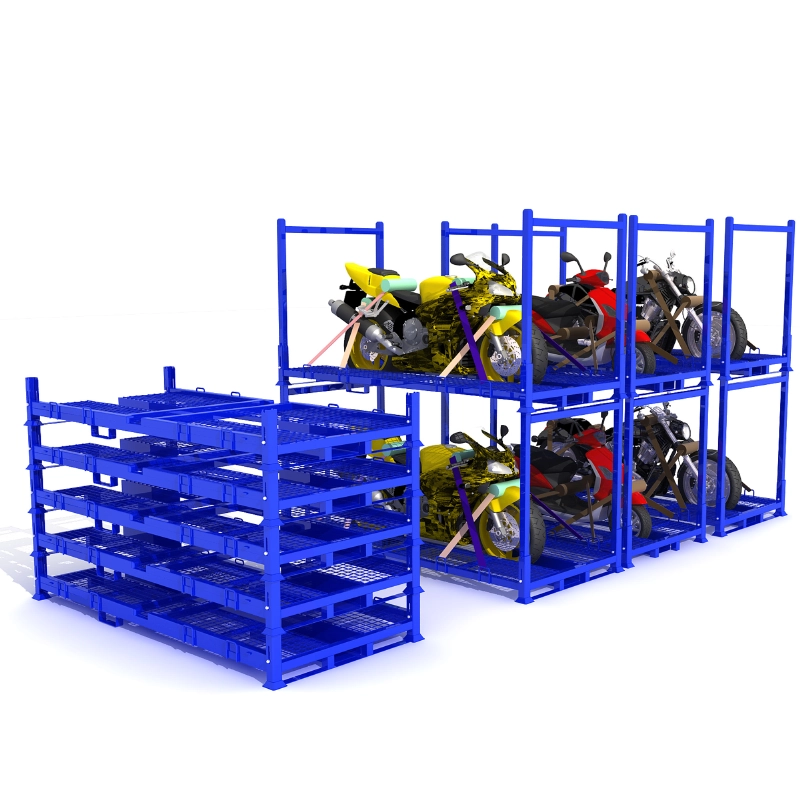
When buyers search for a foldable tire rack, the real operation question is usually broader: can the frame collapse, nest, and travel back with less dead volume? That is exactly where a motorcycle pallet rack earns its keep. In the loaded state, Ttrack works as a rigid steel transport frame with wheel support, tie-down points, and forklift access. In the empty state, it can be reduced to a far thinner return bundle, so backhaul space is spent on useful freight instead of on empty air.
The key point is separation of modes. A rack does not need to behave the same way when it is carrying a bike and when it is waiting to be returned. Ttrack is designed for those two conditions to be handled differently, which is why it is relevant to dealer warehouses, container moves, and distribution networks that cycle the same units again and again.
How the fold works in practice
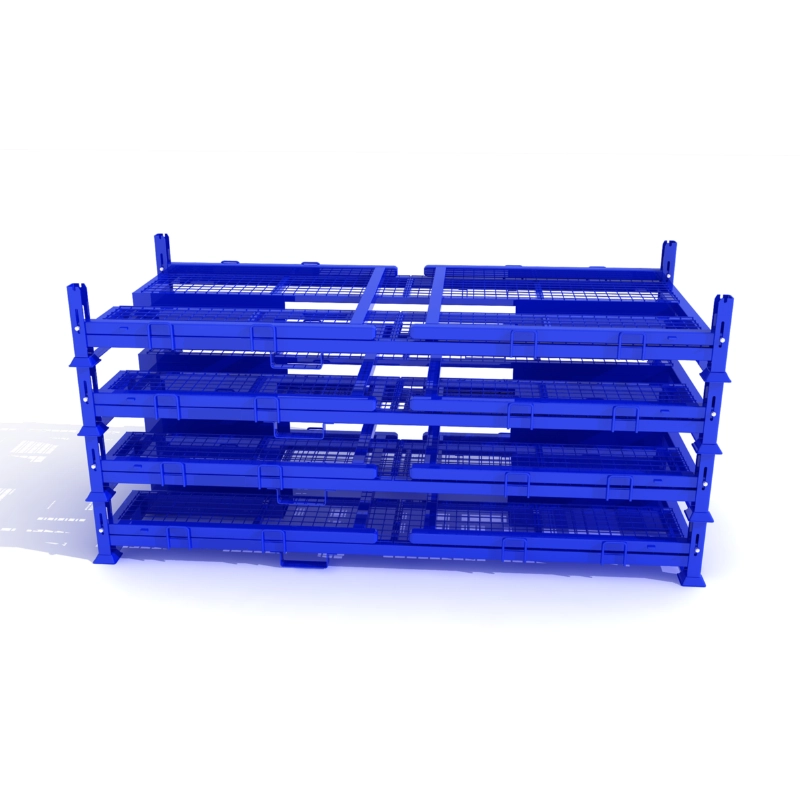
The working sequence is simple. First, the motorcycle is unloaded and the tie-downs are released. Next, the upright side frames or posts are lowered or folded as designed, and the empty racks are nested so the corner geometry and sleeve points sit into one another. That is the operation logistics teams care about: not a clever gimmick, but a clean change from service mode to return mode.
For safe handling, folding should always happen after the load is removed. The wheel chock, tie-down loops, and fork pockets are there to stabilize a live load; once the frame is empty, the collapsed bundle becomes a return asset rather than a working transport station. In day-to-day terms, that means fewer loose empty units standing in the aisle and fewer workers spending time rearranging dead equipment.
- Unload before folding.
- Keep the rack in the working position only while the motorcycle is secured.
- Use the nested bundle for return transport, staging, or off-peak storage.
What changes in empty volume
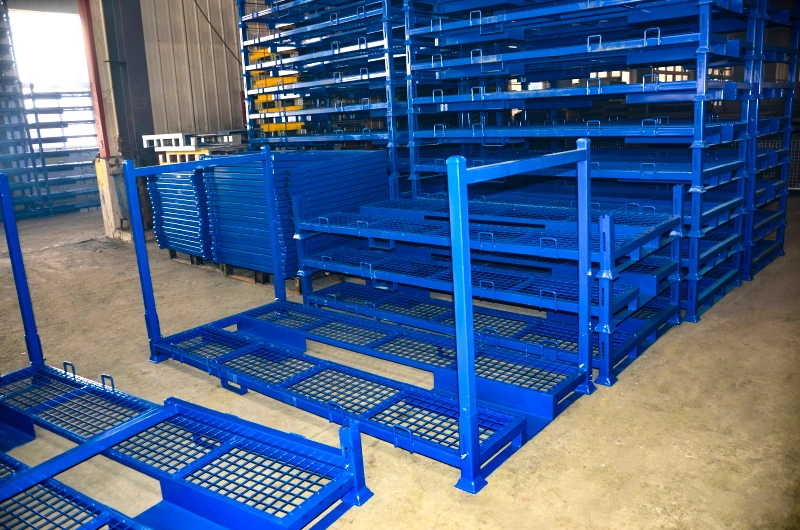
A standing rack occupies its full working height. A folded empty rack becomes a much flatter profile, and a group of empty frames can be nested into one stack instead of consuming one footprint per unit. That is the difference your backhaul planner sees immediately: the same truck bay, container bay, or return lane can hold more empty units because the air gaps disappear.
The exact reduction depends on the model and the way your team stacks it, so it should not be sold as a fixed number. But the direction is always the same. A flat bundle is easier to stage, easier to count, and easier to load tightly. That is why foldable structure matters in reverse logistics as much as it matters in outbound shipping.
Why backhaul cost drops
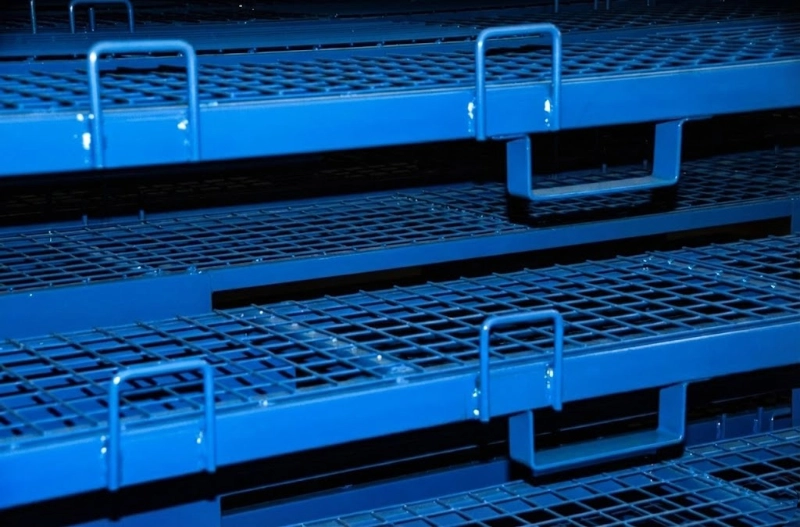
Backhaul cost is often a volume problem before it becomes a weight problem. When a return leg is charged by cubic space, every empty rack that folds flat cuts the amount of dead cube the carrier has to move. That can improve consolidation, reduce the number of trips needed for the same number of units, and lower the chance that empty equipment is handled as loose freight.
For a logistics manager, the benefit is broader than freight spend. Fewer touches usually mean fewer dents, fewer missing parts, and less time spent separating return equipment from active stock. If your backhaul lane is expensive, folding the rack is a direct way to make that lane carry more useful value per move.
In warehouse terms, a collapsed bundle can be parked in a return zone or staging lane instead of occupying an active storage slot. If you previously needed one slot per upright empty rack, nesting can reclaim most of that lane for active inventory. The exact number of slots released depends on your stack height and aisle plan, but the planning rule is simple: fewer standing frames, more usable floor.
Where it fits, and where it does not
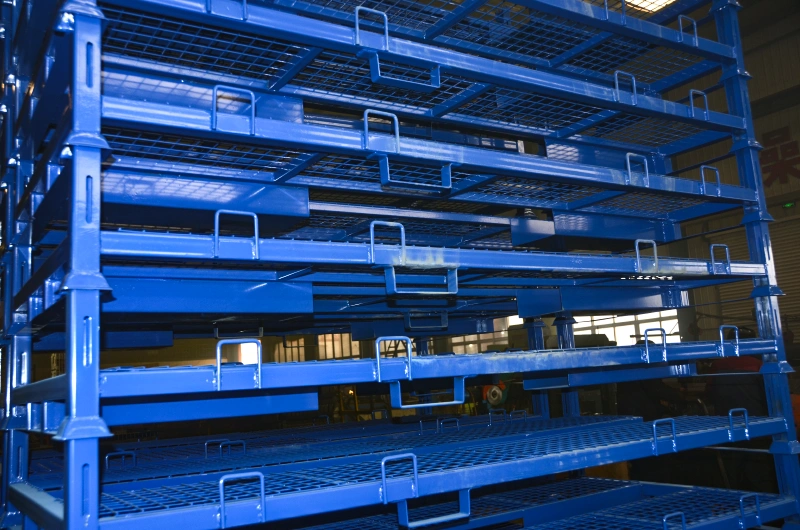
Ttrack makes sense when the same rack must work across loading, transit, return, and staging. It is a strong fit for dealer warehouses, distribution networks, and container moves where empty returns are recurring. It is not the right choice if you need a permanent fixed display and never plan to collapse the frame, or if the load plan changes so often that the folding operation would slow the line.
As always, the rack should be matched to the wheelbase, the fork access, and the actual movement path inside your warehouse. Used in the right workflow, a foldable motorcycle pallet rack is not just a transport frame. It is a space-control tool for the empty leg.
The practical takeaway is simple: foldability matters when reverse volume matters. Use it when storage slots are expensive. Use it when the return leg should travel thin, not bulky.
Need a foldable motorcycle pallet rack plan for your return lane, dealer warehouse, or export container flow?
Need a Custom Storage Solution?
Speak directly with our technical engineers. We offer free structural designs, heavy-duty catalog evaluations, and quick B2B price quotations.
Request a Quote Now →