
When a load sits square on a pallet, the open frame is enough. When the cargo is soft, round, leak-prone, or a project-only cylinder load, the rack has to match the payload instead of the warehouse habit. That is the logic behind Strack: use one welded steel nestainer family, then change the containment detail by load type.
The benefit is not only safety. In the referenced Strack setup, loaded stacking and empty nesting work together, and empty racks can reduce floor footprint by roughly 70% to 80%. Forklift-ready base geometry, custom sizing, and optional side grills, side bars, wire mesh decks, and cylinder-specific frames let one product family cover many warehouse behaviors without fixed racking.
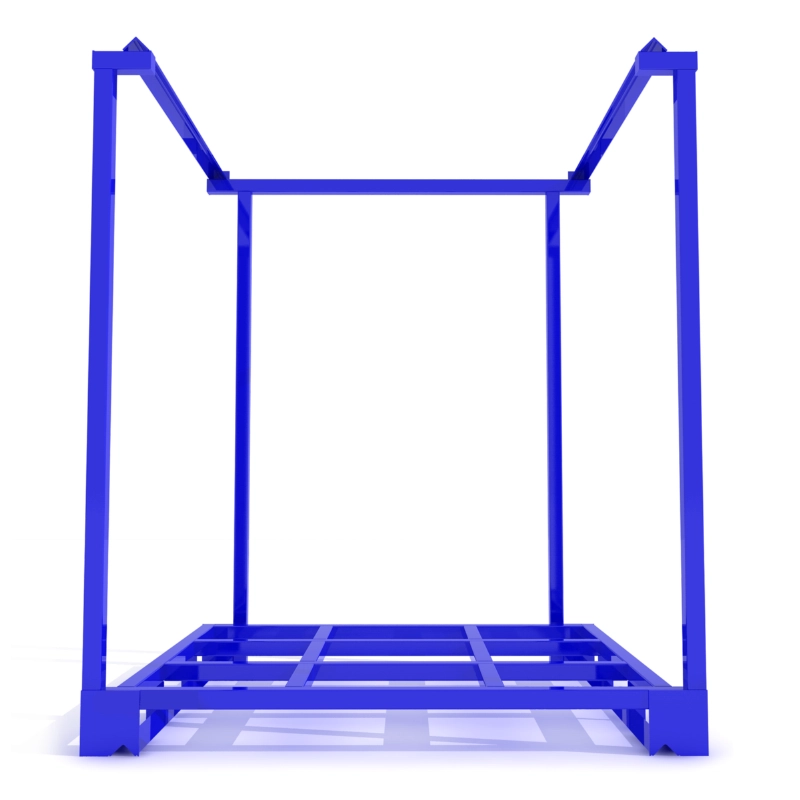
Start with the open frame when the load is already stable
For palletized cartons, stretch-wrapped boxes, or other unit loads that already hold their shape, an open frame is usually the cleanest option. The rack lifts the load as one unit, keeps floor stacking under control, and still gives you the stacking and nesting benefits of the Strack family. In the referenced case set, the dimensions were built around a 1200 × 800 mm pallet basis, with internal clear size 1300 × 900 × 1900 mm, overall size 1400 × 950 × 1980 mm, and about 100 mm empty-stack gap to suit forklift tine thickness. Those numbers are case references, not a universal default, but they show how the geometry is matched to the real payload.
If you are planning a temporary warehouse zone or a seasonal buffer area, the open frame is the baseline to compare against. When the pallet and the wrap already do the stabilization job, adding unnecessary side containment only increases steel count and handling friction.
Use side grills or side bars when the load can lean, bulge, or roll
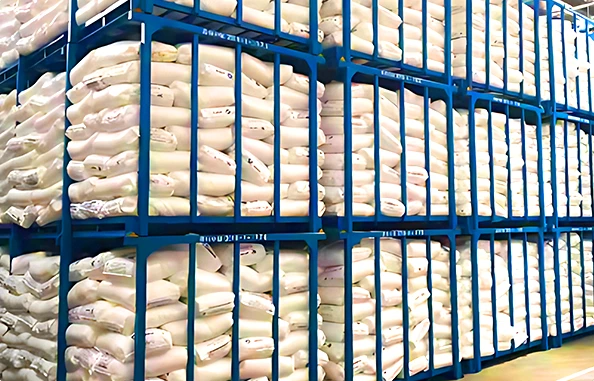
Woven bags need lateral control because soft sack walls expand and shift. That is why the side-grill version matters: the vertical grid gives the load a boundary and reduces outward tilt during forklift movement or stacked storage.
Drums and pails behave differently. Their center of gravity is round, not flat, so side containment bars are the better answer. They keep plastic pails from sliding sideways, and they reduce the chance that a round container will wander inside the rack when the truck brakes or turns. For chemical or food-related packaging, that simple difference matters more than a generic stronger frame.
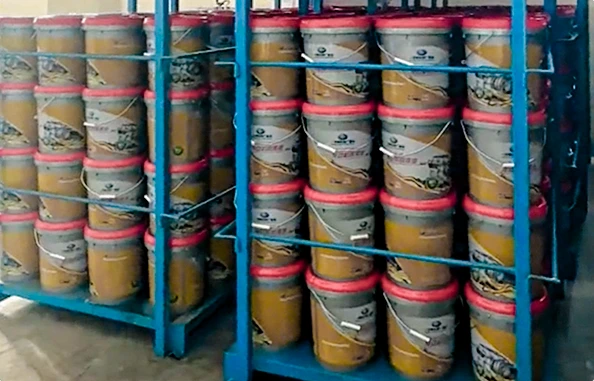
The rule is simple: if the payload can deform, select a boundary that stops the deformation from becoming a spill, a tilt, or a damaged corner. Choose the containment by product shape, not by habit.
Choose a wire mesh deck when the risk is falling-through, not side sway
Small parts, mixed-size items, and leak-prone containers need a deck that closes the bottom opening. The wire mesh version does exactly that. It is not there to replace side containment; it is there to stop smaller goods from dropping through an open base and to support irregular footprints that do not sit cleanly on a standard pallet surface.
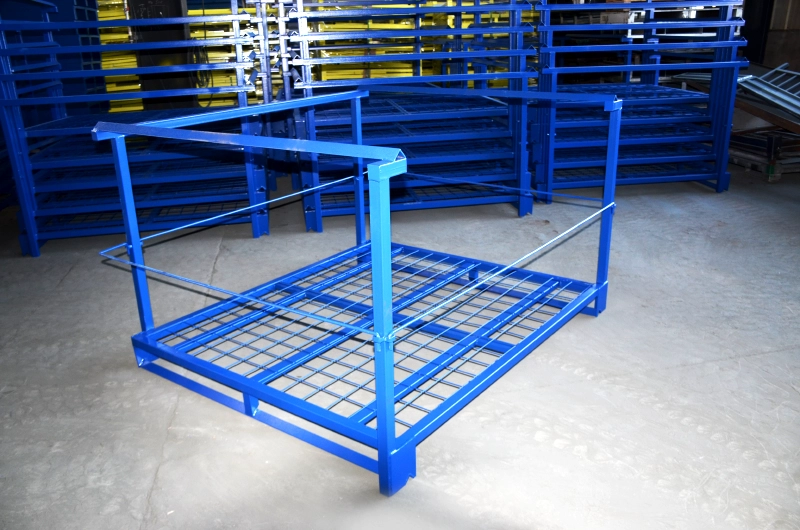
This is the right call when the warehouse is handling loose components, small cartons, or mixed packaging that would otherwise need extra trays or liners. The mesh deck turns the rack into a more controlled unit-load carrier without forcing you into fixed shelving.
Use the cylinder version only for cylinder projects
Gas cylinders are a different class of payload. They are tall, narrow, and safety-critical, so they need a project-specific configuration with dedicated chain restraint and a frame designed for cylinder spacing. That is why the cylinder variant should be treated as a special-case solution, not as a general warehouse substitute.
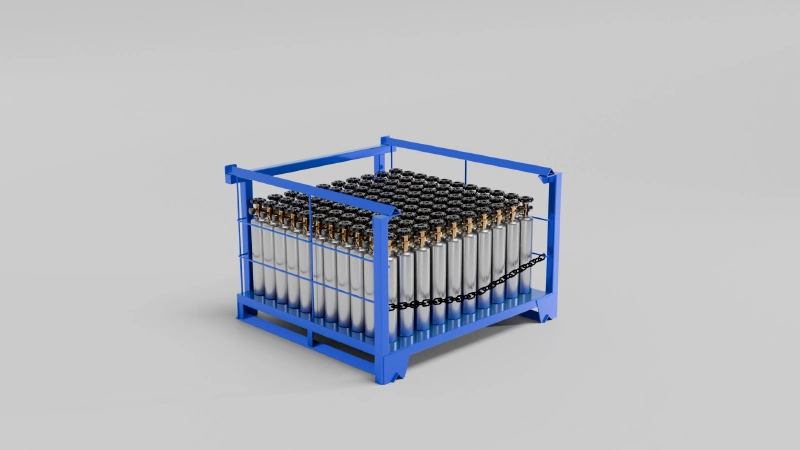
If a site handles cylinders, the right questions are not Can we reuse the bag rack? but What cylinder diameter, what chain position, what access path, and what handling sequence are required? The answer belongs in the project drawing, because this version is about payload safety first.
What to confirm before ordering
Before you lock the configuration, confirm four items: pallet footprint, load height, load behavior, and return logistics. The profile references heavy-duty use in the 1000–2000 kg range depending on configuration, but the final drawing should decide the exact rating. If the load is soft or round, choose containment. If it is already stable, keep the frame open. If the warehouse needs empty-rack return or storage efficiency, keep nesting in the spec so the empty footprint stays compact.
That is the practical advantage of Strack. One family, multiple containment options, and a selection rule tied directly to the cargo shape.
Applications
- FIBC bulk bags and other soft sack loads that need side control
- Plastic pails or drums that need anti-roll containment
- Small parts and leak-prone items that need a mesh deck
- Project-only gas cylinder storage with chain restraint
FAQ
When is an open frame enough?
When the payload is already palletized, wrapped, and stable enough to keep its shape during forklift handling. In that case, the open frame gives you the cleanest path to stacking and nesting.
Why not use one containment style for everything?
Because bags, drums, cartons, and cylinders fail in different ways. Side sway, rolling, and falling-through are not the same problem, so they should not share the same fix.
For the product route, open PDP-05. For the layout route, open PAGE-02. If your next project mixes soft bags, drums, cartons, or cylinders, the load shape should decide the rack variant first.
Need a Custom Storage Solution?
Speak directly with our technical engineers. We offer free structural designs, heavy-duty catalog evaluations, and quick B2B price quotations.
Request a Quote Now →