
|
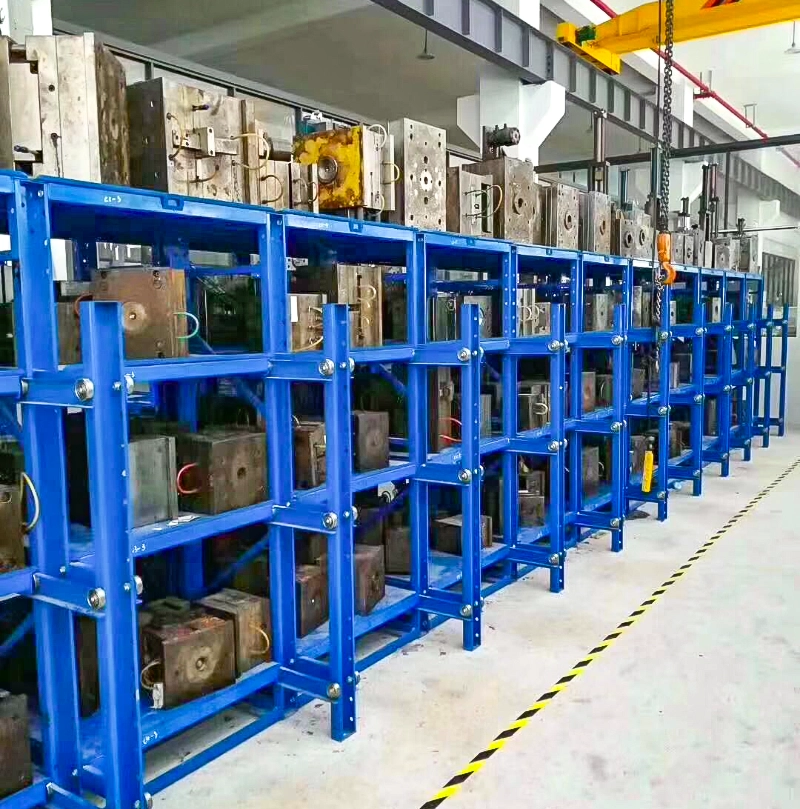
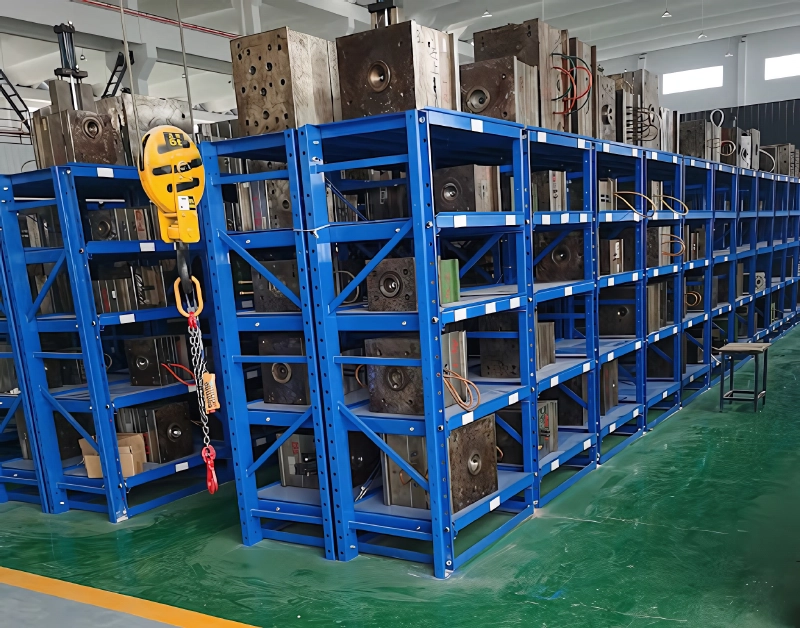
In your plastic packaging facility, are heavy injection and blow moulds cluttering the floor next to your machines? Slow changeovers, risk of damage to precision tooling, and wasted floor space are actively eroding your production efficiency. It’s time to move beyond simple storage and implement a true 5S system designed for high-value moulds. |
5S mould storage solutions.
For any modern plastic packaging manufacturer—whether you’re producing thermoformed PP cups, PET bottles, or heavy-duty jerry cans—the efficiency of your injection molding or blow molding machines is paramount. Yet, a critical bottleneck is often overlooked: the chaotic and unsafe storage of the very tools that define your products. Piles of expensive moulds on wooden pallets not only violate 5S principles (Sort, Set in Order, Shine, Standardize, Sustain) but also introduce tangible production risks, from extended downtime to irreparable tool damage.
The Real Costs of Disorganized Moulds in a Plastics Workshop
The “store it on the floor” method is a common but costly habit. In a high-volume plastic processing environment, this leads to a cascade of problems that directly impact your bottom line:
- Extended Changeover Times (SMED Failure): Your Die Setter wastes 20-30 minutes just locating the correct mould, clearing a path, and waiting for a forklift. This is valuable production time lost on your injection or blow molding machines.
- Risk of Precision Damage: An injection mold storage system is crucial. A single collision from a forklift can damage a mould’s delicate parting lines or cooling channels, leading to costly repairs and quality control issues like flashing on your finished plastic parts.
- Corrosion and Contamination: Moulds left on the floor are susceptible to moisture from cleaning operations and ambient humidity, leading to rust. They are also exposed to contaminants like hydraulic fluid, dust, and plastic resin particles, compromising the next production run.
- Wasted Production Floor Space: Every square foot occupied by a disorganized mould is space that could house another revenue-generating production line. With a 4-meter turning radius required for forklifts, a significant portion of your workshop is reduced to inefficient traffic lanes.
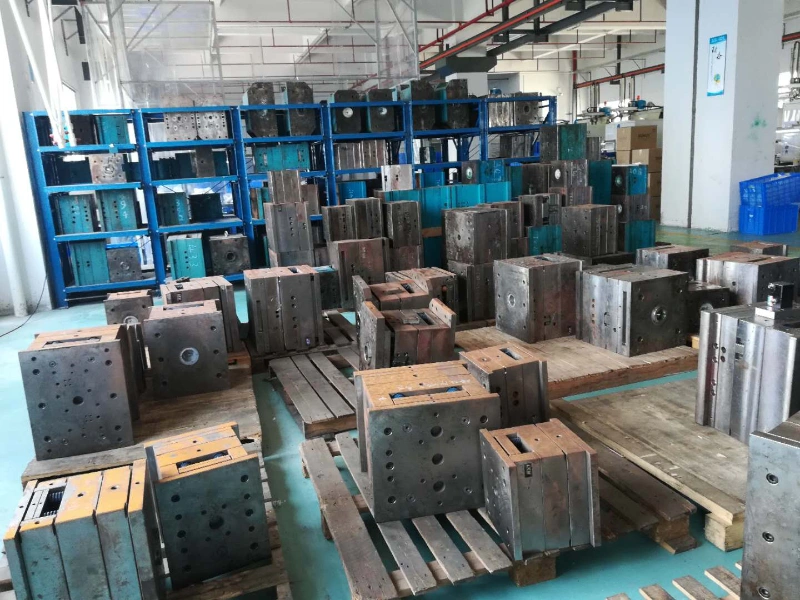
This disorder is the direct opposite of a lean, 5S-compliant operation. True optimization requires a systematic approach, starting with the right infrastructure.
From Floor Clutter to Vertical Order: The Engineering of a Purpose-Built Mould Rack
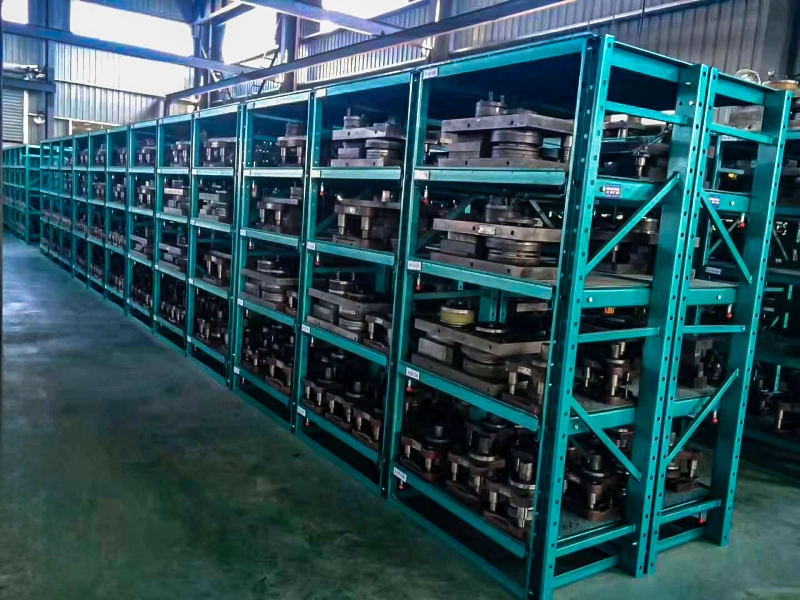
A heavy duty mold racking system is not just shelving; it’s a piece of engineered equipment designed to solve these specific problems. The transition from chaos to order is rooted in specific mechanical principles.
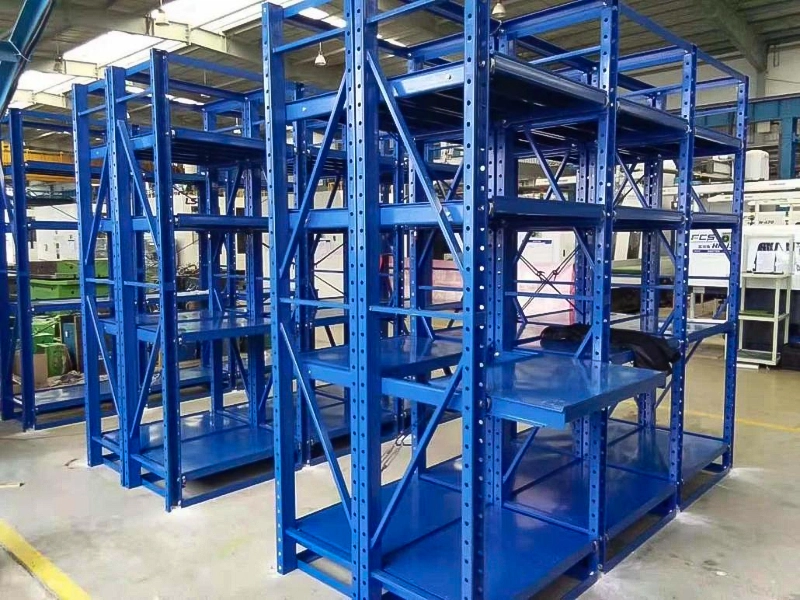
1. The Power of 100% Full-Open Drawers
Unlike standard shelving where access is limited, our die roll out racks feature drawers that extend completely from the frame. This design is critical for safe and efficient handling.
- Why it Works: This 100% extension allows your existing Overhead crane or a dedicated chain hoist to achieve a direct, vertical lift. There is zero dead angle. Your operator can easily access the mould’s center of gravity without any risk of the tool hitting the rack frame.
- Your Benefit: This completely eliminates the need for risky forklift maneuvering near the rack. The changeover process becomes a predictable, single-operator task, dramatically improving safety and speed.
2. The Unyielding Stability of a Heavy-Duty Steel Frame
Your moulds for plastic drums or automotive parts can weigh from 1,000 to 3,000 kg. A standard rack is simply not an option. Our system is built on a foundation of structural integrity.
- Why it Works: We use high-grade Q235B steel, with main uprights constructed from 10# channel steel (100mm*42mm*4.0mm). Each drawer is supported by high-precision Harbin 6404 bearings that convert massive sliding friction into smooth, manageable rolling friction. This means even a 2-ton mould can be moved with minimal force.
- Your Benefit: This robust construction prevents the frame from bending or failing under load, protecting your six-figure tooling assets. Furthermore, every drawer is equipped with a mechanical self-locking safety pin, ensuring it cannot accidentally slide out or shift once retracted, meeting stringent OSHA safety standards.
The Tangible Gains: A 5S Mould Storage System in Action
Implementing a proper drawer type mold rack transforms your workshop from a reactive environment to a proactive, highly organized production hub. The results are not just aesthetic; they are quantifiable.
| Dimension | Before: Disorganized Floor Storage | After: Erack 5S Mould Storage System |
|---|---|---|
| Space Utilization | Requires 4-meter forklift aisles, wasting up to 80% of potential storage area. | Reduces aisles to 1.2 meters for crane access, increasing storage density by up to 300%. |
| Mould Changeover Efficiency | Finding, clearing, and moving a mould can take over 45 minutes. | Direct access and vertical lifting reduce the entire retrieval process to under 5 minutes. |
| Asset Protection | High risk of rust from ground moisture and impact damage from forklifts. | Stored in a clean, dry, individual slot. The 7-step powder coating process on the rack itself resists corrosion for over 15 years. |
| Worker Safety (EHS) | High risk of back and foot injuries from prying heavy moulds and forklift accidents. | Ergonomic, low-force drawer movement. Optional pneumatic assist eliminates all manual pulling for moulds over 2 tons. |
By applying 5S principles to your most valuable production tools, you create a safer, more efficient, and more profitable manufacturing environment. A well-designed mold rack system is not a cost center; it is a foundational investment in operational excellence.
Frequently Asked Questions
1. Our blow moulds for 5-gallon drums are extremely heavy. What is the maximum load capacity per drawer?
Our heavy-duty three-pillar racks are engineered to handle significant loads. Standard configurations support 1,000 kg to 3,000 kg (approx. 2,200 to 6,600 lbs) per layer. For exceptionally heavy tooling, we can provide custom-engineered solutions with reinforced structures and materials to meet your specific requirements.
2. The air in our workshop can be humid, and we’re concerned about rust. How does your rack’s finish hold up?
This is a critical consideration. Our racks undergo a comprehensive 7-step industrial surface treatment process that includes acid washing, phosphating, and shot blasting before a 60-80μm thick layer of high-quality epoxy resin powder is electrostatically applied and cured. This creates a durable, non-porous barrier that provides C3-level corrosion resistance, guaranteeing a service life of 15+ years without rusting, even in humid industrial environments.
3. How does this system integrate with our facility’s existing overhead bridge crane?
The system is designed for seamless integration. The 100% full-open drawer and three-pillar structure ensure that when a drawer is extended, there is clear, unobstructed vertical access for your crane’s hook. This allows for direct lifting without any side-loading or interference, making it a perfect fit for facilities already equipped with overhead cranes.
4. We are a growing company and expect our mould inventory to increase. Can this system be expanded later?
Absolutely. The system is built on a modular main-and-sub-frame design. You can start with a primary unit and easily add on extension modules as your business grows. This allows you to scale your storage capacity infinitely and flexibly, without the need for a complete system overhaul, protecting your initial investment.
5. What is the key difference between using your mould rack and simply placing moulds on a heavy-duty pallet rack?
The primary difference is access and safety. A pallet rack requires a forklift to place and retrieve a mould, which is inefficient and high-risk. It offers no protection from dust and provides poor density. Our drawer mould rack storage provides individual, protected compartments with effortless roll-out access for direct crane lifting. It is a purpose-built system for rapid, safe mould exchange (SMED), not just static storage.
Need a Custom Storage Solution?
Speak directly with our technical engineers. We offer free structural designs, heavy-duty catalog evaluations, and quick B2B price quotations.
Request a Quote Now →