
 |
Your injection molding machines are the heart of your operation, but they’re only making money when they’re running. Every minute spent searching for a mold on a crowded floor, wrestling it with a forklift, or risking damage to a high-precision surface is a direct hit to your bottom line. If your tool room is a bottleneck of disorganized pallets instead of a high-efficiency hub, you’re leaving capacity and profit on the table. |
In the demanding world of plastic packaging manufacturing, speed and precision are everything. Whether you’re running PET bottles for the beverage industry or PP containers for FMCG clients, the efficiency of your mold changeover process directly impacts your plant’s output. Yet, many workshops are still hampered by an outdated and hazardous mold storage method: heavy, expensive injection mold storage units and blow molds scattered on wooden pallets, occupying valuable floor space and creating a daily risk of damage and injury.
As specialist custom mould rack suppliers, we engineer solutions that transform this chaotic liability into a strategic asset. It’s not just about shelving; it’s about re-engineering the workflow around your most critical production tools.
From Clutter to Capacity: The Engineering Behind a High-Density Tool Room
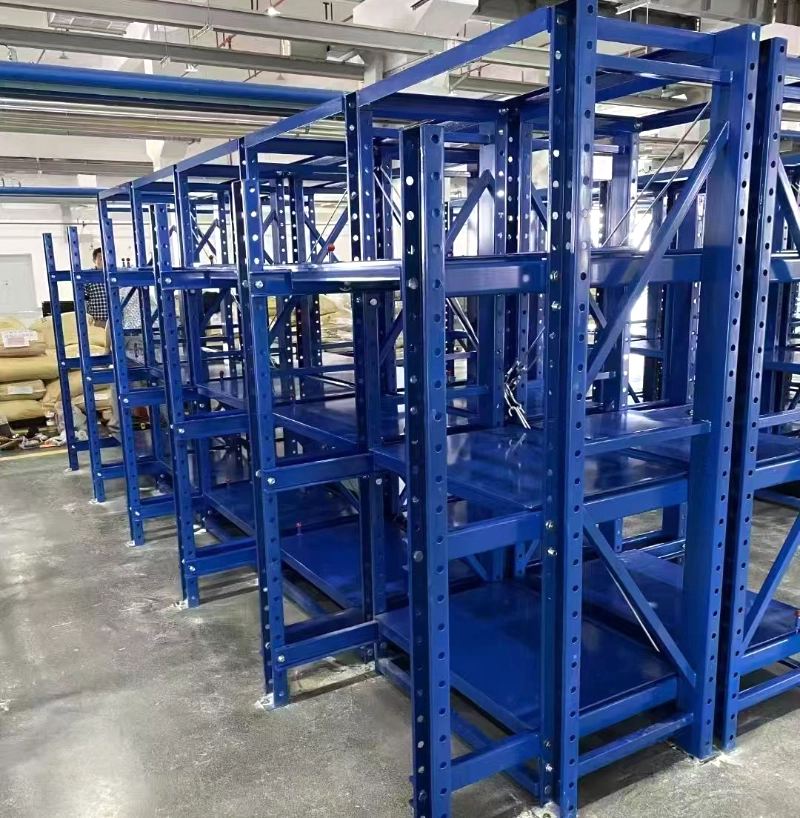
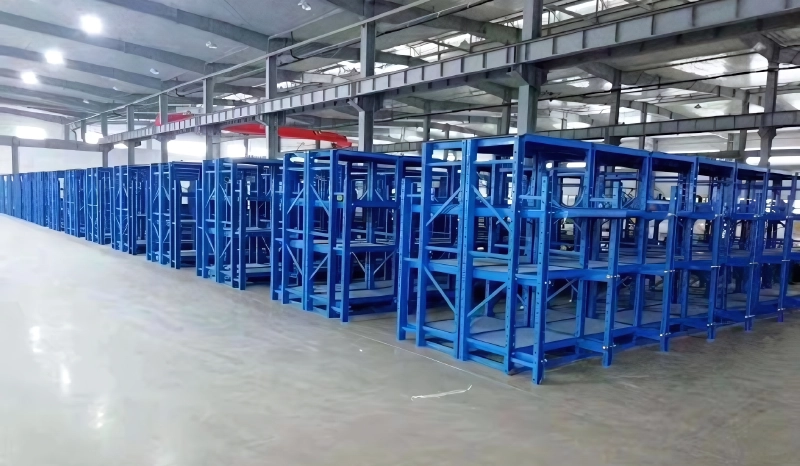
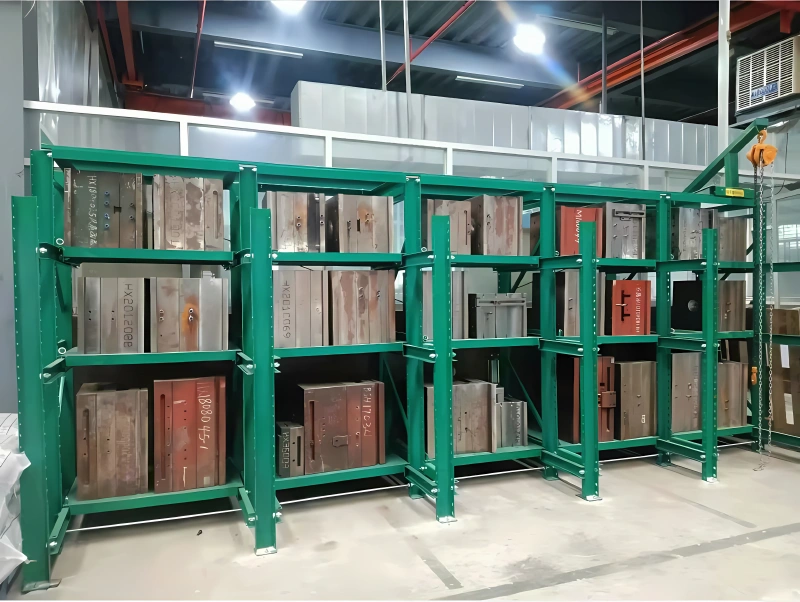
The most common complaint from production supervisors is a lack of space. The desire is always to add another injection or blow molding machine, but the floor is often consumed by disorganized molds. A traditional horizontal storage approach is the primary culprit. By leveraging vertical space, a purpose-built heavy duty mold rack system can immediately reclaim up to 80% of your mold storage footprint.
This is made possible by a robust structural foundation. Our racks utilize heavy-gauge Q235B structural steel, typically employing 10# channel steel (100mm x 48mm x 5.3mm) for the main pillars. This high-rigidity framework ensures that each level can safely support loads from 1,000 to 3,000 kg (approx. 2,200 to 6,600 lbs) without any structural deflection. The result is a dense, organized, and secure central mold library, freeing up prime real estate for revenue-generating machinery.
Slashing SMED Time: The Power of 100% Full-Extension Access
The Single-Minute Exchange of Die (SMED) is a lean manufacturing ideal, but it’s impossible to achieve when your Die Setter spends 30 minutes just locating and safely accessing a mold. Forklifts require wide aisles and careful maneuvering, increasing the risk of collision with a mold’s precision parting lines or cavities. This is where the core innovation of a drawer type mold rack lies.
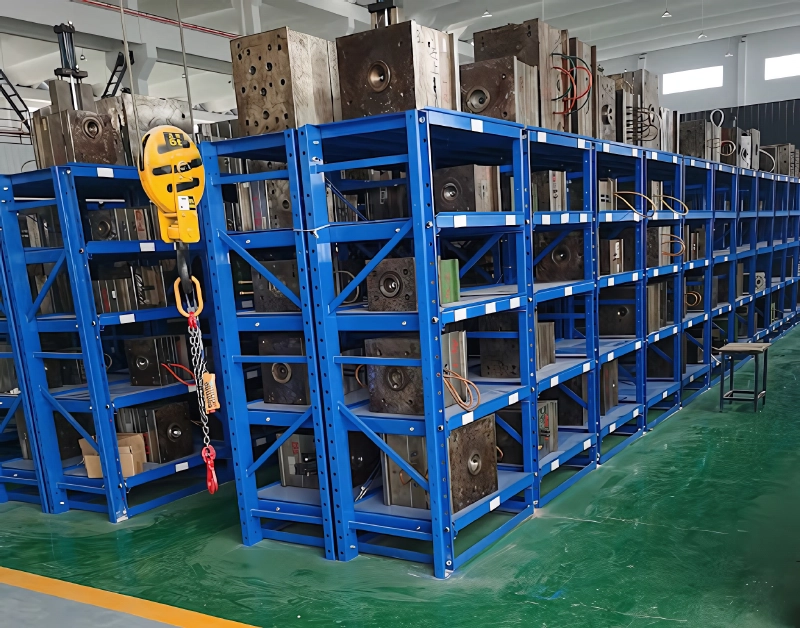
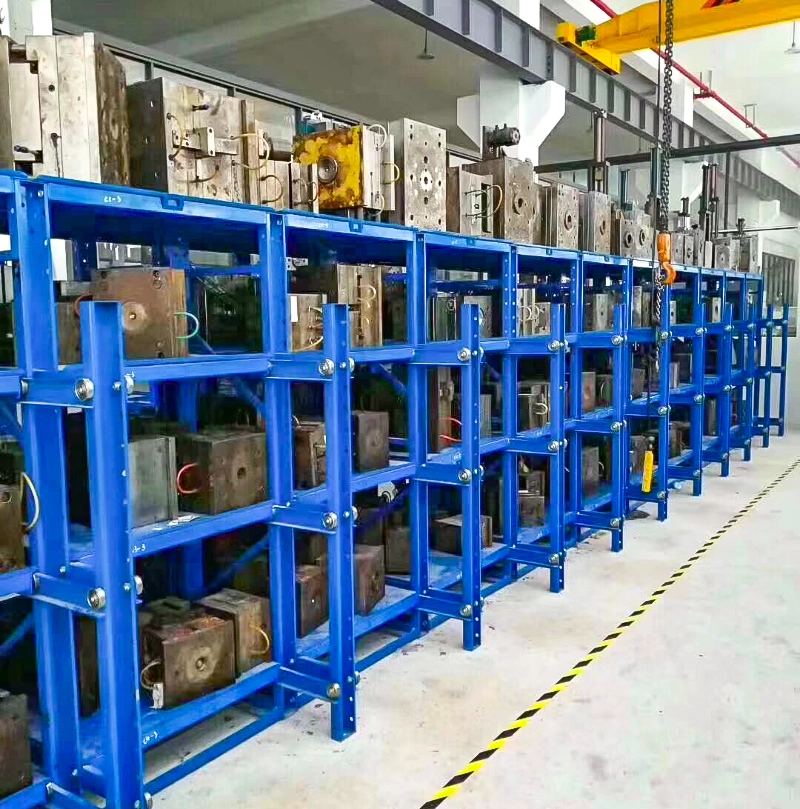
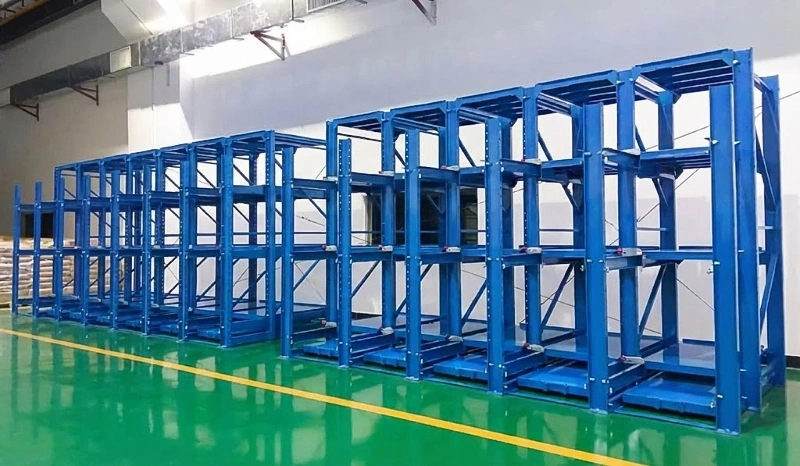
Each shelf is a fully extendable drawer that rolls out 100% of its depth. This crucial feature presents the entire mold clear of the rack’s structure, allowing your overhead crane or chain hoist to achieve a direct, zero-dead-angle vertical lift. The drawer’s smooth motion, even under a 2-ton load, is facilitated by high-precision Harbin 6404 bearings, which convert high-friction sliding into low-effort rolling. This transforms a multi-person, high-risk forklift operation into a safe, predictable, one-person task, cutting the mold retrieval and loading time by as much as 80%.
A Fortress for Your Assets: Protecting Molds from Damage and Corrosion
A multi-cavity PET preform mold can represent a capital investment of tens of thousands of dollars. Leaving it on a damp concrete floor is an invitation for rust; moving it with a forklift is a constant gamble against accidental impacts. A professional mold racking system is your insurance policy.
Engineered for Safety and Longevity:
- Multi-Point Safety Locks: Each drawer is equipped with an independent, physical self-locking safety pin. This mechanically prevents any drawer from sliding out due to vibration and ensures it remains securely locked in place once retracted, meeting stringent OSHA safety protocols.
- Corrosion-Resistant Finish: We implement a 7-step surface treatment process that includes acid pickling, phosphating, and a 60-80μm thick electrostatic powder coating. This industrial-grade finish creates an impermeable barrier against the humidity often found in production environments, protecting your molds from rust and preserving their value.
- Structural Reinforcement: The back of each unit is fortified with solid steel cross-bracing, providing exceptional resistance to lateral forces and ensuring the entire structure remains stable even at full capacity.
Designed to Evolve with Your Production Line
Your business is not static, and your storage infrastructure shouldn’t be either. Whether you are expanding your line of plastic drums or adding capacity for new cosmetic packaging contracts, our systems are designed for growth. The modular, main-and-add-on-bay design allows you to extend your storage capacity seamlessly as your collection of molds grows. We provide custom solutions, including pneumatic-assisted drawers for exceptionally heavy molds (over 2 tons) to further enhance ergonomics and protect your team’s occupational health. Partner with a mold storage rack supplier who understands that a solution must be scalable, safe, and built to last.
Frequently Asked Questions
1. Our plant uses some very heavy, multi-cavity blow molds for 5-gallon jerry cans. Can your racks handle the weight?
Absolutely. Our heavy duty die racks are engineered with standard single-layer capacities of 1 to 3 tons (2,200 to 6,600 lbs). We use robust 10# channel steel and a three-pillar design for maximum stability, making them ideal for storing large and heavy molds used in plastic container manufacturing.
2. How does this system work with our facility’s existing overhead crane?
The system is designed specifically for crane integration. The 100% full-extension drawer brings the mold completely clear of the rack frame. This provides your crane operator with unobstructed, direct vertical access to the mold’s lifting points, making the process faster and significantly safer than using a forklift.
3. The humidity in our workshop is a constant concern. How do your racks resist rust?
We address this with a comprehensive 7-step surface treatment process. Before the final powder coating is applied, the steel undergoes shot blasting, acid washing, and phosphating. This creates a superior bond for the 60-80μm thick epoxy powder coat, forming a durable, corrosion-resistant shield that is proven to last over 15 years in typical industrial environments.
4. We are planning to add two more injection molding machines next year. Can we expand the storage system easily?
Yes. Our systems are built on a modular main-and-add-on-bay principle. This allows you to start with the capacity you need today and seamlessly connect additional units as your business grows, ensuring a future-proof investment without requiring a complete overhaul.
5. Do your mould racks comply with international safety standards like OSHA or ANSI?
Yes. Safety is integral to our design. Features such as the independent mechanical safety pins on every drawer, anti-slip drawer surfaces, and a minimum structural safety factor of 1.2 are engineered to meet or exceed the stringent guidelines set by bodies like OSHA and ANSI (specifically MH16.1 for industrial steel storage racks).
Need a Custom Storage Solution?
Speak directly with our technical engineers. We offer free structural designs, heavy-duty catalog evaluations, and quick B2B price quotations.
Request a Quote Now →