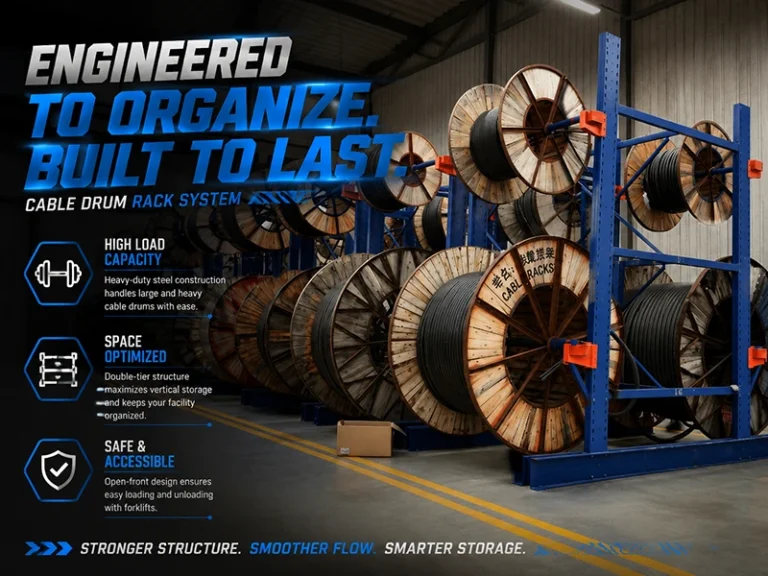
Main frame for a controlled reel family
Use the main rack where one diameter group is frequently stored and picked. Supports are positioned to the agreed reel geometry; the 100 mm hole pattern gives the design team a repeatable adjustment basis.

Adjustable Carack cable reel rack for mixed reel diameters from Ø737 to Ø2007 mm, using 100 mm upright hole increments. Submit your reel schedule for a project-specific layered layout.
MULTI-SPEC FIT | CABLE REEL STORAGE
If your cable range runs from about Ø700 mm to Ø2000 mm, buying a separate rack for every reel family creates unused floor space and a difficult location system. Carack is configured around punched steel uprights: the reel support position can be set at 100 mm installation-hole increments, then agreed with the reel diameter, load and handling method in your layout.
The available measured reference table covers 22 reel sizes from Ø737 to Ø2007 mm and reel weights from 500 to 3000 kg. This range is a multi-specification design reference—not a standard capacity promise. Final levels, support spacing, number of reels per bay and rated load must be confirmed in the technical agreement.
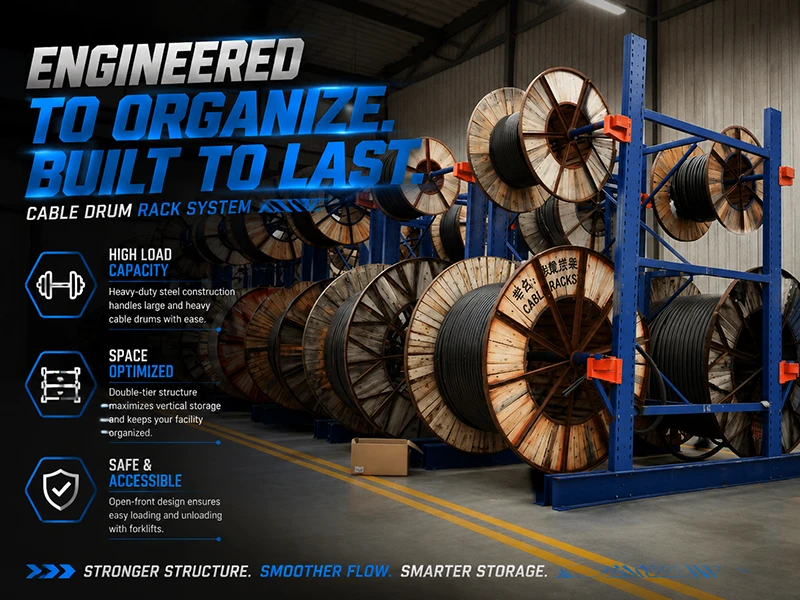
Carack can be planned as a main frame with auxiliary frames, single-sided or double-sided, and with one or more levels. The right choice depends on your actual reel diameter list, loaded weight, aisle width, lifting equipment and required dispensing access.
Use the main rack where one diameter group is frequently stored and picked. Supports are positioned to the agreed reel geometry; the 100 mm hole pattern gives the design team a repeatable adjustment basis.
Add auxiliary frames when the plant needs more positions in the same planned run. This increases storage density through system extension, but the actual number of reels and levels is determined by bay dimensions, load checks and safe handling clearances.
A double-sided layout uses both faces of the structure for organized access. It is suitable when the aisle and loading method allow access to both sides; it is not a substitute for a confirmed forklift or crane operating envelope.
Choose a single-sided arrangement against a wall or at a controlled work area when access is intentionally from one side. Wall, floor, anchoring and exclusion-zone requirements must be reviewed before release.
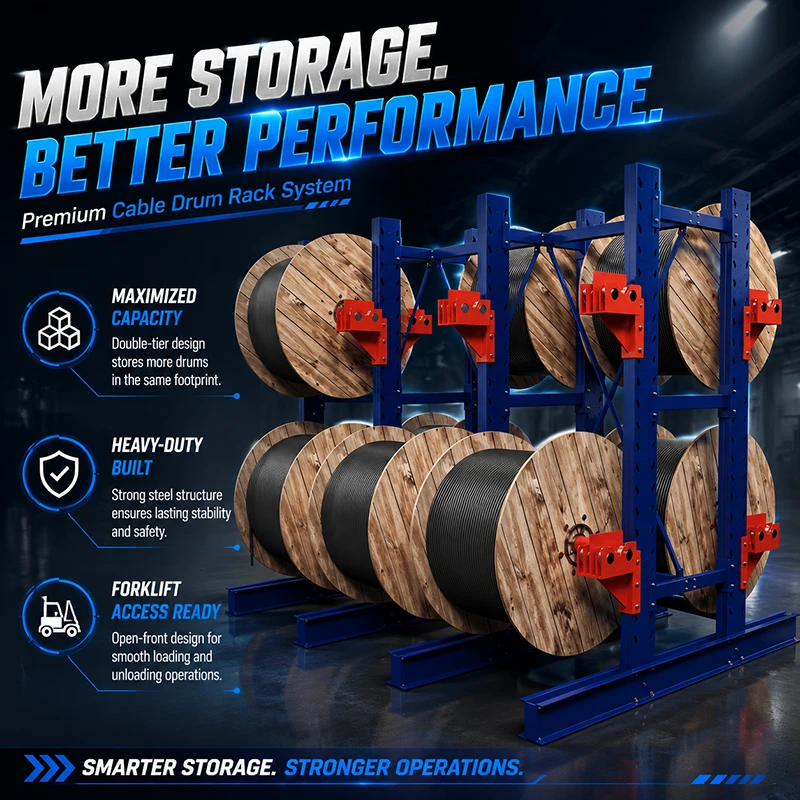
Instead of assigning a fixed rack type to every small, medium and large reel, your planner can group compatible sizes and set support positions against the actual diameter schedule. This supports a clearer location system and a more deliberate use of floor area.
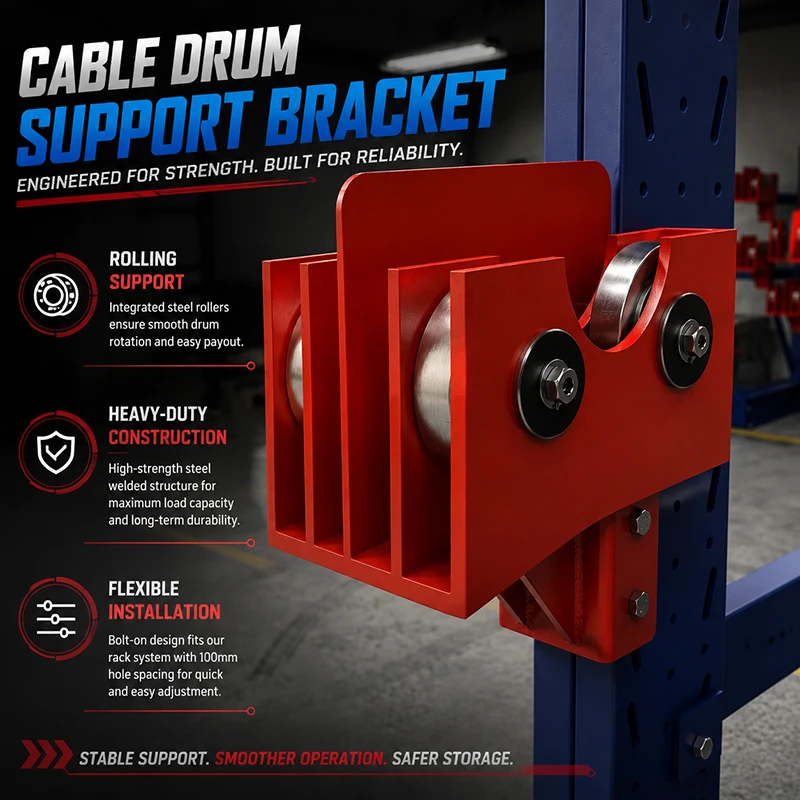
The roller support bracket provides a defined support point for reel rotation and handling. It does not remove the need to verify reel flange condition, axle or lifting method, center distance, loading sequence and operator clearance.
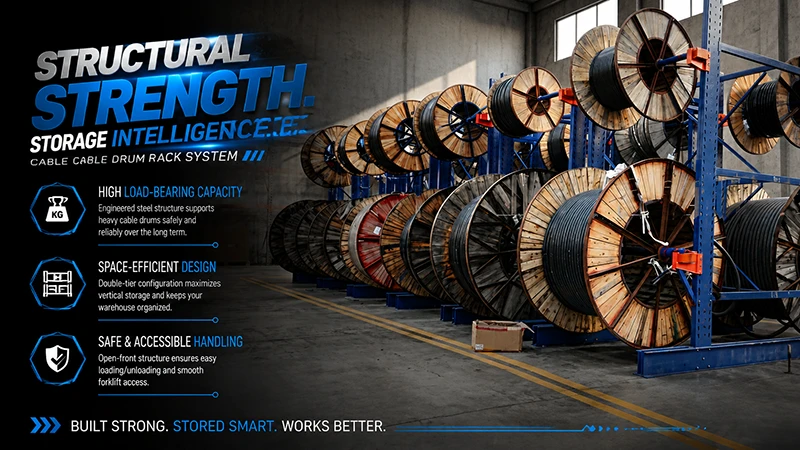
Send the complete diameter and weight schedule rather than selecting one rack from the largest reel alone. The supplied reference table includes 22 measured sizes from Ø737 to Ø2007 mm. We can group compatible reel families and propose a main-frame/auxiliary-frame layout, subject to project engineering confirmation.
Yes, the design reference specifies punched uprights with installation holes at 100 mm increments for support positioning. The selected support positions, clearances and load conditions must be confirmed in the technical agreement.
There is no single standard answer. Reel width, flange diameter, support spacing, gross weight, access clearance and the loading method determine the safe quantity. We will calculate the proposed quantity from your reel schedule instead of presenting an unverified catalogue number.
Auxiliary frames can add storage positions within a planned run, but the density gain must be calculated from your floor plan, bay length, reel mix, aisle and handling envelope. Submit the reel schedule and available area for a layered layout comparison.
It may not suit reels that require a different support interface, loads outside the reviewed range, unstable or damaged flanges, restricted access for the selected handling equipment, or sites that cannot meet the required floor and anchoring conditions. These cases should be reviewed before quotation.
Share reel diameter, width, gross weight, quantity, handling equipment and available floor area. We will use those inputs to review adjustable support positions and the main/auxiliary-frame density—not assume a standard tier capacity.