
Carack Reel Removal & Transport Forklift Clearance
Carack
Carack whole-reel removal and transport PDP for factories moving cable reels by forklift. Learn how side clearance, support-beam offset, and reel dimensions are matched before fabrication.
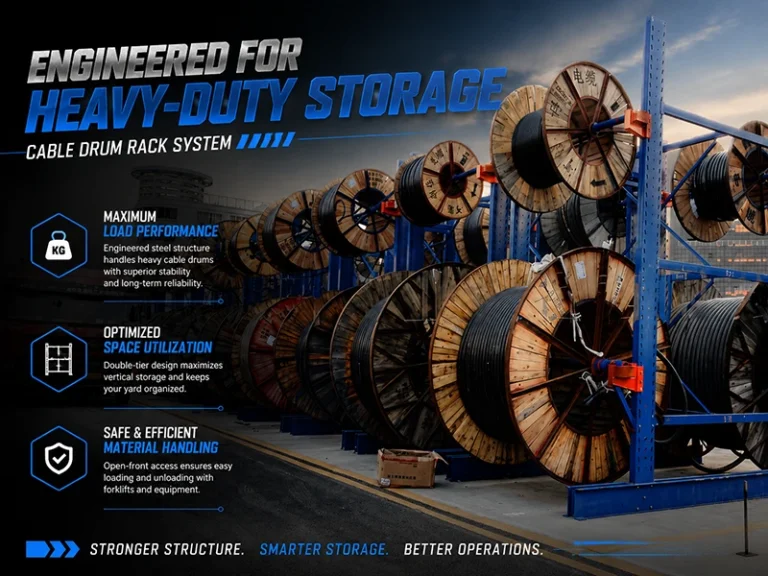
Forklift removal for reels that must travel to another station
This Carack layout is for factories that move a full reel from storage to a line-side cart or another workstation, often as a 100–200 yard transfer. The fork path is built for side access, vertical lift, and a clean exit from the bay.
The clearance is matched to the reel family and the forklift model, so the support beam stays out of the lift path and the reel can come off the rack as a unit. This page is about whole-reel removal and transport, not cable pay-off from the rack.
- Forklift enters from both sides of the reel bay for a straight lift path.
- Clearance is customized to reel OD, face width, core bore, and fork thickness.
- The support beam and roller cradle are kept outside the travel path.
- Built for whole-reel transfer to a cart or a second process station.
- Related routes: PDP-01, PDP-02, BRAND-02, CASE-02.
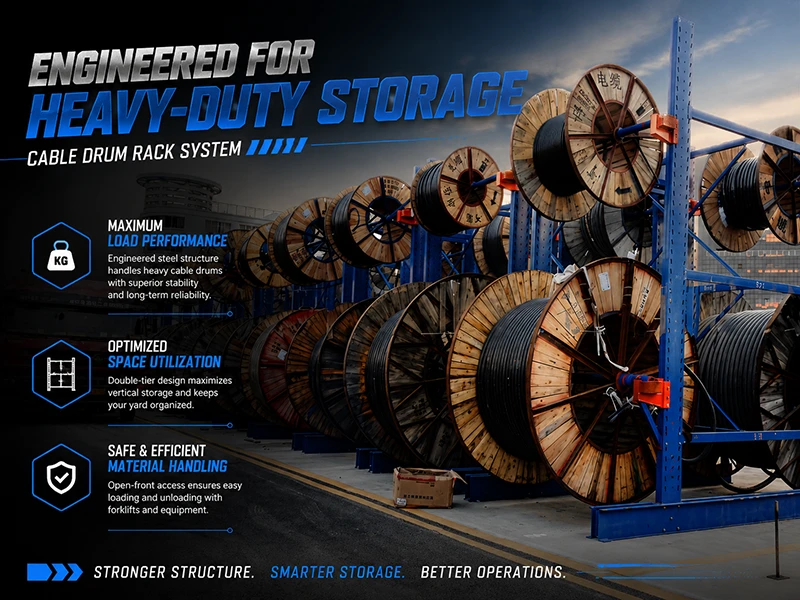
Choose the clearance path that matches your handling flow
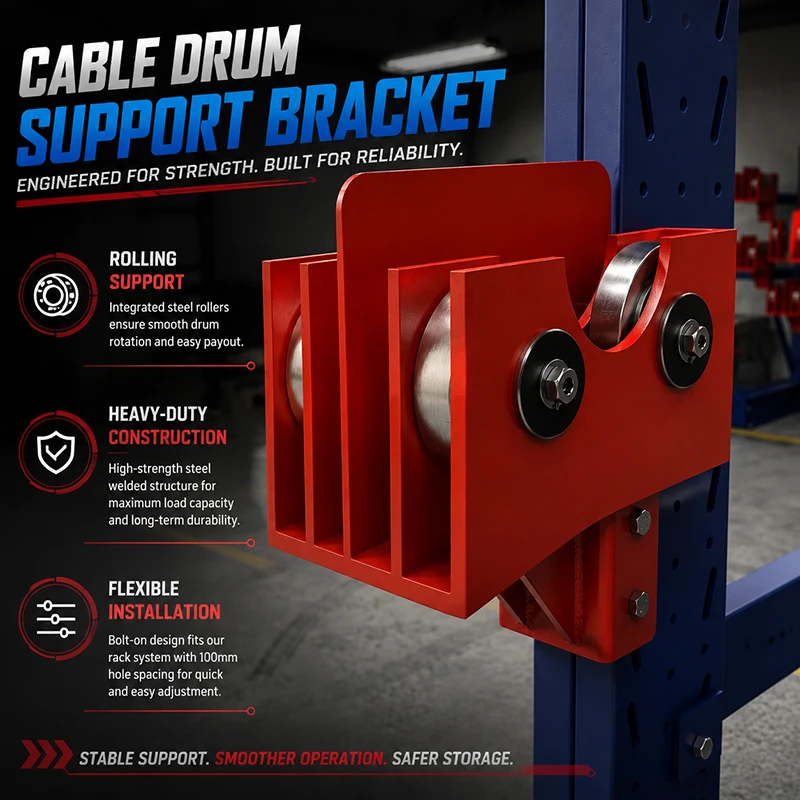
PDP-01
Forklift pickup bay
For plants that lift the full reel off the rack and move it intact to the next workstation.
- Side access lift path
- Vertical pickup and exit
- Custom bay width by reel family
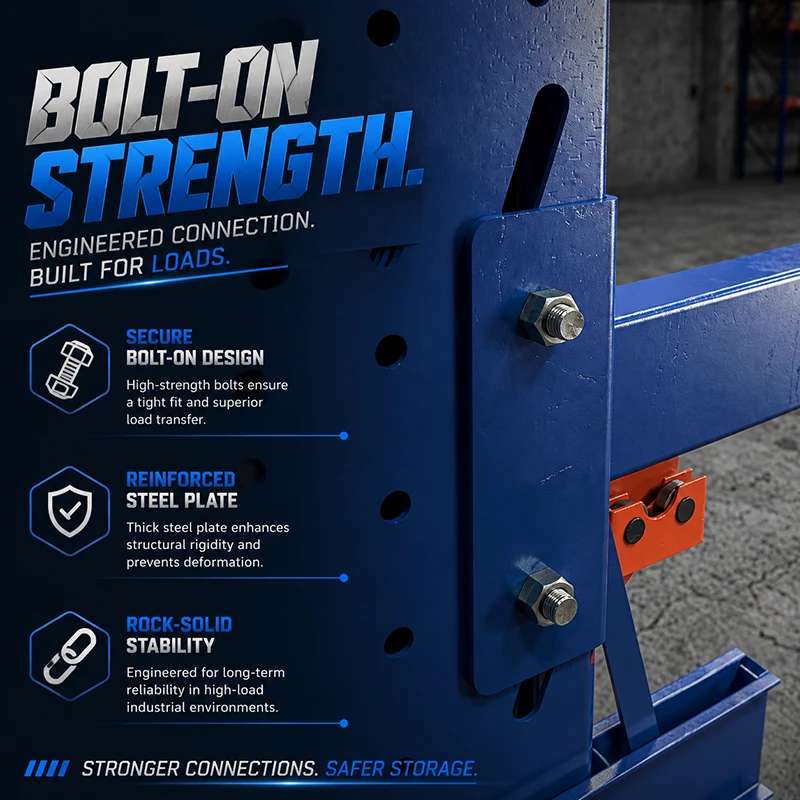
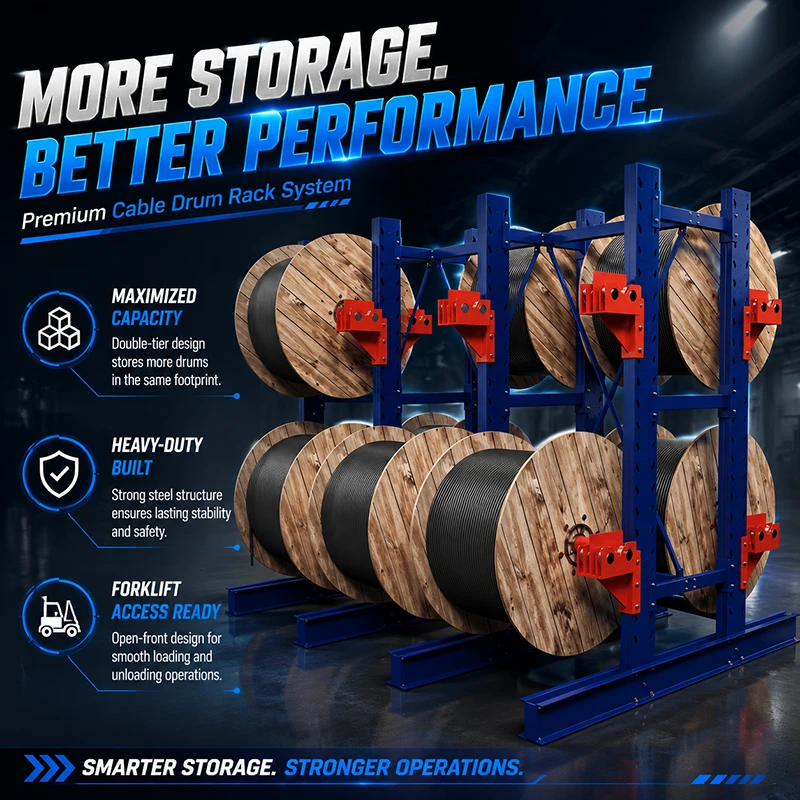
PDP-02
Beam-offset clearance bay
For projects that need extra separation between the reel face, the support beam, and the fork carriage.
- Support-beam offset check
- Fork thickness match
- Transfer to cart or line-side point
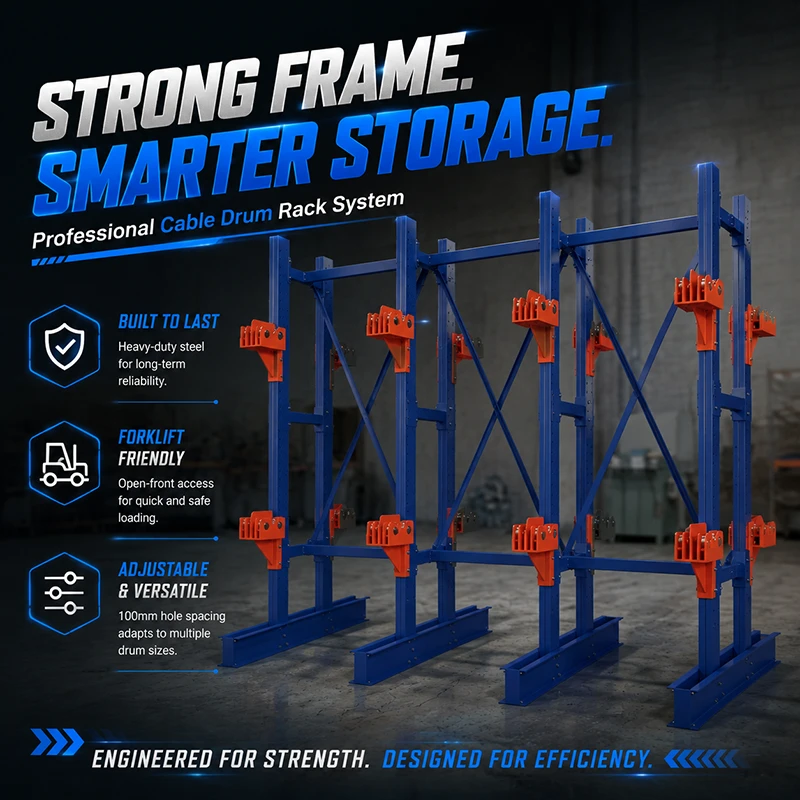
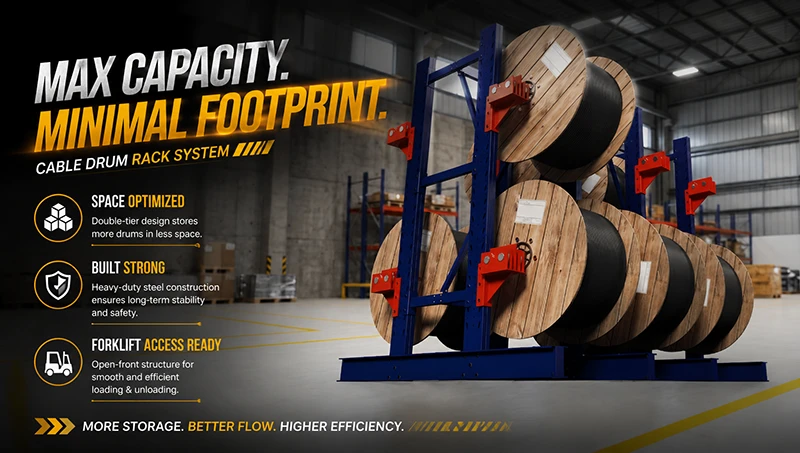
CASE-02
Project proof and load-path review
Use a customer-specific case page to validate the handling path before release.
- Drawing-led clearance check
- Load path review
- Release-ready documentation
Built for whole-reel transfer, not cable pay-off from the rack
Forklift clearance
The fork path is defined so the forks can enter from the side, lift vertically, and leave without sweeping the support beam.
Whole-reel handling
This is for removing the reel as a unit and moving it intact to another point in the plant.
Custom sizing
Bay width, beam offset, and fork pocket depth are set from the actual reel family and forklift model.
Clear separation from A-frame pay-off logic
An A-frame used for live pay-off keeps the reel on the frame while cable is drawn off. This page is for taking the reel off the rack first.
Send the reel and forklift data, then lock the clearance
Share reel dimensions
Send reel OD, face width, core bore, weight, and the reel family you want to standardize.
Share forklift data
Provide forklift model, fork width, fork thickness, mast reach, and any carriage offset limits.
Confirm the drawing
We check side clearance, beam offset, and the transfer path before fabrication is released.
Fabricate and test the lift path
The rack is built to the confirmed geometry, then the pickup and drop-off path is verified against the handling flow.
Answers to the clearance and handling questions
How does the forklift take the reel off the rack?
The forks enter from the side clearances, take the load under the reel, lift vertically, and pull straight out to transfer the reel to the cart or the next station.
Is the clearance enough?
It can be, but the clearance is not a fixed universal number. It must be matched to your reel size and forklift model; one technical review used 690 mm as an example center-distance figure, but the final value is always drawing-led.
Will it hit the support beam?
Not when the bay opening and beam offset are set to the actual fork path. The support beam sits outside the lift path, so the reel can be removed without brushing the frame.
Is this the same as a rack for cable pay-off?
No. A pay-off A-frame keeps the reel on the frame while cable is drawn off. This page is for taking the whole reel off the rack and moving it intact.
When is this layout not the right choice?
If the reel must stay on the rack for live pay-off, or if you cannot standardize enough reel sizes and forklift data for a stable clearance, use a different handling concept.