
Cold Storage Galvanized Derack for Wet Warehouses
Cold-storage Derack for humid, chilled, and wash-down warehouses. Compare hot-dip galvanizing, cold galvanizing, and galvanized-plus-coating routes for wet environments.
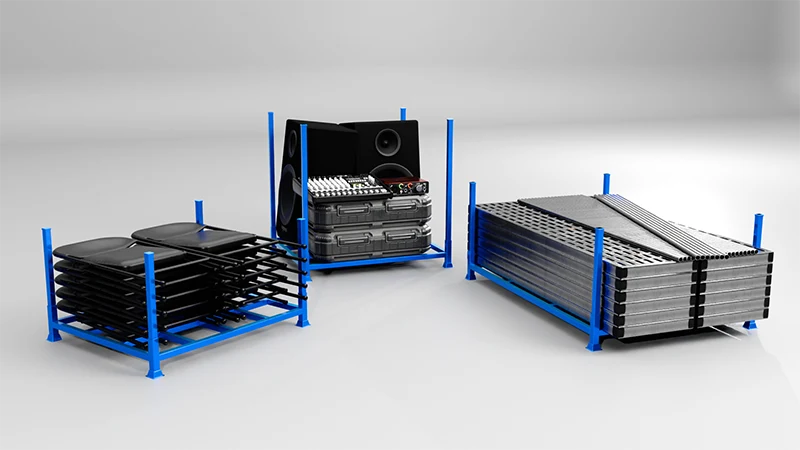
A returnable stack rack is not the same thing as a fixed warehouse rack
If your warehouse is dry, a painted frame may be acceptable. If your site sees cold-room condensation, rinse water, salt fog, or frequent humidity swings, you need a corrosion strategy that matches the job. This page focuses on the galvanized Derack option for those conditions.
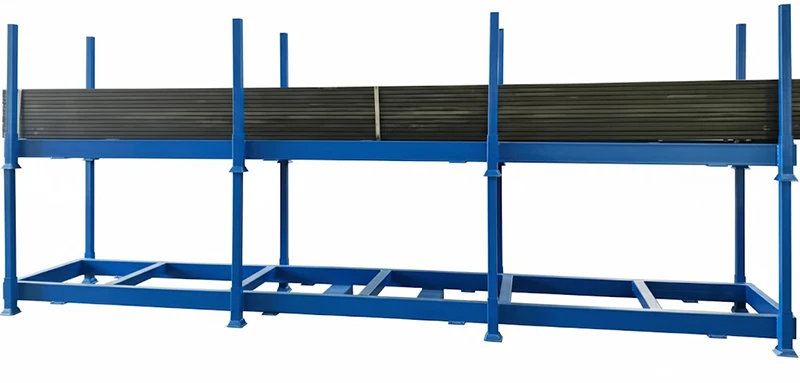
Derack sits between a pallet and a fixed rack. It is a structural load carrier that can be moved, stacked, nested, and returned to circulation. For wet or chilled environments, the question is not only strength. The real question is how the coating behaves after repeated handling, edge wear, and moisture exposure.
- Hot-dip galvanizing gives the most direct zinc barrier for wet and cold-room use.
- Cold galvanizing is a thinner zinc-rich option and usually looks brighter, but it is not the same as hot-dip protection.
- Galvanized plus spray coating can improve appearance, but sprayed systems still need a fully protected internal structure.
- Paint-only or spray-only frames are less suitable where hidden steel, scratches, and condensation can trigger rust.
Share your cold-room temperature band and load to get a galvanized proposal
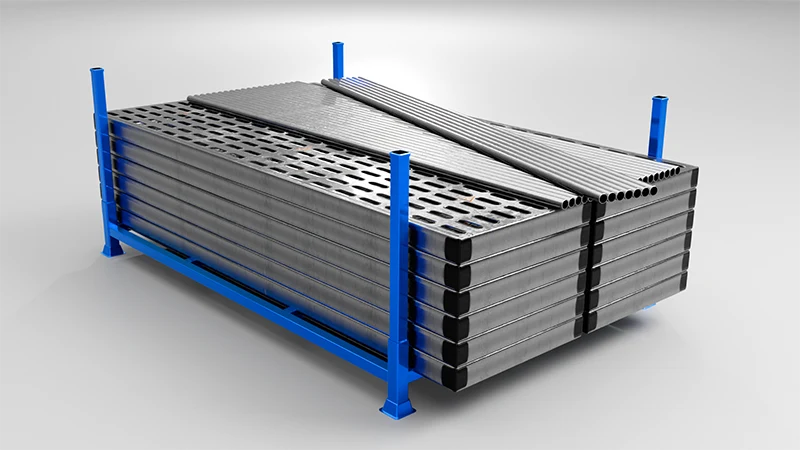
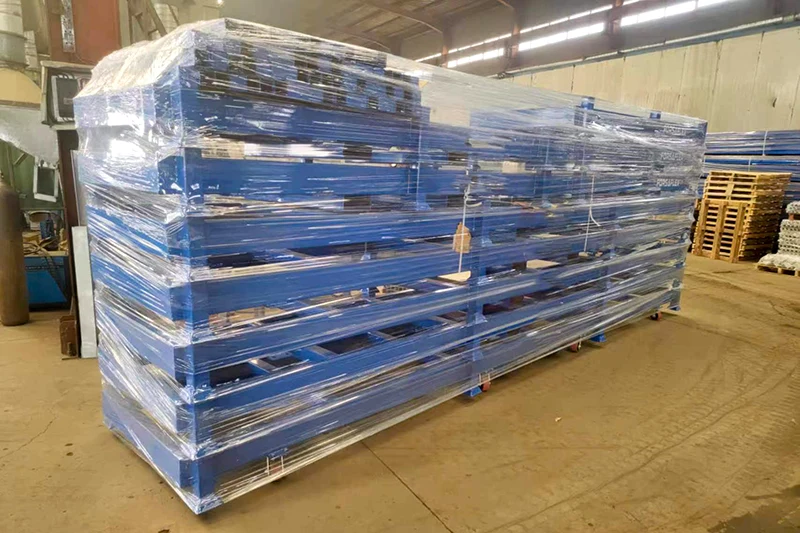
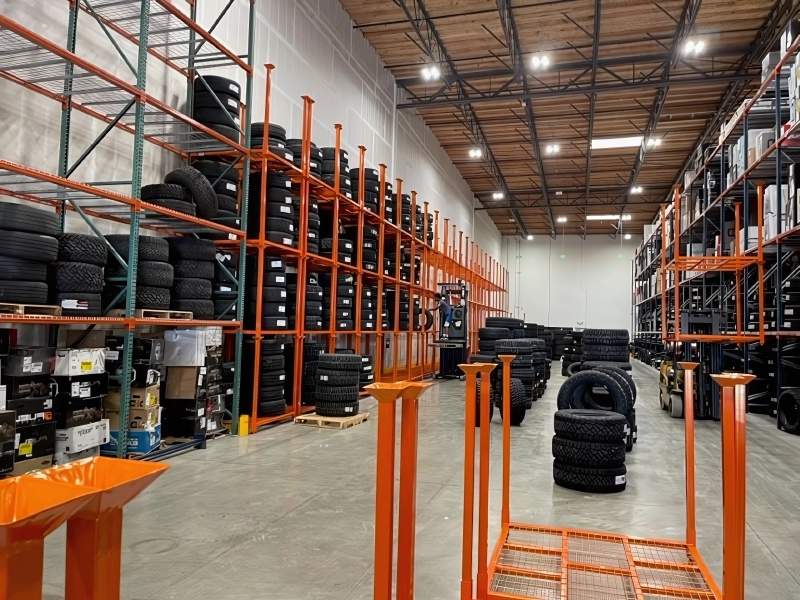
Choose the protection level for the room, not for the brochure
Best for cold rooms
Hot-dip galvanized Derack
The zinc layer is formed by immersion, so the protection reaches both exposed surfaces and edges more comprehensively. This is the preferred option for chilled warehouses, wet turnover, and environments with regular condensation.
- Use when rust prevention matters more than a painted appearance.
- Good fit for cold storage, wash-down areas, and damp logistics yards.
- Recommended when the rack must stay in circulation for a long service cycle.
Brighter finish
Cold galvanized Derack
Cold galvanizing is a zinc-rich coating system and can appear brighter than hot-dip finishes. It is a coating choice, not a shortcut to full immersion protection, so it should be selected carefully based on actual humidity and wear conditions.
- Useful where appearance is important and the environment is less aggressive.
- Needs clear confirmation of coating thickness and application method.
- Not the first choice for repeated condensation or harsh cold-room exposure.
Appearance + protection
Galvanized plus spray-coated Derack
This hybrid route can balance appearance and protection, but it should not be treated as automatic rust proofing. If the internal steel is not protected or the surface is scratched, corrosion can still begin from damaged or exposed areas.
- Suitable when the customer wants both branding color and corrosion protection.
- Confirm whether the system is hot-dip first, then coated, or coated over another treatment.
- Needs careful inspection on edges, welds, and hidden contact points.
What changes when you move from spray paint to zinc protection?
Spray coating vs galvanizing
Spray coating is a surface layer. Galvanizing is a zinc-based corrosion strategy. For cold storage, the difference matters because condensation, handling wear, and hidden edges can expose bare steel over time.
Why zinc helps inside and out
With hot-dip galvanizing, zinc reaches the external surfaces and edge areas more completely. That matters on welded steel structures where moisture may reach corners, joints, and damage points first.
What happens if you use spray paint in a cold room
If the internal steel is not protected and the coating is scratched, rust can begin from the inside, the weld area, or any exposed steel. In a cold room, moisture and condensation make that risk more visible.
Can it work as a cold-room rack?
Derack can be specified for cold-room use, but it is still a returnable stack rack, not a fixed pallet racking system. The final answer depends on load distribution, stacking method, floor condition, and the corrosion route you choose.
Send the storage conditions first, then we define the zinc route
Tell us the storage environment
Share the cold-room temperature band, humidity level, whether the area is washed down, and whether the rack will see outdoor transfer or salt exposure.
Confirm the load and geometry
Provide the unit weight, load distribution, stacking height, and whether the rack must be nested, stacked, or moved as a complete set.
Choose the protection route
We will recommend hot-dip galvanizing, cold galvanizing, or a galvanized-plus-coating route according to the environment and service life target.
Finalize the job-specific drawing
Because Derack is project based, the final size, post count, and working load are confirmed before production rather than copied from a generic catalog value.
Cold-storage galvanized Derack questions, answered plainly
What is the difference between spray coating and galvanizing?
Why is galvanized steel better for wet and cold rooms?
What happens if a spray-painted rack is used in a cold room?
Can I use this directly as a cold storage rack?
What do you need from me to quote the right galvanized solution?
B2B Racking Structural Engineering Calculator
Input your structural guidelines below. Our math system calculates material deflection, stress bounds, and recommends optimal profiles.
Click Compute to calculate stress factors and display structural drawing recommendations.