
Cold Storage Inverted Rerack for Palletized Loads
Cold-storage inverted Rerack for palletized loads: no floor anchors, no insulation damage, connector pallet linkage for stability, 100 mm empty nesting clearance, and indoor electrostatic spray coating.
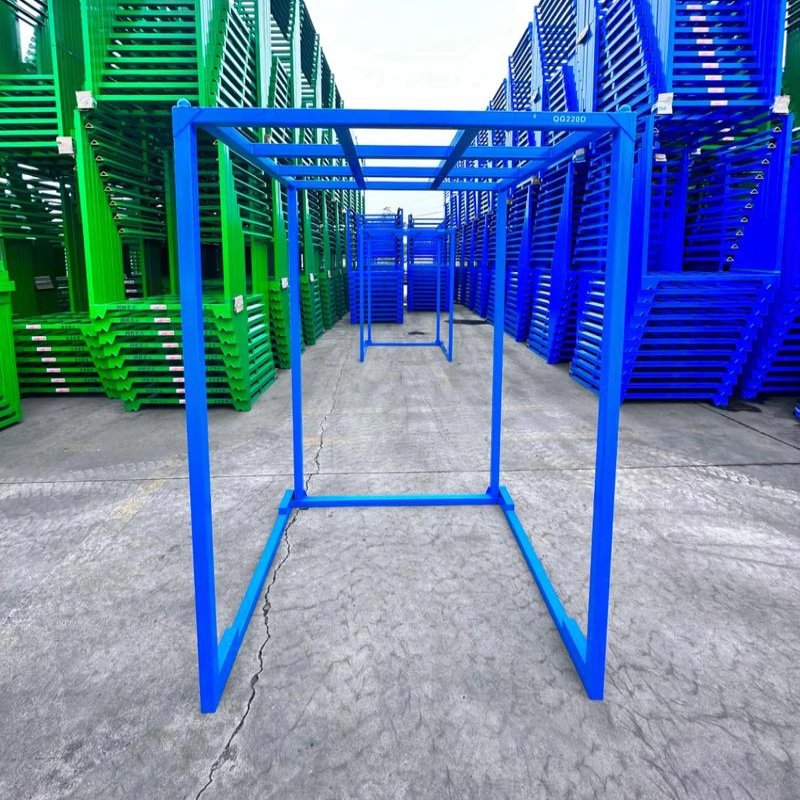
Why an inverted Rerack fits refrigerated pallet storage
Cold-room storage needs vertical capacity without turning the floor into a fixed construction site. An inverted Rerack lets pallet loads stack in a controlled way, while avoiding floor anchors that can penetrate insulation layers or complicate future layout changes.
In project 14306, the cold-storage layout used a 1200×1200 mm pallet, a 500 kg load, and a two-layer arrangement inside a refrigerated warehouse. The rack was engineered as a project sample, not a universal SKU, so dimensions and details should always be confirmed against the actual pallet and cargo envelope.
- No floor anchoring, so the slab and insulation build-up stay intact.
- Two inverted racks can be linked into one working set with a connector pallet and lifting lugs.
- Empty nesting clearance can be set at 100 mm to suit fork tine thickness.
- Indoor cold-room use can rely on electrostatic spray coating.
- Designed for palletized loads, not for unstable loose cargo or outdoor exposure.
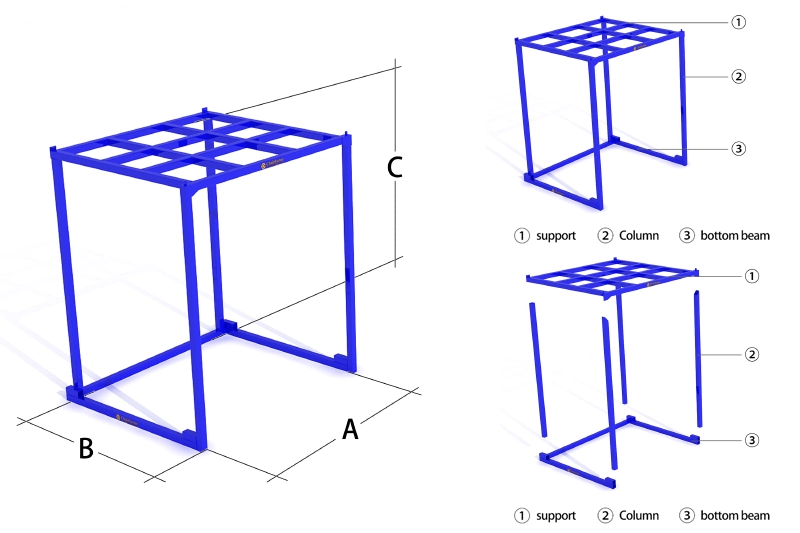
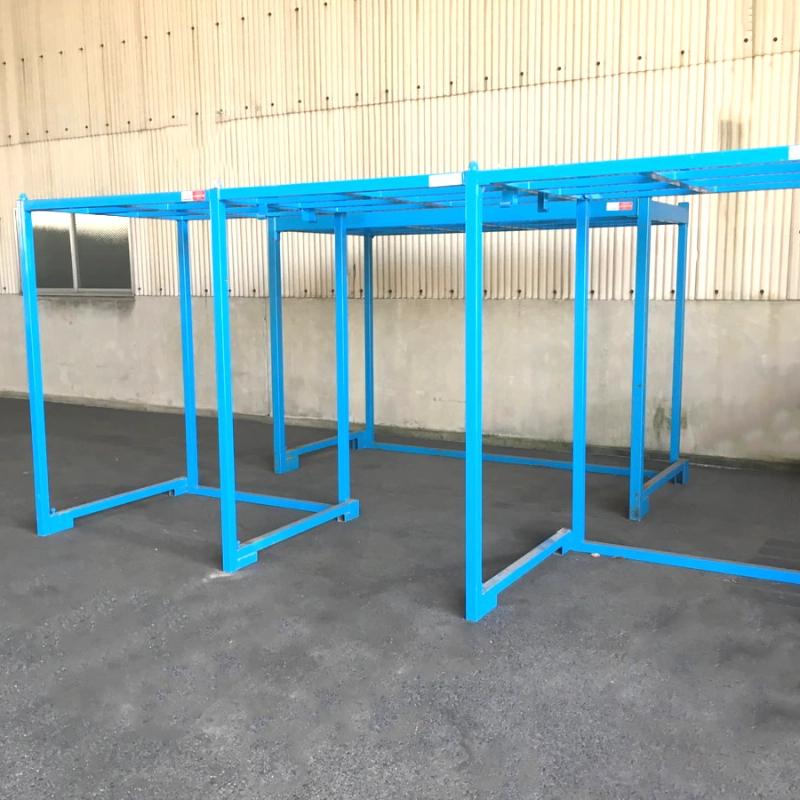
Three things the cold-storage version must solve
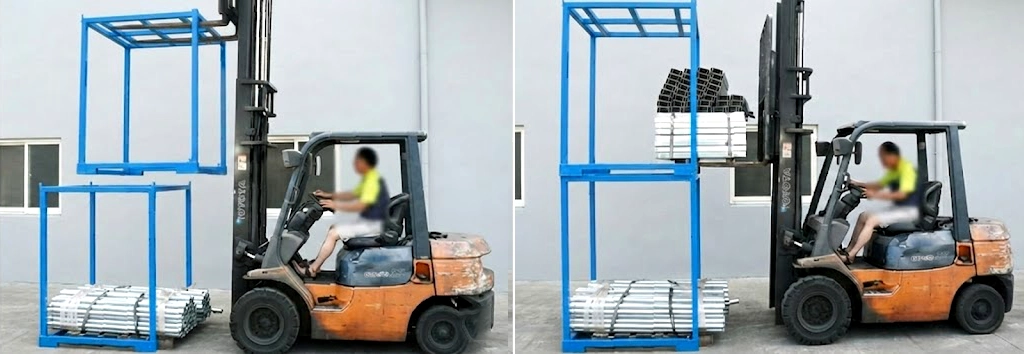
Floor-safe setup
No anchors through insulated floors
The rack sits as a welded steel load carrier inside the cold room, so the installation can avoid drilling, anchoring, or damaging insulation layers. That keeps the room reversible when the layout changes.
• Better fit for warehouses that want temporary or adjustable layouts.
• Good for sites where the floor build-up must remain intact.
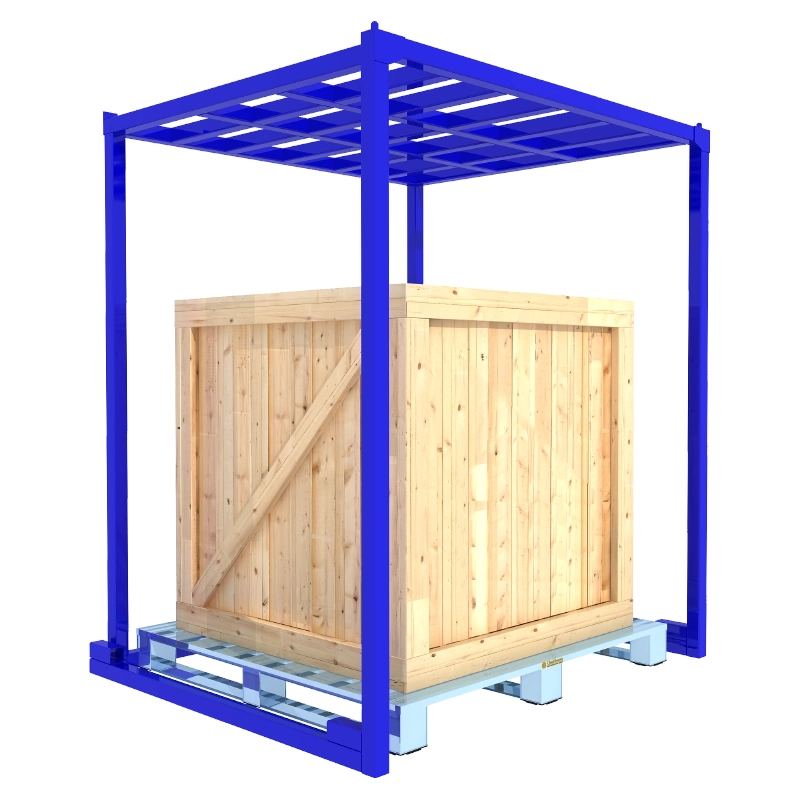
Connector pallet
Connector pallet + lifting lugs link two racks
In project 14306, the middle connector pallet had lifting lugs, which let two inverted racks act as one connected unit. The result is less loose handling, better overall stability, and a controlled bill of materials.
• Suitable when the customer wants a more unified rack set.
• Project-specific hardware can lower total system cost versus adding extra structure.
Forklift & coating
100 mm nesting gap and indoor spray coating
The empty stacking gap can be kept at 100 mm to suit fork tine thickness when the rack is nested empty. For indoor refrigerated use, electrostatic spray coating is usually enough; it is not a substitute for outdoor or rain-exposed protection.
• 100 mm is a project value, not a universal standard.
• Indoor cold rooms do not need outdoor-grade maintenance assumptions.
What the cold-room buyer needs to verify before ordering
Load path and floor condition
Confirm whether the cold-room slab can take the planned point load without anchors. If the site needs fixed anchoring for code or seismic reasons, this project logic should be reviewed before moving forward.
Pallet size and cargo envelope
Project 14306 was built around 1200×1200 mm pallets and a 500 kg load. Different pallet sizes or product overhangs may require a different inner size and a different crossmember layout.
Empty return handling
The 100 mm nesting clearance helps with fork tine clearance during empty return, but the actual gap should still be confirmed against the forklifts and handling habits used on site.
Indoor use only
Electrostatic spray coating is the right cost-conscious choice for indoor cold storage. If the rack will see rain, washdown exposure, or outdoor waiting time, the coating spec should be changed before production.
How to move from a cold-room layout request to a buildable drawing
Share the pallet and load data
Send pallet size, cargo height, and target load per pallet so the rack can be sized around the real working envelope.
Confirm whether two racks must be linked
If the cold room needs a more stable pair, the connector pallet with lifting lugs can be added as a project-specific option.
Set the nesting and fork-entry gap
Agree the empty gap, fork tine thickness, and handling direction so empty racks still nest cleanly without contact damage.
Approve coating and delivery method
For indoor refrigerated storage, electrostatic spray coating is usually enough. Then the project can move to packaging, stacking, and transport planning.
Cold-storage questions buyers usually ask first
Can an inverted Rerack be used in a cold room without floor anchors?
Yes, when the site load path and operating rules allow it. The whole point of this layout is to avoid drilling through insulation or committing the room to a fixed rack grid.
Why use a connector pallet with lifting lugs?
It lets two inverted racks work as a linked pair, which improves stability and keeps the system cost under control. In project 14306, that was the preferred connection logic.
Is the 100 mm nesting gap a standard spec?
No. It is a project example used to fit fork tine thickness during empty nesting. Always confirm the handling equipment before repeating it on another job.
Is electrostatic spray enough for refrigerated storage?
For indoor cold storage, yes. It is a practical coating choice when the rack is not exposed to rain or long-term outdoor waiting. If the environment changes, the coating spec should change too.
B2B Racking Structural Engineering Calculator
Input your structural guidelines below. Our math system calculates material deflection, stress bounds, and recommends optimal profiles.
Click Compute to calculate stress factors and display structural drawing recommendations.