
 |
Auf den ersten Blick sehen die meisten 2-stöckigen Transportwagen auf Rädern ähnlich aus. Sie bestehen aus Stahl und haben vier Räder. Doch der Unterschied zwischen einem Wagen, der 12 Monate hält, und einem, der 10 Jahre hält, ist unsichtbar: Er liegt im Herstellungsprozess. Ein wirklich industrial workshop cart wird durch *die Art und Weise* seiner Konstruktion definiert. |
Das "Black-Box"-Problem bei Stahlwagen
Viele Anbieter sind lediglich Montagebetriebe oder Wiederverkäufer. Sie können nicht sagen, *wie* der Rahmen geschweißt oder *wie* der Stahl behandelt wird. Dies ist eine "Black Box". Der Käufer entdeckt die mangelhafte Qualität erst sechs Monate später, wenn unter schwerer Last eine Schweißnaht reißt oder die Beschichtung abzublättern beginnt und Rost freilegt. In einem industriellen Umfeld ist dies nicht nur ein Ersatzteilkostenproblem, sondern ein Sicherheits- und Zuverlässigkeitsversagen.
Ein Blick in einen E-E-A-T-Fertigungsprozess (Expertise, Autorität, Vertrauenswürdigkeit)
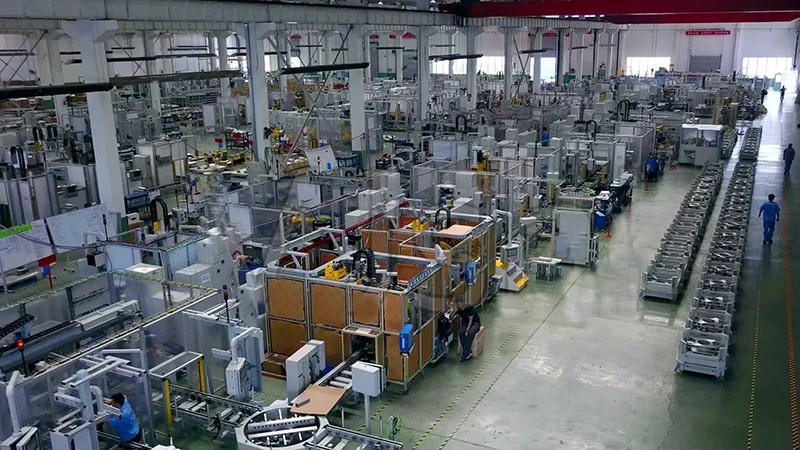
Ein professioneller Hersteller kann auf seinen Prozess als Qualitätsgarantie verweisen. Zwei Prozesse sind bei Schwerlastgeräten nicht verhandelbar: die Schweißung und die Oberflächenveredelung.
Die Schweißung: CO2-Schutzgasschweißen (MIG/MAG)
Ein billiger Wagen wird oft "punktgeschweißt" oder schlecht geheftet. Ein Industrierahmen basiert auf CO2-Schutzgasschweißen (MIG/MAG). Dieses Verfahren verwendet einen kontinuierlichen Drahtvorschub und ein Schutzgas, um eine tiefe, gleichmäßige Schweißnaht zu erzeugen. Die Vorteile sind entscheidend:
- Tiefe Durchdringung: Die Schweißnaht verschmilzt das Metall, anstatt nur auf ihm zu liegen. Dies verleiht einem für 600 kg ausgelegten Wagen seine wahre Festigkeit.
- Geringere Verformung: Die Hitze wird konzentriert, was ein Verziehen des Stahlrohrs verhindert und sicherstellt, dass der Rahmen rechtwinklig und gerade ist.
- Überlegene Festigkeit: Die resultierende Schweißnaht ist extrem stark und widerstandsfähig gegen Risse, Vibrationen und dynamische Belastungen, denen ein fahrender Wagen ausgesetzt ist.
Die Beschichtung: Mehr als nur Farbe
Eine einfache Sprühdose Farbe bietet keinerlei Schutz. Eine echte Industriebeschichtung ist ein mehrstufiger chemischer Prozess. Der Goldstandard ist die elektrostatische Pulverbeschichtung.
- Vorbehandlung (Der wichtigste Schritt): Der rohe Stahlrahmen wird gereinigt und behandelt, oft mit einem Säurebad (Beizen) und einer Phosphatierung. Dieser Prozess entfernt alle Öle und ätzt den Stahl mikroskopisch an, wodurch eine perfekte Haftfläche entsteht.
- Elektrostatische Applikation: Das pulverförmige Polymer wird elektrisch aufgeladen, und der Wagenrahmen wird geerdet. Das Pulver wird dann zum Stahl hingezogen, umhüllt Ecken und verbindet sich gleichmäßig.
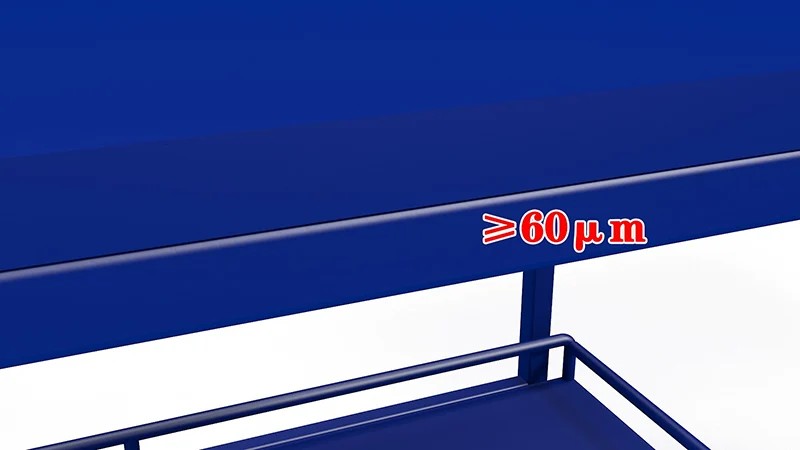
- Das beschichtete Teil wird in einem Industrieofen eingebrannt. Die Hitze schmilzt das Pulver, sodass es zu einem glatten, durchgehenden Film verläuft, der zu einer harten, langlebigen Oberfläche aushärtet. Eine industriestandardmäßige Beschichtungsdicke von 60 µm oder mehr gewährleistet eine wirksame Barriere gegen die Elemente. Der Wagen wird eingebrannt, wodurch das Pulver zu einer dicken, gleichmäßigen und extrem harten Schale schmilzt (oft 60 µm).
Dieser Prozess macht die Beschichtung beständig gegen Absplittern, Chemikalien und Kratzer und ist die einzig zuverlässige Methode, um Rost zu verhindern.
Warum dieser Prozess Ihre Garantie ist
Zu verstehen, *wie* ein 2 tier trolley on wheels hergestellt wird, ist der einzige Weg, seinen Spezifikationen zu vertrauen. Eine Tragfähigkeit von 600 kg ist bedeutungslos, wenn die Schweißnähte schwach sind. Ein Versprechen von "Langlebigkeit" ist leer, wenn es sich nur um Sprühfarbe handelt. Dieses Maß an Fertigungsdetails ist der Unterschied zwischen einem Wegwerfwerkzeug und einer langfristigen Kapitalinvestition.
Häufig gestellte Fragen
F: Was ist CO2-Schutzgasschweißen?
A: Auch als MIG- oder MAG-Schweißen bekannt, ist es ein fortschrittliches Verfahren, das ein Schutzgas verwendet, um die Schweißnaht vor Verunreinigungen zu schützen. Dies erzeugt eine viel stärkere, tiefere und gleichmäßigere Schweißnaht als einfaches Punktschweißen und ist für Schwerlastgeräte unerlässlich.
F: Was ist elektrostatische Pulverbeschichtung?
A: Es ist ein hochtechnologischer Beschichtungsprozess, bei dem ein pulverförmiger Kunststoff elektrisch mit dem Metall verbunden und dann eingebrannt wird. Es entsteht eine Beschichtung, die deutlich dicker, härter und beständiger gegen Rost und Absplittern ist als herkömmliche flüssige Farbe.
F: Warum ist die Vorbehandlung (wie Phosphatierung) für die Beschichtung so wichtig?
A: Die Vorbehandlung ist der kritischste Schritt für die Haltbarkeit. Sie reinigt alle Verunreinigungen vom Rohstahl und ätzt die Oberfläche an, wodurch die Pulverbeschichtung eine dauerhafte, chemische Bindung mit dem Metall eingehen kann. Ohne sie würde die Beschichtung leicht abblättern oder abplatzen.
F: Wie wirkt sich dieser Herstellungsprozess auf die Tragfähigkeit des Wagens von 600 kg aus?
A: Die Tragfähigkeit von 600 kg ist ein direktes Ergebnis dieser Prozesse. Das CO2-Schweißen stellt sicher, dass die Rahmenverbindungen stark genug sind, um die dynamische Belastung einer 600-kg-Last zu bewältigen, während die Pulverbeschichtung den Baustahl vor Rost und Zersetzung schützt.
Q: Is this industrial workshop cart beständig gegen Chemikalien oder Öle?
A: Ja. Die hochwertige pulverbeschichtete Oberfläche ist porenfrei und hochbeständig gegen gängige Industriechemikalien, Öle und Reinigungslösungsmittel, was sie leicht abwischbar und ideal für eine Werkstattumgebung macht.
Benötigen Sie eine individuelle Lagerlösung?
Sprechen Sie direkt mit unseren technischen Ingenieuren. Wir bieten kostenlose Strukturplanungen, Bewertungen von Hochlast-Katalogen und schnelle B2B-Preisangebote.
Jetzt Angebot anfordern →