
Outdoor storage does not fail because a galvanized wire mesh container gets wet once. It becomes a problem when water remains standing at the feet, under the base, or at damaged contact points. For an outdoor or semi-enclosed storage area, a simple practical rule applies: first resolve drainage and ground contact, then check the load-bearing points.
Stbox is a collapsible wire mesh container for the storage and transport of industrial parts. The documented surface is electrogalvanized steel with a zinc coating of at least 8 μm; the product description states that this version is resistant to corrosion from rain in outdoor conditions. This is useful protection, but not a general rust-resistance guarantee for outdoor use. Actual performance depends on load, water retention, contamination, handling damage, and the coating specification agreed for the project.
Allow rainwater to drain away and do not leave feet standing in stagnant water
The first outdoor check concerns not the container but the storage area. A seemingly level concrete surface can hold water after rain, especially where wheel ruts, expansion joints, drains, or stacked materials create depressions. Position the container so that surface water can leave the storage area. The stacking feet and the underside of the base must not remain standing in a puddle for extended periods.
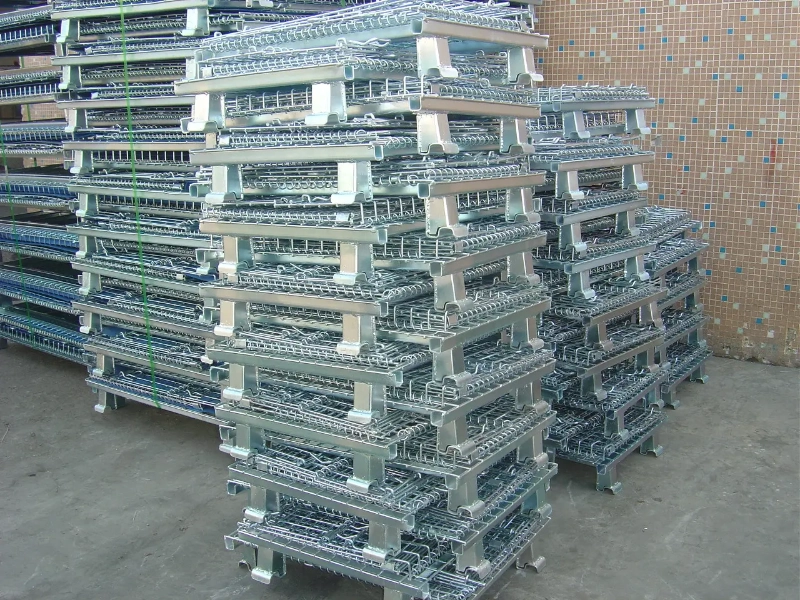
How much ground clearance is appropriate? There is no reliable one-size-fits-all figure for every storage area, since the required ground clearance depends on site drainage, rainfall levels, cleaning method, accessibility for forklifts or pallet trucks, and whether the container is stored assembled or collapsed. The right goal is sufficient ground clearance to keep the lower steel parts and stacking feet above normal surface water while still allowing the feet to sit fully and stably and equipment to approach safely. If the area is frequently flooded or hosed down, resolve the structural or drainage issue rather than relying on an improvised spacer.
Use a firm, level surface. Avoid loose blocks that could tip the load or prevent the feet from sitting fully. After rain, check whether water has collected under the stack; if so, relocate the storage area or improve the drainage concept before treating the galvanizing as the sole protection.
Inspect stacking feet and ground contact areas – not just the visible mesh
Outdoor corrosion often begins where you least look: at the underside of the base, at the pressed stacking feet, at weld transitions, and at points where grit or damp dirt adheres. The steel base and stacking feet of the Stbox are load-bearing components. When inspecting an assembled stack, ensure that each upper foot sits fully in the receiver of the lower container and that no foot rests on a stone, a chipped concrete edge, or accumulated mud.
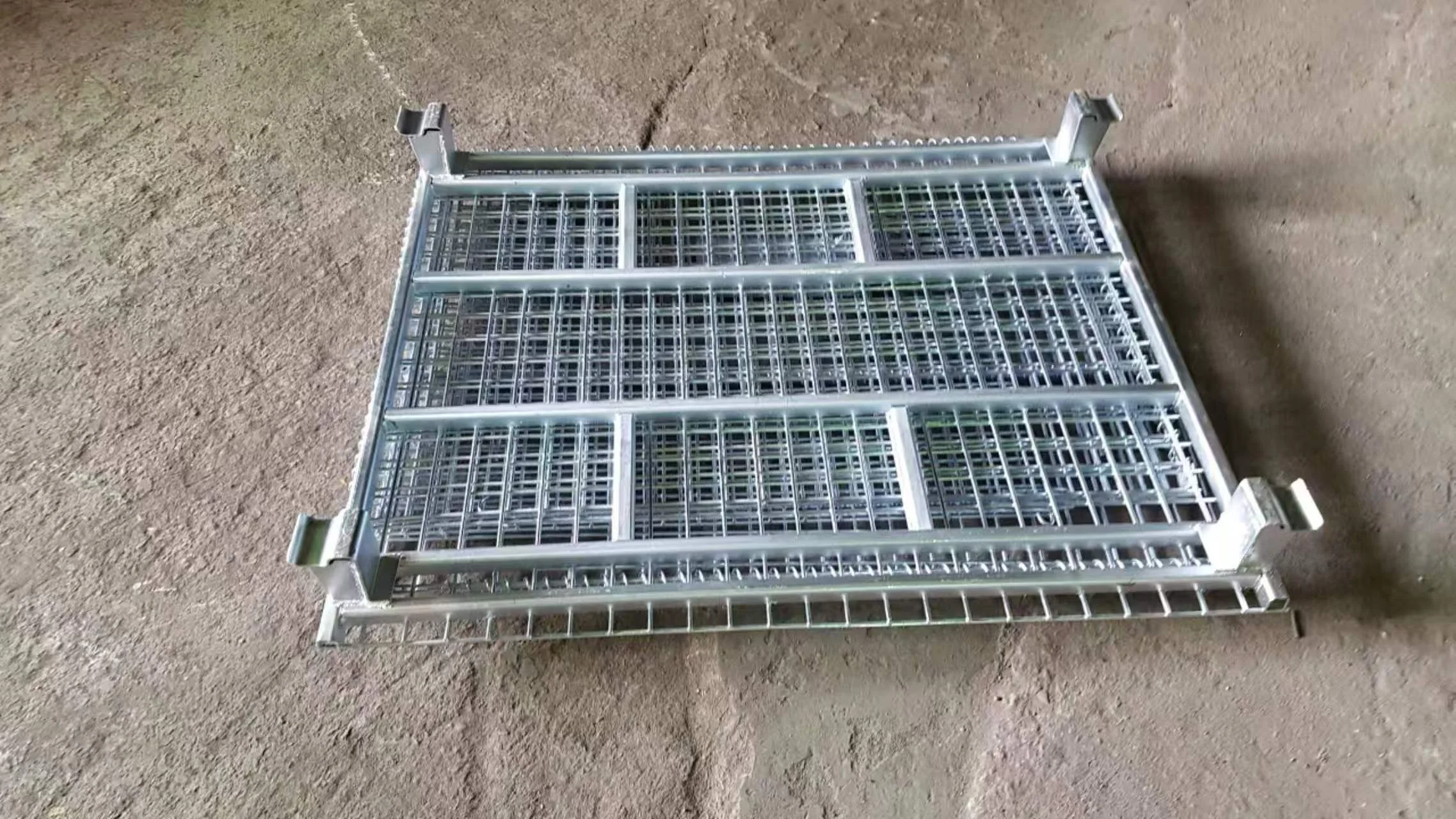
Look for white corrosion products, red rust, blistering or missing zinc coating, deep scratches, bent feet, cracked welds, and deformation in the base area. Surface dirt is not automatically structural damage, but it can conceal moisture and should be removed using a method compatible with the agreed surface. Particular attention is required after dragging, forklift contact, pallet truck impact, or uneven setting-down of a stack. A container with significant rust or damaged load-bearing components should be isolated and taken out of service until assessed.
Inspection frequency should follow the project agreement, not a self-invented universal schedule. A practical routine can combine the agreed regular inspection with event-driven checks after heavy rain, flooding, chemical contact, visible impacts, or relocation. Document the location, condition of the feet and underside, coating damage, and corrective measures. This makes it possible to identify whether a recurring puddle or a handling habit is causing the damage.
Adapt the coating specification to the environment
"Galvanized" alone is not yet a complete specification for outdoor use. Before ordering, describe the actual exposure: covered storage area or fully outdoors, normal rain or frequent washing with water, coastal or inland climate, contact with fertilizer, salt, acids, alkalis, oils, or other chemicals, as well as the intended storage duration. Then coordinate the required coating system, layer thickness, repair procedure for damaged areas, and inspection or acceptance criteria with the supplier.
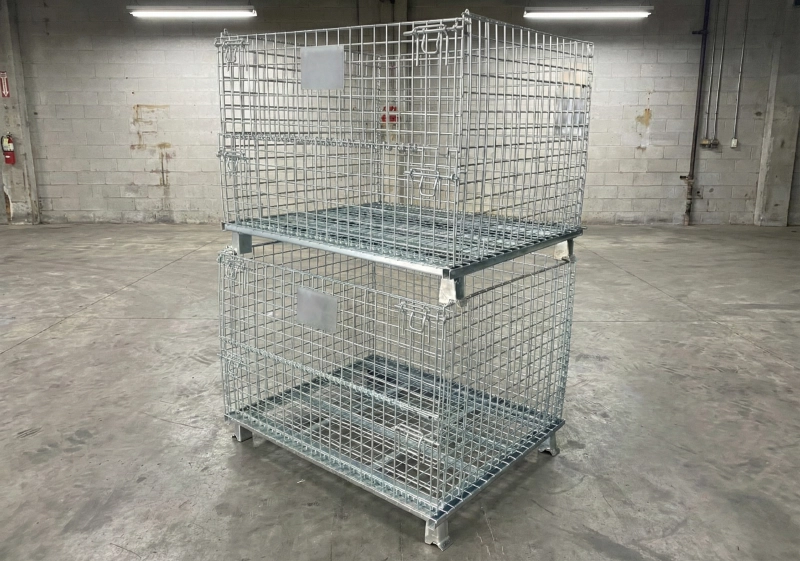
For the documented Stbox version, the specified surface is electrogalvanized with a zinc coating of at least 8 μm. This gives the buyer a defined starting point for a normal industrial storage discussion. However, it should not be converted into a fixed number of rust-free years, a salt-spray classification, or suitability for every chemical atmosphere. For more aggressive exposure, request a coating or protection concept tailored to that environment; in covered areas, by contrast, the site may prioritize drainage, impact avoidance, and inspection discipline.
What an outdoor operating concept should define
- Placement: a firm, level area with defined water runoff and no regularly standing water beneath the feet.
- Ground clearance: standortspezifische Bodenfreiheit, die den Boden über dem Oberflächenwasser hält, ohne den stabilen Sitz der Füße oder den Handlungszugang zu beeinträchtigen.
- Stapelung: nur die genehmigte Stapelanordnung verwenden; für die dokumentierte Konfiguration 13967 ist die beladene Stapelung auf vier Lagen begrenzt, wobei jede obere Einheit auf 500 kg begrenzt ist und die Füße vollständig aufsitzen müssen.
- Inspektion: eine vereinbarte regelmäßige Routine sowie Kontrollen nach Überschwemmungen, Stößen, Chemikalienkontakt oder Umsetzung, die Füße, Unterseite, Schweißnähte, Zinkverlust und Verformung umfasst.
FAQ: Lagerung von verzinkten Drahtcontainern im Freien
Kann Stbox über einen längeren Zeitraum im Freien bleiben?
Es kann für den Einsatz im Freien oder im halboffenen Bereich bewertet werden, wenn die Aufstellungs-, Entwässerungs-, Handhabungs- und Beschichtungsanforderungen mit der dokumentierten Konfiguration übereinstimmen. Die langfristige Eignung lässt sich nicht auf eine garantierte Anzahl von Jahren reduzieren. Senden Sie die tatsächliche Umgebung und den Lagerzeitraum für eine projektspezifische Empfehlung.
Was sollten wir tun, wenn an einem Fuß Rost auftritt?
Entfernen Sie zunächst den Container aus der aktiven Stapelung oder Beladung, wenn die Korrosion stark ist, und isolieren Sie ihn zur Beurteilung. Prüfen Sie, ob stehendes Wasser, eingeschlossene Verschmutzungen, Stöße oder Beschichtungsschäden das Problem verursacht haben. Beladen Sie keinen verformten oder strukturell beeinträchtigten Fuß weiter, während Sie auf eine Entscheidung warten.
Melden Sie die Umgebung und den Stapelzeitraum, um eine Beschichtungs- und Inspektionsempfehlung für Ihren Hof zu erhalten.
Senden Sie Ihre Anforderungen an die AußenlagerungBenötigen Sie eine individuelle Lagerlösung?
Sprechen Sie direkt mit unseren technischen Ingenieuren. Wir bieten kostenlose Strukturplanungen, Bewertungen von Hochlast-Katalogen und schnelle B2B-Preisangebote.
Jetzt Angebot anfordern →