
Outdoor storage does not fail because a galvanized wire mesh container gets wet once. It becomes a problem when water stays around the feet, under the base, or at damaged contact points. For a yard or semi-outdoor holding area, the practical rule is simple: solve drainage and ground contact first, then inspect the points that carry and transfer the load.
Stbox is a collapsible wire mesh container intended for industrial parts storage and handling. Its documented finish is electro-galvanized steel with a zinc coating of at least 8 μm, and the product material describes outdoor rain-corrosion resistance for this configuration. That is useful protection, not a universal outdoor rust-life promise. Actual performance depends on exposure, water retention, contamination, handling damage, and the coating requirement agreed for the project.
1. Keep rainwater moving and keep the feet out of standing water
The first outdoor check is not the container—it is the yard. A level-looking concrete area can still hold water after rain, especially where wheel tracks, expansion joints, drains, or stacked materials create low points. Place the cage where runoff can leave the storage zone. Do not allow the stack feet or the underside of the base to sit in a puddle for extended periods.
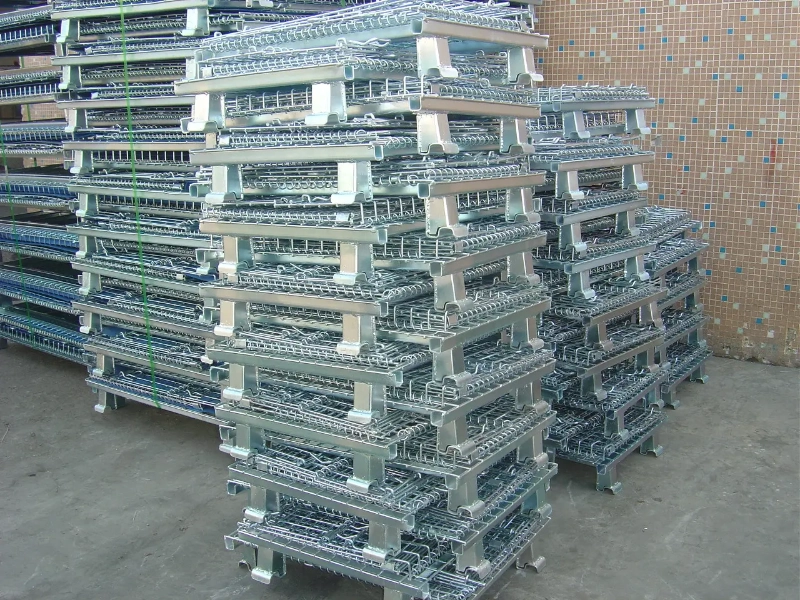
How much ground clearance is suitable? There is no responsible single number for every yard, because the required clearance depends on the site’s drainage, rainfall, cleaning method, forklift or pallet-jack access, and whether the cage is assembled or folded. The correct target is enough clearance for the bottom steelwork and stack feet to remain above ordinary surface water, while preserving stable, full seating of the feet and safe equipment entry. If the area floods or is washed down frequently, solve the civil-work or drainage issue rather than relying on a small improvised spacer.
Use a firm, level support surface. Avoid loose blocks that can tilt the load or prevent the feet from seating completely. After rain, check whether water has collected beneath the stack; if it has, move the storage position or improve the drainage plan before treating the galvanized finish as the only defense.
2. Inspect the stack feet and ground-contact areas—not just the visible mesh
Outdoor corrosion often starts where operators look least: the underside of the base, the pressed stack feet, weld transitions, and points where grit or wet debris remains trapped. Stbox’s steel base and stack feet are load-transfer components. When inspecting an assembled stack, confirm that every upper foot is fully located on the lower container’s receiving area and that no foot is sitting on a stone, broken concrete edge, or accumulated sludge.
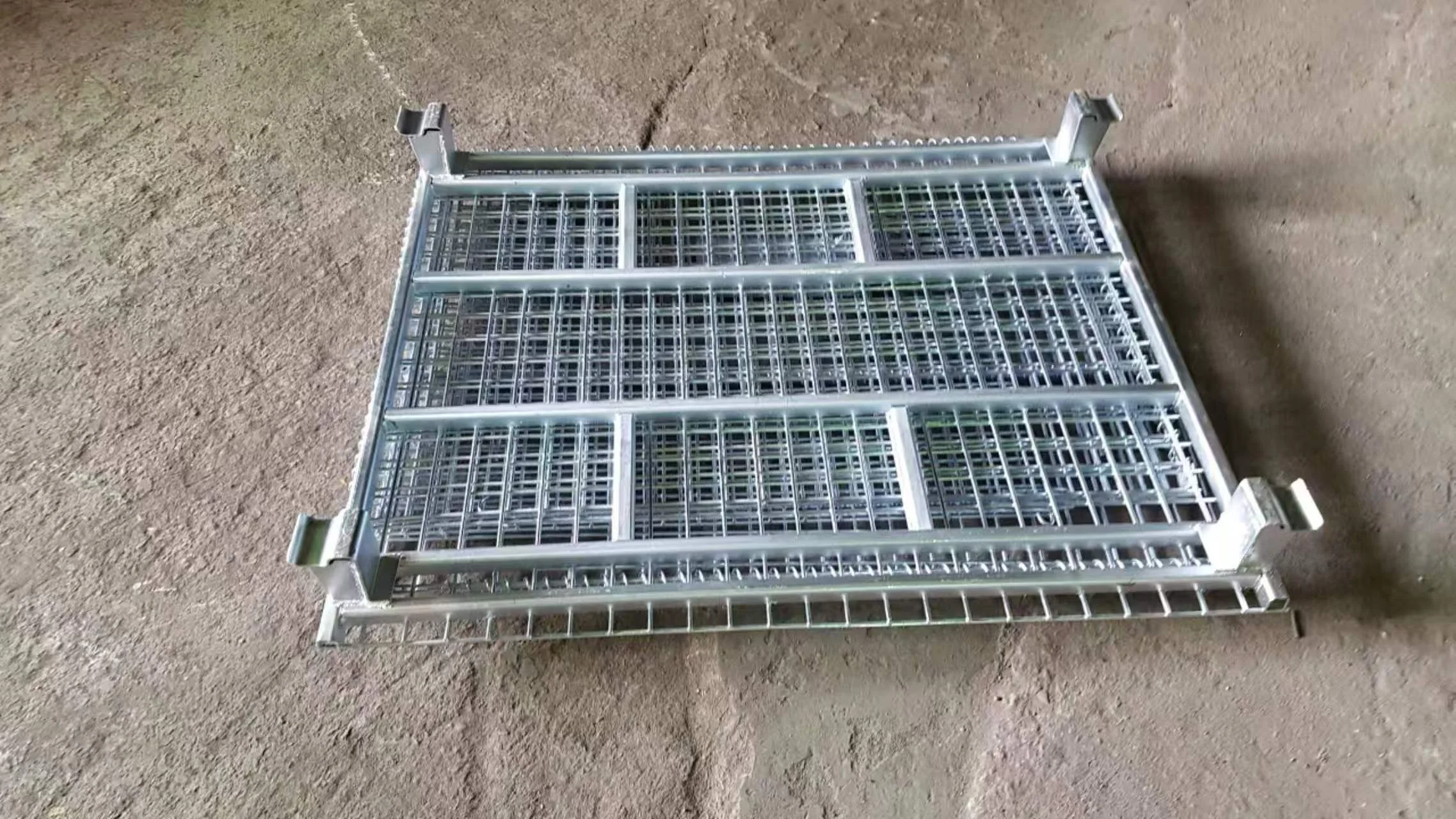
Look for white corrosion products, red rust, blistering or missing zinc, deep scratches, bent feet, cracked welds, and distortion around the base. Surface dirt is not automatically structural damage, but it can hide moisture and should be removed using a method compatible with the agreed finish. Pay special attention after dragging, forklift contact, pallet-jack impact, or a stack being placed down unevenly. A container with serious rust or damaged load-bearing components should be isolated and taken out of service until it is assessed.
Inspection frequency should follow the project agreement, not an invented universal calendar. A practical site routine can combine the agreed periodic inspection with event checks after heavy rain, flooding, chemical exposure, visible impact, or relocation. Record the location, condition of the feet and underside, coating damage, and corrective action. This makes it possible to see whether a recurring puddle or handling practice is causing the deterioration.
3. Match the coating requirement to the environment
“Galvanized” is not a complete outdoor specification by itself. Before ordering, describe the real exposure: covered yard or fully open storage, normal rain or frequent washdown, coastal or inland atmosphere, contact with fertilizer, salt, acids, alkalis, oils, or other chemicals, and the expected holding period. Then confirm the required coating system, coating thickness, damaged-area repair method, and inspection or acceptance criteria with the supplier.
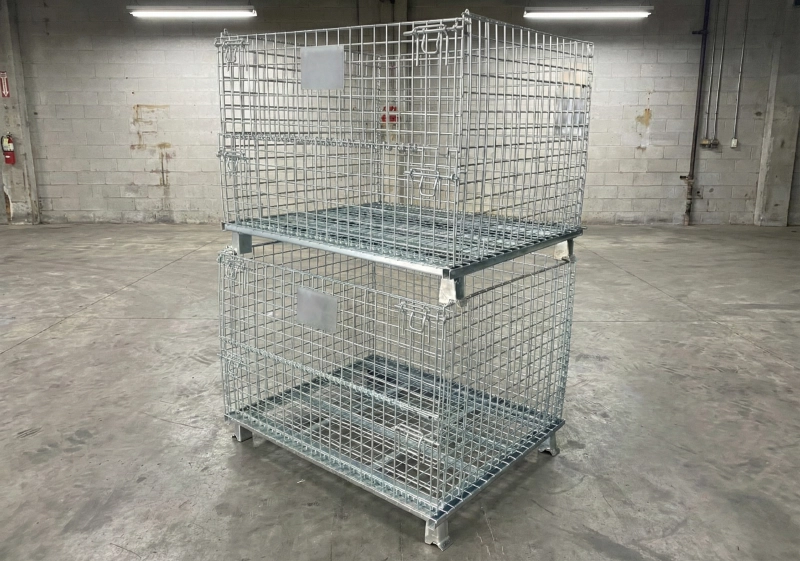
For the documented Stbox configuration, the stated surface is electro-galvanized with a zinc coating of at least 8 μm. That gives the buyer a defined starting point for an ordinary industrial storage discussion. It should not be extended into a fixed number of rust-free years, a salt-spray rating, or suitability for every chemical atmosphere. Where exposure is more aggressive, ask for a coating or protection proposal tied to that environment; where the area is sheltered, the site may instead prioritize drainage, impact prevention, and inspection discipline.
What an outdoor operating plan should specify
- Placement: a firm, level zone with a defined runoff path and no routine standing water under the feet.
- Clearance: site-specific clearance that keeps the base above surface water without compromising stable foot seating or handling access.
- Stacking: use only the approved stack arrangement; for the documented 13967 configuration, loaded stacking is limited to four layers, with each upper unit limited to 500 kg, and feet fully seated.
- Inspection: an agreed periodic routine plus checks after flooding, impact, chemical contact, or relocation, covering feet, underside, welds, zinc loss, and distortion.
FAQ: outdoor galvanized wire container storage
Can Stbox stay outdoors for a long period?
It can be evaluated for outdoor or semi-outdoor use when the placement, drainage, handling, and coating requirements match the documented configuration. Long-term suitability cannot be reduced to a guaranteed number of years. Send the actual environment and storage period for a project-specific recommendation.
What should we do if rust appears at a foot?
First remove the container from active stacking or loading if the corrosion is serious, and isolate it for assessment. Check whether standing water, trapped debris, impact, or coating damage caused the issue. Do not continue loading a distorted or structurally compromised foot while waiting for a decision.
Report the environment and stacking period to receive a coating and inspection recommendation for your yard.
Need a Custom Storage Solution?
Speak directly with our technical engineers. We offer free structural designs, heavy-duty catalog evaluations, and quick B2B price quotations.
Request a Quote Now →