
Wie verhindert ein Stahl-Stapelregal das Quetschen der untersten Kartons beim mehrstöckigen Palettenstapeln?
Erfahren Sie, wie ein Rerack-Stahl-Stapelregal dazu beiträgt, die untersten Kartons und Palettenfüße aus dem Druckpfad beim mehrstöckigen Palettenstapeln herauszuhalten. Prüfen Sie Querträgerausrichtung, vertikale Lagerung, Schutz der oberen Ebene und projektbestätigte Tragfähigkeit.
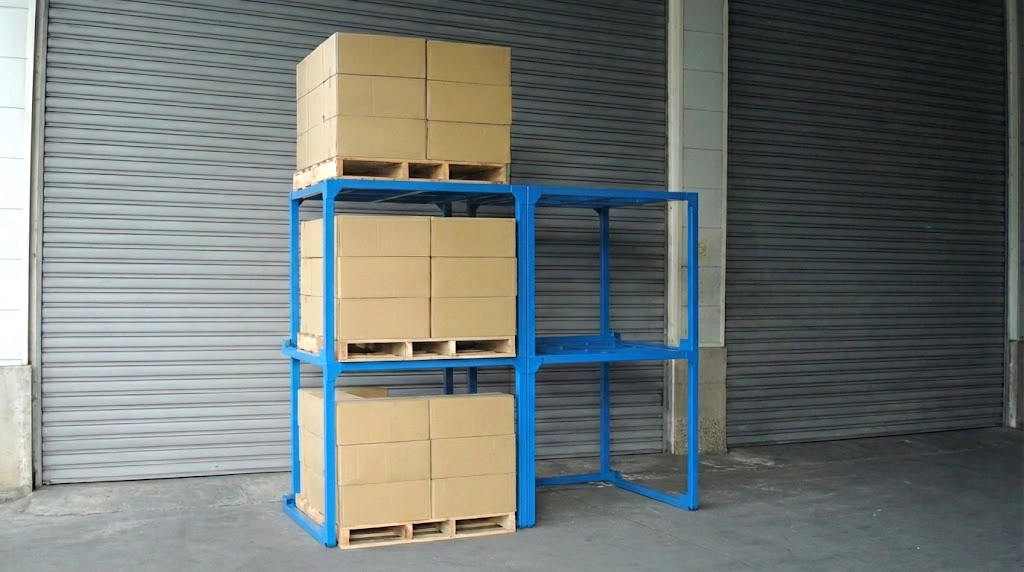
Keep the bottom carton out of the crush zone
A steel stacking rack directs the stacking load through its welded frame and does not burden the bottom pallet and its cartons with the weight of the levels above.
For packaged goods, bagged goods, drums, wet wipes, and other palletized loads, the practical question is not simply "Can the load be stacked?" It is about where the force is directed. With Rerack, the corner posts and frame transfer the load to the rack below. The bottom load is not used as a structural layer, so the bottom cartons are less exposed to compressive stress from loads above, and the pallet feet do not have to withstand unintended point pressure.
- Frame-based stacking: the rack body, not the bottom cartons, forms the load path.
- Support positioning: Cross beams can be arranged to match the support legs of the customer's pallet, including the 1100 × 1100 mm arrangement specified for Rerack.
- Vertical storage: two-level rack stacking or another confirmed configuration can utilize airspace without assuming a fixed load capacity as universal.
- Controlled top level: Side rails, end panels, or other protective devices can be added if the top load is high, unstable, or prone to tipping.
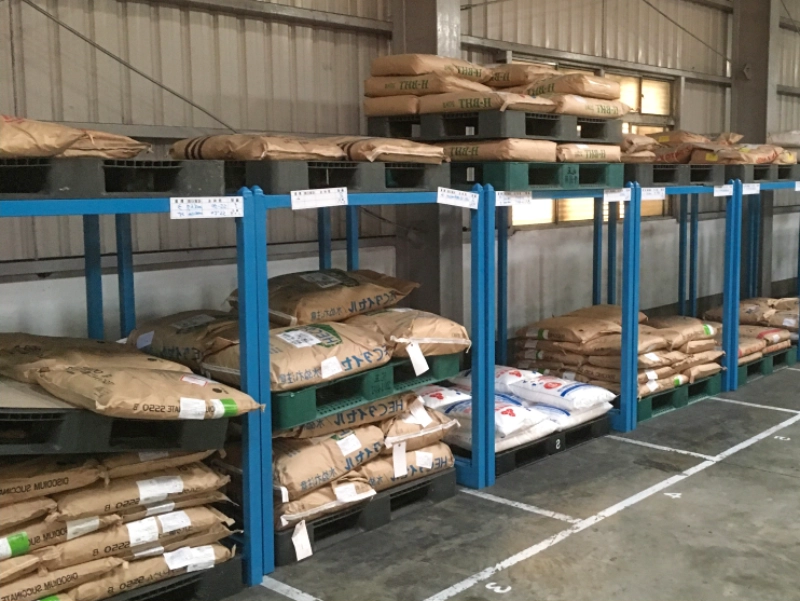
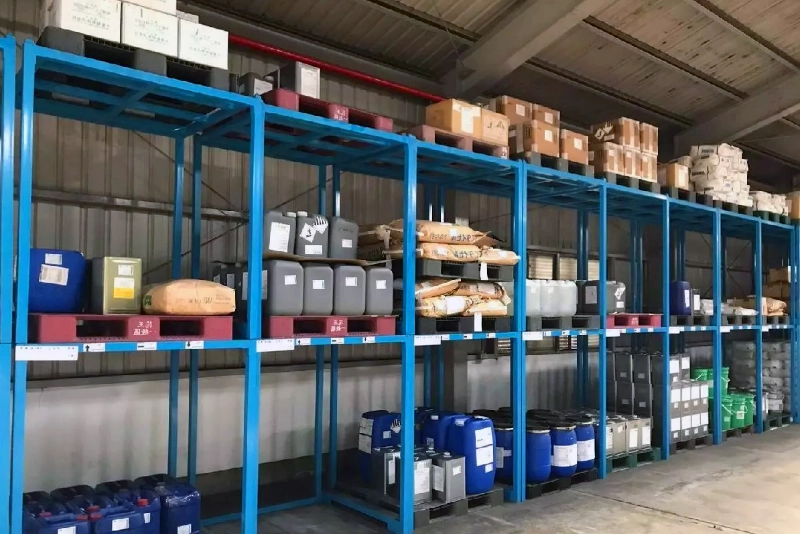
The load path is designed for your pallet
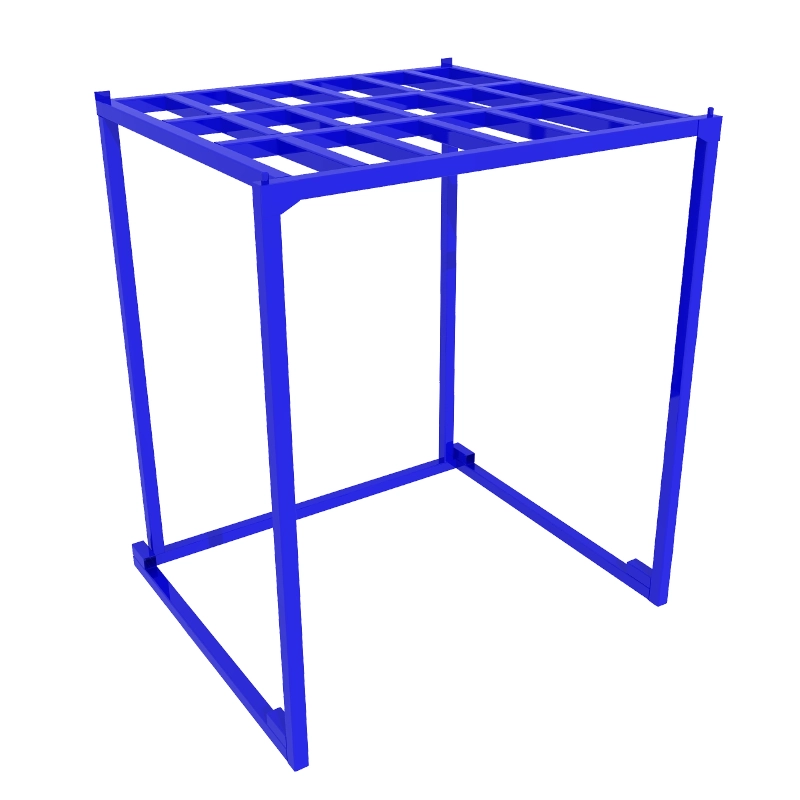 FRAME
Welded frame carries the stack
Rerack is a heavy-duty stacking rack built on steel posts, base elements, and upper support elements. This separates rack-to-rack contact from carton-to-carton compressive stress.
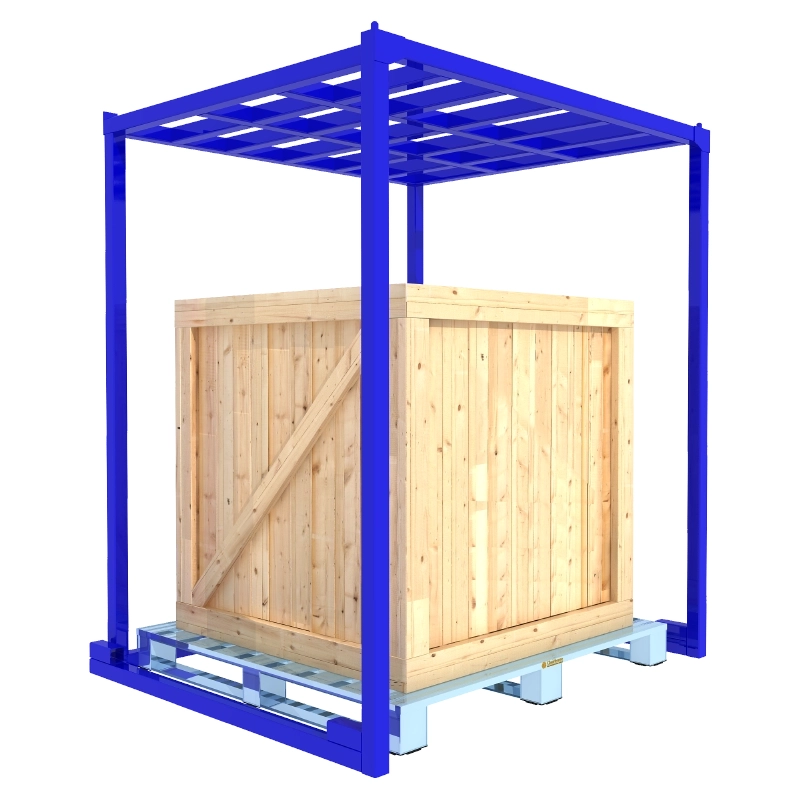 PALLET SUPPORT
Cross beams meet the pallet feet
The positions of the cross beams are not chosen as a generic grid. They are matched to the pallet dimensions and the positions of the support legs to reduce point pressure that can deform wooden pallet feet.
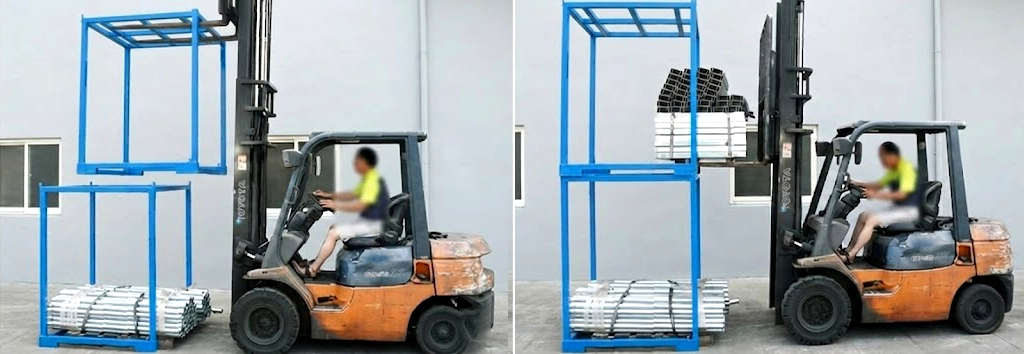 STACKING & RETURN
Use height when full – nest when empty
Loaded units can form a compact vertical storage arrangement. Empty frames can be nested into each other for return or backhaul planning, subject to confirmed rack geometry and forklift clearance height.
Compare the force path before comparing the price
Floor block stacking
In floor stacking, upper pallets and load press onto the lower load. Cartons can be crushed, bags can lose their shape, and the feet of the lower pallet can be subjected to stresses they are not designed for.
Rerack load path
The rack frame creates a separate steel load path between stacked units. It is intended to prevent the lower load from becoming a compression element, while the actual load capacity depends on the confirmed design.
Height without blanket load capacity
Vertical storage can create usable slots in a warehouse or workshop buffer. Stack height, unit spacing, load center of gravity, floor condition, and forklift handling must be reviewed together; there is no single universal load capacity.
Securing the top level
Open frames are suitable for stable, palletized loads. High or unstable goods in the top level require side rails, end walls, stop bars, or another agreed securing method. Rerack is not an assurance that every load can be stacked without protection.
From a crush complaint to a verified rack layout
Describe the load
Send the load type, carton or bag dimensions, pallet unit weight, total height, and notes on the center of gravity.
Map the pallet feet
Confirm pallet length, width, and support leg positions. For the reference case 1100 × 1100 mm, the cross beams are aligned to the actual leg pattern.
Confirm stacking
Check the planned number of rack levels, floor condition, forklift access, clearances, and whether side securing is required in the top level.
Release project design
Load capacity, dimensions, steel profiles, surface treatment, and accessories are confirmed project-specifically before production – not adopted from another rack.
Questions warehouse teams ask about protecting the lower load
Does a Rerack guarantee that cartons will never be crushed?
No. It changes the intended load path so that the steel frame carries the stacking load and not the bottom cartons; however, the result depends on the released dimensions, load distribution, pallet condition, stacking method, and handling. The load must be stable and fully set down before the forklift withdraws.
Why are the cross beam positions important for wooden pallets?
If a support element rests on an unsuitable spot on the pallet, a pallet foot or deck board can be point-loaded and deform. Cross beams should therefore be checked against the actual leg pattern of the pallet. The 1100 × 1100 mm layout in the reference project is a project detail, not a universal pallet standard.
Kann ich dasselbe Rerack für Kartons, Säcke, Fässer und Feuchttücher verwenden?
Diese Lastarten können in Betracht gezogen werden, da sie palettiert sind, weisen jedoch unterschiedliches Druckverhalten und unterschiedliche Schwerpunkte auf. Kartonfestigkeit, Sackstabilität, Rollrisiko bei Fässern, Palettentyp und Gesamthöhe müssen für die Konfiguration angegeben werden. Ein für eine Last ausgelegtes Regal sollte nicht ohne Prüfung für eine andere verwendet werden.
Wie viele Ebenen kann ich stapeln?
Es gibt keine einzelne Antwort für jedes Rerack. Projektaufzeichnungen enthalten Referenzen für zweistöckige Regalstapelung und dreistöckige Warenstapelung; die zulässige Anordnung hängt jedoch von der Regalauslegung, der Einzellast, dem Boden, den lichten Maßen, der Handhabung und der Stabilitätsprüfung ab. Die Nenntragfähigkeit wird durch die Konfiguration bestätigt.
Benötigen Lasten in der obersten Ebene Seitenholme oder Wände?
Stabile Lasten mit geeigneter Aufstandsfläche können in einem offenen Rahmen verwendet werden. Hohe, schmale, unebene oder anderweitig kippgefährdete Lasten sollten hinsichtlich Seitenholmen, Endwänden, Anschlagleisten oder anderer Sicherung geprüft werden. Die umgebende Sicherung wird mit der Last ausgewählt – nicht als pauschale Sicherheitszusage hinzugefügt.
Ist dies ein Ersatz für ein fest installiertes Palettenregal?
Nicht immer. Ein Rerack eignet sich für temporäre Layouts, Pufferlagerung, sich ändernde Lagerpositionen und palettierte Waren, die vertikal gestapelt werden müssen, ohne im Boden verankerte Träger. Ein fest installiertes Palettenregal kann für ein dauerhaftes, konstruktiv ausgelegtes Gangsystem mit definiertem Layout besser geeignet sein. Wir können beide Optionen vergleichen, wenn Sie uns den Workflow und die Standortgegebenheiten mitteilen.
Was sollte ich für ein Angebot zum Quetschschutz einreichen?
Send us the pallet size and foot layout, the type of load, the carton or packaging dimensions, the individual weight of the pallet, the total loaded height, the planned stacking levels, the conditions indoors/cold storage/outdoors, the forklift data, and any concerns regarding the stability of the top load. Based on this information, we will check the interface between the rack and the pallet.