
How Does a Steel Stack Rack Keep Bottom Cartons From Being Crushed in Multi-Level Pallet Stacking?
Learn how a Rerack steel stack rack helps keep bottom cartons and pallet feet out of the compression path in multi-level pallet stacking. Review crossbar alignment, vertical storage, top-load guarding and project-confirmed capacity.
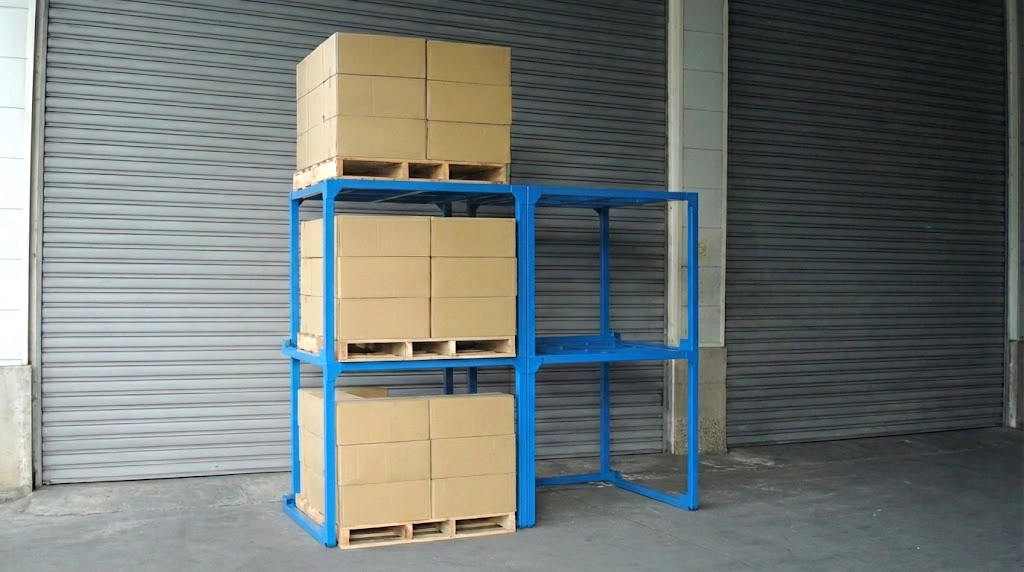
Keep the bottom carton out of the crush zone
A steel stack rack carries the stacking load through its welded frame instead of making the bottom pallet and its cartons carry the weight of the levels above.
For cartonized goods, bagged products, drums, wet wipes and other palletized loads, the practical question is not simply “can the load be stacked?” It is where the force goes. With Rerack, the corner posts and frame transfer the load toward the rack below. The bottom cargo is not used as a structural layer, so the bottom cartons are less exposed to compression from upper loads and the pallet feet are not forced to take unintended bearing pressure.
- Frame-supported stacking: the rack body, not the bottom cartons, forms the load path.
- Leg-position support: crossbars can be laid out to match the support legs of the customer’s pallet, including the 1100 × 1100 mm arrangement referenced for Rerack.
- Vertical storage: two-level rack stacking or another confirmed configuration can use overhead space without treating a fixed load rating as universal.
- Controlled top level: side rails, end panels or other guarding can be added when the top load is tall, unstable or prone to tipping.
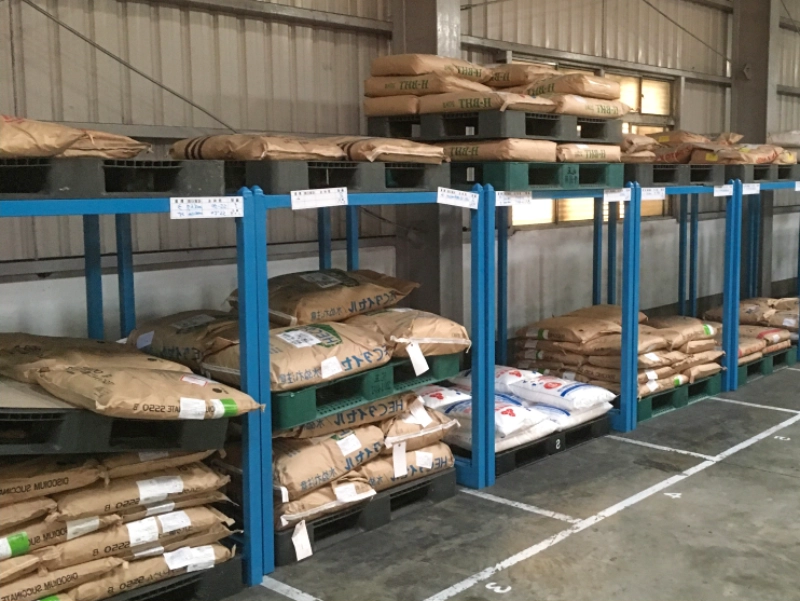
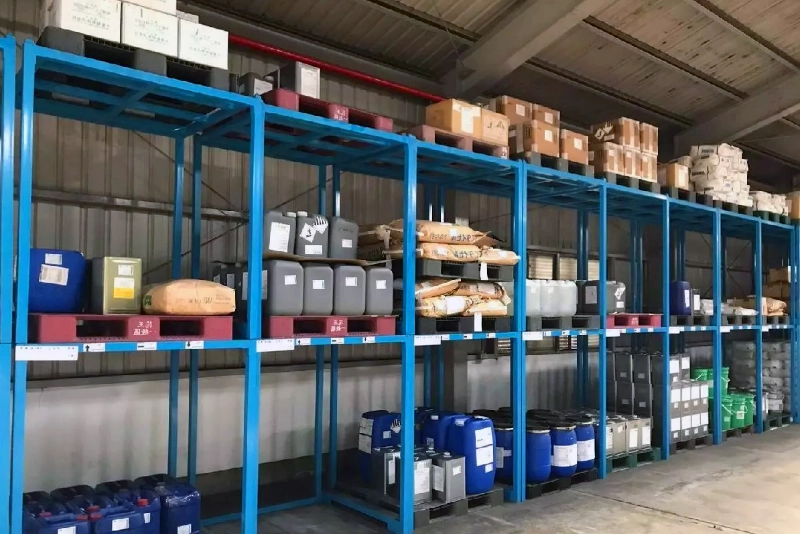
The load path is designed around your pallet
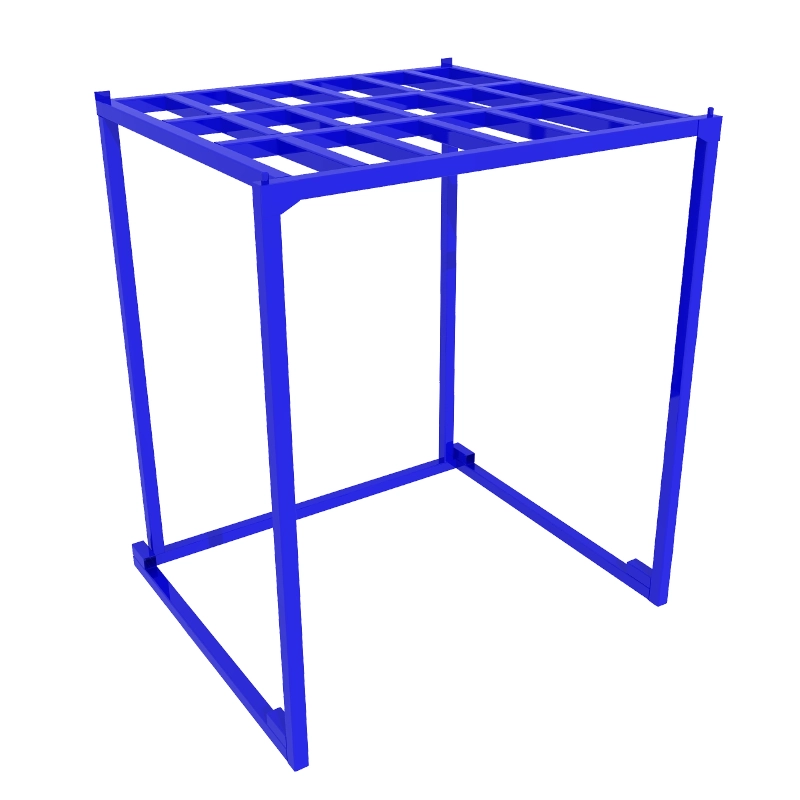
FRAME
Welded frame carries the stack
Rerack is a heavy-duty stack rack built around steel posts, base members and upper support members. This separates rack-to-rack bearing from carton-to-carton compression.
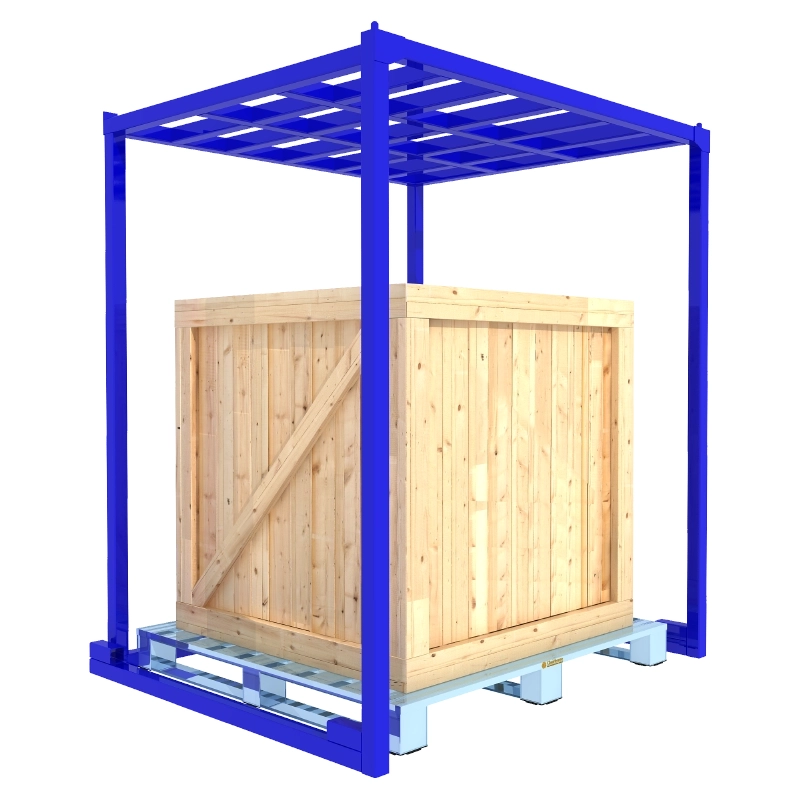
PALLET SUPPORT
Crossbars meet the pallet feet
Crossbar positions are not selected as a generic grid. They are checked against pallet dimensions and support-leg locations to reduce concentrated pressure that can deform wooden pallet feet.
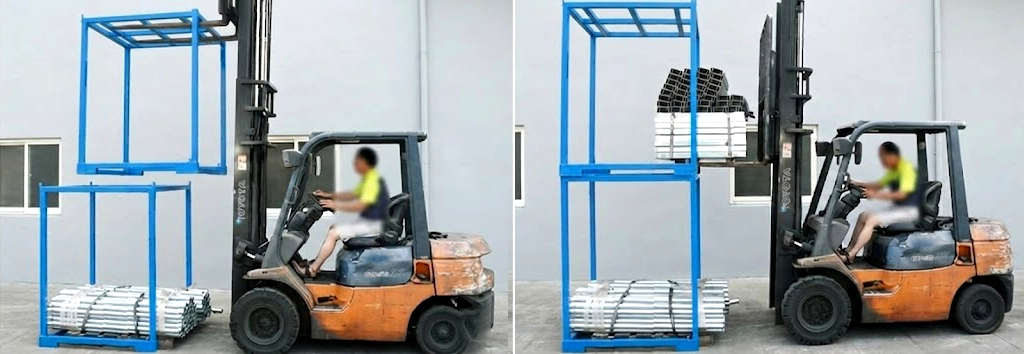
STACK & RETURN
Use height when full, nest when empty
Loaded units can form a compact vertical storage layout. Empty frames can be nested for return or backhaul planning, subject to the confirmed rack geometry and forklift clearance.
Compare the force path before you compare the price
Floor block stacking
In a floor stack, upper pallets and cargo bear down through the lower load. Cartons may crush, bags may lose shape, and the bottom pallet feet may be exposed to loads they were not intended to carry.
Rerack load path
The rack frame creates a separate steel load path between stacked units. It is intended to keep the lower cargo from becoming the compression member, while the actual capacity remains subject to the confirmed design.
Height without a blanket rating
Vertical storage can add usable positions in a warehouse or workshop buffer. Stack height, unit spacing, cargo center of gravity, floor condition and forklift handling must be reviewed together; there is no single universal load rating.
Top-level containment
Open frames suit stable, palletized loads. Tall or unstable top-level goods need side rails, end panels, stop bars or another agreed guard. Rerack is not a promise that every load can be stacked without protection.
Turn a crush complaint into a verified rack layout
Describe the load
Send the cargo type, carton or bag dimensions, single-pallet weight, total height and center-of-gravity concerns.
Map the pallet feet
Confirm pallet length, width and support-leg positions. For the 1100 × 1100 mm reference, crossbars are laid out against the actual leg pattern.
Confirm the stack
Review the intended number of rack levels, floor condition, forklift entry, clearances and whether top-level side guarding is needed.
Approve the project design
Capacity, dimensions, steel sections, surface treatment and accessories are confirmed for the project before production—not assumed from another rack.
Questions warehouse teams ask about bottom-load protection
Does a Rerack guarantee that cartons can never be crushed?
No. It changes the intended load path so the steel frame carries the stacking load rather than the cartons below, but the result depends on the approved dimensions, load distribution, pallet condition, stacking method and handling. Cargo must be stable and fully seated before the forklift withdraws.
Why do crossbar positions matter for wooden pallets?
If a support member lands against an unsuitable part of the pallet, a pallet foot or deck board can receive concentrated pressure and deform. Crossbars should therefore be checked against the actual pallet support-leg pattern. The 1100 × 1100 mm layout in the reference project is a project detail, not a universal pallet standard.
Can I use the same Rerack for cartons, bags, drums and wet wipes?
These load types can be considered because they are palletized, but they do not share the same compression behavior or center of gravity. Carton strength, bag stability, drum rolling risk, pallet type and total height must be supplied for configuration. A rack designed for one load should not be reassigned without review.
How many levels can I stack?
There is no single answer for every Rerack. Project records include two-level rack stacking and three-level goods-stacking references, but the allowable arrangement depends on the rack design, unit load, floor, clearances, handling method and stability review. The rated capacity is confirmed by configuration.
Do top-level loads need side rails or panels?
Stable loads with a suitable footprint may use an open frame. Tall, narrow, uneven or otherwise tip-prone loads should be reviewed for side rails, end panels, stop bars or other containment. The surrounding guard is selected with the load—not added as a blanket claim of safety.
Is this a replacement for fixed pallet racking?
Not always. Rerack suits temporary layouts, buffer storage, changing warehouse positions and palletized goods that need vertical stacking without floor-anchored beams. Fixed pallet racking may be more appropriate for a permanent, engineered aisle system with a defined layout. We can compare both when you provide the workflow and site constraints.
What should I submit for a crush-protection proposal?
Send pallet size and leg layout, cargo type, carton or package dimensions, single-pallet weight, total loaded height, planned stack levels, indoor/cold-store/outdoor conditions, forklift details and any top-load stability concern. We will use those inputs to review the rack and pallet interface.
B2B Racking Structural Engineering Calculator
Input your structural guidelines below. Our math system calculates material deflection, stress bounds, and recommends optimal profiles.
Click Compute to calculate stress factors and display structural drawing recommendations.