
Como um stack rack de aço evita que as caixas da base sejam esmagadas no empilhamento multinível de paletes?
Aprenda como um rack de aço Rerack ajuda a manter as caixas inferiores e os pés dos paletes fora do caminho de compressão no empilhamento de paletes em vários níveis. Revise o alinhamento das travessas, o armazenamento vertical, a proteção contra carga superior e a capacidade confirmada pelo projeto.
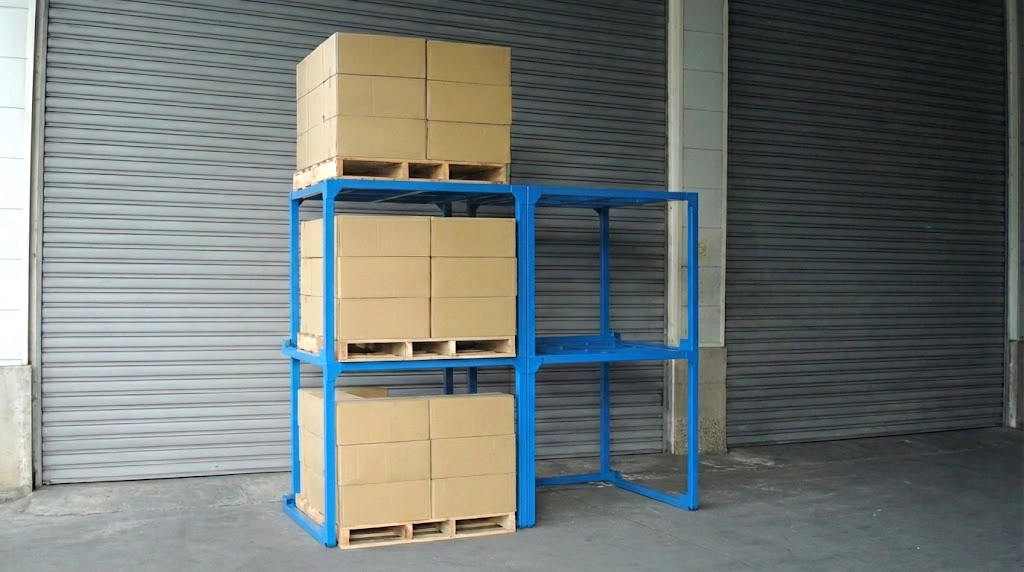
Keep the bottom carton out of the crush zone
A steel stack rack routes the stacking load through its welded frame, rather than making the bottom pallet and its cartons bear the weight of upper levels.
For cartoned goods, bagged products, drums, wet wipes and other palletized loads, the practical question is not simply "can the load be stacked?" It is where the force goes. With Rerack, the corner posts and frame transfer the load to the rack below. The bottom load is not used as a structural layer, so bottom cartons are less exposed to compression from upper loads and pallet feet are not forced to bear unintended bearing pressure.
- Frame-supported stacking: the rack body, not the bottom cartons, forms the load path.
- Foot-position support: crossbars can be arranged to match the customer's pallet support feet, including the 1100 × 1100 mm configuration referenced for Rerack.
- Vertical storage: two-level rack stacking or another confirmed configuration can use overhead space without treating a fixed load capacity as universal.
- Controlled top level: side rails, end panels or other guarding can be added when the top load is tall, unstable or prone to tipping.
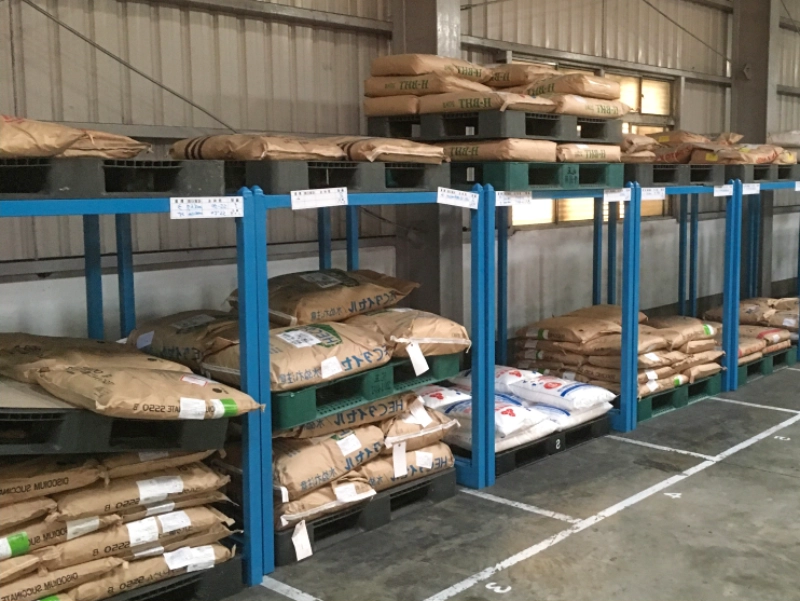
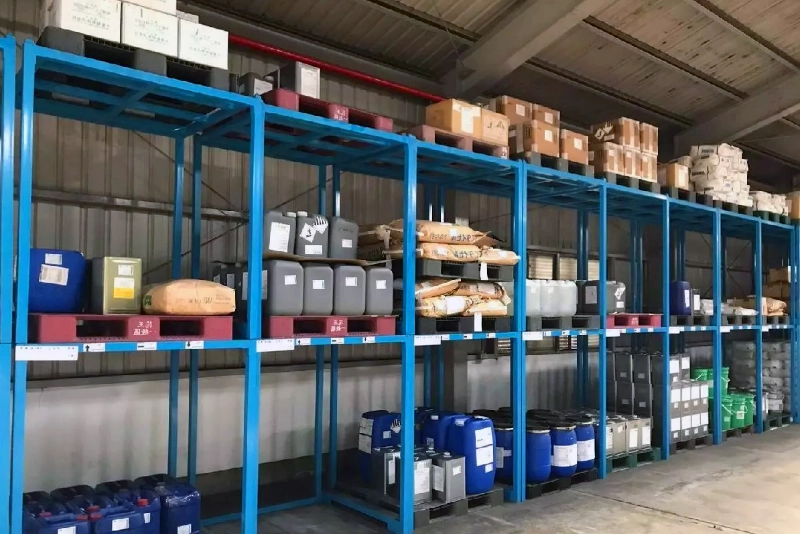
The load path is designed around your pallet
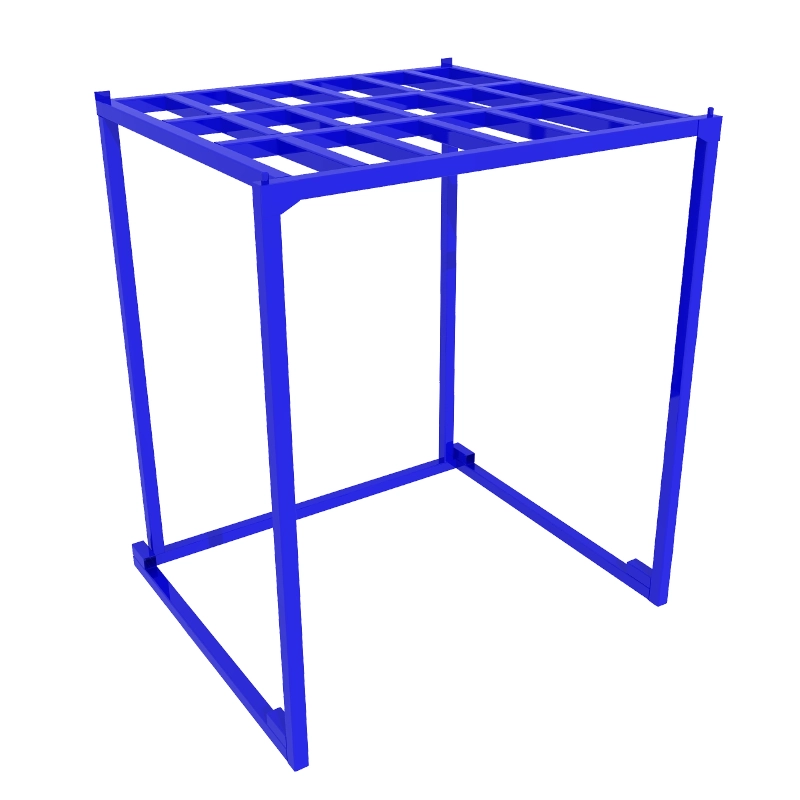 ESTRUTURA
The welded frame supports stacking
Rerack is a heavy-duty stack rack built around steel posts, base members and top support members. This separates rack-to-rack support from carton-to-carton compression.
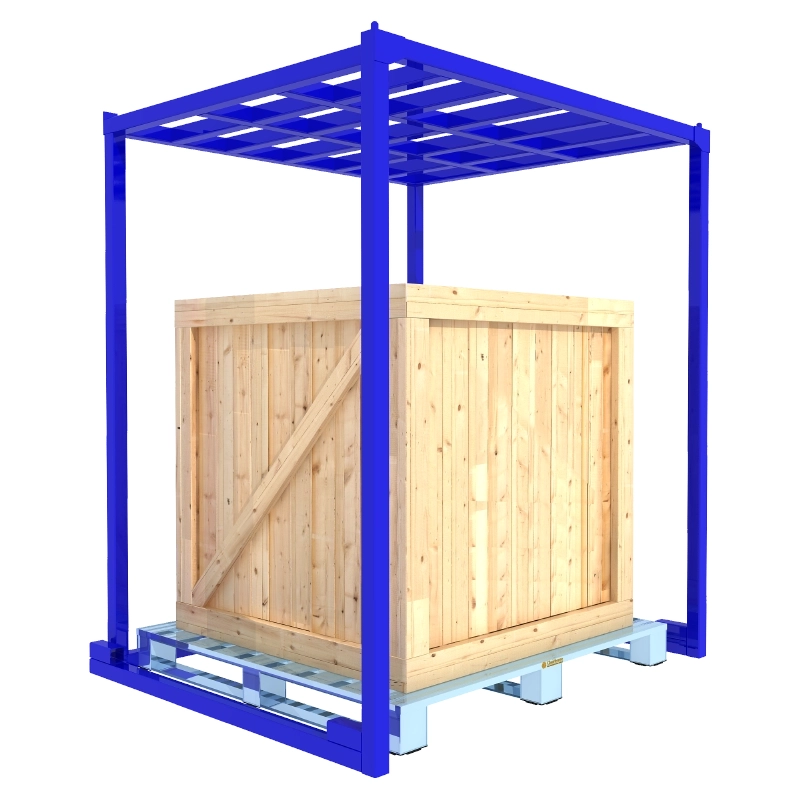 PALLET SUPPORT
Crossbars meet the pallet feet
Crossbar positions are not selected as a generic grid. They are checked against pallet dimensions and support foot locations to reduce concentrated pressure that can deform the feet of wooden pallets.
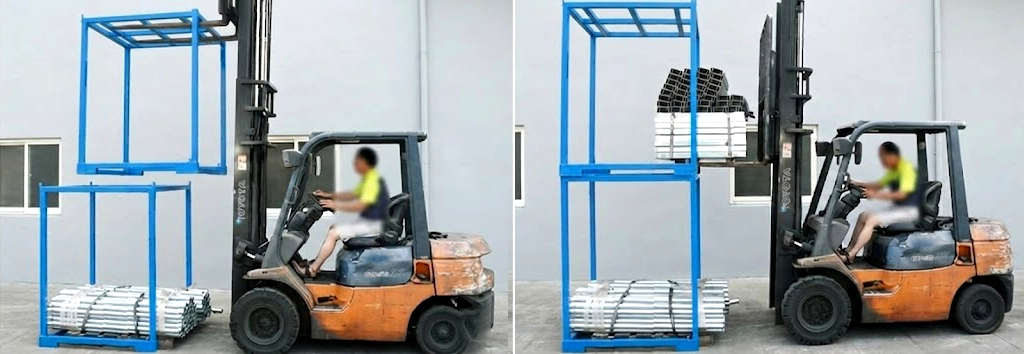 STACK AND RETURN
Use the height when full, nest when empty
Loaded units can form a compact vertical storage layout. Empty frames can be nested for return planning or return transport, subject to confirmed rack geometry and forklift clearance.
Compare the force path before comparing the price
Block stacking on the floor
In a floor stack, upper pallets and load press down on the lower load. Cartons can be crushed, bags can lose shape, and bottom pallet feet can be exposed to loads they were not designed for.
Load path in the pallet rack
The pallet rack frame creates a separate steel load path between stacked units. It is designed to prevent the lower load from becoming the compression element, while actual capacity remains subject to confirmed design.
Height without generic rating
Vertical storage can add useful positions in a warehouse or workshop buffer area. Stacking height, unit spacing, load center of gravity, floor condition and forklift handling must be analyzed together; there is no universal load rating.
Top-level containment
Open frames are suitable for stable, palletized loads. Tall or unstable goods on the top level need side rails, end panels, stop bars or other agreed guarding. The pallet rack is not a guarantee that every load can be stacked without protection.
Turn a crush claim into a verified pallet rack layout
Describe the load
Send the load type, carton or bag dimensions, weight per pallet, total height and center of gravity concerns.
Map the pallet feet
Confirm the length, width and support foot positions of the pallet. For the 1100 × 1100 mm reference, crossbars are arranged according to the actual foot pattern.
Confirm the stacking
Review the intended number of pallet rack levels, floor condition, forklift entry, clear spans and whether side guarding is needed at the top level.
Approve the design
Capacity, dimensions, steel profiles, surface treatment and accessories are confirmed for the project before production — not assumed from another pallet rack.
Questions warehouse teams ask about bottom load protection
Does a pallet rack guarantee that cartons can never be crushed?
No. It changes the intended load path so the steel frame supports the stacking load instead of the cartons below, but the result depends on approved dimensions, load distribution, pallet condition, stacking method and handling. The load must be stable and fully supported before the forklift withdraws.
Why are crossbar positions important for wooden pallets?
Se um elemento de apoio ficar sobre uma parte inadequada do palete, um pé ou uma tábua do palete pode receber pressão concentrada e deformar-se. Portanto, as travessas devem ser verificadas em relação ao padrão real dos pés de suporte do palete. O layout de 1100 × 1100 mm no projeto de referência é um detalhe do projeto, não um padrão universal de paletes.
Posso usar o mesmo porta-paletes para caixas, sacos, tambores e lenços umedecidos?
Esses tipos de carga podem ser considerados porque são paletizados, mas não compartilham o mesmo comportamento de compressão nem o mesmo centro de gravidade. A resistência da caixa, a estabilidade do saco, o risco de rolamento dos tambores, o tipo de palete e a altura total devem ser informados para a configuração. Um porta-paletes projetado para uma carga não deve ser reatribuído sem análise.
Quantos níveis posso empilhar?
Não há uma resposta única para todos os porta-paletes. Os registros de projeto incluem referências de empilhamento em dois níveis e de empilhamento de mercadorias em três níveis, mas a disposição permitida depende do projeto do porta-paletes, da carga unitária, do piso, dos vãos livres, do método de manuseio e da análise de estabilidade. A capacidade nominal é confirmada pela configuração.
As cargas do nível superior precisam de trilhos laterais ou painéis?
Cargas estáveis com uma base adequada podem usar uma estrutura aberta. Cargas altas, estreitas, irregulares ou com tendência a tombar devem ser analisadas quanto à necessidade de trilhos laterais, painéis de extremidade, barras de parada ou outra contenção. A proteção ao redor é selecionada junto com a carga — não adicionada como uma alegação genérica de segurança.
Isso substitui uma estanteria fixa para paletes?
Nem sempre. O stack rack é adequado para layouts temporários, armazenamento em buffer, posições de armazém variáveis e mercadorias paletizadas que precisam de empilhamento vertical sem travessas fixadas ao piso. A estanteria fixa para paletes pode ser mais apropriada para um sistema permanente e projetado de corredores, com layout definido. Podemos comparar as duas opções quando você fornecer o fluxo de trabalho e as restrições do local.
Quais informações devo enviar para uma proposta de proteção contra esmagamento?
Envie o tamanho do palete e o layout dos pés, o tipo de carga, as dimensões da caixa ou embalagem, o peso de um único palete, a altura total carregada, os níveis de empilhamento planejados, as condições internas/de câmara fria/externas, os detalhes da empilhadeira e qualquer preocupação com a estabilidade da carga superior. Usaremos essas informações para avaliar a interface entre o rack e o palete.
Calculadora de Engenharia Estrutural para Racking B2B
Insira suas diretrizes estruturais abaixo. Nosso sistema matemático calcula a deflexão do material, os limites de tensão e recomenda perfis ideais.
Clique em Calcular para computar os fatores de tensão e exibir as recomendações de desenho estrutural.