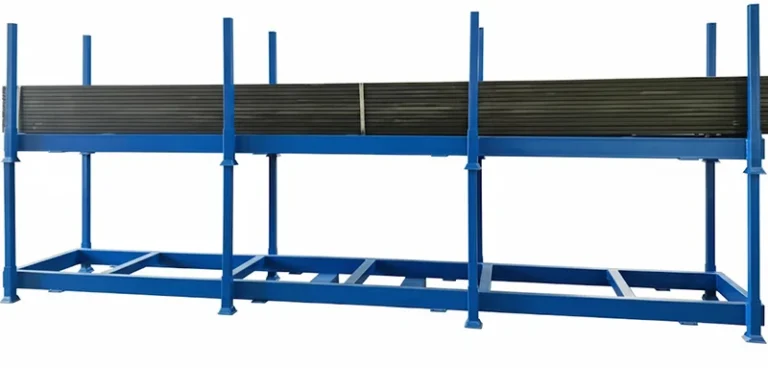
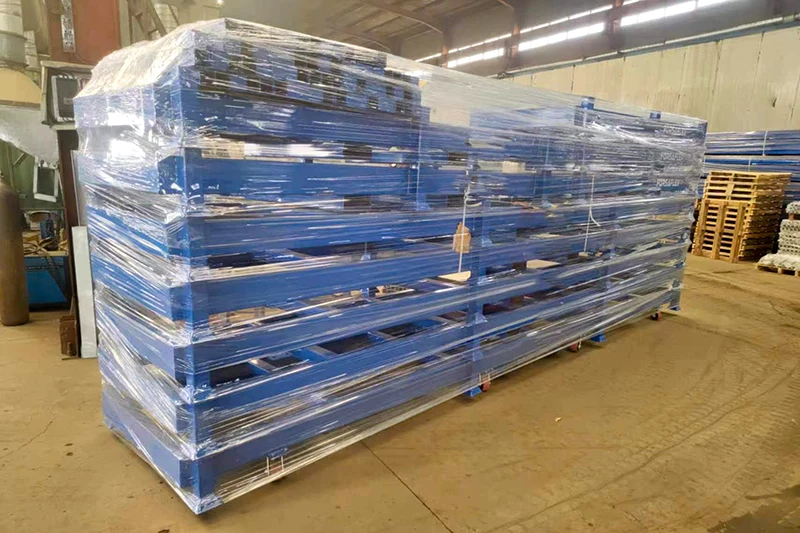
Chain-Tethered Post Version
Best when posts are removed often and must stay attached to the frame during unloading, staging, or return logistics.

Derack anti-loss post storage option with tethered uprights and recessed base grooves for cleaner return management in rental and circular-use workflows.
Optional configuration
For rental and circular-use teams, a removable post rack needs a clear way to keep loose uprights from disappearing during unloading, staging, and return trips.
Derack is a removable-post steel stack rack used for returnable transport and bulk handling. In repetitive assembly and disassembly loops, the uprights can be separated from the frame, which makes them easier to misplace. A basic optional anti-loss layout uses a tethered-post approach together with recessed base grooves, so removed posts still have a defined place on the rack during transport or recovery. This is an industry-derived configuration, not a claim of original invention, and it should be treated as an optional project choice rather than a universal standard.
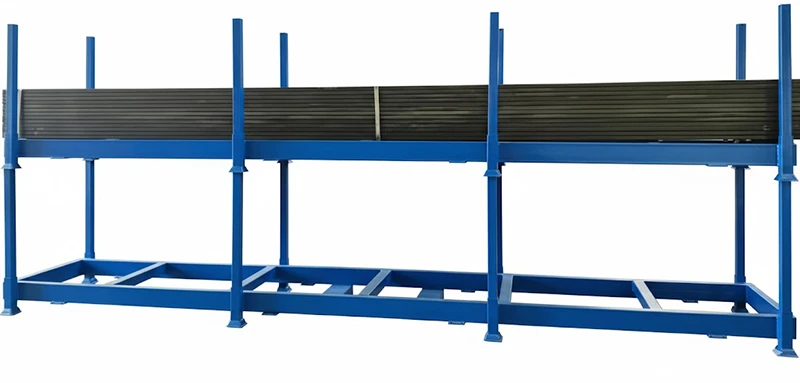
Best when posts are removed often and must stay attached to the frame during unloading, staging, or return logistics.
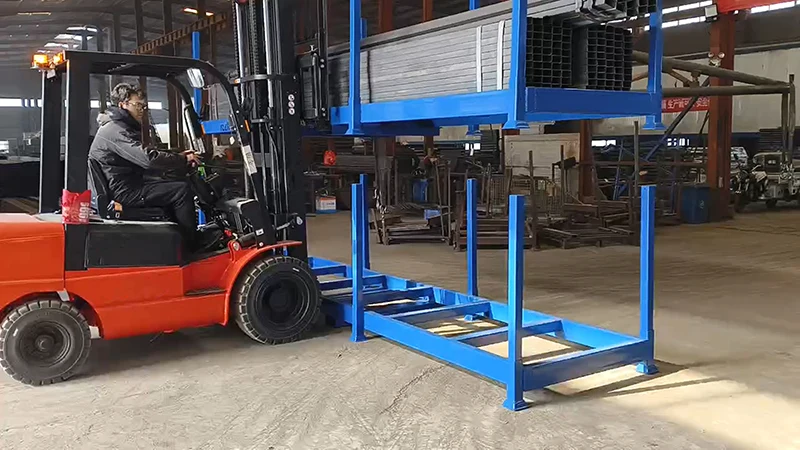
Suitable when the rack stays assembled for longer periods and post loss is not a recurring issue.
Because the uprights remain tethered or parked in a defined groove, the parts are less likely to be left behind in a warehouse corner, on a dock, or in a customer return area.
A defined storage position makes it easier for teams to count, stage, and recover components before the rack goes back into service.
The anti-loss detail is for organization and recovery control. Final transport volume still depends on the rack size, whether the posts remain attached, and how the empty unit is nested for return.
Start with the real operating pattern: how often the posts are removed, how the rack returns, and where loose components usually get lost.
Decide whether the project needs a tethered-post layout, a grooved parking position, or both together as a basic optional package.
Verify forklift access, empty-rack nesting, and the intended recovery flow so the anti-loss detail does not conflict with normal handling.
Finalize post quantity, upright height, base size, finish, and any return-management details during RFQ or engineering review.
Because the uprights are separated from the frame during unloading, staging, or return handling. Once they become loose parts, they can be mixed with other racks or left behind in temporary storage areas.
The chain keeps removed posts physically connected to the rack, while the recessed groove gives them a fixed place on the base. Together, they reduce the chance that the uprights disappear during transport or recovery.
It does not automatically create a large volume penalty, but the final packed size depends on the post length, whether the uprights stay attached, and how the empty rack is nested for return. Treat volume as a project decision, not a fixed promise.
Yes. Chain length, groove position, post count, upright height, base size, surface finish, and forklift access should all be confirmed for the project. If the use case does not involve frequent disassembly, a standard removable-post layout may be enough.