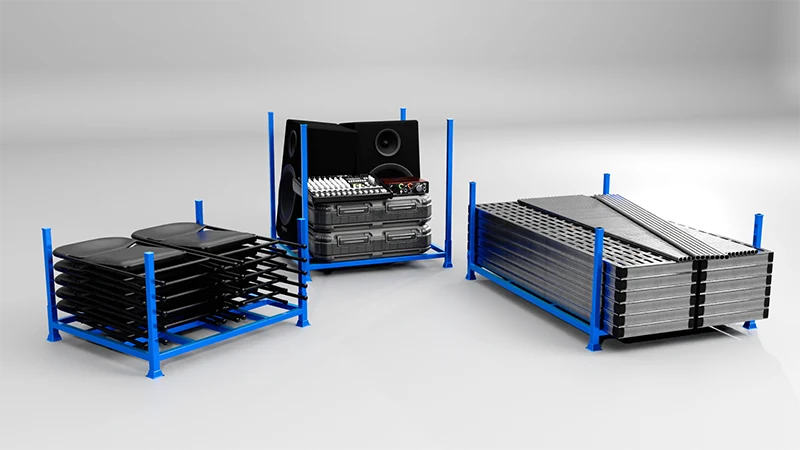
Beam rack: fixed, stable, picking-first
Choose beam rack when the warehouse must keep a permanent layout and the operation depends on direct picking access, clear lanes, and the highest possible stability for palletized storage.

Compare Derack and beam rack to choose between fixed-rack stability, pallet picking, and movable returnable storage for your warehouse.
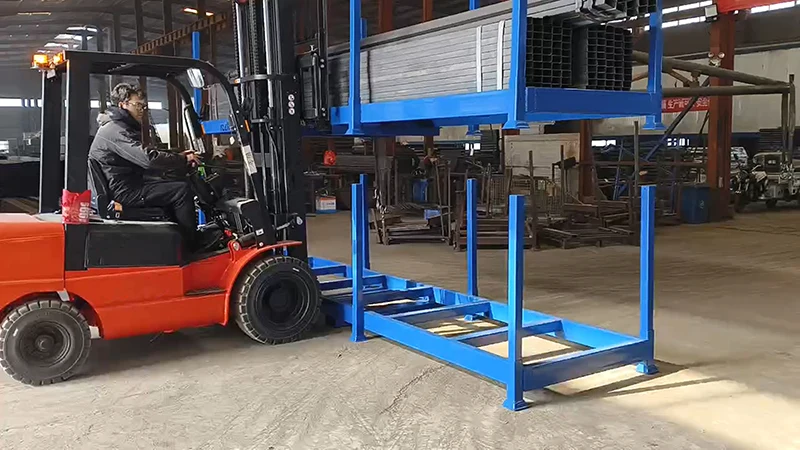
Comparison guide
If your priority is 100% picking access and absolute stability, beam rack is the safer default. If you need movable, stackable units that can be dismantled, nested, and returned more efficiently, Derack is the better fit.
Derack sits between a pallet and a fixed rack. It turns floor stacking into structural load-bearing handling, so the load is carried by the base frame and uprights rather than by the product pile alone. That makes it suitable for closed-loop circulation, return logistics, and layout changes. Beam rack, by contrast, is the fixed-rack answer when you want maximum stability, clear picking access, and a permanent warehouse layout. The choice is not about which one is universally better; it is about whether your operation values fixed access and stability, or flexible movement and returnable packaging.
Choose beam rack when the warehouse must keep a permanent layout and the operation depends on direct picking access, clear lanes, and the highest possible stability for palletized storage.
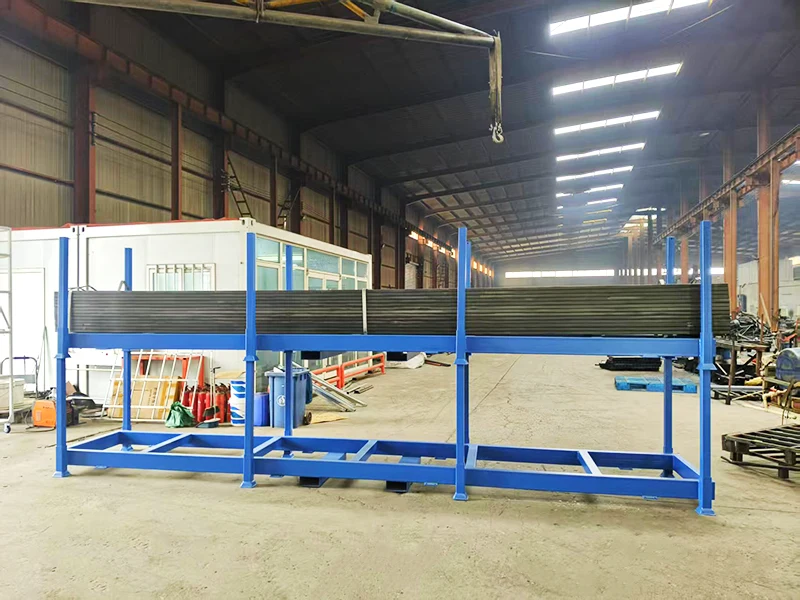
Choose Derack when you need to move whole units by forklift, stack them, dismantle uprights when empty, and recover volume through nesting or return transport.
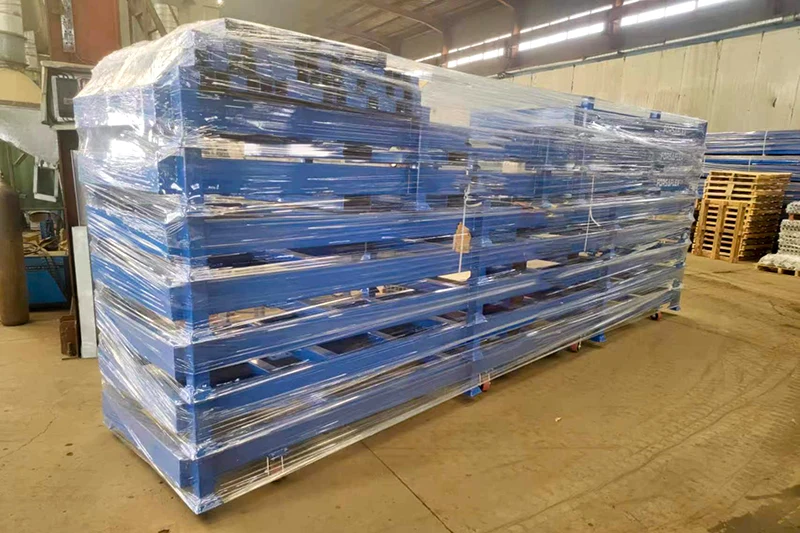
Use both when part of the inventory needs permanent, highly stable storage and another part needs seasonal, project, or return-loop handling. Mixed use is a real operating pattern when the warehouse has both steady SKUs and fluctuating lots.
Beam rack is the stronger choice when you want the most stable fixed storage system. Derack is stable as a structural unit, but it is not the same as a permanent fixed rack; if your process depends on absolute rack stability for every pick face, beam rack should stay the default.
Derack is a poor fit when the operation needs constant individual picking, rigid aisle planning, or a fixed layout that should not move. In those cases, choosing Derack would add flexibility you may not need and remove some of the stability and direct-access benefits of a beam rack.
Beam rack and Derack can be combined in one warehouse. That is useful when the same site has one zone for stable pallet picking and another zone for movable, stackable, or returnable units. The key is to assign each system to the job it does best.
Derack is designed as a steel load-bearing carrier that can work with forklift handling, stacking, and nesting. It is not just a pallet, and it is not the same as a fixed rack. If your current operation depends on standard pallet logic only, you need to confirm the unit format, fork entry method, and load distribution before switching.
If every pallet must be picked directly and frequently, lean toward beam rack. If the goal is unit-level circulation, staged storage, or return logistics, include Derack in the evaluation.
Check whether the application needs the highest possible fixed-rack stability or whether a structural movable unit is enough. Do not assume one-layer behavior equals multi-layer stacking behavior.
Verify whether the load sits on pallets, on the rack frame, or on both. Derack can be used as a compatible circulating carrier, but the project must confirm the exact load path and unit interface.
If the warehouse has both fixed high-frequency picking and flexible project lots, use a mixed layout. If the site is almost entirely stable pallet picking, beam rack may remain the simpler answer.
It is less suitable than beam rack when the requirement is absolute fixed-rack stability. Derack is a structural movable carrier, so it should be selected for flexibility, returnability, and stackability rather than for the same stability expectation as a fixed beam rack.
Do not lead with Derack when the warehouse needs a permanent picking rack, rigid aisle planning, or the highest fixed-layout stability. In those cases, beam rack is the better base system.
Yes. Many operations can use beam rack for stable picking zones and Derack for project lots, return loops, or area-based storage that changes often.
Beam rack normally works around palletized storage in fixed lanes. Derack is a returnable steel carrier that can be designed around the product and the handling flow, so the pallet interface and load path must be confirmed per project.
Derack must be checked for fork entry, base clearance, and handling zones because the whole unit is moved as a carrier. Beam rack depends more on fixed installation and pallet placement than on moving the whole frame.
Input your structural guidelines below. Our math system calculates material deflection, stress bounds, and recommends optimal profiles.
Click Compute to calculate stress factors and display structural drawing recommendations.