
Galvanised Stillages for Loose Parts and Components
Galvanised stillages for loose parts, components and metal offcuts. Learn when to choose mesh sides, solid bases, galvanised finish and stacking points.
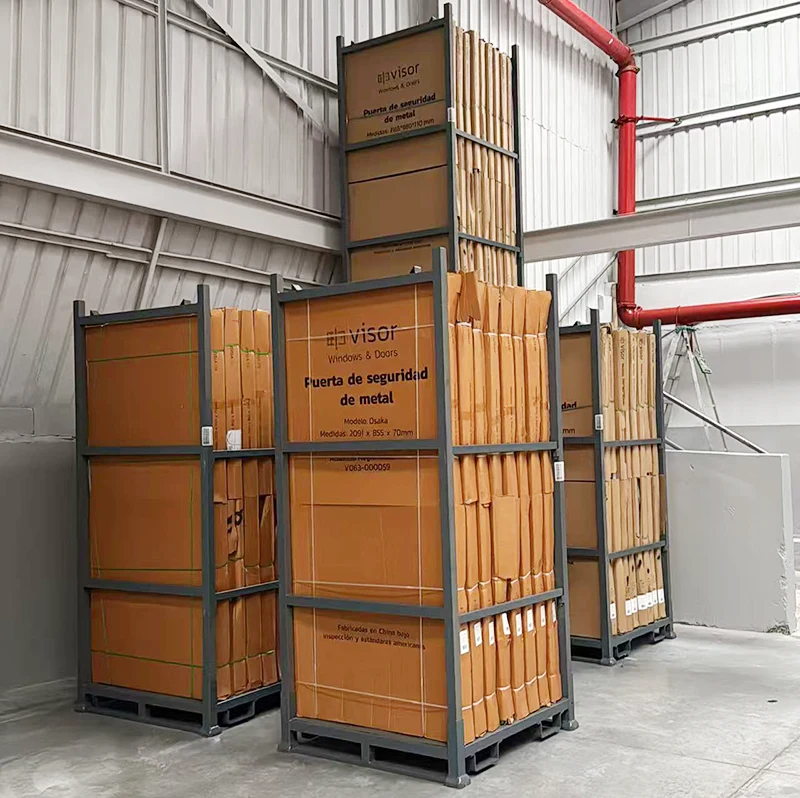
Keep scattered parts together, stack them, and move them without re-bagging
A galvanised stillage turns loose pieces into a controlled turnover unit. It is made for parts, not for full pallet loads, so the workflow stays visible, stackable and easy to lift.
Choose a mesh side wall when you need ventilation and quick visibility; choose a solid steel base when you need smaller parts, sharp edges or added liners; choose a mixed layout when you want a balance of containment and drainage. For broader product references, continue with BRAND-01, PDP-08 and BLOG-03.
- For loose parts, stampings, offcuts and mixed components
- Stackable form helps you use floor space better
- Forklift-ready for workshop turnover and warehouse transfer
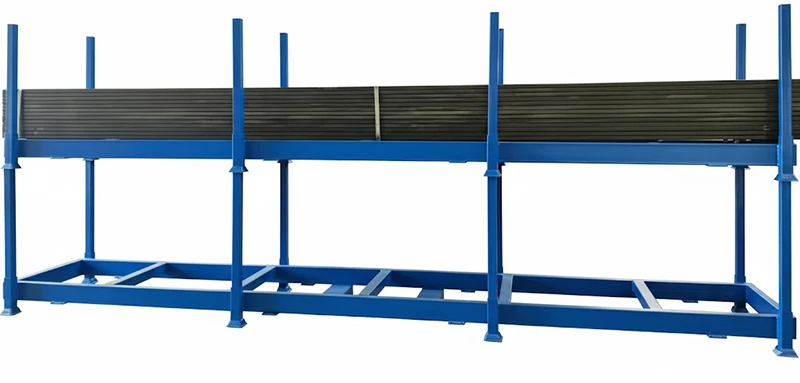
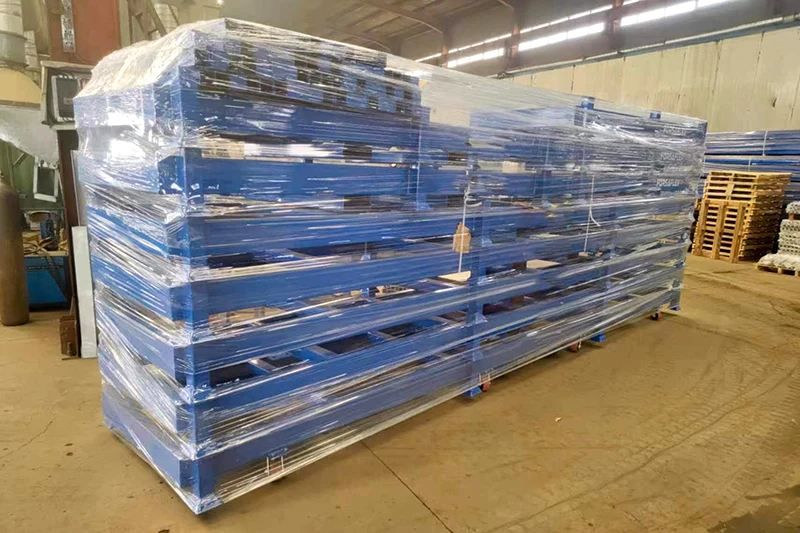
Pick the base and side wall around the part shape, not around the label
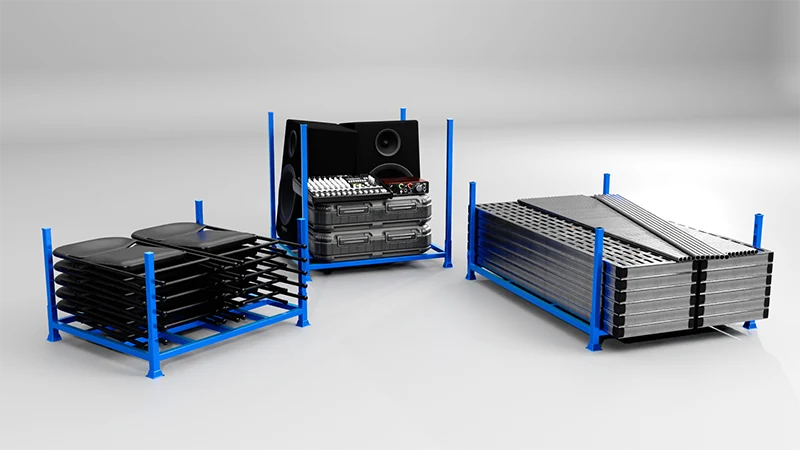
Mesh-sided / open frame use
Use it when visibility and drainage matter
Good for mixed loose parts, parts that need to be counted quickly, and circulation where an open frame helps cleaning or drainage. If the parts are small, confirm the mesh opening and add a liner if needed.
Best for: loose components, mixed kits, returnable bins.
Watch for: very small parts, fragile surfaces, slip-through risk.
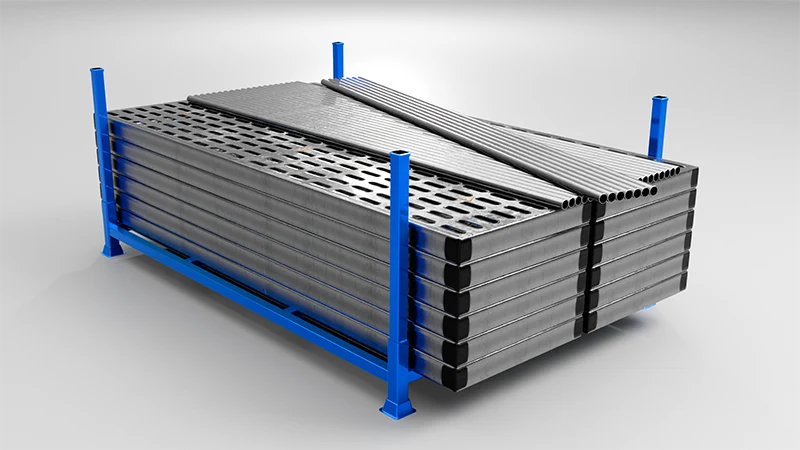
Solid base / plate bottom use
Use it when the parts are small, sharp or oily
A solid steel plate base makes it easier to hold smaller parts, protect cut edges, and add dividers or trays. It usually weighs more than an open base, but it gives a cleaner containment surface for workshop turnover.
Best for: stampings, machined parts, offcuts, oily parts.
Watch for: added weight and less drainage.
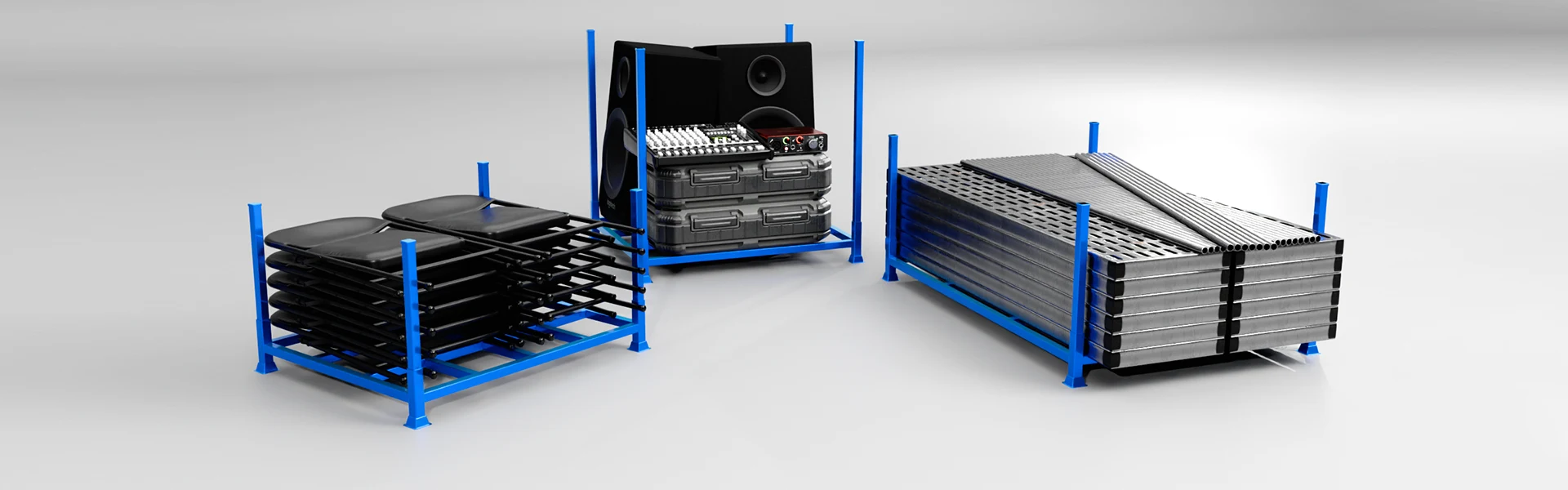
Stackable with locating points
Use it when you need stable stacked turnover
Stacking should rely on the frame, corner posts or locator cups, not on loose contact between filled units. That keeps the stack aligned, lowers slip risk and makes empty return storage easier.
Best for: repeated turnover, return logistics, floor-space pressure.
Watch for: load limit, part shift, and unlevel floors.
Built for workshop circulation, but not for full pallet loads
Corrosion protection where handling is rough
A galvanised finish is a practical choice when the stillage moves between indoor and exposed areas, or when the unit is handled repeatedly and needs better resistance than a decorative coat alone.
Finish choice depends on exposure
Galvanising is usually preferred for corrosion resistance and service life, while powder coating is often chosen when color coding, appearance or a smoother finish matter more in a dry indoor environment.
Stacking control is part of the design
If you plan to stack loaded stillages, use proper locating points, confirm the load path, and define the maximum stack height. Stable stacking should come from the frame, not from the operator guessing the alignment.
Parts flow stays visible and sorted
Compared with bagging or loose floor placement, a stillage keeps the batch together, easier to count, easier to move and easier to return. That is why it fits workshops, machining lines and internal logistics loops.
Send the part shape first, then we map the stillage around it
Show the material form
Tell us whether you are handling loose parts, stamped pieces, cut offcuts, mixed kits or returnable components. That decides the containment style first.
Confirm base, wall and finish
We compare mesh side, plate base, mixed frame, galvanised finish and powder-coated finish according to the handling route and exposure level.
Set stacking and forklift conditions
We define stack locator points, fork entry and return storage so the unit can circulate safely in the workshop and warehouse.
Review the proposal and move to sample
Once the shape, quantity and route are clear, we can turn it into a drawing, confirm the details and move toward production.
The questions buyers usually ask before they order
Mesh side or solid steel bottom: which is better?
Use mesh when you want airflow, visibility and lighter handling. Use a solid steel bottom when the parts are small, sharp, oily or easy to lose through openings. If the parts are tiny, a liner or divider is usually worth checking.
Galvanised and powder-coated: what is the difference?
Galvanising is mainly chosen for corrosion resistance and tougher outdoor or semi-outdoor handling. Powder coating is usually chosen for appearance, color coding and a smooth finish. If the stillage will see moisture, abrasion or repeated transfer, galvanising is often the safer default.
Can this be used directly as a workshop turnover box?
Yes, if the part size, capacity, fork entry and stacking method are matched to the route. A stillage is exactly the kind of unit used for internal turnover, but it should be specified around the material form and not treated like a full pallet for whole loads.
Do stacked units need limiting or locating features?
Yes. If the unit will be stacked, it should have proper locating corners, posts or cups, and the stack height should be limited by the design load and the floor condition. Stacking without guidance is how slip and damage start.