
Mgrack vs Wooden Crate vs Fixed Welded A-Frame vs Groves/NSMC
Mgrack
A practical comparison page for Mgrack, one-time wooden crates, fixed welded A-frames, and Groves/NSMC/Unruh Fab. Focuses on reuse, return logistics, protection, and total cost.
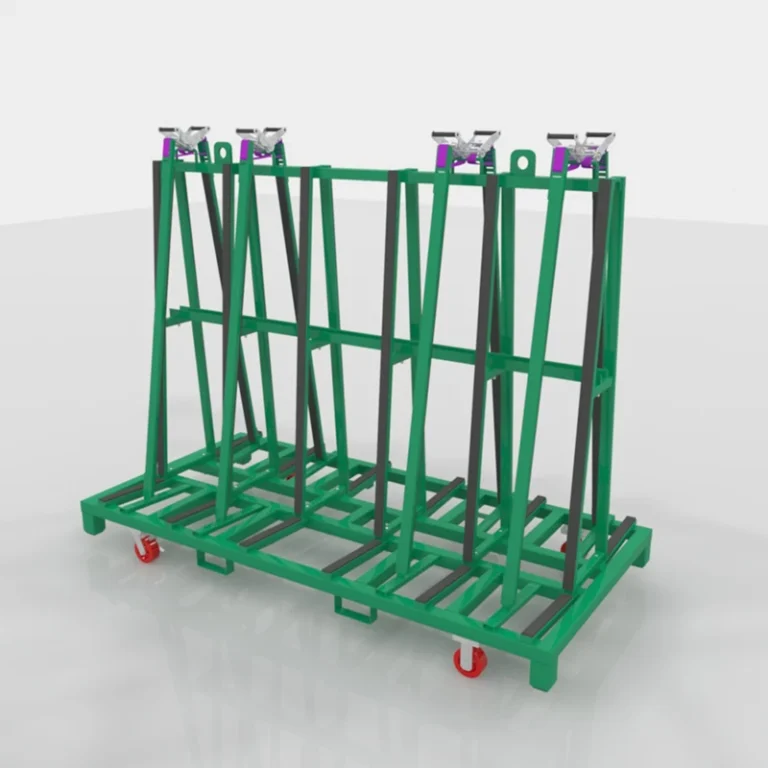
Compare the rack options before you lock the spec
For glass, stone, and other sheet goods, the cheapest rack on paper can become the most expensive choice in return freight, damage risk, or factory flow.
Mgrack is for reusable upright handling and empty-return logistics. A one-time wooden crate is for disposal, not recovery. A fully welded A-frame is stable, but it stays bulky when empty. Groves, NSMC, and Unruh Fab are useful North American benchmarks when the buyer already expects that brand standard.
| Option | Best fit | 拆装 / 回运 | Cost reality | Main caution |
|---|---|---|---|---|
| Mgrack | Reusable in-plant handling, upright storage, and empty-return logistics | Knock-down parts and nested empty racks help reduce reverse freight | Usually higher than disposable wood, but better total economics when reused | Needs your real panel size, unit weight, aisle width, and handling route |
| One-time wooden crate | Single trip outbound protection when return use is not planned | Not designed for return flow | Low buy-in cost, but waste and disposal costs add up | Weak as a reusable handling asset and not a good answer for return logistics |
| Fixed welded A-frame | On-site storage when the rack can stay in place | Cannot knock down, so empty return stays bulky | Can be acceptable for a fixed shop floor, but freight efficiency is poor | Not ideal if the rack must travel back empty or ship in compact form |
| Groves / NSMC / Unruh Fab | Brand-led buyer specs, benchmark comparison, or premium North American references | Depends on the exact model and project spec | Often priced as premium market references | Do not assume the brand name alone solves the handling route or total cost problem |
- Use Mgrack when the rack must move inside the plant and come back empty.
- Use wood only when the shipment is one-way and the rack will not be reused.
- Use a fixed welded A-frame only when the rack can stay on site and space is not a return issue.
- Use Groves / NSMC / Unruh Fab when the buyer spec is brand-led or you need a known benchmark to compare against.
- Do not buy any option until panel size, unit weight, aisle width, floor type, and handling route are known.
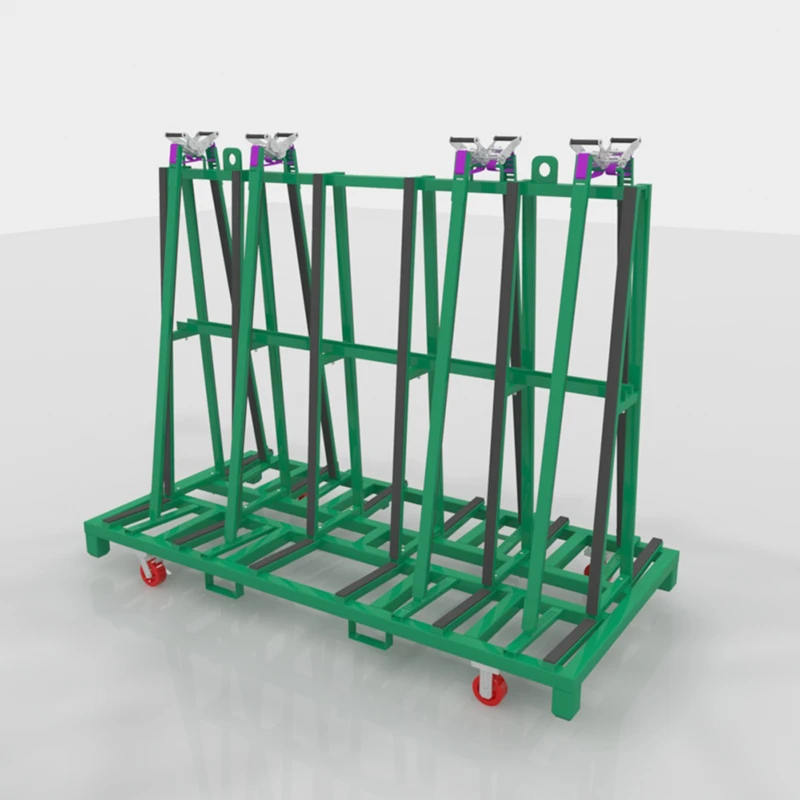
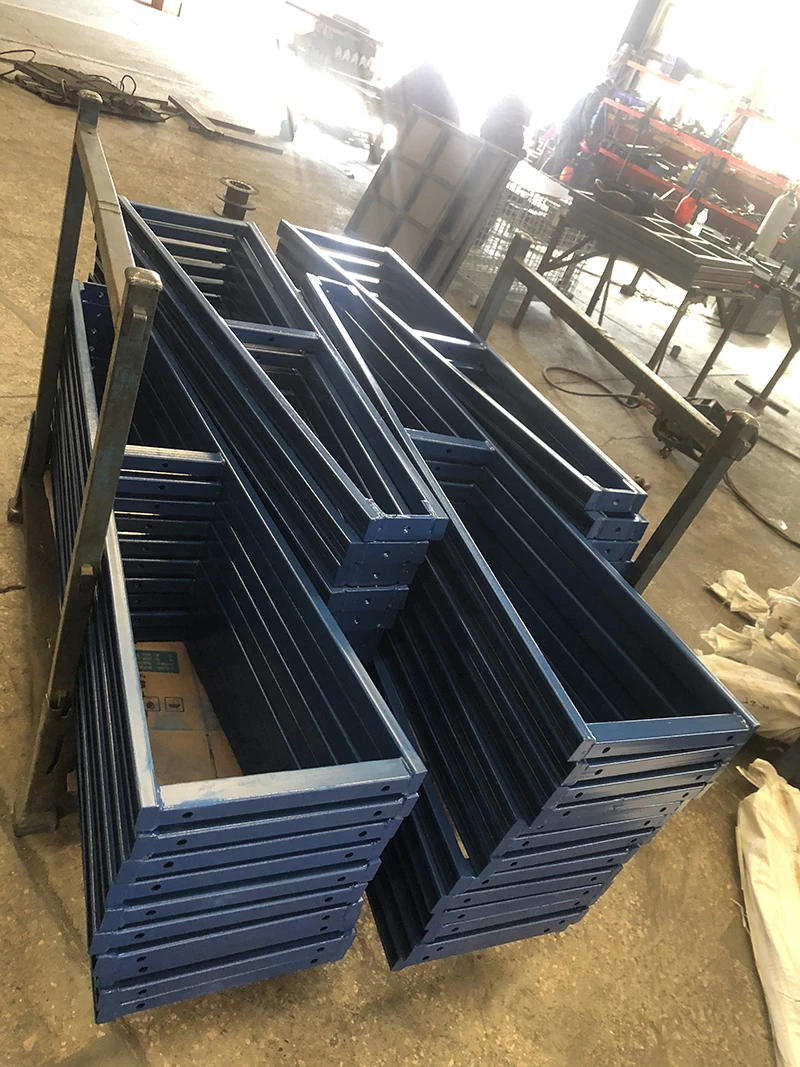
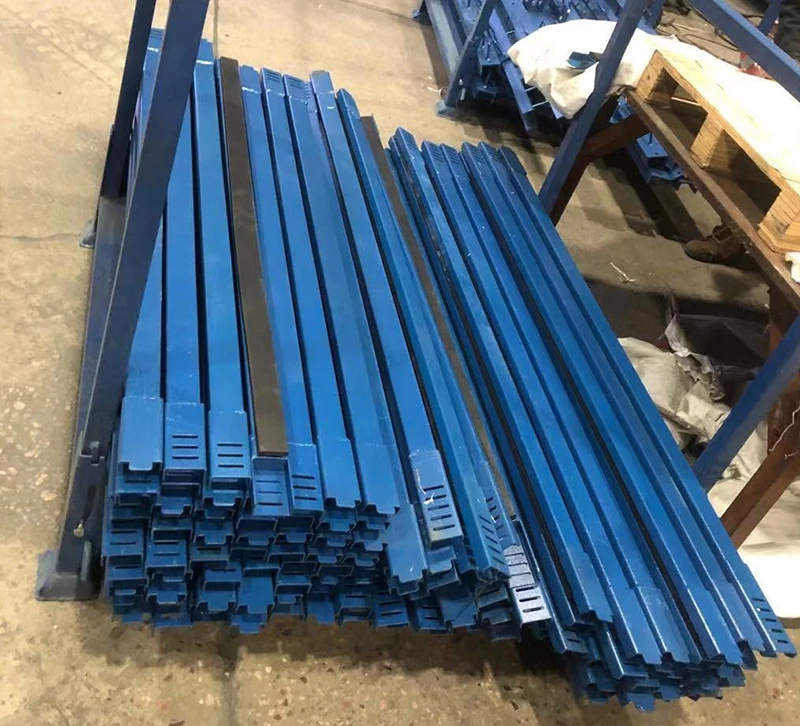
Choose the path that matches your return flow
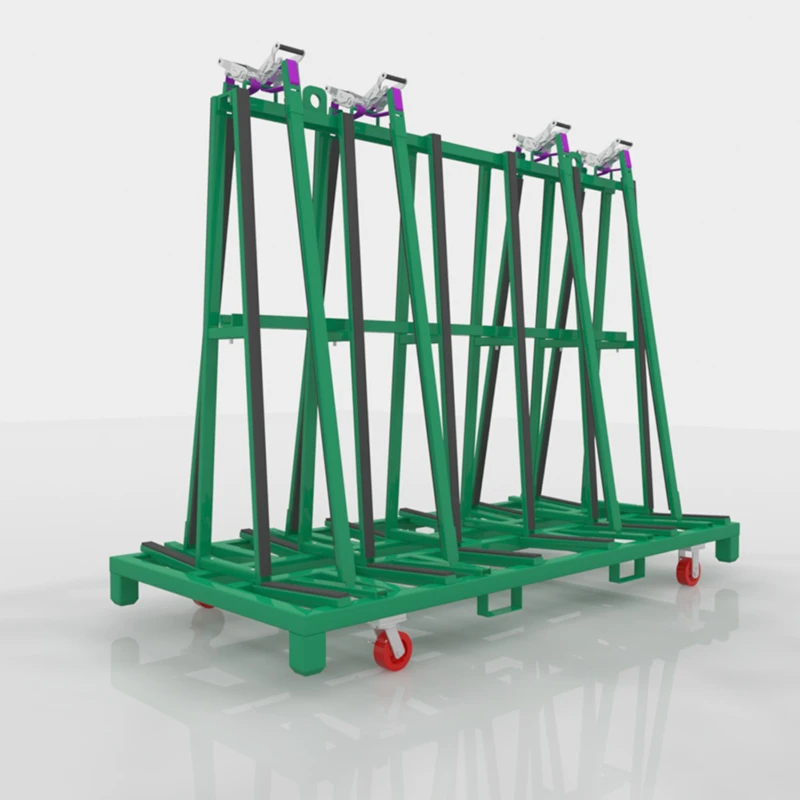
Best when reused
Mgrack
Pick this when you need a reusable handling asset for upright storage, in-plant transfer, and compact empty return. It is the right answer when the rack itself is part of the workflow, not just the packing.
Good fit: glass factories, stone shops, PV and panel handlers
Main value: knock-down shipping and return logistics
Best when outbound only
One-time wooden crate
Choose the crate when the job is one-way, the rack will not come back, and disposal cost is acceptable. It can protect the load, but it does not solve the return-logistics problem.
Good fit: short-life export packaging
Main value: low initial packaging cost
Best when fixed
Fixed welded A-frame
Use a welded frame when the rack can stay on site and space is not a concern. It is stable, but the empty unit is still a full-size object that has to be stored or moved.
Good fit: permanent shop-floor storage
Main value: simple rigid structure
The decision is about flow, not just the frame
Reusable return flow
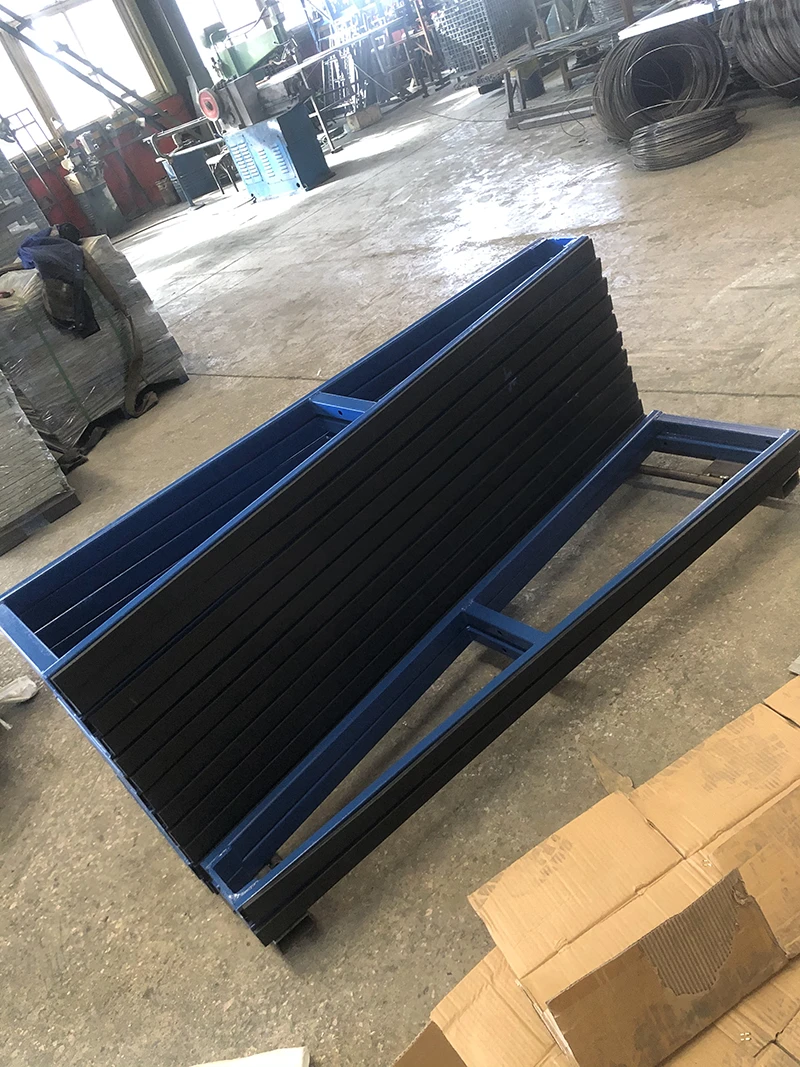
Knock-down parts and nested empty racks help the rack earn its keep across more than one trip.
Surface protection
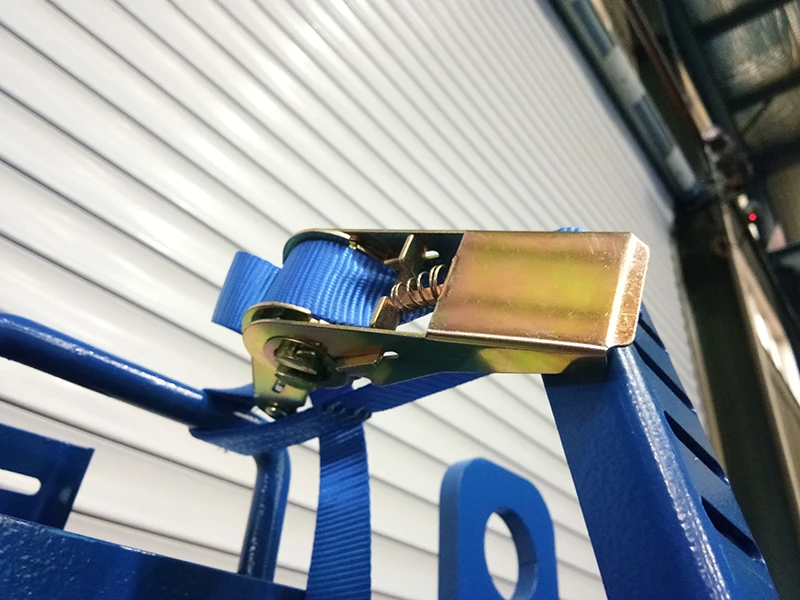
Rubber pads and ratchet restraint are used to separate the steel frame from the panel surface during handling.
Handling options
Depending on the project, the rack can be specified with casters, forklift access, or lifting points.
Benchmark without hype
Groves, NSMC, and Unruh Fab are useful references, but the right choice is still the one that matches your route and cost model.
Four checks before you place the order
Measure the real load
Confirm panel length, width, thickness, unit weight, and surface-protection requirements before you compare options.
Map the route
Check aisle width, turning space, floor condition, and whether the rack must return empty or stay on site.
Choose the handling mode
Decide whether the project needs casters, forklift handling, or lifting points. Do not assume one mode fits all.
Lock the total cost
Compare the rack price with return freight, disposal, downtime, and damage risk. If those inputs are not clear, do not buy yet. If you need the broader selection pack, continue to PDP-01, PDP-05, BLOG-06, and CASE-03.
Straight answers for the buyer
What is Mgrack best for?
It is best for reusable upright storage and in-plant transfer of glass, stone, and similar sheet goods when return logistics matter.
What is the problem with a one-time wooden crate?
It is a disposable packaging solution. It can protect outbound shipments, but it does not solve reuse, return freight, or empty-rack storage.
Why is a fixed welded A-frame not ideal for return?
Because it cannot knock down. When the rack is empty, it still occupies full space in the yard, in the warehouse, and on the truck.
How is Mgrack different from Groves, NSMC, and Unruh Fab?
They are established North American references and useful benchmarks. The comparison should focus on buyer standard, service support, lead time, and total handling cost, not on brand name alone.
When should I not buy any of these options?
Do not buy yet if the panel size, unit weight, aisle width, floor quality, handling method, or surface-protection requirement is still unknown.
Are the load values published on this page?
No. The verified package for this page does not publish signed load values, steel grade, or caster rating. Ask for the actual panel data before quoting.