MOLD STORAGE SELECTION GUIDE
Mold rack vs floor stacking vs static shelving: choose by access, load and handling
If you are deciding how to store heavy molds, compare the operating method—not just the purchase price. Floor stacking, ordinary static shelving and a full-extension die rack solve different storage problems.
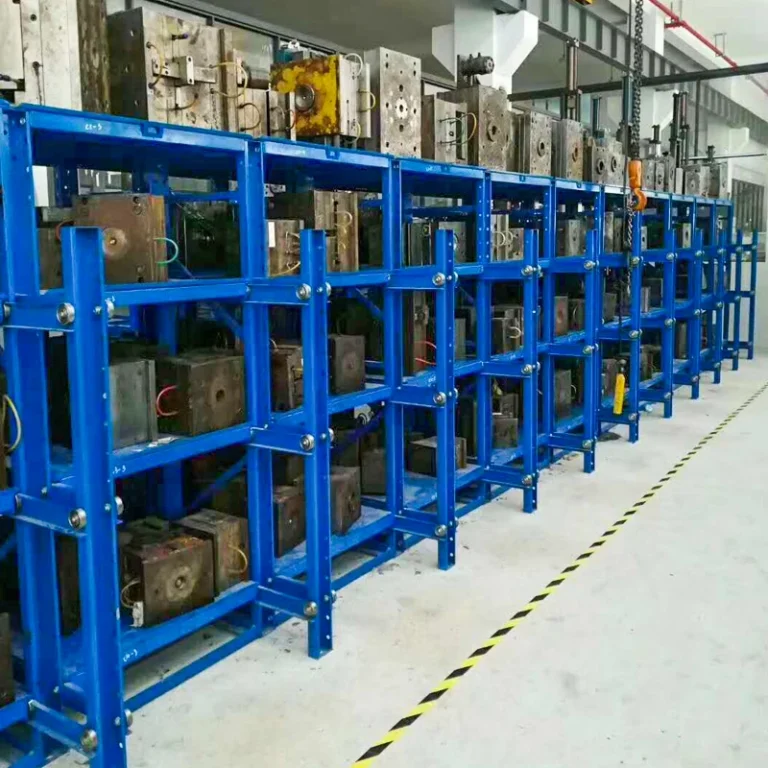
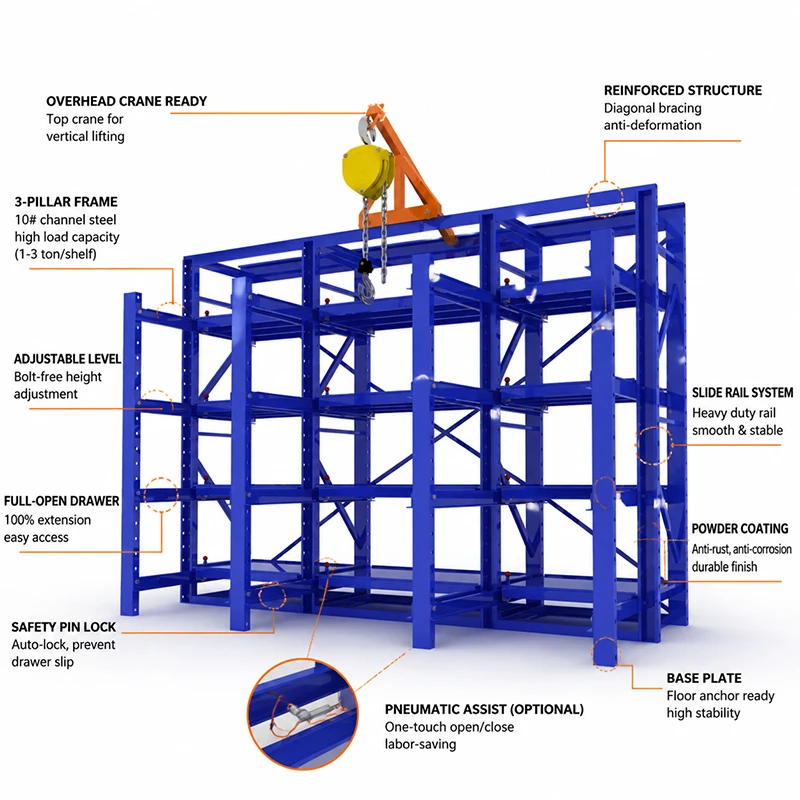
Erack is a heavy-duty mold storage system for molds and tooling that need dedicated locations and overhead lifting access. Its drawers extend horizontally to expose the stored mold for vertical handling by an overhead crane or hoist. The rack is anchored to a suitable hardened floor and is not a substitute for lifting equipment. For low-load, low-frequency storage, floor stacking or ordinary shelving may still be practical; for frequent access to heavy molds, the full-extension layout makes the selection logic clearer.
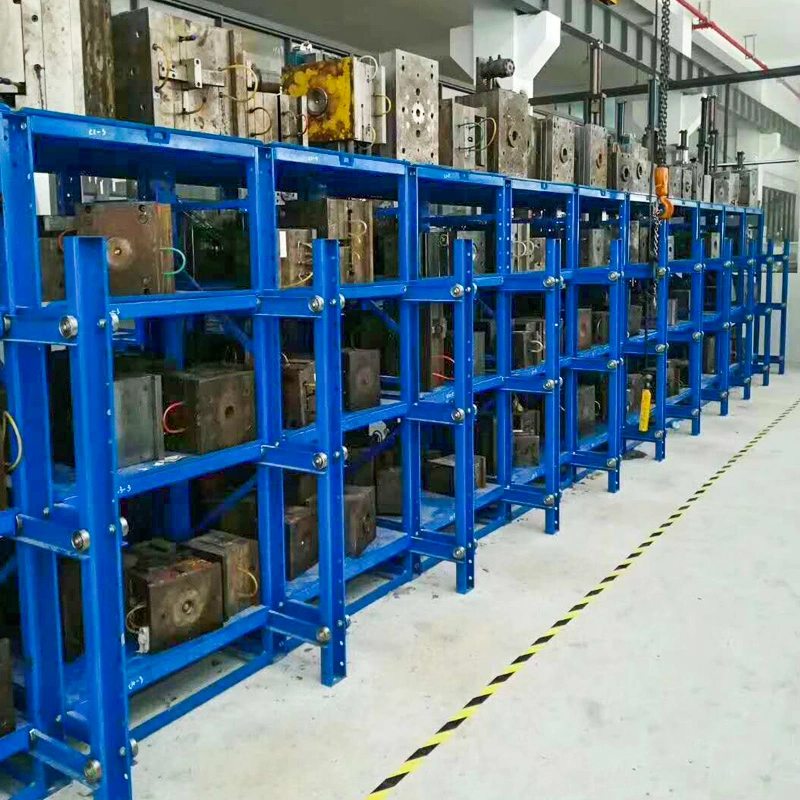
- Dedicated drawer locations reduce the need to move other molds before reaching the selected unit.
- Full-extension drawers expose the mold for vertical lifting instead of requiring forklift access between rack bays.
- Heavy-duty construction, safety locking pins and floor anchoring must be matched to the mold load and site conditions.
Three storage methods, three different operating conditions
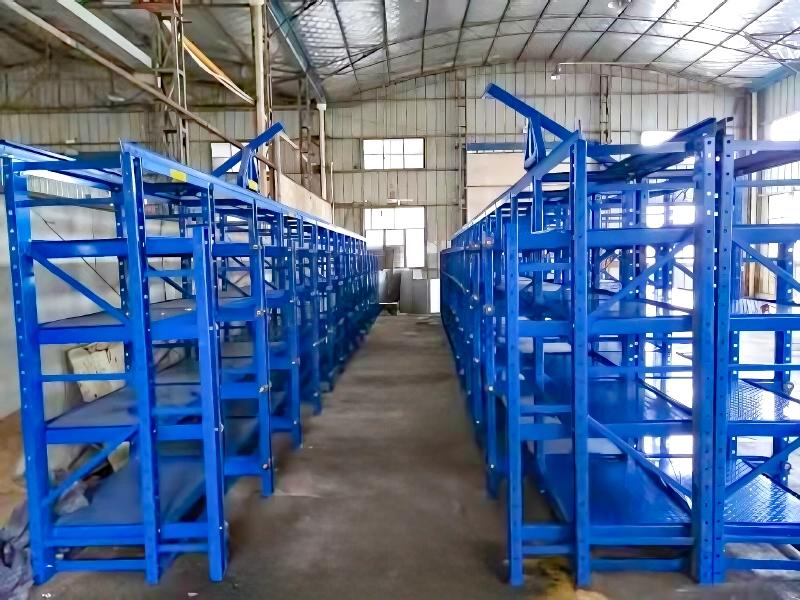
Floor stacking
Can remain suitable for light, infrequently accessed molds, temporary staging or sites where the floor layout and handling method already work. It becomes difficult to control when molds are mixed, blocked by other items or frequently moved; confirm floor bearing, separation and lifting access before use.
Ordinary static shelving
May fit lighter molds and lower-frequency storage when loads stay within the shelf design and the handling route is straightforward. A static frame is not automatically suitable for a fully extended heavy drawer: pulling a loaded drawer forward introduces a cantilevering moment and front-load demand that ordinary shelf beams and connections may not be designed to carry.
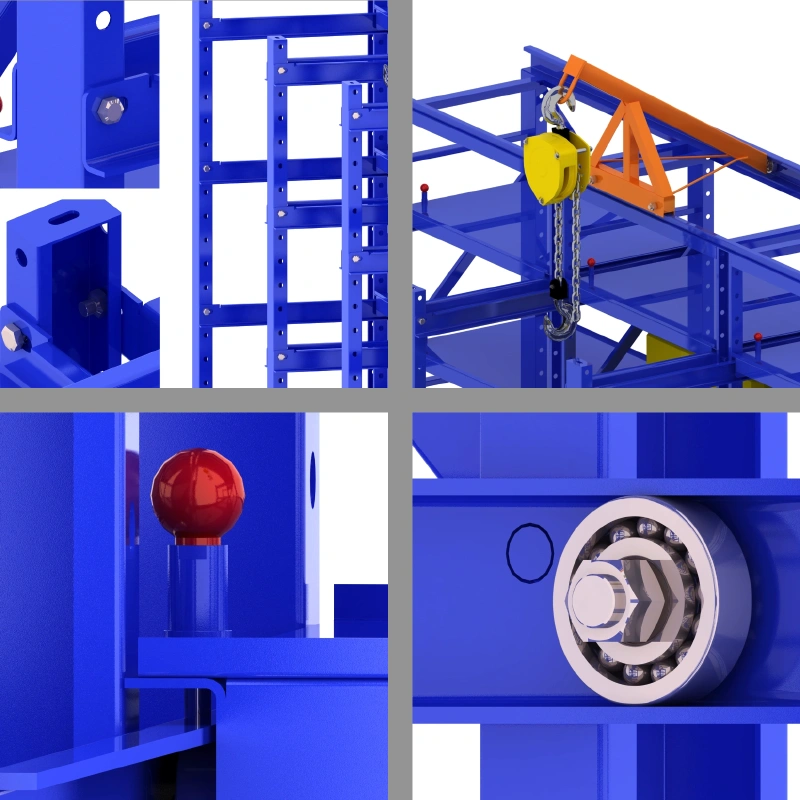
Full-extension die rack
Best considered when heavy molds need individual locations, frequent access and a clear vertical lifting position. Erack requires suitable floor anchoring and an overhead crane or hoist; it is not the right choice for a site without lifting coverage or without a floor that can accept the required anchoring.
What the full-extension design changes
Less searching and fewer blocked positions
Floor stacking often creates a reachability problem: the mold you need may be behind or below another mold. A dedicated drawer position makes the retrieval path more direct, provided the location data and loading discipline are maintained.
A static shelf is not a roll-out drawer
A normal shelf mainly carries vertical load in place. A fully extended drawer also transfers load forward and creates a moment at the guides, posts and anchors. That is why drawer rails, front support, safety locking and the complete frame must be engineered as a system rather than added to an ordinary shelf.
A clearer crane-handling position
When the drawer is fully open, the mold is exposed for a vertical lift from above. This can reduce the need for a forklift to enter a narrow rack aisle, but the crane or hoist, lifting accessories, clear height and operating procedure remain essential.
When automation is worth discussing
Consider pneumatic assistance or a wider handling-system review when manual drawer movement, access frequency, mold weight, ergonomic limits or production takt make the basic manual configuration unsuitable. Automation should follow a site review of loads, air supply, lifting equipment, controls and safety interlocks—not be assumed from the rack alone.
Select the right storage method before you request a quote
-
1. List the molds
Provide each mold's maximum length, width, height, weight, center of gravity and access frequency. Separate active production molds from reserve or temporary-stage items.
-
2. Map the handling route
Mark the forklift route, pedestrian route, crane or hoist coverage, hook height, lifting accessories and the clearance needed above the highest storage level. A full-extension die rack must be paired with overhead lifting.
-
3. Check the floor and anchoring
Confirm that the proposed area is level, hardened and suitable for the specified floor anchors. If the floor cannot safely accept anchoring, pause the rack selection and request an engineering review.
-
4. Compare the operating method and assistance level
For low-load, low-frequency molds, floor stacking or static shelving may remain adequate. For heavy, frequently retrieved molds where aisle space and retrieval effort are costly, compare a dedicated roll-out system against the current handling time and risk. If manual drawer movement is unsuitable, request pneumatic assistance or a wider automation review based on the site's loads, air supply, lifting equipment and safety controls.
Questions buyers usually ask before choosing
When is floor stacking still acceptable?
It can be reasonable for lighter loads, low-frequency access, temporary staging or a controlled area where molds remain identifiable and can be lifted without moving a confusing stack. It is a poor fit when the selected mold is routinely blocked, the floor becomes congested or workers must use unsafe improvised handling.
Why can’t an ordinary rack simply take a full-extension drawer?
A full drawer shifts the load forward and creates a cantilevering moment at the rail, posts and anchors. Ordinary shelving may be designed for stationary vertical loads, not the combined vertical load, pull-out force and front moment of a heavy drawer. The complete rack and anchoring system must be checked for the intended mold load.
Does a full-extension die rack remove the need for a forklift?
It can reduce forklift access inside the storage aisle when the mold is lifted vertically by an overhead crane or hoist. It does not remove the need for a suitable lifting device, rated accessories, clear height, trained operators and a controlled lifting procedure.
Can I pull out several loaded drawers at once?
No. Follow the supplied operating procedure: return the active drawer and engage its safety lock before opening another loaded drawer unless the engineered system specifically provides another approved interlock sequence. Multiple extended loads can move the combined center of gravity forward.
When should I consider automation?
Discuss pneumatic assistance or a broader automated handling solution when mold weight, retrieval frequency, ergonomic limits or production takt makes manual movement unsuitable. The decision should be based on a site review, not on a generic automation claim.
What information should I send for a comparison quote?
Send a mold list, maximum dimensions and weights, access frequency, floor construction, available crane or hoist coverage, required clear height, aisle constraints and whether forklift access will remain in the area. This lets the structure and handling method be selected together.